See why the Virgin of Guadalupe pilgrimage fills Mexico City every Dec 12, from the 1531 legend to families who walk for days and sing at dawn today.
Mexico has many festivals. None moves the country like December 12.
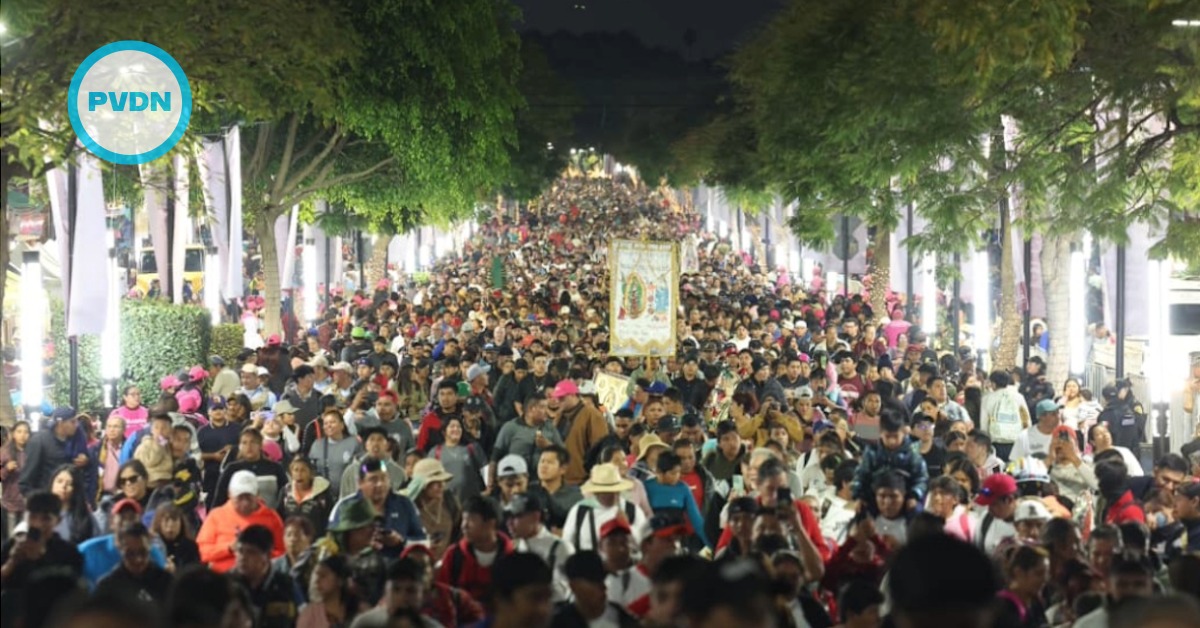
Before sunrise, highways into Mexico City turn into slow caravans. You see runners in matching shirts. You see cyclists with candles tied to handlebars. You see families walking behind a hand-painted image, pushing a stroller, or carrying a baby in a rebozo. People stop at gas stations to tape blisters and say a quick prayer. Drivers honk, not in anger, but in support.
This is the feast day of the Virgin of Guadalupe, known across Mexico as La Morenita. For Catholics, it is devotion to Mary under a Mexican name. For many non-religious Mexicans, it is still a shared calendar date. It is a story about home, mother, survival, and hope. If you want to understand Mexico beyond resorts and headlines, this is one of the cleanest windows.
The pilgrimage centers on one place in the north of the capital: the Basilica of Our Lady of Guadalupe at Tepeyac. On a typical day, it feels like a large shrine and a busy tourist stop. In early December, it becomes a small city. The air smells like melted wax and street food. You hear mariachis mixing with Mass. You also hear that tired, happy sound people make when they arrive somewhere they have dreamed of reaching.
Ask Mexicans where they are going this week, and you may hear one answer: “a La Villa.” That shorthand refers to Villa de Guadalupe, the neighborhood surrounding the shrine. In the days leading up to December 12, the city changes around it. Side streets become sleeping areas. Neighbors set out water. Police close lanes so walkers can pass. Even people who never step into a church know what the crowd means.
The day in almost literal terms: on December 12, it can seem as if all roads in Mexico lead to this single church. That is the pull of Guadalupe. The pilgrimage is not a niche religious practice. It is a national rhythm you can see with your own eyes.
In Puerto Vallarta, you can watch the same devotion shrink to human scale. In the days leading up to Dec. 12, groups stream into the Parroquia de Nuestra Señora de Guadalupe downtown, turning ordinary streets into candlelit routes. The capstone is the Peregrinación de los Favorecidos, a Vallarta tradition tied directly to Mexico City. One local account traces it back to 1946, after a group of faithful survived a road accident while returning from the Basilica in Mexico City, inspiring an annual walk of gratitude that still draws huge crowds.
For a first-time visitor, the scale can be hard to read. It is not one procession. It is thousands of small ones, arriving hour after hour. Some groups carry a single framed image. Others bring a full band. Many walk at night to avoid traffic and heat. Almost all arrive with a reason they can name, even if they do not say it out loud.
Virgin of Guadalupe
The tradition begins with a story set in 1531, only a decade after the Spanish conquest. According to Catholic tradition, an Indigenous man named Juan Diego was walking near Tepeyac Hill when he saw a young woman who spoke to him in Nahuatl. She asked him to tell the local bishop to build a church there. The bishop, the story says, demanded proof.
Juan Diego returned to Tepeyac in search of a sign. He gathered roses that should not have been blooming in December. He carried them in his tilma, a cloak made from cactus fiber. When he opened the cloak in front of the bishop, the flowers fell out, and an image of the Virgin appeared on the fabric. That image, believed by devotees to be miraculous, is what pilgrims come to see today.
If you want the practical details, the shrine’s own site has maps, Mass times, and access information. Even if you are not Catholic, it helps to know what you are walking into.
You will hear this story told in different registers. Some people repeat it as a literal miracle. Others speak of it as a founding myth that helped shape a new society. Historians debate sources, dates, and how the devotion grew. What is not debated is the impact. The image became a bridge between worlds, in a country built from collision and mixing.
Tepeyac itself matters. Long before the basilicas, it was a sacred hill. After 1531, it became the most visited Marian site in the Americas. The current basilica complex is also a lesson in Mexico City physics. The older temple began to sink as the soft ground shifted. A newer, circular basilica was built in the 1970s so the image could be seen by far more people, safely.
The day has its own soundtrack. At midnight and in the early hours, groups sing “Las Mañanitas,” the Mexican birthday song, as if Mary were the guest of honor. Fireworks crack in the dark. A brass band starts up. Then the long, steady rhythm of Mass takes over again. The celebration feels both intimate and huge, like a family party held inside a stadium.
For foreigners, one detail can be surprising. Many pilgrims do not come only to “see.” They come to complete a promise. A parent may have vowed to walk if a child survived an illness. A young couple may come to ask for a job, a visa, or a pregnancy. Someone may come to say thank you for a year that did not break them. In Mexico, gratitude and petition often travel together.
The walking itself is part of the message. Groups travel from towns and cities across the country. Some leave days early and sleep on sidewalks. Some arrive on their knees for the last stretch. It can look extreme to an outsider. For participants, the physical cost is the point. It turns private pain into a public act. It also turns faith into something you can measure in kilometers.
This is also why the basilica feels different from a quiet European cathedral. It is not built around silence. It is built around motion. Priests celebrate repeated Masses. Volunteers guide traffic. Families take photos and then step aside for the next group. Near the image, visitors move along a walkway so the line keeps flowing. The shrine is designed for the fact that, on this day, the crowd is the ritual.
Mexico City officials plan the week like a major civic event. In recent years, the city government has reported totals in the many millions for the days around December 12, including more than 11 million pilgrims during the peak dates in 2023. Even if numbers shift year to year, the scale is the constant.
Around the shrine, you see the small details that make the day feel Mexican. People bring bouquets wrapped in newspaper. Kids wear miniature costumes, dressed as Juan Diego or as little “inditas,” the embroidered outfits you see in school plays. Dance groups in feathers and shells circle the plaza. Vendors sell candles by the kilo, alongside warm atole for cold hands.
Inside the crowds, the mood shifts by the hour. At night, it feels like a campsite with prayers. By late morning, it feels like a street fair with hymns. Through it all, the direction stays the same. Everyone is moving toward the same image, at their own pace.
For many walkers, the finish line is not a photo. It is a moment of contact. They touch the wall, kiss a rosary, or lift a child for a blessing. Then they turn around and make space for the next group. The pilgrimage teaches patience. It also teaches that Mexico can still move together, even when it argues about everything else back home.
The Pilgrimage That Shapes Mexico
To understand why the pilgrimage sits so deep in Mexican life, look beyond church walls. Guadalupe is not only a religious figure. She is a national icon who has traversed politics, art, and daily life. Her image appears in homes, taxi dashboards, corner stores, murals, and football tattoos. People who rarely attend Mass still keep her close.
Part of that power comes from how she is portrayed. La Morenita is tender and firm at once. Her downcast eyes read as humility, but also attention. Her mantle of stars reads as protection. For many devotees, she feels less like a distant saint and more like a mother who understands ordinary problems.
That closeness makes December 12 feel like a reunion. People arrive in groups that look like extended families, workplaces, and whole neighborhoods. They carry matching banners, share food, and trade places in line. Strangers help strangers, because everyone has earned the same tired legs.
There is also a historical undertone that foreigners often miss. The story places an Indigenous messenger at the center, and it says Mary spoke in Nahuatl. In a society built on conquest, that detail carries weight. For believers, it signals dignity. For others, it explains why the devotion could grow across class and region.
If you are visiting, keep it respectful and simple. The plaza is public, but the emotions are not. Step aside when people pray. Avoid close-up photos of faces. Let families reach the image without competition. You can be curious without being invasive.
You do not need to decide whether the miracle “happened” to understand why it matters. The pilgrimage is impactful in the present tense. Each year, people leave work, spend what they can, and walk through cold nights to reach one image. That is identity, not just faith.
For a concise background on the tradition and its feast day, see Encyclopaedia Britannica’s overview of Our Lady of Guadalupe. Then, if you can, watch a few hours of the pilgrimage in person. You will understand why the road to Tepeyac is never just a road.
For many Mexicans, that feeling lasts long after the candles burn out. It follows them back to their towns, their kitchens, and their dashboards. That is the real takeaway for outsiders. December 12 is not a side story. It is Mexico speaking in its own voice.