In a new internal report, Mexico’s Attorney General’s Office admits it cannot verify key drug seizure statistics – including millions of fentanyl pills supposedly destroyed last year. The findings raise pointed questions: Are Mexico’s blockbuster busts truly as advertised? Or have poor oversight and possible corruption clouded the truth? Expats and observers alike are left wondering what really happened to the narcotics authorities’ claim to have seized and incinerated. For now, what’s at stake is more than numbers – it’s trust in Mexico’s fight against narcotics.
Mexico’s war on drugs is facing a credibility crisis from within. A new internal report reveals that the Attorney General’s Office (FGR) cannot verify the fate of millions of fentanyl pills it claims to have seized and destroyed. The watchdog’s findings detail gaping holes in the tracking and incineration of narcotics, pointing to severe lapses that raise more questions than answers.
Internal Watchdog Reveals Unverified Seizures
The internal control unit of the FGR – essentially its watchdog – found serious transparency failures in how drug seizures were handled in the second half of 2025. According to a report delivered to Congress on January 29, officials could not account for the fate of more than 5.5 million fentanyl pills. Those pills were supposed to have been incinerated, yet in at least eight documented cases, their final destination remains unknown. Basic protocols for recording, reporting, and verifying the destruction of narcotics simply did not exist, or were outdated. In fact, the rules governing how authorities secure, count, and destroy seized drugs hadn’t been updated since 1994. The watchdog noted that no modern system was in place to log these operations or ensure they were carried out properly.
Lapses in Drug Incineration Oversight
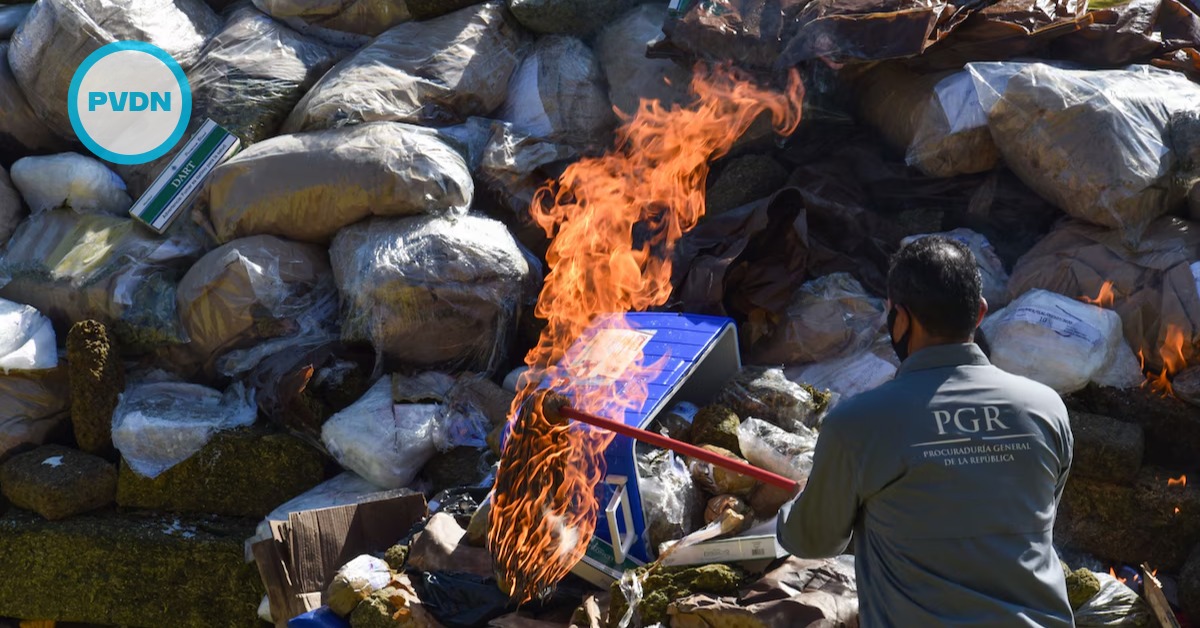
The report painted a troubling picture of how narcotics were supposedly being destroyed. It reviewed 294 drug incineration events across Mexico in late 2025 and found that many had no reliable statistics or daily logs. Inconsistencies and irregularities were common.
Crucially, there was no systematic verification that the incineration equipment was functioning correctly to fully destroy the contraband. For some high-activity regions, authorities failed to even report the volumes and types of drugs they burned. These gaps mean that large seizure totals touted by officials – such as tons of drugs or millions of pills – cannot be independently verified. The internal auditors deemed this lack of oversight a critical risk. In response, they flagged multiple incidents for further investigation. This included referring three cases for potential criminal prosecution of the involved parties.
Cocaine Swap Scandal Exposes Corruption
The revelations did not emerge in a vacuum. Just months earlier, a scandal within the FGR had already cast doubt on the integrity of its drug seizures. In one case in mid-2025, agents seized a hefty shipment — about a ton of cocaine — in the state of Guerrero. But when it came time for the ceremonial incineration, a group of corrupt officials allegedly pulled a bait-and-switch. Instead of burning the real cocaine, they swapped in powdered milk, tossing the harmless substitute into the flames in a solemn public ceremony. Days later, the audacious ruse was discovered, triggering outrage.
Mexico’s prosecutors swiftly fired around a dozen FGR personnel and pressed charges against them. Among those accused was the agency’s own internal comptroller, Arturo Serrano Meneses — the very official responsible for oversight. Investigators suspect that this ring of officials had been siphoning off seized narcotics and potentially selling them back into the black market. The fact that such a scheme could happen at the heart of the nation’s top anti-drug institution underscored how weak controls had become. It also showed how easily official drug-bust claims could be fabricated.
Doubts Cloud Official Drug-Bust Claims
These incidents have shaken confidence in Mexico’s reported achievements against narcotics, especially fentanyl. For the past few years, authorities have touted record-breaking drug busts and lab shutdowns to demonstrate progress. The aim was partly to answer pressure from the United States to curb the flow of fentanyl. Now, an internal review admits that basic record-keeping was nonexistent and some seizure figures were essentially untrustworthy. In light of that, those proud claims ring hollow.
If millions of fentanyl pills supposedly seized and destroyed can go untracked, observers ask, what other announced “victories” might be exaggerated? This is not the first time Mexican agencies have been accused of inflating their stats. In 2022, for example, the army abruptly quadrupled its count of drug labs “dismantled” by including long-abandoned sites as new busts.
One former DEA official bluntly criticized such manipulated figures as “outrageous” and “not worth the paper they’re written on.” He suggested those inflated numbers were aimed more at appeasing U.S. demands for results than reflecting reality. The pattern of opaque or padded numbers, critics argue, erodes trust on both sides of the border.
Pressure, Politics, or Plain Corruption?
Why would officials allow — or even perpetrate — such murkiness in the first place? Analysts point to a mix of possible motives. One is political pressure. Mexican leaders have been under intense U.S. scrutiny to show results in the fight against fentanyl trafficking. That pressure could create perverse incentives to inflate seizure statistics or hastily announce big drug destruction events without proper verification. The goal in such cases would be to make it appear to Washington that progress is being made.
Another motive could be more nefarious — and simpler. As the cocaine swap scandal suggests, outright corruption may lead some officials to divert seized drugs for profit. If a cache of fentanyl pills never gets properly logged or truly burned, it might quietly find its way back onto the streets through illicit channels. At this point, these scenarios remain speculative, but they are plausible enough that they’ve gained traction in public discourse. What’s clear is that neither explanation reflects well on the state of Mexico’s drug enforcement efforts.
Calls for Transparency and Accountability
The fallout from the watchdog report is prompting calls for urgent reforms. Mexico’s authorities have promised to modernize their procedures — starting with replacing that decades-old 1994 rulebook for handling seized narcotics. The new head of the FGR’s internal control unit, appointed after the 2025 scandal, has reportedly instituted basic fixes. These include mandatory record-keeping, certified scales for weighing drugs, and routine reports on every destruction event. These are steps toward preventing another multimillion-pill mystery.
Observers note that restoring credibility will be crucial not just for Mexico’s domestic rule of law, but also for maintaining international cooperation. The United States is grappling with a fentanyl overdose epidemic. It needs to trust that its southern neighbor is accurately reporting and effectively neutralizing the illegal opioids flowing north. Mexican expats and residents alike, for their part, want assurance that the authorities fighting the cartels are transparent and accountable. The hope is that shining a light on these inconsistencies will force a course correction. Ideally, seized drugs will actually be taken out of circulation, and the numbers the government boasts will be backed by verifiable facts.
With information from El Financiero, El Economista, Revista Vertical, Reuters