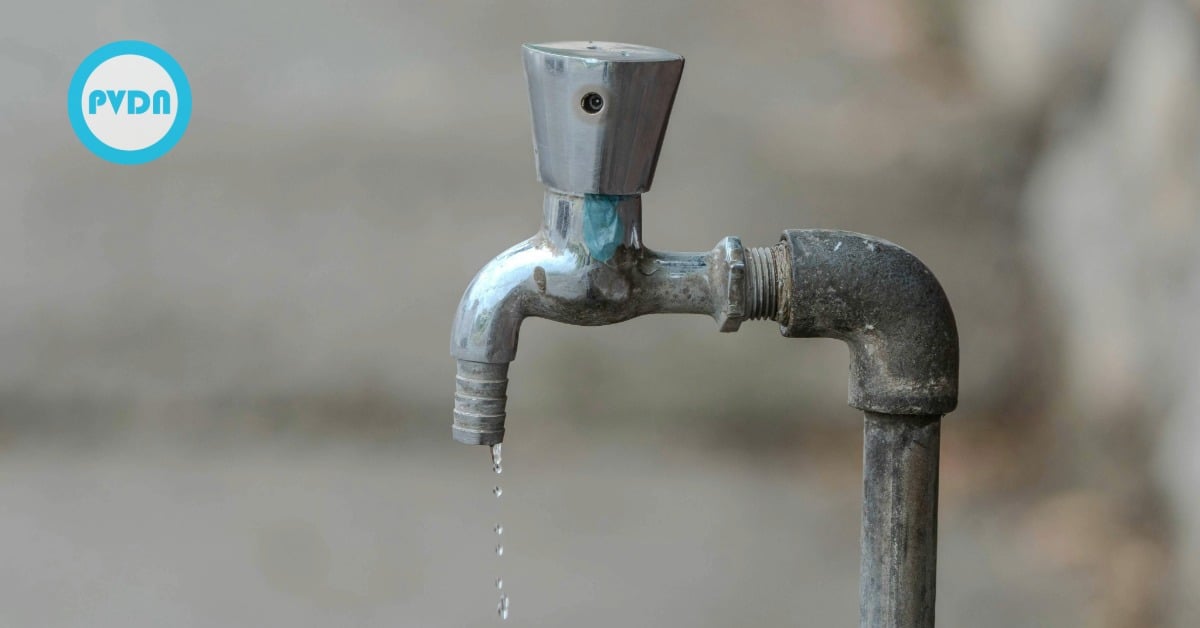
Mexico’s housing problem is no longer only about land, prices, or permits. Developers now say a more basic issue is slowing projects across the country: water. About 150,000 homes are reportedly stuck because the infrastructure needed to serve them is not ready. That matters beyond the construction industry. It affects supply, prices, and how fast-growing cities can absorb new residents. It also raises a bigger question about whether Mexico can build at scale without first fixing the systems beneath the ground.
Water becomes the bottleneck
Mexico’s housing pipeline is running into a constraint that is harder to solve than demand. Developers say roughly 150,000 planned homes are being delayed because projects do not yet have the water infrastructure needed to move forward. In practical terms, that means some developments have land, financing, and market interest, but still cannot advance on schedule because the networks that would supply them are missing, incomplete, or not authorized for urban use.
That warning lands at a time when housing activity is trying to accelerate. Public programs have pushed new momentum into the sector, and private builders are also looking to expand. But supply does not grow from announcements alone. Homes need pipes, pumping capacity, drainage, power connections, and legal clarity over water volumes. When one of those pieces is missing, construction slows, even if the need for housing remains obvious.
Why water access can halt a project
For many readers, housing delays may sound like a familiar story about red tape. In Mexico, the problem can be more specific. A development may need proof that enough water can be assigned for public urban use before it can fully move ahead. That is not just a paperwork issue. It is tied to whether an area’s infrastructure can actually support more households without deepening shortages for people already living there.
Developers have also pointed to energy infrastructure as part of the same bottleneck. The issue is not only whether homes can be built, but whether they can be served reliably once occupied. Industry leaders say that if private projects and federal housing plans keep moving forward, as many as 600,000 homes could be under development in 2026. That makes infrastructure capacity more than a technical concern. It becomes one of the main limits on how much housing can reach the market and how quickly.
A housing story built on older water gaps
The deeper context is that Mexico’s water system already carries long-standing inequalities. Material from the Mexican Institute of Water Technology, citing census data, says millions of homes still lack piped water. That does not mean every delayed project sits in a dry zone. It does mean the country is trying to expand housing while many communities still live with fragile or incomplete service.
In fast-growing metros and tourism-driven regions, the pressure is sharper. Population growth, seasonal demand, aging networks, and groundwater stress can collide in the same place. When that happens, the argument over housing shifts. It is no longer only about affordability or land availability. It becomes a question of whether a city can add new residents without overloading basic systems. That helps explain why developers are framing water as a direct brake on housing supply, not as a side issue.
The federal buildout raises the stakes
This matters more because the federal government is trying to scale up housing production. The official Vivienda para el Bienestar program outlines a national goal to construct 1.8 million homes. That ambition makes infrastructure even more important. A large housing push can only move as fast as local networks, permits, and service capacity allow.
Developers are now seeking clearer rules for water procedures. They expect the regulation tied to a new National Waters Law framework to bring more certainty to the process for requesting water volumes for housing use. That may help, but it will not solve every local shortfall. A clearer rulebook can reduce uncertainty. It cannot instantly create wells, pipes, treatment capacity, or stronger municipal systems where they do not yet exist.
Why this matters for buyers, renters, and residents
When projects are delayed, the effect reaches beyond builders. Fewer completed homes usually means tighter supply. In markets already dealing with price pressure, that can keep homes less accessible for longer. The impact can be felt by first-time buyers, working families, renters, and employers trying to house staff near jobs. It can also intensify local tensions in cities where growth is already outpacing infrastructure.
For foreign residents in Mexico, this is a useful signal about how the country’s housing problem is evolving. It is not only a demand story, nor is it only a financing story. In many places, it is now an infrastructure story. A project may look viable on paper and still stall because the public systems behind it are not ready. That is one reason housing can remain scarce even when cranes, announcements, and investment plans suggest more supply should be coming.
What comes next
The immediate question is whether regulation and public works can catch up fast enough. Recent federal actions on water availability zones show that water allocation remains a live policy issue in 2026. But the near-term outcome will depend on more than national rules. States and municipalities still need the capacity to process approvals, expand networks, and coordinate housing growth with basic services.
That means the headline figure of 150,000 delayed homes should be read as a warning about system limits. It does not mean those projects are dead. It means they are stuck in a part of the process that is often less visible than groundbreaking ceremonies or sales launches. Until that changes, Mexico’s effort to build more housing will remain tied to a simpler reality: homes cannot move faster than the water systems meant to serve them.
Deep Dive:
Mexico Power Shortages Are Already Delaying Projects