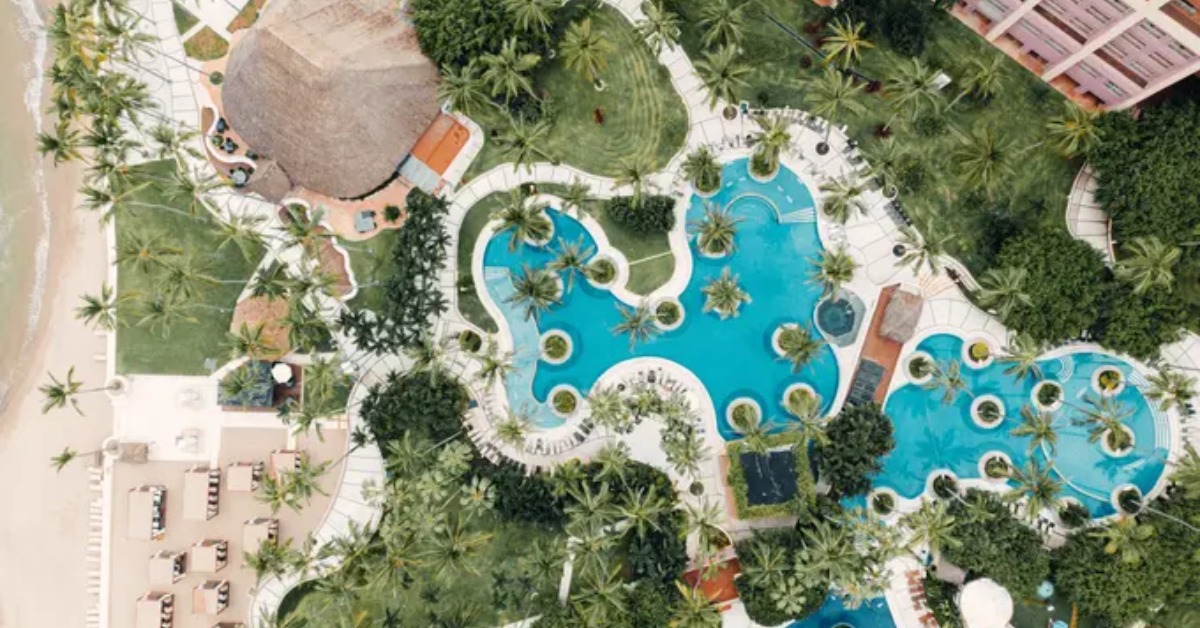
A familiar Puerto Vallarta hotel has reopened with a new name, a new format, and a larger role in Mexico’s changing resort market. The Westin Playa Vallarta is now the brand’s first all-inclusive resort in Mexico, following a major renovation of the former Westin Resort & Spa Puerto Vallarta. The opening comes as Mexico’s beach destinations compete for travelers who want easier booking, upgraded dining, wellness programs, and resort stays with fewer surprise costs.
Westin enters Mexico’s all-inclusive market
The Westin Playa Vallarta, an All-Inclusive Resort, has officially opened in Puerto Vallarta, marking Westin’s first all-inclusive property in Mexico.
The resort is located in Marina Vallarta, along Banderas Bay, at the site of the former Westin Resort & Spa Puerto Vallarta. The reopening follows a multi-million-dollar renovation that changed the property from a traditional resort into a full all-inclusive beach hotel.
The relaunch began on May 1, 2026, with the opening, which is being promoted this week, as a milestone for Westin and Marriott International in Mexico. The property now joins the broader All-Inclusive by Marriott Bonvoy portfolio.
For Puerto Vallarta, the opening is not only a hotel story. It is another sign that major hospitality brands are repositioning older beach properties for travelers who want convenience, brand loyalty benefits, and higher-end resort experiences.
What changed at the former Westin resort
The renovated property now has 281 redesigned accommodations, including swim-up junior suites and suites with private plunge pools. Some rooms are designed for adults, while others are aimed at families and longer stays.
The resort kept Westin’s focus on wellness, but adapted it to the all-inclusive model. Guests can expect the brand’s Heavenly Bed, a redesigned Heavenly Spa, fitness programming, and activities such as yoga, meditation, paddleboarding, kayaking, and coastal bike rides.
Dining is a central part of the relaunch. The property features a Gourmet Gallery concept, with several restaurants and outdoor dining options. The food and beverage program includes Mexican, Japanese, seafood, international, and café-style options, along with cocktail and mezcal experiences.
The all-inclusive rate generally covers lodging, meals, snacks, alcoholic and non-alcoholic drinks, entertainment, some water sports, kids’ activities, taxes, service fees, and gratuities. Extra charges may still apply for spa services, tours, transportation, premium items, laundry, and motorized water sports.
That distinction matters for visitors comparing hotel prices. The all-inclusive model can simplify budgeting, but it does not mean every service on the property is included.
A different kind of all-inclusive push
For many years, all-inclusive resorts in Mexico were most closely tied to Cancún, Riviera Maya, Los Cabos, and large resort corridors. Puerto Vallarta has always had all-inclusive hotels, but the destination also built much of its identity around local restaurants, smaller hotels, the Romantic Zone, and repeat visitors who spend time outside their resorts.
The Westin opening reflects a different stage of the market. Global hotel brands are now using the all-inclusive model to reach travelers who still want a resort package, but expect better design, stronger dining, wellness options, and more connection to the destination.
This is part of a broader shift in Mexico’s hospitality sector. Major brands are not only building new resorts. They are also renovating existing properties and moving them into higher-priced segments.
In Puerto Vallarta and nearby Riviera Nayarit, that strategy fits the current market. Recent hotel-sector data showed Puerto Vallarta with an average hotel occupancy of 72.9 percent from January through August 2025. Riviera Nayarit reached 74.7 percent during the same period.
The same market review found that luxury and upper-scale hotels now account for about 60 percent of three- to five-star properties across Puerto Vallarta and Riviera Nayarit. That helps explain why older resort assets are being refreshed rather than left in place.
What it means for Puerto Vallarta
The opening gives Puerto Vallarta another branded resort product aimed at travelers who may otherwise compare the city with Cancún, Punta Mita, Los Cabos, or the Dominican Republic.
The property also benefits from its location. Marina Vallarta is close to the Puerto Vallarta International Airport, giving short-stay travelers a practical option near the beach, the marina, golf, restaurants, and cruise activity.
Puerto Vallarta’s airport set a passenger record in 2025, with close to seven million passengers. The city also reached a new visitor record that year, according to local tourism figures. Those numbers support more investment, but they also put pressure on infrastructure, mobility, labor, and public services.
For local residents and expats, the hotel’s relaunch may be most visible through employment, supplier demand, restaurant competition, and visitor patterns. All-inclusive guests often spend more time inside the resort than traditional hotel guests. At the same time, higher-end properties can bring more spending power into the destination and support year-round jobs.
The outcome depends on how well hotels connect guests with the wider city. Puerto Vallarta’s appeal has long been tied to its neighborhoods, restaurants, galleries, beaches, and local culture. Resorts that send guests into the city can support that wider economy. Resorts that keep most spending inside the property create a different kind of tourism footprint.
The larger hospitality trend in Mexico
The opening of The Westin Playa Vallarta comes as Mexico’s resort market is becoming more segmented. Travelers are no longer choosing only between budget hotels and luxury resorts. They are comparing wellness resorts, adults-only properties, family resorts, branded residences, boutique hotels, and all-inclusive packages with stronger dining and design.
This competition is especially visible in beach destinations. Renovations are being used to reset older properties for new traveler expectations. Instead of simply adding rooms, hotel groups are changing the type of guest they want to attract.
For Marriott, the Westin property gives the company another all-inclusive foothold in Mexico’s Pacific market. For Puerto Vallarta, it reinforces the city’s role as part of a high-end corridor that increasingly includes Riviera Nayarit and Punta Mita.
The question for the destination is not whether more upscale resorts will arrive. That trend is already underway. The bigger issue is how Puerto Vallarta balances hotel investment with the local character that keeps many visitors returning.
The new Westin is a clear example of where the market is moving. Mexico’s all-inclusive sector is no longer only about volume, buffets, and beach access. It is moving toward branded, wellness-focused resorts that sell ease, comfort, and curated experiences under one price.