Puerto Vallarta, Jalisco, August 3, 2026 – Five canine inspection teams are now operating at Puerto Vallarta International Airport and Guadalajara International Airport as part of a state-federal program targeting agricultural and biosecurity risks.
Since the program began in May, inspectors have reviewed more than 53,000 bags, 2,018 commercial flights, 43 civil flights, and 246 pets.
The operation is being coordinated by the Jalisco Agency for Sanitation, Safety and Agrofood Quality, known as ASICA, with personnel trained by the National Service for Agrofood Health, Safety and Quality, or SENASICA. Inspections take place under the supervision of the federal Office of Agricultural Health Inspection.
Jalisco officials describe the program as the first state initiative in Mexico to add canine teams and state personnel to support federal airport inspections. The teams are assigned to the Miguel Hidalgo y Costilla Airport in Guadalajara and the Licenciado Gustavo Díaz Ordaz Airport in Puerto Vallarta, both of which are operated by Grupo Aeroportuario del Pacífico.
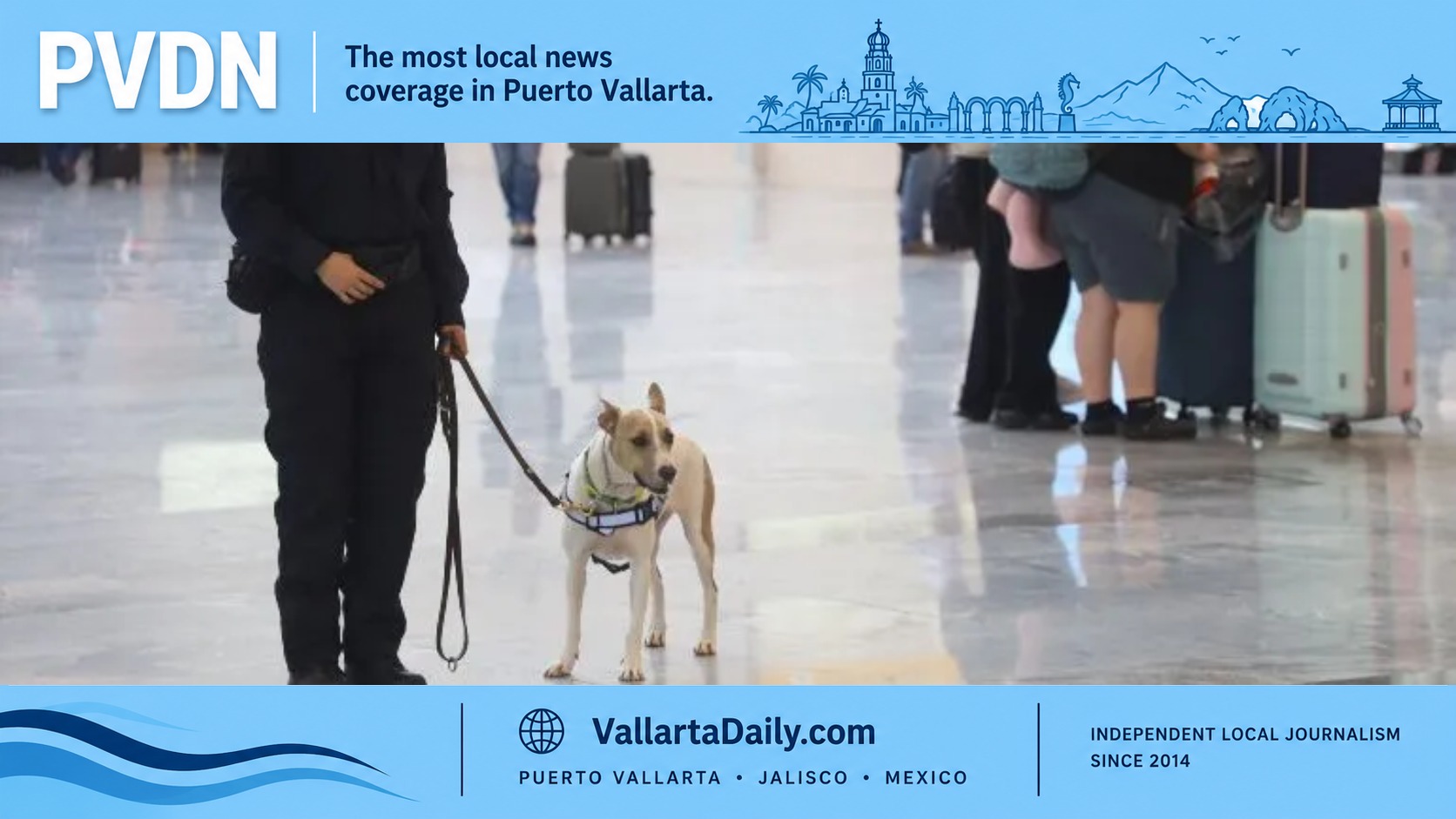
The dogs use what inspectors call passive marking. When a canine detects a potentially sanitary product, it sits beside the bag rather than scratching or barking. Inspectors then interview the passenger and examine the contents to determine whether the item is regulated.
The program has so far resulted in the seizure and destruction of 773.79 kilograms of fresh fruit, 2,057 kilograms of dried and fresh beef, pork and poultry, and 1.3 kilograms of raw shrimp and lobster.
The figures released by the state combine activity at both airports and do not identify how many inspections or seizures occurred specifically at Puerto Vallarta International Airport.
One of the dogs, a three-year-old mixed-breed named Havana, was rescued from a shelter and trained to detect agricultural risks. ASICA previously identified Havana as one of Jalisco’s canine units trained to detect livestock screwworm, a disease that has prompted additional inspections of animals and animal products.
Officials have also tightened pet checks and continue to restrict pork and wild boar products originating in countries affected by African swine fever.
Passengers arriving in Mexico with fresh produce, meat, seafood, plants, or other animal and agricultural products should check SENASICA’s current guidance on products permitted into Mexico before traveling. Products that present a sanitary risk may be seized and destroyed or, in some cases, returned to their country of origin.
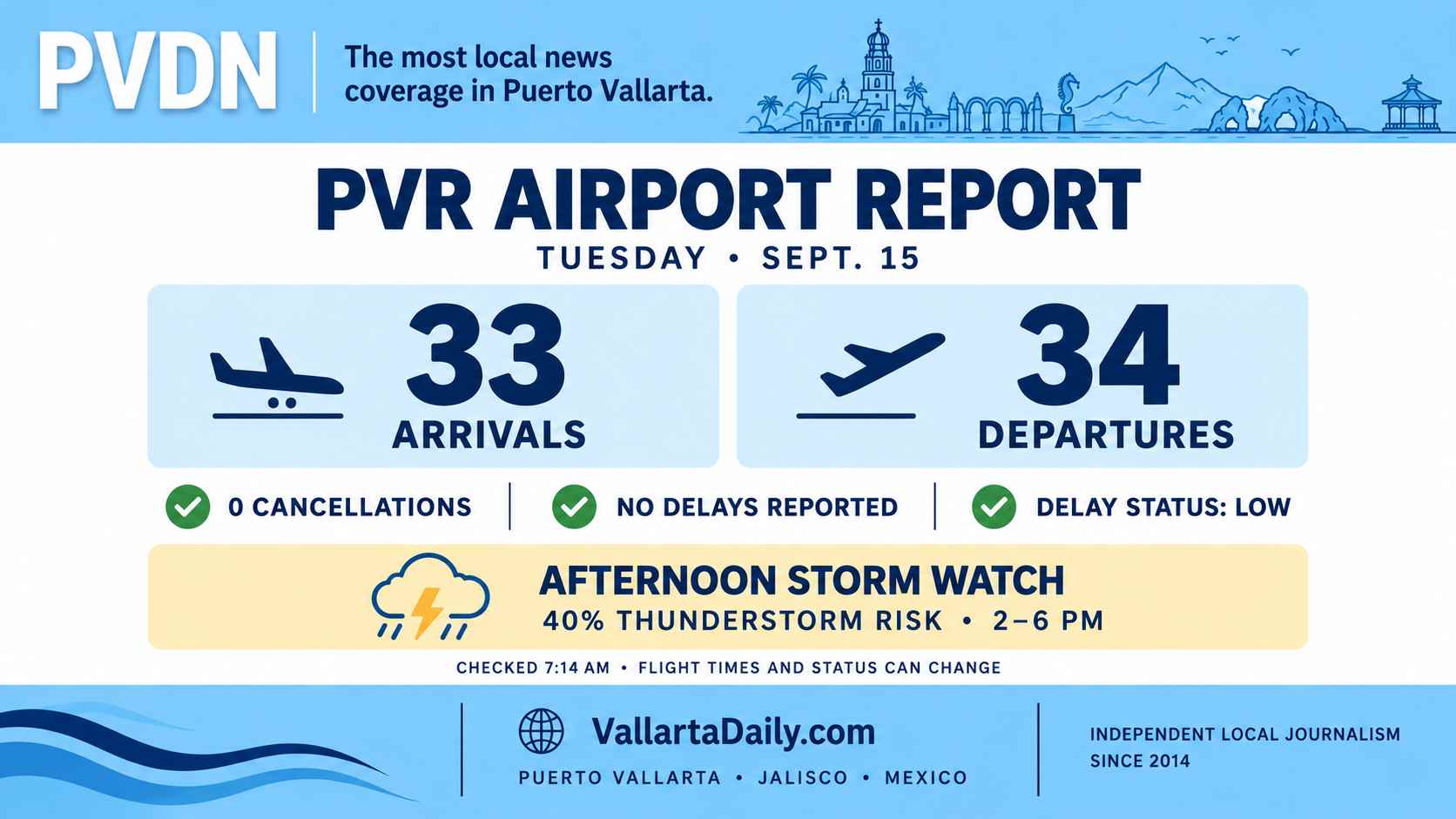
Current arrivals, departures, cancellations, and delays at the terminal are available through PVDN’s Puerto Vallarta Airport coverage.