Puerto Vallarta Wildlife Guide: What to Do When You See Monkeys, Iguanas, Crocodiles, or Sea Turtles
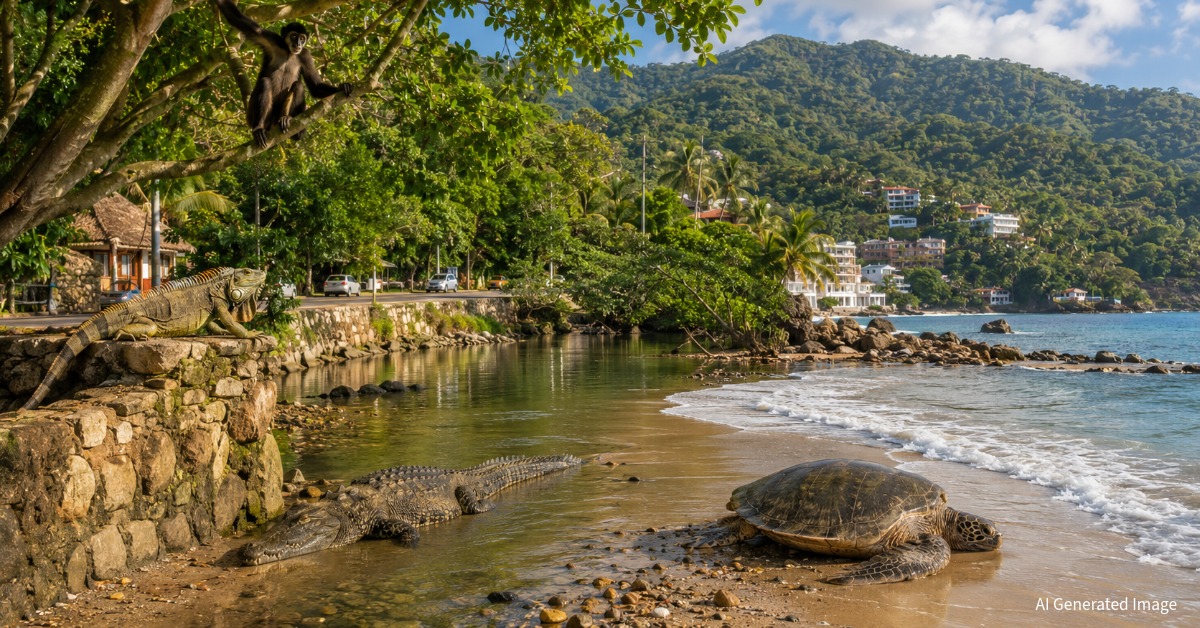
Puerto Vallarta’s wildlife does not stay neatly inside the jungle. It shows up on beach sand, river mouths, hotel-zone canals, residential walls, and the south shore highway, where one bad decision by a driver, swimmer, pet owner, or curious visitor can put both people and animals at risk.
That question became practical again after a garrobo was photographed in Puerto Vallarta, and videos circulated of a possible spider monkey along Federal Highway 200 near Mismaloya. The monkey reports should still be treated with caution. Publicly available reports describe the animal near the roadway in the Mismaloya area, but no official statement at publication time confirmed whether it was wild, escaped, or previously kept in captivity.
For residents and visitors, slow down, keep distance, do not feed or touch the animal, and call trained authorities if wildlife is injured, trapped, aggressive, in traffic, or being handled by people.
Puerto Vallarta sits between the Sierra Madre, Banderas Bay, estuaries, rivers, and urban development. That is why encounters with iguanas, crocodiles, sea turtles, birds, coatis, raccoons, and other animals are part of local life. The goal is not to turn every sighting into an emergency. It is important to know when to leave an animal alone and when to report it.
If you see monkeys near Mismaloya or Highway 200
Spider monkeys are native to parts of Mexico and prefer tropical forest and riparian vegetation, but a monkey walking near a tourist road is not a roadside attraction. It may be disoriented, stressed, injured, habituated to people, or separated from a safer habitat.
Drivers on Federal Highway 200 south of Puerto Vallarta should slow down without stopping in a travel lane, avoid crowding the animal with cars or motorcycles, and never try to lure it with food. Feeding makes animals bolder around traffic and people, and it can turn a short encounter into a repeat problem.
If the animal is on the pavement, on utility lines, near a crowd, or appears injured, report the location as precisely as possible. Use a landmark, a kilometer reference, a nearby business, beach access, or a GPS pin. A video can help authorities identify the species and location, but filming should not take precedence over road safety.
The Mismaloya corridor is a place where jungle, highway traffic, tourism businesses, and residential life meet quickly.
The large lizards people see on walls, rocks, in gardens, on vacant lots, and along roadsides are often called iguanas or garrobos locally. In most cases, they are simply moving through their territory, warming themselves, looking for food, or escaping dogs and people.
Do not pick them up. They can bite, scratch, whip with the tail, or drop from a wall into traffic when startled. Keep dogs away, give the animal an open escape route, and let it move on.
A garrobo on a quiet wall or garden path is not usually a call for authorities. A different response is needed if the animal is injured, trapped inside a building, tangled in netting, being harassed, or sitting in a dangerous road location. In those cases, take a photo from a safe distance and report the location.
Crocodiles are part of Vallarta’s coastal system
Crocodiles in Puerto Vallarta are most closely associated with estuaries, mangroves, canals, river mouths, and beaches near those water systems. El Salado, Boca de Tomates, the Marina and Hotel Zone canal areas, the Ameca River mouth, and other low-lying coastal zones are places where residents and visitors should heed warning signs and lifeguard instructions.
VallartaDaily has followed this issue closely, including coverage of Puerto Vallarta lifeguards training for crocodile encounters, the planned Puerto Vallarta Crocodile Patrol, and the role of Estero El Salado as a protected urban ecosystem.
If you see a crocodile from the beach, riverbank, bridge, or canal edge, back away and keep children and pets well clear of the water. Do not enter the water nearby, do not throw objects, do not attempt a selfie, and do not try to scare the animal away. If a crocodile is near swimmers, a busy beach, a public walkway, or a residential area, call 911 or Protección Civil and Bomberos Puerto Vallarta.
Pets are a common risk point. Dogs should be leashed near rivers, estuaries, canals, and beach areas where crocodiles have been reported. A dog splashing near the water can draw attention even when people believe the area looks calm.
Sea turtles need dark, quiet beaches
Sea turtle nesting and release activity is part of the Puerto Vallarta coast, especially during the warmer months and into late year. Mexico’s NOM-162-SEMARNAT-2012 sets national rules for protecting sea turtles in their nesting habitat, including measures for beaches where nesting occurs.
Anyone who finds a turtle nesting, hatchlings crossing the sand, tracks, or a possible nest should avoid touching the turtle, eggs, or hatchlings. Do not use flash photography. Do not shine a phone light or flashlight toward the turtle’s face. Do not move hatchlings to the water. The correct move is to keep your distance and notify lifeguards, hotel security (if you are on a resort beach), an authorized turtle camp, Protección Civil, or 911.
Puerto Vallarta has a long-running relationship with turtle protection, including local nest protection and controlled release efforts. VallartaDaily has covered the season through articles such as Sea Turtle Hatching Season in Puerto Vallarta Begins in July and more recent regional coverage of turtle recovery and conservation work.
Who to call for wildlife in Puerto Vallarta
For an immediate risk to people or animals, call 911. That is the best first call when wildlife is in traffic, on a busy beach, inside a home or business, visibly injured, trapped, or drawing a crowd.
Protección Civil y Bomberos Puerto Vallarta can be reached at 911 for emergencies. The municipal directory also lists the city’s main numbers as 322 178 8000 and 322 226 8080.
PROFEPA, Mexico’s federal environmental enforcement agency, receives environmental and wildlife complaints through 800 PROFEPA or 800 776 3372. Reports should include the location, what happened, photos or video if safely available, and whether the animal is injured, being held, sold, transported, or harassed.
Puerto Vallarta’s Dirección de Sostenibilidad Ambiental is the local environmental office for non-emergency municipal wildlife and environmental matters. Recent municipal records list the office in the Campo Verde area, with phone 322 688 2368 and email [email protected].
A few local rules that prevent most problems
Do not feed wildlife. That includes monkeys, crocodiles, iguanas, raccoons, coatis, birds, and turtles. Feeding changes animal behavior, brings them closer to roads and homes, and can make future encounters more dangerous.
Do not handle wildlife for photos. A calm-looking animal may be stressed, sick, or defensive. Handling also creates legal problems when protected species are involved.
Keep pets controlled. Dogs are often the first animals to be chased, cornered, or injured by wildlife. Leashes matter near canals, estuaries, river mouths, beaches, jungle roads, and vacant lots. It is worth mentioning that Puerto Vallarta does have leash laws.
Respect warning signs and beach flags. VallartaDaily’s regular beach coverage can help readers track general beach conditions, but the sign or flag posted at the specific beach is the instruction that matters when you arrive.
Report the behavior, not just the animal. A crocodile floating in an estuary is different from a crocodile beside swimmers. A garrobo on a wall is different from an injured lizard trapped in netting. A monkey in the tree canopy is different from a monkey walking along Highway 200. The details help authorities decide whether to observe, rescue, relocate, or leave the animal alone.
Puerto Vallarta’s wildlife is one of the reasons the region feels different from a built-out resort city. The responsibility that comes with that includes maintaining distance, slowing down, protecting pets and children, and letting trained professionals handle encounters that require intervention.