Mexico’s banks are shrinking their street-level footprint faster, and this is no longer just a story about convenience apps. It also involves security, geography, older customers, cash-heavy routines, and uneven access to financial services. The latest figures show a sharper drop in branches, but they also explain why branches are not disappearing at the same pace for everyone. The next phase will shape who still gets in-person banking and who is pushed online.
A smaller branch map
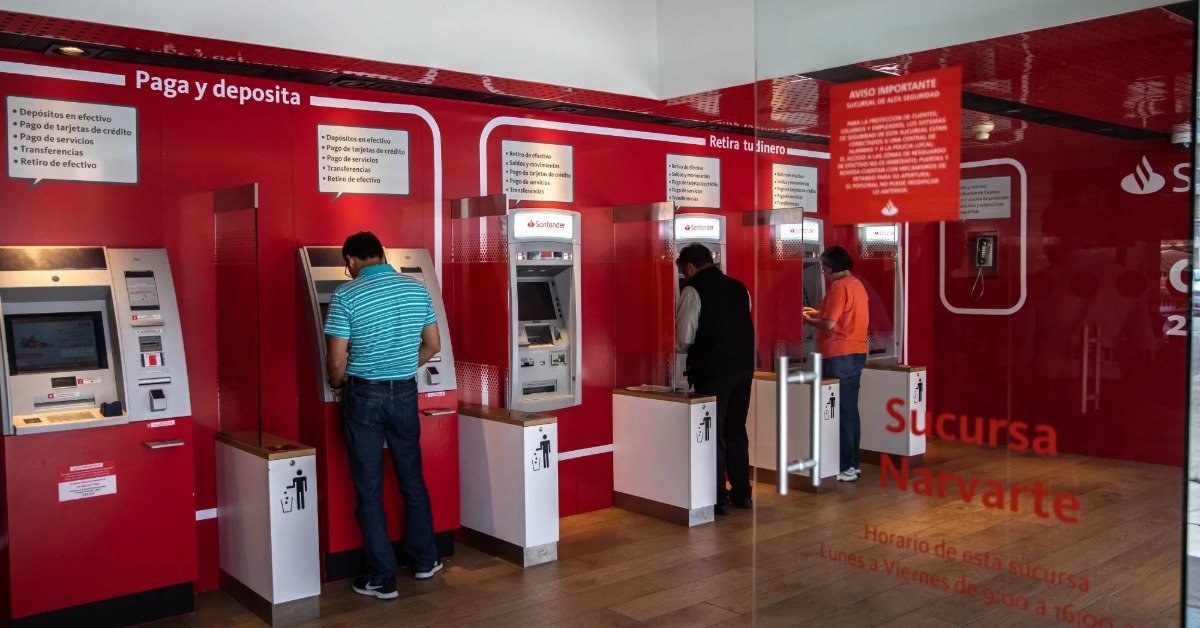
Mexico’s banking map is getting thinner. By the end of 2025, the country had 11,486 bank branches in operation, down 357 from December 2024. That is a meaningful drop in a business that once treated branches as the main marker of reach and trust. The decline was sharpened by the liquidation of CIBanco, which removed 205 branches from the system in one step. Even without that factor, the direction is clear. Branch closures are no longer a slow background trend. They are becoming a more visible part of banks’ network reshaping.
The pullback is not happening at the same speed everywhere. Among the seven largest banks in Mexico, the combined network fell to 7,032 branches at the end of 2025, down 186 from a year earlier. BBVA, Santander, Banamex, and HSBC all reported smaller footprints than in 2024. Banorte moved the other way and expanded. That matters because it shows the story is not simply that branches are obsolete. It is that banks are becoming more selective about where a branch still makes business sense.
Why banks are doing this
The first driver is simple. Digital banking now handles a growing share of everyday tasks that once required a visit to a branch. Transfers, bill payments, card controls, account management, and many service requests can now be done on a phone. BBVA México said it reached 27 million digital clients in 2025, representing 80 percent of its total customer base. It also said 73 percent of its transactions were completed through digital channels. That kind of shift changes the economics of keeping large physical networks open.
There is another reason, and it is less discussed. Banks also have to think about security. Some executives say certain branches are being closed or relocated because they cannot guarantee safe working conditions for employees, or because customers are using those sites less as commercial activity moves elsewhere. That means closures are not only about technology. They are also about risk, operating costs, and the concentration of banking activity in places where volume is stronger and conditions are more predictable.
Why branches still matter
The digital shift does not mean branches have stopped mattering. In 2024, 62.8 percent of adults in Mexico used a bank branch at least once during the year, according to the national financial inclusion survey. That is a high share for a market often described as rapidly digitizing. The same survey found 77.6 percent used some form of financial infrastructure in the previous year. The message is straightforward. In-person service still has a real role, even as apps become the default for routine tasks.
That matters most for customers whose needs are not routine. Branches are still important for people making large transfers, resolving account issues, completing identity checks, signing documents, or managing business cash. They also matter for older users and for people who do not fully trust or understand digital channels. For foreigners living in Mexico, these issues can surface in practical moments such as document updates, account reviews, mortgage paperwork, or compliance checks. The banking app may be enough most days, but it is not enough for every problem.
Access is more than a branch count
The national total is falling, but that does not mean the system has lost all physical reach. Using CNBV data, BBVA Research found that 78.8 percent of the population was within two kilometers of a branch in 2024. That suggests access remains broad in much of urban Mexico, even with fewer outlets. The same research found 91.5 percent of the population was within four kilometers of at least one financial access point when other channels were included. In other words, the branch network is shrinking inside a wider ecosystem of ATMs, correspondents, and digital tools.
That distinction is important because financial inclusion is no longer measured only by how many branches survive. It is increasingly about whether people can reach the kind of service they actually need. A customer in a well-connected city may barely notice one fewer branch if an ATM, a correspondent, and a strong mobile app are nearby. A customer in a smaller town may feel the loss immediately if the branch is the only place to solve more complex issues. The next stage of Mexican banking looks less like the end of the branch and more like a sharper divide between customers who can move online easily and those who cannot.
What comes next
Banks are unlikely to abandon branches altogether. The more likely outcome is a smaller, more specialized branch network, backed by heavier use of apps for basic transactions and a greater focus on high-traffic, lower-risk locations. That model may work well in connected cities. It is a harder fit in places where cash remains central, internet quality is uneven, or customers still want a person across the desk when something goes wrong.
For readers in Mexico, the real question is not whether branches will continue to close. They probably will. The more important question is who loses practical access first. That is where this story moves from a banking trend to a daily life issue.