A rare-disease diagnosis in Mexico can take years, not because doctors don’t care, but because the system often can’t confirm what’s wrong fast enough. A new breakdown shows that just 25 public hospitals in 16 states are accredited for certain rare-disease pathways, leaving many families to navigate referrals, travel, and waitlists. The gap lands hardest outside major hubs, where access can hinge on paperwork as much as medicine. What does “accredited” actually mean, and why does that label shape who gets timely care?
A February 2026 article by Excélsior states that just 25 public hospitals in 16 states are accredited to treat rare diseases across Mexico, framing the issue as a national capacity bottleneck that deepens delays and inequities.
The strongest independent confirmation of the “25 hospitals / 16 states” figure is a 2022 legislative document published in the Gaceta Parlamentaria of the Cámara de Diputados. It includes a map of states with at least one accredited center and a table listing 25 accredited public providers across 16 federal entities.
A critical nuance emerges from that same table: the accredited intervention is labeled “Enfermedades Metabólicas y Lisosomales” (metabolic and lysosomal diseases). In other words, the documented “25 hospitals” are not a comprehensive list of all public facilities that treat any rare condition in Mexico. They appear to be the accredited network for a specific subset of low-prevalence disorders where financing and protocols require formal accreditation.
What “accredited” means in this context
In Mexico, “accreditation” in this debate is not a general statement that a hospital has specialists who can treat rare diseases. It is closer to a formal authorization tied to financing and defined benefit packages—the kind that determines whether a facility can deliver and bill for certain high-cost interventions under federal public funding mechanisms.
Two public documents help clarify how narrow and program-linked this can be. A 2022 “Programa Anual de Acreditación” produced by the Dirección General de Calidad y Educación en Salud lists specific accredited interventions under “FPGC,” including “ENFERMEDADES LISOSOMALES Y SÍNDROME DE MORQUIO” for defined facilities and scheduled evaluation windows.
A separate long-form explainer (focused on metabolic hereditary disorders and lysosomal diseases) describes accreditation as a process involving documentation and on-site verification, framed as necessary for hospitals to access financing to treat these patients.
This matters for interpreting the news claim. A hospital can have internal expertise in a rare condition, yet still fall outside the small “accredited” network that unlocks diagnosis-to-treatment pathways for certain disorders—especially when long-term enzyme replacement therapies and specialized monitoring are involved.
Where the 25 accredited hospitals are located
Across sources, the geographic pattern is consistent: the accredited network is concentrated, with one state accounting for almost a quarter of the sites. A widely cited count explains the distribution as follows: six accredited hospitals in Guanajuato; two each in Mexico City, Jalisco, Michoacán, and Veracruz; and one each in Aguascalientes, Colima, Chiapas, Chihuahua, Hidalgo, State of Mexico, Nayarit, Puebla, San Luis Potosí, Sinaloa, and Tamaulipas.
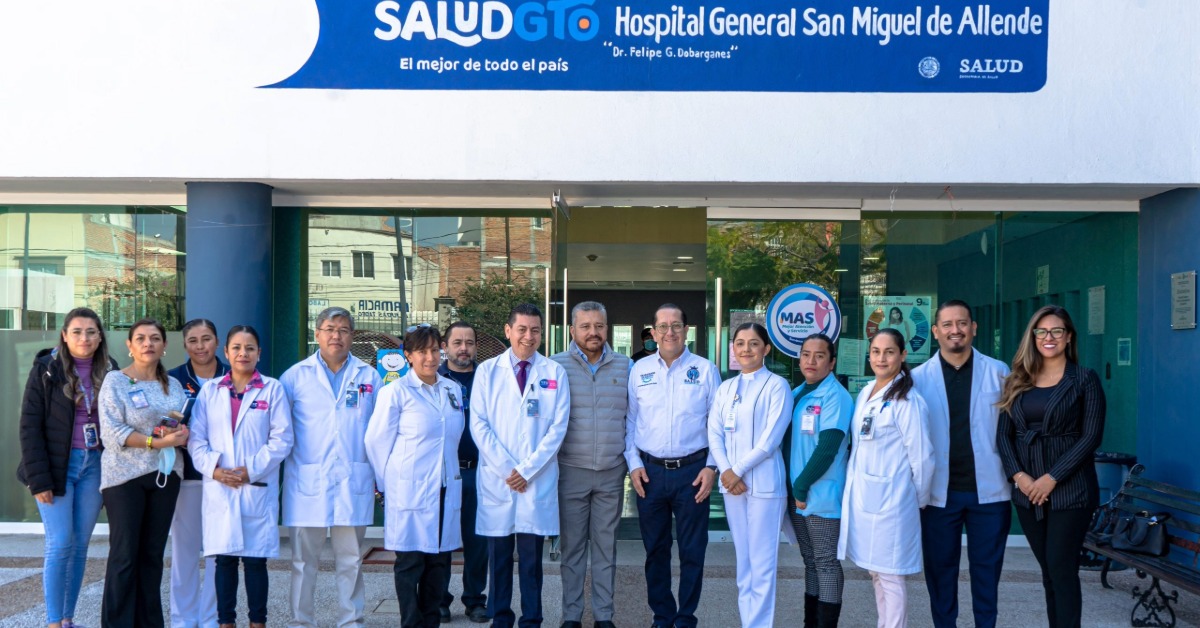
The legislative table that underpins the “25” figure identifies the providers as the accredited public network for metabolic and lysosomal diseases, including (as listed): Hospital Centenario Miguel Hidalgo; Hospital Regional Universitario; Centro Regional de Alta Especialidad de Chiapas; Hospital Infantil de Especialidades de Chihuahua; Hospital Infantil de México Federico Gómez; Instituto Nacional de Pediatría; Hospital General Celaya; Hospital General de León; Hospital General de Acámbaro; Hospital General San Luis de la Paz; Hospital General San Miguel de Allende; Hospital Regional de Alta Especialidad del Bajío; Hospital del Niño DIF Hidalgo; Hospital Civil de Guadalajara Fray Antonio Alcalde; Hospital Civil de Guadalajara Juan I. Menchaca; Hospital Regional de Alta Especialidad de Ixtapaluca; Hospital General Dr. Miguel Silva; Hospital Infantil de Morelia Eva Sámano de López Mateos; Hospital Civil Dr. Antonio González Guevara; Hospital para el Niño Poblano; Hospital Central Dr. Ignacio Morones Prieto; Hospital Pediátrico de Sinaloa; Hospital Infantil Dr. Alberto López Hermosa; Centro de Alta Especialidad Dr. Rafael Lucio; and Hospital de Alta Especialidad de Veracruz.
The practical implication of this map-and-table geography is straightforward: when a needed therapy or diagnostic pathway depends on an accredited provider, patients outside these 16 entities face travel, waiting lists, and administrative friction—and those burdens rise sharply when care requires weekly or frequent infusions.
Referral pressure across public systems
The 2026 news framing emphasizes that the concentration of accredited sites increases referral pressure on high-specialty centers, including institutions that serve people with social security coverage.
For people covered by IMSS, tertiary referral often runs through Unidades Médicas de Alta Especialidad and national medical centers in Mexico City. The Centro Médico Nacional Siglo XXI is described in IMSS materials as a complex that houses multiple specialty hospitals, including a pediatric UMAE. A separate IMSS institutional note describes the Hospital de Especialidades at this complex as a reference hospital and reports tens of thousands of out-of-state transfers annually—an indicator of cross-state demand that aligns with “referral pressure” concerns.
The same centralization dynamic appears at the Centro Médico Nacional La Raza, where IMSS listings explicitly identify UMAE facilities within the complex.
For federal workers covered by ISSSTE, the structure is also tiered, with third-level care concentrated in relatively few sites.
A separate constraint runs underneath both referral systems: the availability of genetics expertise. A peer-reviewed assessment of genetic counseling needs in Mexico highlights uneven exposure to training and geographic concentration of medical geneticists, with Mexico City standing out relative to other states. This supports the broader point that even when referral routes are documented on paper, a lack of specialist capacity can delay confirmation and treatment initiation in practice.
The diagnostic odyssey and why limited accredited capacity can magnify it
Rare diseases are typically defined as conditions affecting fewer than 5 in 10,000 people in the European Commission’s framework, a commonly used policy threshold in Europe. Even under well-resourced health systems, diagnosis often takes years, a pattern documented in large-scale European survey work.
Mexico-specific data suggest longer timelines. An open-access analysis of the Mexican Rare Disease Patient Registry (launched in 2022 and based on 144 respondents in its first-year dataset) reports a mean time to clinical diagnosis of 8 years and an average of six medical specialists consulted. It also reports low rates of genetic referral and genetic/molecular testing, despite strong patient interest in testing when available.
These findings map cleanly onto the public-facing “diagnostic odyssey” description used in Mexican reporting—years of consultations, delayed confirmation, and delayed entry into the treatment system. They also help explain why a small accredited network can matter beyond geography. If a disorder’s treatment pathway depends on moving through an accredited center—because protocols, infusion capacity, or reimbursement are linked to accreditation—then delayed diagnosis and limited accredited capacity can reinforce one another. (This is an inference based on the combination of registry findings, accreditation-linked program design, and the geographic concentration of accredited sites.)
What has changed since the “25 hospitals” figure first appeared
The “25 hospitals” figure is not new. It appears as early as 2022 in both journalism and a legislative document, and it continues to be repeated in 2026 coverage. That continuity is notable because the financing and governance landscape around care for people without social security coverage has changed since then.
In May 2023, a decree published in the Diario Oficial de la Federación was reported to have extinguished INSABI and integrated its functions into IMSS-Bienestar. For readers trying to reconcile older sources that describe accreditation through INSABI-era financing, that transition is essential context. It suggests that references to “INSABI funding” in older reporting may now translate, operationally, into IMSS-Bienestar-era coordination for the uninsured—though the “accredited-site bottleneck” may persist regardless of the label.
There are also signs of attempted expansion. In mid-2023, one report described pre-accreditation work aimed at adding an accredited hospital in Guerrero, which would have increased the count of states with at least one accredited site. In 2025, the Chiapas state health authority announced the launch of an adult lysosomal-disease clinic based at a major general hospital in Tuxtla Gutiérrez—an example of capacity-building that may or may not change the federal “accredited” list used in earlier counts.
The timing of the 2026 article also aligns with Rare Disease Day, observed each year on February 28 (or February 29 in leap years), which tends to concentrate public attention on diagnostic delays and access gaps.