Puerto Vallarta, Jalisco, July 22, 2026 — Puerto Vallarta environmental officials reported that six crocodiles of different sizes were found dead over a two-week period, including five within the municipality and one in neighboring Bahía de Banderas.
At least one case is well documented. On June 19, a 3.43-meter adult male washed onto the beach at Los Tules in the Hotel Zone. The crocodile carried identification tag 569 from the Estero El Salado monitoring program and was estimated to be 45 to 50 years old. It had apparently drifted in the sea for two or three days before reaching shore.
A visual inspection found no mutilation, puncture wounds, or other obvious evidence of violence. The carcass was already decomposing and was buried after municipal personnel notified the Federal Environmental Protection Agency, known as Profepa. No necropsy was conducted, leaving natural illness, an internal injury and a possible vessel strike among unconfirmed possibilities.
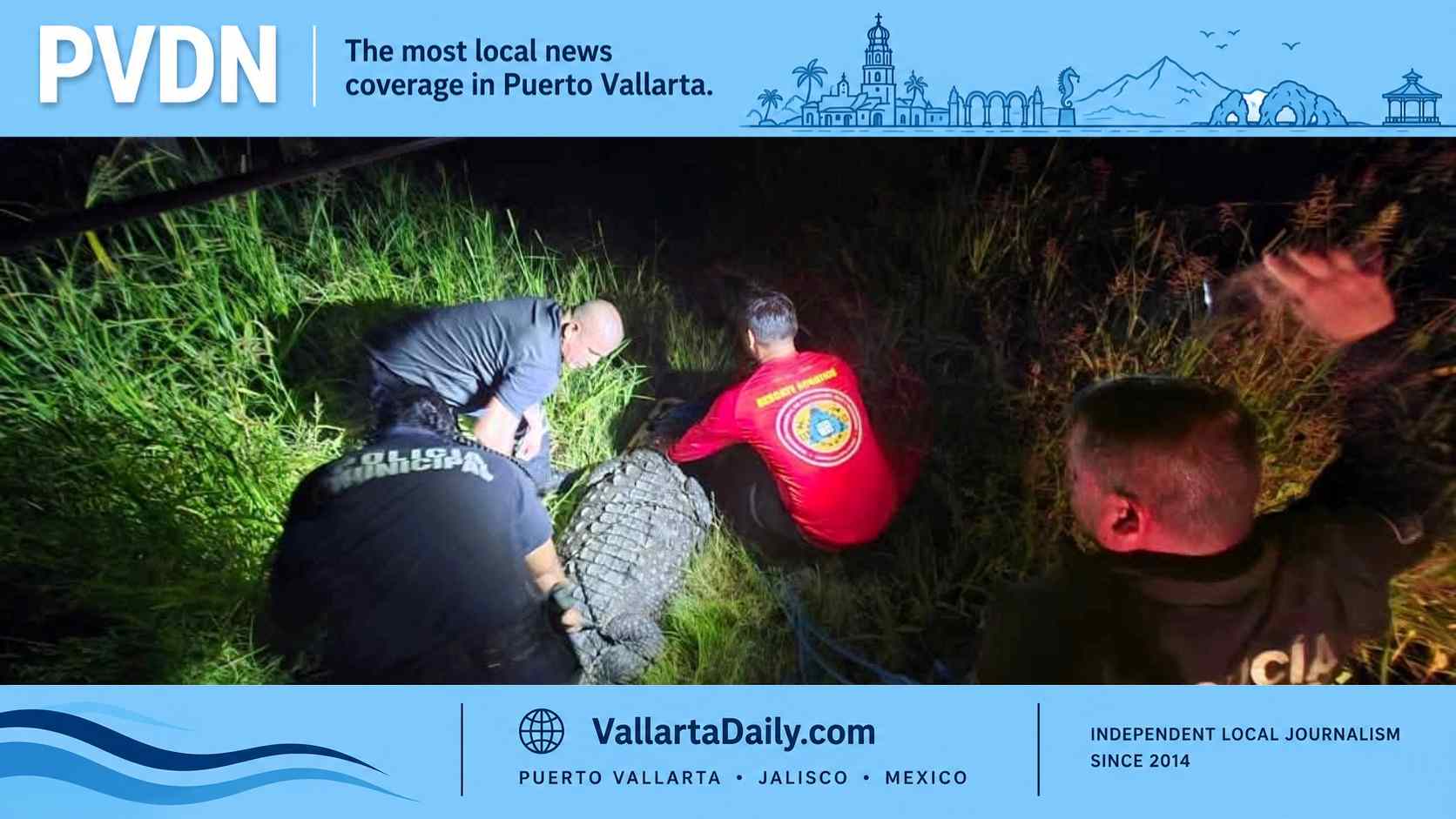
A July 2 discovery in Nuevo Nayarit appears to fall near the other end of the reported two-week window, although no agency has publicly linked it to the reported group of six. A 2.8-meter male was found in a stormwater canal near Jarretaderas that connects with the Río Ameca. Inspectors reported a hook around its body, prompting a possible poaching inquiry. Specialists said currents and tides may have moved the carcass from another location.
That animal was found six days after a crocodile killed a 28-year-old man near Marina Vallarta. The timing may fuel concern about retaliation, but no evidence has connected the Nuevo Nayarit death to the June 26 attack.
Recent reports also identify a smaller crocodile found near offices of the federal Environment and Natural Resources Secretariat. They do not provide the other Puerto Vallarta locations, the dates when those animals were recovered, their sizes, whether they carried identification tags, or whether tissue samples were preserved.
Officials have raised territorial fighting linked to shrinking habitat as one possible explanation. That theory may fit some deaths, but it does not explain the Los Tules animal, which had no visible wounds.
Researchers at the University of Guadalajara say urban growth and changes in land use have altered crocodile movement around wetlands, rivers and beaches. The animals increasingly pass through developed areas after losing older routes between mangroves, estuaries and waterways. That helps explain more frequent encounters, but it does not establish why six animals died in a short span.
CUCosta researchers estimate fewer than 1,000 crocodiles live along the coast between Puerto Vallarta and Barra de Navidad. Vallarta Daily previously reported that the estimate challenges claims of an uncontrolled population boom. Six deaths alone do not establish a population decline, yet the number carries more weight when the regional population is limited, and officials cannot explain most of the losses.
The American crocodile, Crocodylus acutus, is listed under special protection in Mexico’s NOM-059 environmental standard. The designation applies to species that could become threatened when harmful pressures reduce their viability.