Fifteen years after the Deepwater Horizon disaster, scientists are still finding signs of damage in the Gulf of Mexico. A long-running acoustic study followed whales and dolphins for a decade after the spill. What it found raises new questions about the health of deep-water ecosystems, the limits of restoration, and the way chronic pollution affects a sea shared by Mexico, the United States, and Cuba.
A disaster still echoing underwater
Fifteen years after the Deepwater Horizon oil spill, the Gulf of Mexico is still giving scientists new evidence of long-term damage. A recent scientific study found major declines in several groups of toothed whales and dolphins in the decade after the 2010 disaster.
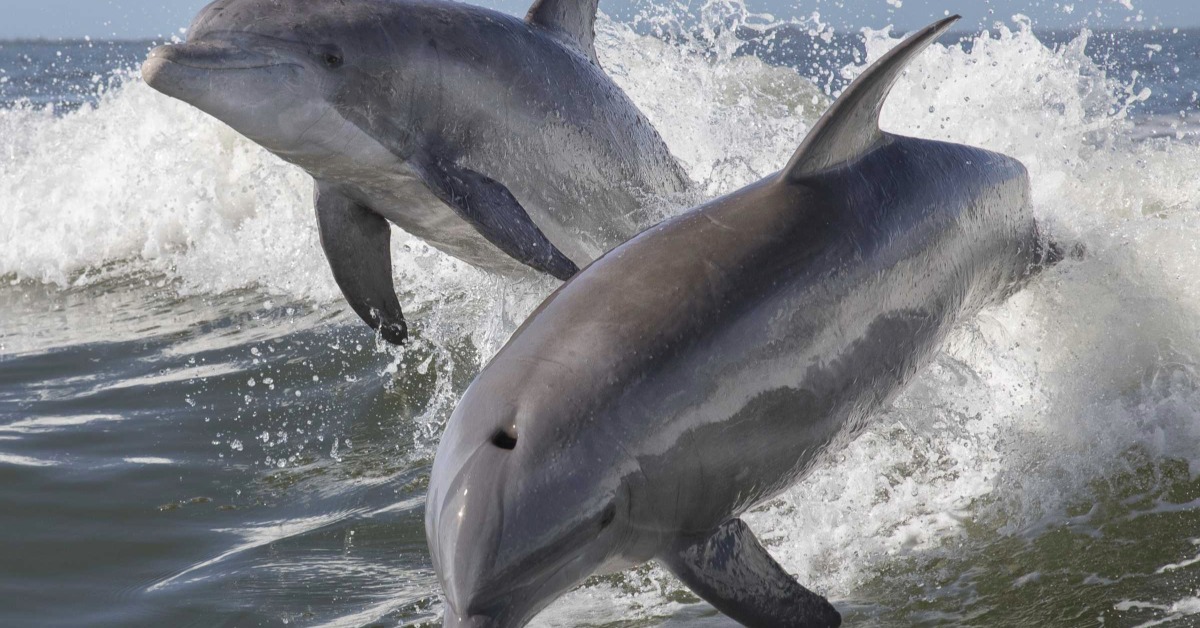
The study tracked marine mammals in deep waters using passive acoustic monitoring, a method that listens for the clicks and calls animals use to feed, navigate, and communicate. Researchers found declines in density across seven of eight monitored groups of toothed whales, with reductions ranging from 13% to 83%.
The largest drops were found among beaked whales, especially Gervais’ beaked whales. The study also documented declines among sperm whales and smaller dolphin groups. These animals live far offshore and are rarely seen by most people, but they are part of the Gulf’s larger ecological system.
The findings do not prove that the spill alone caused the decline. Scientists were careful on that point. The study found a strong pattern that is consistent with long-term impacts from Deepwater Horizon, while also noting that other pressures may be involved.
That distinction matters. The Gulf of Mexico is not affected by a single problem. It faces oil and gas activity, chronic pollution, underwater noise, ship traffic, fishing pressure, climate change, and changes in freshwater flow. The spill was one major shock inside a system already under stress.
For Mexico, this is not only a U.S. environmental story. The Gulf is a shared sea. Its waters connect communities, fisheries, wildlife, oil fields, and coastal economies across borders. What happens in one part of the Gulf can carry consequences far beyond the place where damage first appears.
What the study found
The research focused on odontocetes, the scientific term for toothed whales. This group includes sperm whales, beaked whales, dolphins, and related species. Unlike baleen whales, toothed whales use echolocation to hunt and navigate.
That behavior helped researchers study them. By placing listening devices underwater, scientists could record their sounds over long periods. Those recordings enabled researchers to estimate changes in animal density over several years.
The monitoring began shortly after the Deepwater Horizon spill in April 2010. The acoustic array was later maintained for more than a decade. This allowed scientists to compare long-term trends rather than only short-term effects.
The study found that Gervais’ beaked whales declined by as much as 83% at monitored deep-water sites. Cuvier’s beaked whales also declined sharply in some locations. Sperm whales dropped by up to 31% at key northern Gulf sites. Smaller high-frequency dolphin groups declined by up to 43%.
These numbers are not simple counts of every animal in the Gulf. They are density estimates at monitoring sites. Still, the pattern was broad enough to raise concern. The declines were observed across different animal groups and in different parts of the monitored area.
The study also found that the declines were not limited to places inside the visible surface oil slick. Some were found outside the surface footprint. That is important because the Deepwater Horizon spill did not only spread oil on the surface.
The disaster also released oil and gas deep underwater. Dispersants were injected near the wellhead to break up the oil. Scientists have long debated how those response actions affected deep-sea life.
For animals that spend much of their time below the surface, the damage may not be visible from shore. That is one reason deep-water monitoring is so important. It gives scientists a way to detect change in places humans rarely see.
How scientists listened to the Gulf
Studying whales and dolphins in deep water is difficult. Many species spend long periods underwater. Some surfaces only briefly. Weather, distance, darkness, and cost can limit ship-based surveys.
Passive acoustic monitoring helps solve part of that problem. It uses underwater instruments to record sound over weeks, months, or years. The devices do not chase or disturb animals. They simply listen.
Toothed whales are well-suited for this kind of study because many produce distinctive clicks. These sounds can help researchers identify species or groups. They can also help estimate how many animals are likely to use an area.
The method is not perfect. Animals may be silent at times. Some sounds are easier to detect than others. Ship noise, wind, and other background sounds can interfere. Researchers must use models and careful assumptions to turn recordings into density estimates.
Still, acoustic monitoring offers something that visual surveys often cannot. It provides long-term, repeated observations in remote parts of the ocean. That matters for animals with long lives and slow reproductive cycles.
The study used long-term monitoring stations in the Gulf. Some were near the Deepwater Horizon wellhead. Others were farther away. Some were in deep-water areas, while others were closer to the shelf.
This design allowed researchers to look for patterns across space and time. It also helped them compare areas inside and outside the surface oil footprint.
The findings showed steady declines in several groups over the 2010 to 2020 period. In some places, certain groups appeared to increase. But the broader pattern showed losses in most monitored toothed-whale categories.
The study’s strength is its time span. A single year of data can be misleading. Marine animals move in response to prey, seasons, and ocean conditions. A decade of listening gives scientists a stronger picture of whether changes are temporary or persistent.
The limits of what the study can prove
The study does not claim that Deepwater Horizon was the only cause of the decline. It also does not claim that every animal died because of oil exposure. The Gulf is too complex for that kind of simple answer.
Scientists lacked strong pre-spill baselines for many offshore species. That makes it difficult to prove exactly how many animals would have been present without the spill. This is a common problem in environmental disasters. The most important data is often the data that was not collected before damage occurred.
The researchers found that the pattern of decline was consistent with Deepwater Horizon impacts. They also found that the declines exceeded earlier expectations from damage assessments. That suggests the offshore impact may have been larger or longer-lasting than earlier models predicted.
This is an important point for readers who remember the spill as a cleanup story. Much of the public attention in 2010 focused on oil-coated birds, damaged beaches, and fishing closures. Those were serious impacts. But deep-water damage is harder to see and harder to explain.
Whales and dolphins can suffer in ways that do not show up immediately. Oil exposure may affect lungs, immune systems, reproduction, and survival. Food webs can also change. If prey species decline or move, predators may follow or struggle.
Movement is another possible factor. Some animals may have shifted away from affected areas. That would still matter. A decline at a monitoring site may not always mean the same number of deaths. It may mean animals no longer use an area as they once did.
Even so, a long-term loss of habitat use can be serious. Marine mammals depend on reliable feeding and breeding areas. If those areas become less suitable, the effects can spread across generations.
The careful wording of the study should not be mistaken for a weak finding. In science, caution is part of credibility. The study shows a measurable, long-running decline. It also explains why causation is difficult to prove with complete certainty.
How the 2010 spill changed the Gulf
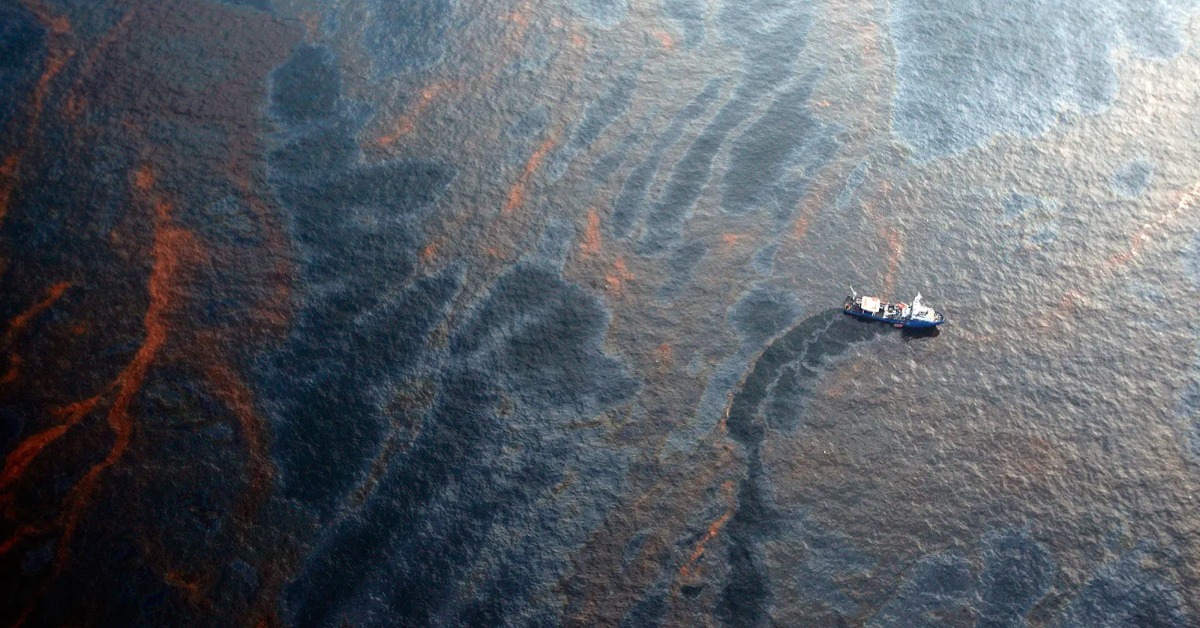
The Deepwater Horizon disaster began on April 20, 2010, when an explosion occurred on a drilling platform off the coast of Louisiana. Eleven workers were killed. The rig later sank, and oil flowed from the damaged Macondo well for 87 days before it was capped.
The spill became the largest offshore oil spill in U.S. history. Estimates differ depending on whether they refer to oil released, oil recovered, or oil that entered the Gulf. Official restoration materials describe roughly 134 million gallons of oil spilling into the Gulf.
The scale was historic, but the location also mattered. The blowout happened in deep water, more than a kilometer below the surface. That made the response more difficult and created uncertainty about how oil moved through the water column.
A large surface slick spread across the northern Gulf. At the same time, oil and gas also moved below the surface. Deep-sea ecosystems, which are rarely visible to the public, became part of the disaster.
The spill affected more than beaches and fishing grounds. Assessments later identified injuries to fish, bottom-dwelling organisms, birds, sea turtles, marine mammals, and nearshore habitats. Marine mammals were among the most difficult animals to assess.
NOAA and partner agencies found that dolphins and whales were exposed through several routes. They could inhale contaminated air, swim through contaminated water, ingest contaminated prey, or encounter oil in other forms.
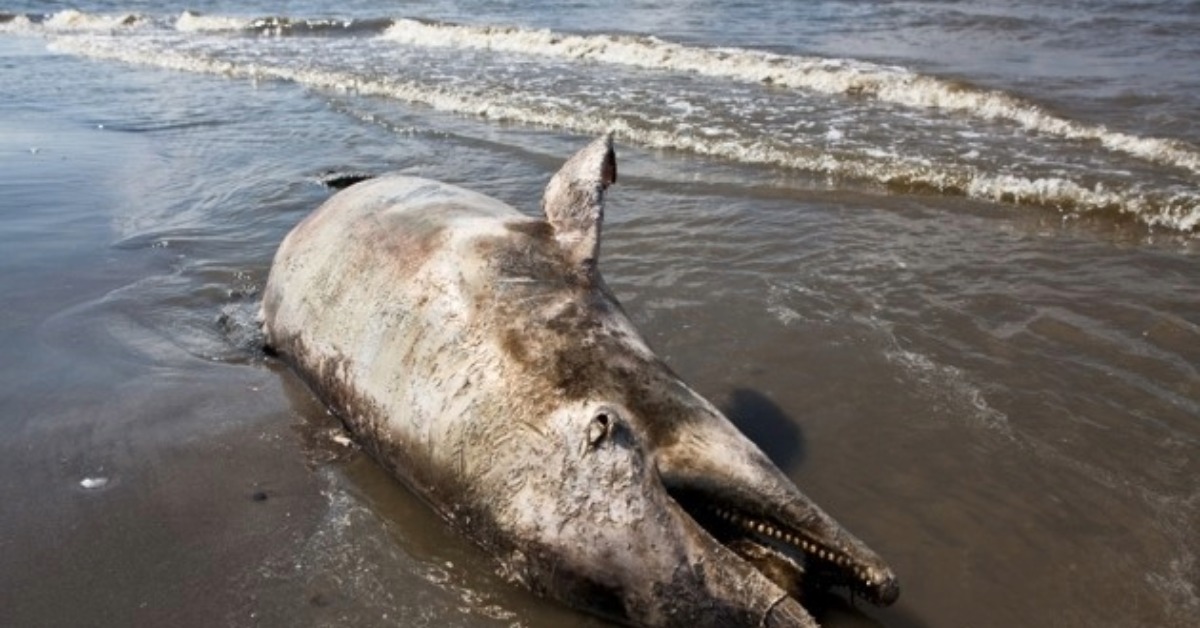
The damage was not limited to offshore species. Coastal bottlenose dolphins also showed severe health problems after the spill. Earlier studies linked the spill to chronic poor health, reproductive failure, and increased mortality in some dolphin populations.
The new acoustic study adds another layer. It suggests that offshore whale and dolphin populations may have faced longer and deeper impacts than earlier estimates captured.
Mexico’s connection to a northern Gulf disaster
The Deepwater Horizon well was off the coast of Louisiana, but the Gulf of Mexico is one connected body of water. Currents, storms, marine life, and pollution do not follow political borders.
Mexico has a long history of offshore oil and marine risk. The Ixtoc I spill in the Bay of Campeche began in 1979 after a well blowout. It became one of the largest oil spills ever recorded. For many Mexicans, it remains a reminder that major offshore accidents are not distant events.
The Gulf also supports Mexican fishing communities, ports, tourism areas, and oil infrastructure. States along the Gulf and in the Yucatán region depend on marine health in both direct and indirect ways. Even people living far from the coast are connected through seafood, energy, shipping, and climate.
That is why the role of Mexican scientists in Gulf research matters. A UNAM marine scientist involved in the international research effort has warned that the Gulf should be understood as a single shared ecosystem. Chronic pollution, underwater noise, ship traffic, and changing ocean conditions affect the system as a whole.
This is especially relevant now, as Mexico continues to face public concern over oil contamination in Gulf waters and along Gulf beaches. Recent Mexican spill reports are separate from the Deepwater Horizon spill, but they point to the same broader issue. Hydrocarbon pollution remains a continuing risk.
For international residents in Mexico, the story also touches on everyday concerns. Many choose Mexico for its coastlines, wildlife, seafood, and outdoor life. The health of marine ecosystems is not an abstract issue. It affects local economies, food systems, tourism, and the character of coastal communities.
The Gulf is often treated as a resource zone. It is a place for drilling, shipping, fishing, and development. But it is also a living system. The decline of whales and dolphins is one sign of how much pressure that system can absorb before damage becomes visible.
The pressures did not end with the spill
The Deepwater Horizon spill was a sudden disaster. But the Gulf also faces slower forms of damage. These can be harder to measure and easier to ignore.
Chronic pollution is one of those pressures. Small leaks, runoff, industrial discharge, vessel activity, and coastal development can add stress over time. Each source may seem limited on its own. Together, they can change water quality and habitat conditions.
Underwater noise is another concern. Whales and dolphins depend on sound. They use it to find food, communicate, avoid danger, and maintain social bonds. Ship traffic, seismic surveys, drilling activity, and other human noise can interfere with those signals.
For animals that hunt by sound, a noisier ocean can mean a harder life. They may need to change where they feed. They may spend more energy. They may communicate less effectively. In some cases, intense noise can cause injury.
Ship strikes also remain a threat to some whales. A collision with a large vessel can kill or seriously injure an animal. This risk grows where shipping routes overlap with important whale habitat.
Fishing pressure can affect whales and dolphins in different ways. Some animals may become entangled in gear. Others may be affected when prey species decline or when food webs shift.
Climate change adds another layer. Warmer water, changing currents, stronger storms, and altered oxygen levels can affect marine species. These changes can move prey, disrupt breeding conditions, and reshape habitat.
The study did not try to measure every one of these pressures. That was outside its scope. But the researchers noted that these factors deserve further investigation.
That is part of the larger lesson. The question is not only whether one spill caused one decline. The question is how a major spill interacts with a Gulf already under pressure.
Why whales and dolphins signal wider ecosystem health
Whales and dolphins are often described as charismatic species. That is true, but it can make them sound more like symbols than as working parts of an ecosystem. In the Gulf, they are both.
Many toothed whales are top predators. Their condition can reveal changes lower in the food web. If prey declines, habitat shifts, or pollution affects reproduction, these animals may show the effects.
Marine mammals also help move nutrients through the ocean. When they feed, dive, breathe, and defecate, they help cycle nutrients across depth layers. This process can support plankton growth and wider productivity.
Their bodies also store carbon. Their movements connect deep and surface systems. Their deaths can even feed deep-sea organisms. In a healthy ocean, large marine mammals are not decorative. They are part of the machinery.
That is why long-term declines deserve attention. A drop in whale or dolphin density may indicate changes that are difficult to observe directly. It may reflect shifts in prey, water conditions, exposure to pollution, or habitat quality.
The animals in this study are especially important because many live far offshore. They are not the dolphins tourists see near beaches. They are deep-water species that depend on parts of the Gulf most people will never visit.
Their remoteness can make their decline easier to overlook. It can also make recovery harder to measure.
A population that reproduces slowly may need many years to rebound. Some whales have long lifespans and long gaps between calves. If adult survival or reproduction drops, the full effect may take years to appear.
This is one reason the new study matters. It shows that damage from a disaster can remain visible long after the oil disappears from the surface.
Restoration and the missing baseline
After Deepwater Horizon, a major legal and scientific process began. The Natural Resource Damage Assessment evaluated injuries to public resources and helped shape restoration plans. A later settlement with BP allocated billions of dollars for restoration.
That process supported many projects across the Gulf. It also funded science, monitoring, habitat work, and recovery efforts. But restoration is not the same as turning back time.
One challenge is knowing what the Gulf would have looked like without the spill. For some coastal habitats, the damage was visible. For offshore whales and dolphins, the picture was less complete.
Before 2010, scientists lacked a comprehensive long-term acoustic baseline for many deep-water species. That limited the ability to compare post-spill conditions with a clear pre-spill record.
The new study helps fill that gap, but it began after the disaster started. That means it can show post-spill trends with unusual detail. It cannot fully reconstruct the Gulf as it was before the blowout.
This is a lesson for future environmental policy. Monitoring cannot begin only after a disaster. Baseline data allow scientists to measure change with confidence.
For Mexico and its Gulf neighbors, long-term monitoring is not a luxury. It is basic infrastructure for environmental protection. Countries cannot manage what they do not measure.
NOAA-supported projects now include broader passive acoustic monitoring across U.S. and Mexican Gulf waters. That kind of work can help scientists understand seasonal, annual, and decadal trends. It may also help separate spill impacts from other pressures.
Better monitoring will not prevent every accident. But it can make damage harder to hide, easier to measure, and more likely to guide recovery.
A longer memory for marine damage
The Deepwater Horizon spill is often remembered as a disaster of 2010. The new findings suggest it should also be understood as a long-term ecological event.
The oil stopped flowing after 87 days. The lawsuits moved through the courts. Restoration money was assigned. Beaches reopened. Fishing resumed in many areas. Public attention moved on.
The whales and dolphins did not move on in the same way. The study shows declines lasting across a decade in several monitored groups. That does not mean the Gulf is dead. It does mean the recovery story is more complicated than many people were led to believe.
This is especially important for a region where oil remains central to the economy. Mexico, the United States, and other Gulf stakeholders continue to rely on offshore energy, shipping, and coastal development. These activities bring jobs and revenue. They also bring risk.
The lesson from Deepwater Horizon is not only that accidents happen. It is that the full cost of accidents can take years to understand.
For coastal residents, tourists, retirees, and expats in Mexico, the Gulf may feel far away if they live on the Pacific or in the highlands. But Mexico’s marine systems are connected to national identity, food, climate, and economic life. Damage to one major sea is part of a larger environmental picture.
The decline of toothed whales and dolphins is not just a wildlife story. It is a warning about delayed consequences. It shows how harm can continue after cleanup crews leave and headlines fade.
The Gulf of Mexico still holds enormous biological value. It also remains under pressure from human activity. The question now is whether long-term science will be matched by long-term protection.