The United States has launched a review of Mexico’s 53 consulates, a move that could reshape one of the country’s largest foreign consular networks. The review comes during a tense period in U.S.-Mexico relations, with disputes over security cooperation, cartel cases, immigration enforcement, and sovereignty. No closures have been announced, but the possibility is already raising questions for Mexican families, dual nationals, and anyone who follows cross-border relations.
US Review Raises Stakes for Mexico’s 53 Consulates
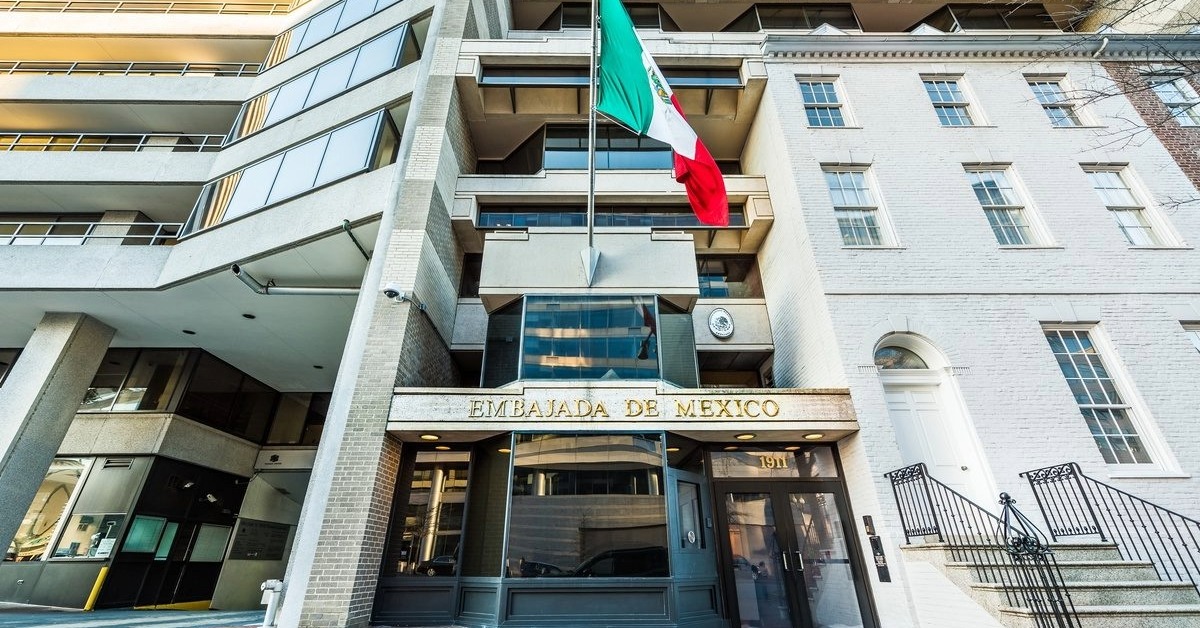
The U.S. government has begun a review of Mexico’s 53 consulates in the United States, a step that could lead to the closure of some offices.
No closures have been announced. U.S. officials have not publicly detailed the scope of the review, its timeline, or the specific standards being used.
The move comes at a tense moment in U.S.-Mexico relations. Recent disputes have centered on cartel enforcement, U.S. security operations, extradition demands, immigration policy, and Mexico’s insistence on national sovereignty.
For Mexican citizens in the United States, consulates are often the closest link to their government; they are also where daily paperwork, legal guidance, and emergency support begin.
For foreigners living in Mexico, the issue is another sign that the relationship between Washington and Mexico City is entering a more difficult phase.
What Mexico’s consulates do in the United States
Mexico has one of the largest consular networks of any country inside the United States. The offices are spread across major cities and regions with large Mexican and Mexican-origin populations.
These consulates handle practical services. They issue passports, consular ID cards, birth records, and other documents. They also help Mexican nationals understand legal options, contact family members, and access support during emergencies.
The services are not limited to undocumented migrants. Mexican citizens with legal status, dual-national families, students, workers, and long-term residents also use consular offices.
That is why any possible closure could have a broad effect. It could mean longer travel times, fewer appointments, and more pressure on nearby consulates.
A person who now visits a local consulate for paperwork might have to travel to another city. That matters for workers who cannot easily take time off, families with children, and older adults who rely on in-person services.
Review with political weight
A review of foreign consulates is not unusual by itself. Governments regularly assess diplomatic and consular relations.
What makes this review different is the timing.
The United States and Mexico are already dealing with several disputes at once. Security cooperation has become more sensitive after reports involving U.S. personnel in Mexico. Washington has also increased pressure on Mexican officials accused of cartel links.
Mexico’s government has pushed back against several U.S. claims and has demanded evidence in cases involving Mexican officials. President Claudia Sheinbaum has also emphasized that foreign agents cannot operate freely on Mexican soil.
The consulate review adds another pressure point. Even if no office closes, the review sends a diplomatic signal.
It also arrives after political figures in the United States accused Mexico’s consular network of trying to influence U.S. politics. Mexico has rejected those claims and says its consular work focuses on protecting citizens and providing lawful services.
Could the U.S. close Mexican consulates?
The United States can restrict, reduce, or close foreign consular offices under diplomatic practice. Host countries have authority over foreign consular operations inside their territory.
That does not mean closures are automatic. Closing a consulate is a serious diplomatic move, especially between neighboring countries with deep family, business, and migration ties.
In past cases involving other countries, consulate closures have been tied to accusations of espionage, diplomatic retaliation, or national security concerns. The U.S. has not publicly made that kind of specific accusation against Mexico’s consulates in this review.
For now, the most important detail is what has not been announced. There is no public list of targeted offices or an official closure order. There is no public timeline for when the review will end.
That leaves Mexican communities, consular users, and bilateral observers waiting for clarity.
The human side of consular access
Consular offices often matter most when someone is already under stress.
A lost passport, a detained relative, a child’s birth record, a legal question, or an emergency call can all lead a person to a consulate. These services are usually routine, but they become urgent when access is limited.
The United States had an estimated 37.2 million people of Mexican origin in 2021. That includes people born in Mexico and people with Mexican family roots.
Not all of them use consular services. Still, the size of the community explains why Mexico maintains such a wide network.
A closure in one city would not end services. It would shift the burden to another office. That shift could create longer waits and higher travel costs.
For families split between Mexico and the United States, consular access also helps keep paperwork moving across borders. That can affect inheritance issues, civil records, travel documents, and family support.
A wider signal for U.S.-Mexico relations
The consulate review is not happening in isolation. It fits into a broader pattern of sharper U.S. pressure on Mexico.
Security cooperation has become more complicated. Immigration enforcement remains politically charged. The fentanyl crisis continues to shape U.S. policy toward Mexico. Trade and aviation disputes have also added strain.
Mexico, meanwhile, is trying to defend its sovereignty while maintaining essential cooperation. The two countries remain deeply connected by trade, travel, migration, and family ties.
That balance is difficult. Each new dispute can affect areas that seem unrelated at first.