Mexico rejects new DEA channels for reporting organized crime and corruption, raising questions about U.S. security cooperation in Jalisco.
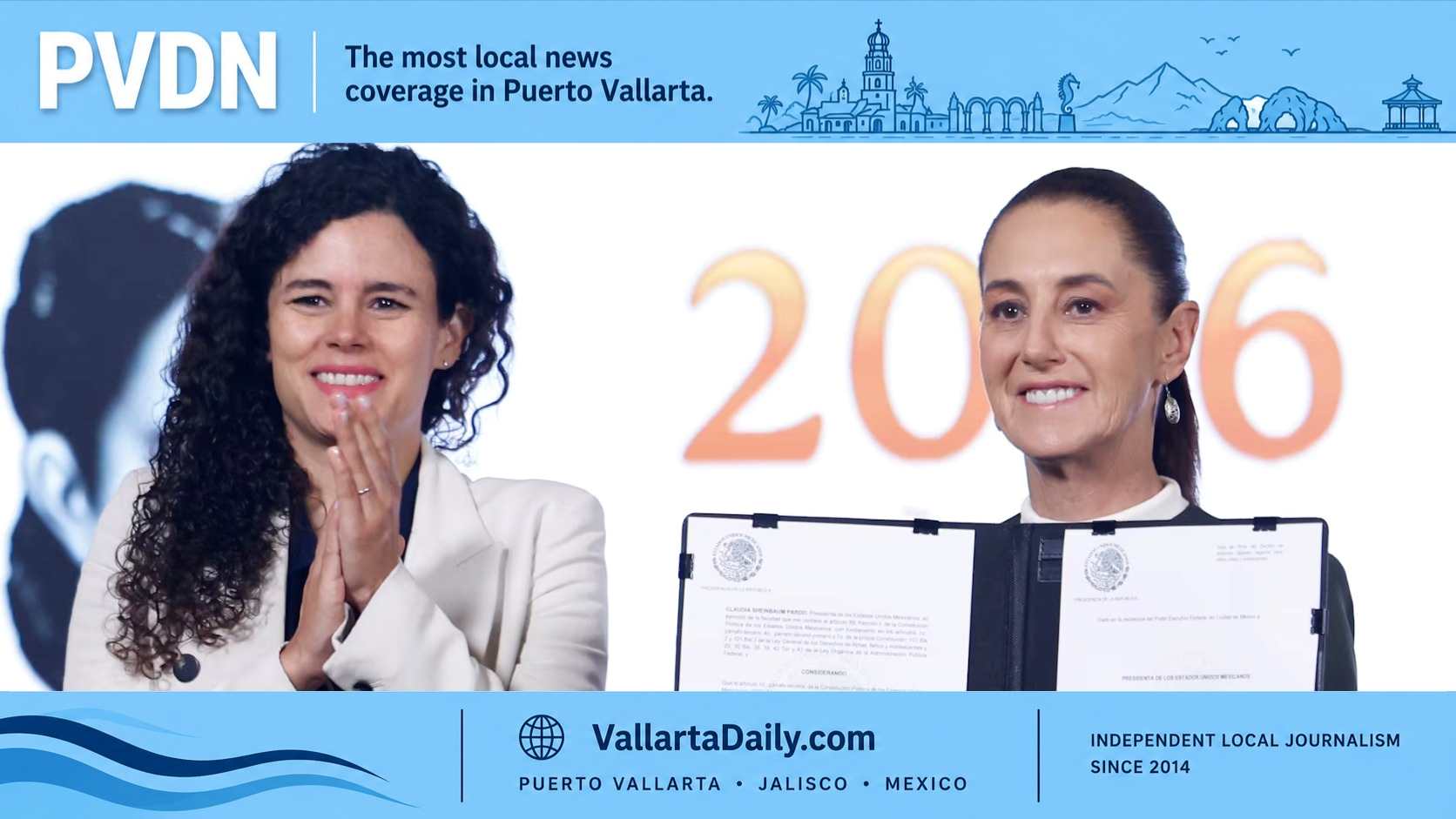
Mexico City, Mexico, November 26, 2026 – President Claudia Sheinbaum accused the United States Drug Enforcement Administration (DEA) of interfering in Mexico’s internal affairs Thursday after the agency established direct communication channels for people to report suspected cartel members, corrupt government officials and money laundering operations.
The initiative initially targets criminal networks in Sinaloa, with similar reporting channels announced for Jalisco and the Jalisco New Generation Cartel (CJNG).
The announcement has opened another dispute between Mexico City and Washington over how far American law enforcement agencies should be allowed to go in their efforts to combat organized crime in Mexico.
Sheinbaum insists that Mexico has its own institutions responsible for investigating criminal activity and that the United States should devote more attention to the drug distribution networks and corruption operating within its own borders.
DEA turns directly to the Mexican public
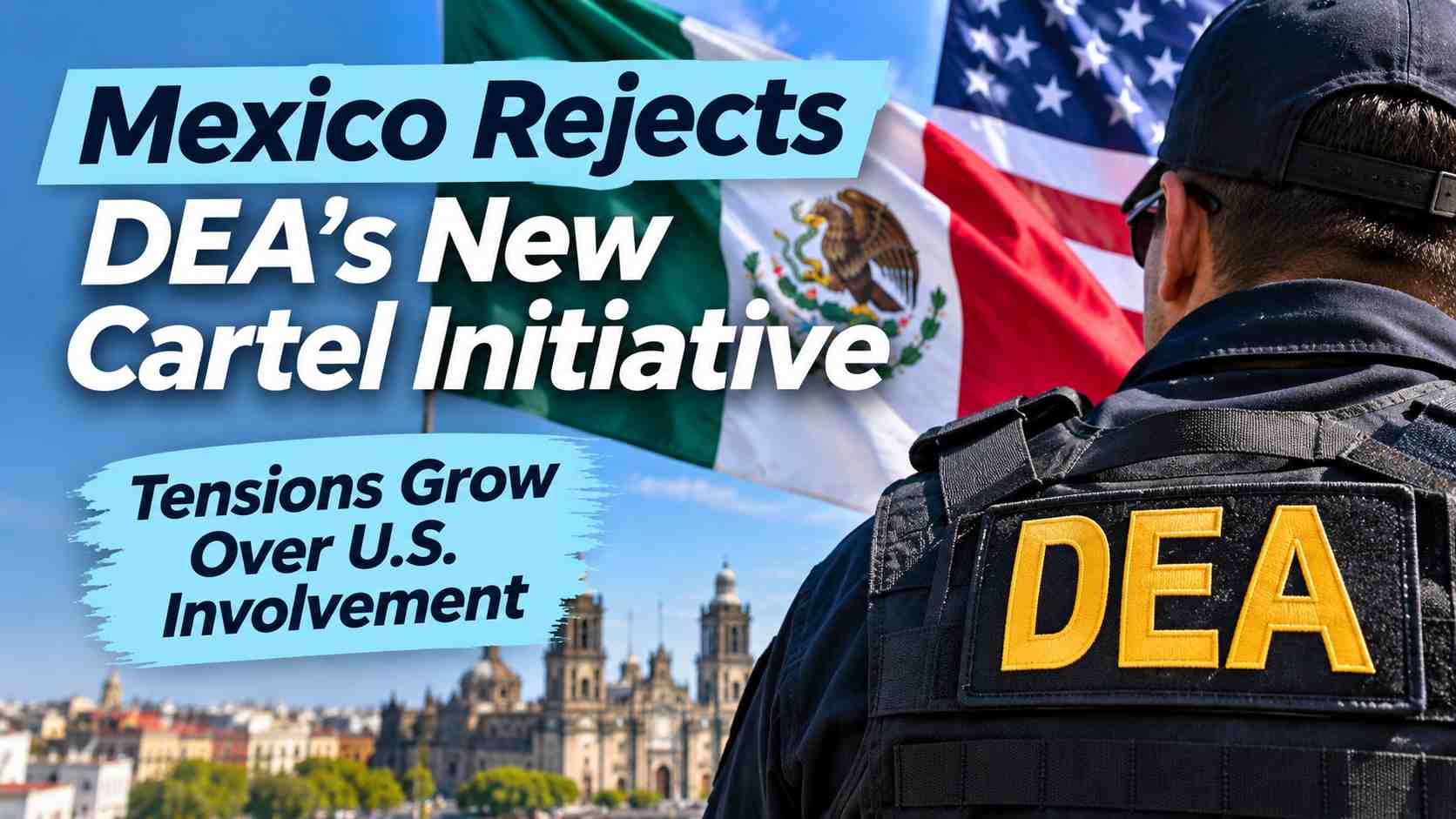
DEA Director Terry Cole announced the initiative Wednesday evening through his official social media account, inviting people with information about organized crime and corruption to communicate directly with the American agency.
The DEA has established communication channels through WhatsApp, Signal, Threema and email for information concerning criminal networks in Sinaloa.
The agency is particularly interested in information about government officials suspected of protecting criminal organizations and the financial networks that help sustain their operations.
Cole said confidential and anonymous reporting would be available, although the practical protections available to people submitting information from Mexico have not been independently established.
The initiative follows other American efforts to target the financial structures behind organized crime. Earlier this month, Vallarta Daily reported on a U.S. reward of up to $10 million for information concerning cartel financial networks.
The latest announcement goes a step further by establishing dedicated channels through which the public can provide information directly to American investigators.
Sheinbaum asks how Washington would react
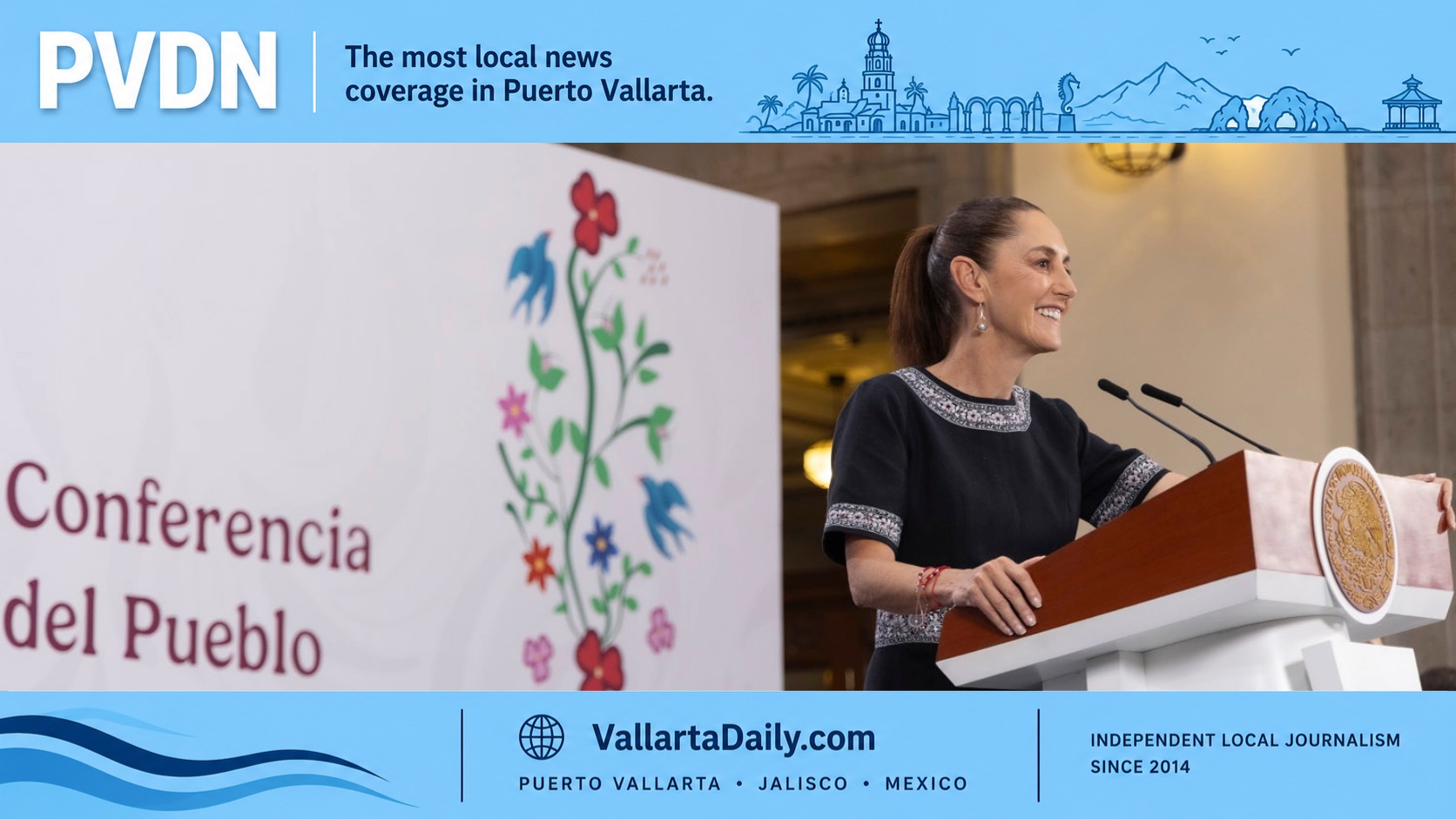
During her morning press conference Thursday, Sheinbaum questioned how the United States would respond if Mexico established similar channels for American citizens to report corruption within their own government.
The president argued that the DEA has considerable work to do within the United States itself.
Her criticism focused on questions that have repeatedly surfaced in Mexico’s discussions with Washington.
Who distributes the drugs once they cross the border? Who profits from their sale in American communities? And what happens to the money generated by those transactions?
Sheinbaum argued that combating international drug trafficking requires both governments to accept responsibility for the criminal networks operating within their respective countries.
Mexico’s Security Cabinet subsequently issued its own rejection of unilateral actions, reiterating that Mexican institutions have the authority to receive criminal complaints, investigate corruption and prosecute offenders.
Jalisco authorities say they were not formally notified
The announcement has particular relevance for residents of Jalisco, including Puerto Vallarta.
Cole indicated that dedicated reporting channels concerning the CJNG would follow those established for Sinaloa.
However, Jalisco Security Secretary Juan Pablo Hernández González said Thursday that his department had not received formal notification of the initiative.
Hernández explained that state authorities maintain communication with foreign diplomatic representatives but had not been officially informed about the reporting channel through the U.S. Consulate or other institutions.
The secretary also reminded residents that Mexico already operates its own anonymous reporting service.
As of Thursday afternoon, the activation of the DEA’s dedicated Jalisco reporting channels had not been independently confirmed.
There has also been no announcement of new DEA field operations specifically targeting Puerto Vallarta.
Sheinbaum questions the DEA’s record at home
Adding to Thursday’s disagreement, Sheinbaum cited a recent Associated Press investigation into the DEA’s handling of fentanyl trafficking cases in the United States.
The investigation found that at least 1.4 million fentanyl pills went unseized while American agents pursued a broader criminal investigation between August 2024 and April 2025.
The DEA has defended its investigative decisions as lawful and coordinated with prosecutors, while the U.S. Department of Justice’s inspector general is reviewing the matter.
Sheinbaum compared the case to Operation Fast and Furious, the controversial American firearms investigation that became a source of diplomatic tension between Mexico and the United States more than a decade ago.
The president used the report to reinforce her argument that American authorities should examine their own law enforcement practices rather than concentrating their criticism exclusively on Mexico.
Cooperation between the two countries continues
Despite Thursday’s exchange, Mexico and the United States continue to cooperate extensively on criminal investigations.
During a November 10 presidential press conference, Mexican Security Secretary Omar García Harfuch explained that meetings with DEA officials take place periodically and include discussions about extradition requests, intelligence sharing and ongoing investigations.
Just this week, the Mexican government also committed to permanent federal security operations in Sinaloa following recent operations against organized crime in the state.
The disagreement is not necessarily about whether the two countries should work together. It is about who directs that cooperation, how information is collected and which authorities are responsible for acting on it.
The Mexican Foreign Affairs Ministry has previously outlined four principles governing bilateral security cooperation: respect for national sovereignty, shared but distinct responsibilities, mutual trust and cooperation without subordination.
Those principles have become increasingly important since Washington formally designated several Mexican criminal organizations, including the Sinaloa Cartel and CJNG, as foreign terrorist organizations in February 2025.
Vallarta Daily has previously examined why Mexico rejects direct U.S. intervention in cartel operations and the potential consequences of that disagreement for communities like Puerto Vallarta.
What does this mean for residents of Puerto Vallarta?
For residents and visitors, Thursday’s announcement does not change Mexico’s existing emergency services or criminal reporting procedures.
According to Mexico’s Secretaría de Seguridad y Protección Ciudadana, the country maintains two distinct telephone services for emergencies and anonymous criminal complaints:
- 911: Immediate emergencies requiring police, medical assistance or civil protection services.
- 089: Anonymous reports concerning suspected criminal activity that requires investigation but does not necessarily involve an immediate emergency.
The DEA’s new reporting initiative is not a substitute for local emergency assistance.
Thursday’s announcement also does not, by itself, establish any change in security conditions in Puerto Vallarta.
The immediate question is whether Mexican and American authorities can reach an understanding about how these new reporting channels will operate, how the information will be handled and whether it will be shared with Mexican investigators.
For now, Washington wants information directly from the Mexican public, while both federal and Jalisco security officials insist that Mexico already has institutions responsible for receiving and investigating those reports.