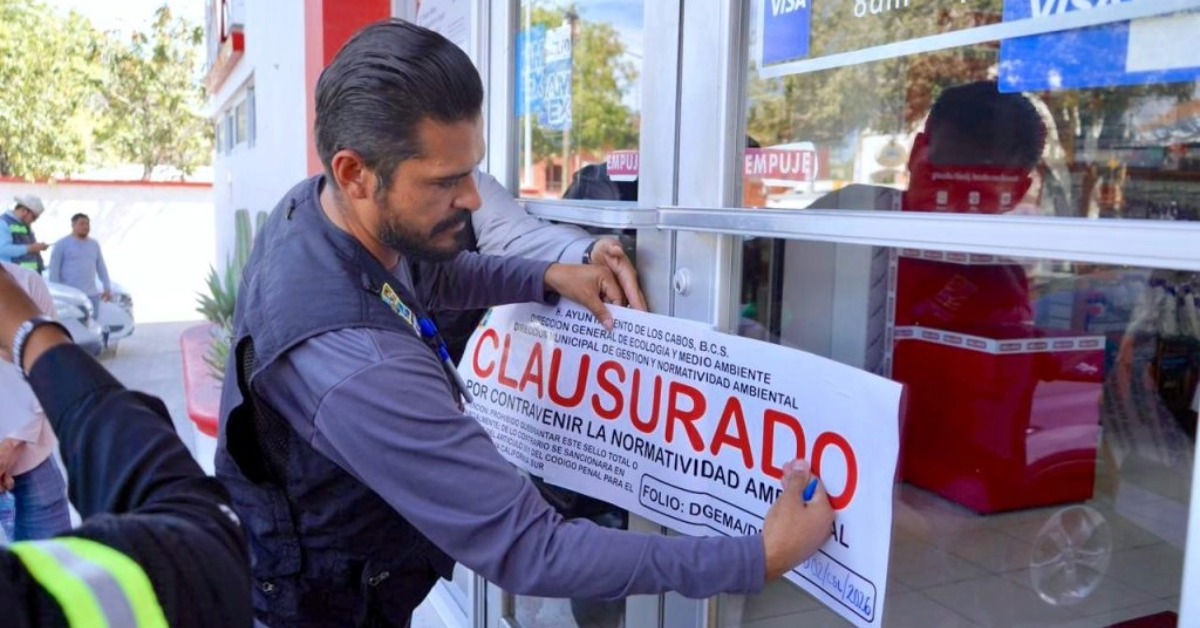
What began as a complaint about dumped rubble in rural Cabo San Lucas turned into a broader inspection of one local business. Officials say the case exposed more than a debris pile. It also raised transport, safety, and environmental questions within the operation itself. The closure may look like a routine local action, but it offers a useful window into how waste rules are enforced in a fast-growing city where construction remains constant.
A complaint turned into a wider inspection
Municipal authorities in Cabo San Lucas closed a business after inspectors traced an alleged illegal construction-waste dump in a rural area to one of the company’s vehicles. The case began with a citizen complaint, then expanded into a multi-agency operation that involved Ecology and Environment, Civil Protection, Revenue, and Transport. That matters because the closure was not presented as a single-issue sanction. It was framed as the result of a broader inspection that looked at how the business was operating, how material was being moved, and whether local rules were being followed across several areas at once.
The municipal government identified the business as IDICOM Eléctrica y Plomería. Officials said inspectors found a clandestine dump site and linked one of the company’s vehicles to the disposal of construction debris. From there, authorities moved to inspect the establishment itself. According to the city, the company’s municipal licenses were in order, but other problems surfaced during the inspection. Civil Protection officials reported violations of municipal rules, and the Transport area said one of the vehicles involved did not have the documentation or permits required for cargo transport. The municipality said the business will remain closed until the observations are addressed.
Why construction debris gets special attention
For many readers, the word escombros may sound minor. In practice, it usually means rubble from building, demolition, or renovation work, including broken concrete, blocks, tile, dirt, and other heavy materials. In a place like Los Cabos, where construction is constant, the legal handling of that debris matters more than it may seem. Once material is dumped in an unauthorized rural area, the problem no longer belongs only to the person who wanted to get rid of it cheaply. It becomes a public enforcement issue, an environmental concern, and often a cleanup cost borne by the municipality.
Los Cabos has been signaling for some time that clandestine dumps are not being treated as a low-level nuisance. In earlier official messaging, the municipal government said people who create illegal dump sites in Cabo San Lucas can face steep fines under local environmental rules. The city has also described the issue as part of a broader urban management problem around commerce, waste, and public order. In its first annual report, the municipality said it logged 2,853 inspection reports tied to obstructions in pedestrian areas, including cases involving debris and clandestine dumps. That does not mean this case is identical to those sidewalk-related reports, but it does show the issue fits into a larger pattern of waste enforcement.
What this closure does and does not mean
One of the more important details in this case is that the business was not shut down because its core municipal licenses were missing. Officials said those licenses were in order. The closure came after inspectors found problems in other areas. That distinction matters because it suggests the municipality viewed the case as more complex than an expired permit or a paperwork lapse at the front desk. The operation addressed environmental compliance, safety compliance, and transport documentation simultaneously. In other words, the alleged dumping complaint opened the door to a wider review of whether the business was operating lawfully across several municipal systems.
At the same time, an administrative closure is not the same as a final ruling on every possible liability issue. The public notice states that the business will remain closed until it complies with the observations raised during the inspection. That means the immediate government action is both corrective and preventive, even if other sanctions may follow. So far, authorities have not publicly detailed whether they will impose a specific fine, order the removal of dumped material, or refer any part of the case for a separate proceeding. The municipal message was firm, but limited. It focused on the closure itself and on the government’s intent to continue similar inspections.
Why the story matters beyond one business
This case will resonate with many residents and foreign property owners because renovation and small construction jobs are routine in Los Cabos. People hire haulers, contractors, and service companies every day. Once debris leaves a home, condo, shop, or job site, most clients assume it is being handled legally. That is not always a safe assumption. A case like this is a reminder that the cheapest disposal option can become the riskiest if material ends up in an unauthorized lot, on a desert road, or in a rural parcel. Even when a customer never sees the dump site, the local damage and the enforcement burden still remain.
It also helps explain how local government enforcement often works in Mexico. For international readers, it can seem unusual that a single complaint brings in Ecology, Civil Protection, Revenue, and Transport at once. But municipal enforcement is often split across several offices, each responsible for a different part of the same real-world problem. A debris pile can raise one question for environmental staff, another for cargo permits, and another for workplace or public safety rules. That is why this story is larger than one closure notice. It shows how local authorities can use a complaint about dumping as the starting point for a broader compliance check.
What to watch next
The next question is whether the closure leads to a short correction period or a longer enforcement process. Much will depend on whether the business addresses the issues identified by inspectors and whether authorities decide the alleged dump site itself requires a separate cleanup or sanction. Another point to watch is whether Los Cabos uses this case to reinforce a broader campaign against illegal dumping tied to commercial activity and construction. The municipality has already said it intends to continue operations of this kind. That suggests the story is not only about one company. It may also be part of a wider push to make waste enforcement more visible in Cabo San Lucas.