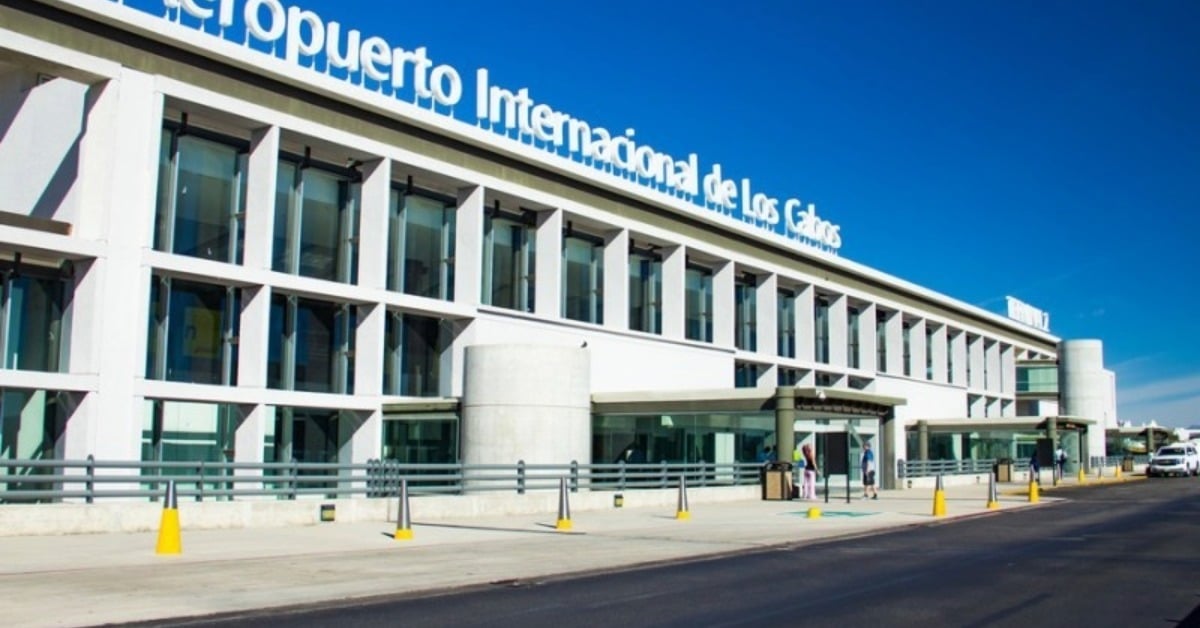
Some Los Cabos tourism figures have raised concern among residents and business owners who depend on foreign visitors. FITURCA says the broader data shows a more stable picture. Airport traffic did soften in early 2026, but the agency says the decline was moderate, with international arrivals nearly unchanged. The bigger question is what these numbers mean for hotels, restaurants, transportation providers, workers, and residents watching the local economy closely.
Los Cabos tourism agency says key visitor markets remain stable
The Los Cabos tourism agency is pushing back against claims that the destination is seeing a sharp collapse in its main visitor markets.
The Fideicomiso de Turismo de Los Cabos, known as FITURCA, said traffic through Los Cabos International Airport fell 2.5 percent during the first quarter of 2026 compared with the same period in 2025. The agency described the change as a moderate adjustment, not a steep downturn.
The distinction matters for Los Cabos because tourism is not just one part of the economy. It supports hotels, restaurants, bars, transportation, tours, real estate services, and many small local businesses.
For residents tied to the sector, the question is not only whether fewer people are arriving. It is also whether the visitors who do arrive continue to spend enough to support jobs and local income.
The international market was nearly flat
FITURCA said the international market showed only a 0.7 percent decline in the first quarter of 2026. That is a much smaller drop than the overall airport figure.
The difference comes from the domestic market. Passenger traffic from within Mexico fell 6.1 percent, making local and national demand the weaker part of the first-quarter picture.
This is an important point for readers outside Mexico. A headline about total airport traffic can suggest one story, while the international market shows another.
Los Cabos depends heavily on travelers from the United States and Canada. Many arrive by direct flights and spend several days in the destination. Those visitors are central to hotel occupancy, restaurant sales, tours, and airport-linked services.
FITURCA’s position is that the destination remains stable in its main foreign markets, even if travel demand is not growing at the same pace as seen in earlier years.
Why the numbers can look confusing
Tourism data can be difficult to read because agencies often measure different things.
Airport passenger traffic counts the number of people moving through the airport. It does not always tell the same story as hotel occupancy, nationality-based immigration data, room nights, or visitor spending.
That means two figures can appear to conflict, even when both are based on real data.
A count of passengers on international flights is not the same as a count of U.S. or Canadian citizens entering Mexico. A traveler from Canada who connects through Mexico City may show up differently from a traveler who flies nonstop to San José del Cabo.
For Los Cabos, this distinction matters because the destination receives many visitors through nonstop international routes. It also serves domestic travelers, Mexican residents, business travelers, and passengers arriving via connecting flights.
The strongest reading of the current data is that Los Cabos softened in early 2026, but the decline was not evenly spread across all markets.
Tourism spending remains part of the story
FITURCA also pointed to tourism spending as a sign that the local economy remains supported by visitor activity.
The agency said tourism spending in March 2026 reached 14.6 billion pesos, a 2.8 percent increase compared with the same month last year. It also said 35 percent of that spending went into non-tourism categories such as local commerce, bars, transportation, and health services.
That helps explain why tourism data matters beyond hotels. Visitor spending often moves through the broader community.
A hotel guest may book a tour, take a taxi, visit a pharmacy, buy groceries, eat at a local restaurant, and hire local services. Those purchases support workers who may not consider themselves part of the formal tourism industry.
FITURCA also said tourism supported 47,093 jobs during the fourth quarter of 2025, up 7 percent from a year earlier.
What it means for residents and businesses
For local residents, the first-quarter figures suggest caution, not panic.
The airport data shows Los Cabos is not immune to slower demand. Higher travel costs, exchange rates, perceptions of security, airline decisions, and global uncertainty can all affect booking behavior.
At the same time, the international travel base appears more resilient than the domestic market. That is important because foreign visitors often represent a larger share of tourism spending in Los Cabos.
Businesses may still feel pressure if bookings slow, stays shorten, or visitors spend less. A small drop in traffic can matter to restaurants, tour operators, and transportation providers operating on thin margins.
But the available data does not support the idea that Los Cabos has lost its main foreign markets in a sudden collapse. It points instead to a more mixed tourism cycle.
Los Cabos still depends on air connectivity
Air connectivity remains one of the biggest factors for the destination.
Los Cabos is not a drive-to resort for most foreign visitors. It depends on direct flights from U.S. and Canadian cities, along with reliable domestic connections inside Mexico.
When airlines add routes, the destination gains access to new travelers. When airlines reduce capacity, even temporarily, local businesses can feel it quickly.
That is why airport numbers are watched so closely. They are one of the earliest signs of changing demand.
For 2026, the challenge for Los Cabos will be keeping its foreign markets steady while also recovering domestic travel. The destination also has to protect its reputation, visitor experience, and service quality.
A stable market still needs attention
The main takeaway is that Los Cabos tourism appears stable, but not automatic.
The destination continues to benefit from strong brand recognition in the United States and Canada. It also has a high-value tourism model, strong hotel infrastructure, and air access from major markets.
Still, stability does not mean the sector can ignore warning signs.
A softer domestic market can affect weekend travel, local occupancy patterns, and Mexican family tourism. Any slowdown in the U.S. or Canadian markets would also have a broader impact on employment and local business income.
For now, FITURCA’s message is clear. Los Cabos is seeing a moderate adjustment in airport traffic, not a collapse in foreign tourism.
For residents, the better question may be what comes next. If international arrivals remain close to last year’s level and spending continues to grow, the destination may absorb the slowdown. If domestic weakness deepens or airlines reduce capacity, pressure could build through the year.