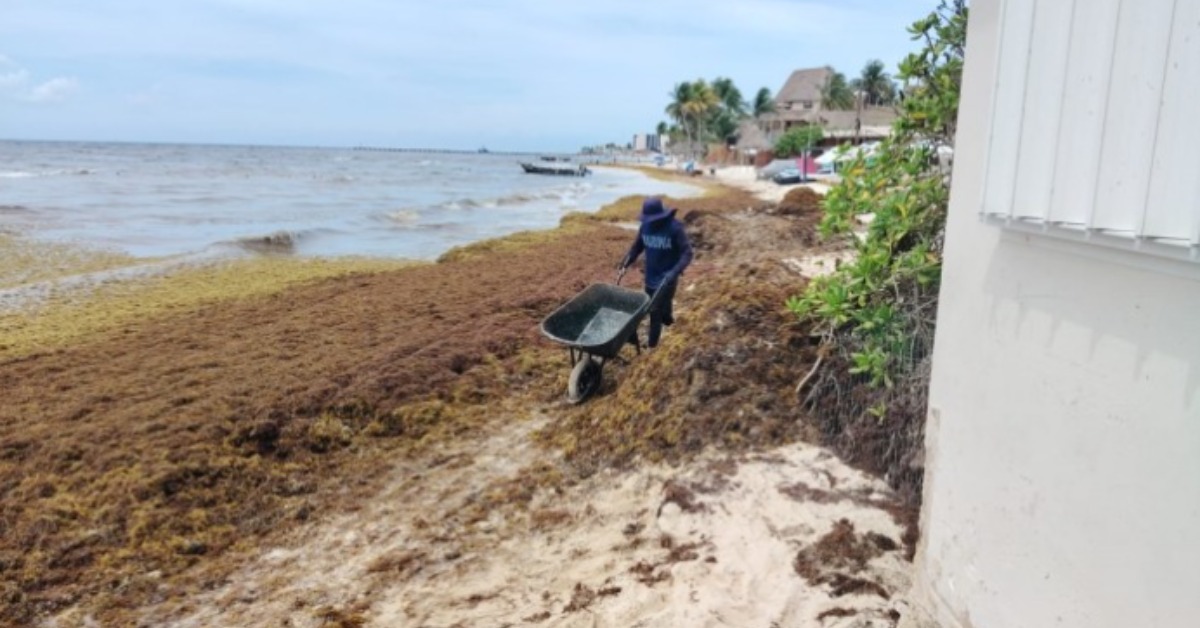
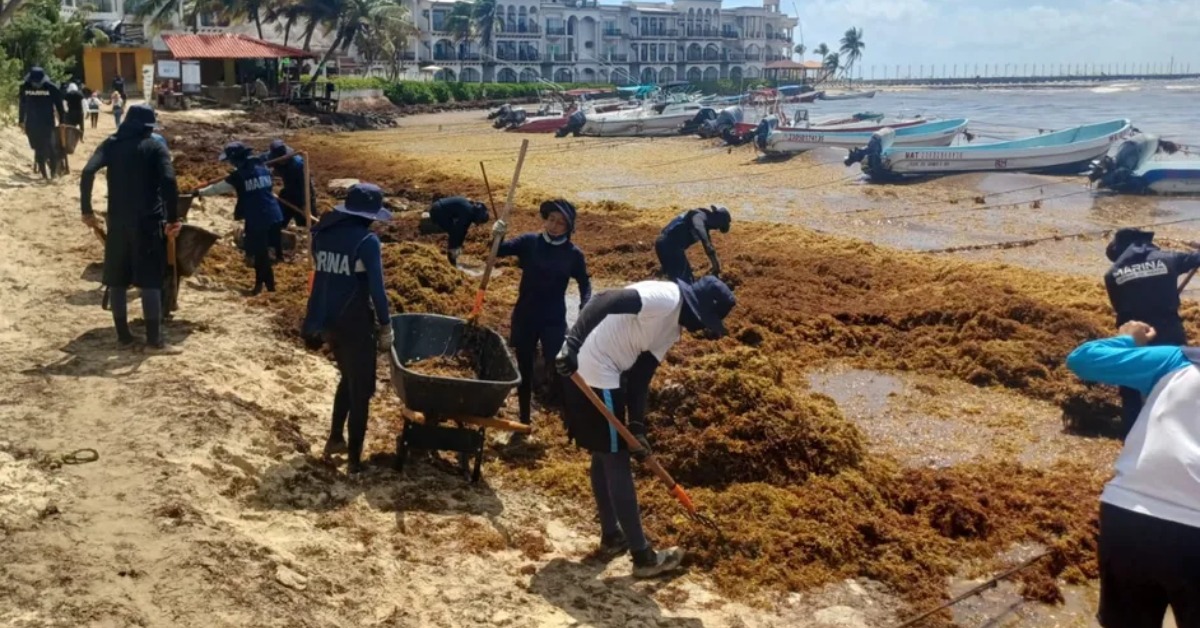
January is supposed to be the easy season on Cancún’s shoreline. Instead, clumps of sargassum greeted early-morning walkers after a burst of surada winds—the warm, southerly blow that can shove anything floating offshore straight onto the sand. With authorities warning that more seaweed may be on the way in the next day, cleanup crews are back in motion, and beachgoers are asking the same question: Is this a one-off weather blip or the first hint that 2026 will be another heavy year?
A January morning that didn’t look like January
Cancún woke up Monday, January 12, to a scene that usually belongs to late spring: brown bands of sargassum pressed up against the shoreline, especially along stretches like Playa Delfines and Playa Caracoles. The timing is what made it land so sharply. January is peak season for visitors and one of the months locals count on for calmer beach conditions, not the “seaweed season” that typically ramps up later in the year.
The surprise was amplified by how quickly it spread online. Photos and short videos made the rounds over the weekend and into Monday morning, with frustrated reactions from travelers who expected postcard water and instead found seaweed underfoot. On the sand, the response was practical: crews moved in to start clearing, and officials urged people to be patient while the worst patches were removed.
Why surada winds matter
The word “surada” gets tossed around like a casual weather footnote, but on this coast, it can be a switch-flip. Surada winds arrive from the south and southeast and are often associated with strong high-pressure systems. They tend to bring warm, dry, gusty conditions—less rain, more push.
That push matters because it changes how the sea processes floating material. Instead of helping disperse sargassum away from the shoreline, a surada can aim wind and surface currents straight at the beach, turning offshore patches into a sudden landfall. It’s not only sargassum; the same conditions can also bring in marine debris that had been sitting farther out, making cleanup feel heavier and more urgent, even if the event is short-lived.
What the next day could bring
Authorities are watching two things at once: what’s already on the beach, and what’s still moving offshore. A Navy forecast cited by local reports projected that roughly 15 tons of sargassum could reach Cancún’s coast within the next 24 hours, with coastal currents generally trending north and northeast—exactly the kind of setup that can keep the shoreline vulnerable even after the first cleanup pass.
At the regional level, the Navy’s oceanographic monitoring has also been tracking multiple near-shore sargassum clusters off Quintana Roo in recent days. In its January 10 outlook, the heaviest short-term risk was centered south of Cancún, with possible arrivals highlighted along corridors from Tulum through Playa del Carmen and toward Puerto Morelos, as well as areas around Cozumel and the far south. That matters for Cancún for a simple reason: conditions shift fast. A city can be left off a 48-hour “most likely” map and still get hit when local wind angles change overnight.
Municipal measures are familiar by now—organized collection, shoreline netting where feasible, and coordination with maritime authorities and hotel operators that maintain their own barriers. What looks like a sudden crisis to a visitor is, to the people who live and work here, a weather-driven logistical problem that can surge and fade within days.
The bigger question for 2026
The uncomfortable part of an early January arrival is what it suggests, not just what it disrupts. Researchers and forecasters have been warning for years that sargassum in the Atlantic and Caribbean has become more persistent and less predictable. Seasonal peaks still tend to cluster in the warmer months, but “off-season” beaching events are no longer rare enough to dismiss as flukes.
Recent satellite updates from U.S. monitoring programs have pointed to a large sargassum presence across the broader Atlantic-Caribbean system and flagged the possibility of unusual early impacts. Locally, the story is also written in budgets and tonnage: last year’s cleanup numbers were massive, and municipalities across Quintana Roo have been building their playbooks around the expectation that heavy years can stack back-to-back.
For expats living in Mexico, the takeaway isn’t panic—it’s flexibility. If you’ve got friends visiting, plan beach days with a backup in mind. If you’re heading out yourself, remember that sargassum can be highly localized; one stretch can look rough while another a short walk away is swimmable. And if you’re sensitive to strong odors, it’s worth knowing that decomposing seaweed can turn a “quick dip” into a day you’d rather spend elsewhere.
None of this changes what Cancún is. But it does change the rhythm of living here: even in January, the sea can suddenly start acting like it’s June.