Quintana Roo remains under a red sargassum alert after Navy monitoring detected more than 90,000 tons of floating sargassum off the Mexican Caribbean coast.
The latest estimate placed the offshore volume at about 90,538 tons, with authorities also warning of eight floating concentrations that could reach different parts of the coast. The reading comes as beach-level monitoring shows broad accumulation along the state’s shoreline.
According to the most recent beach report from state monitoring, 55 of 140 supervised beaches were listed as having excessive sargassum accumulation. Only five were reported without sargassum.
The affected areas include beaches in the northern and southern parts of Quintana Roo. The north includes points such as Punta Cancún, Gaviota Azul, Chac-Mool, Puerto Morelos Norte, Puerto Aventuras, Akumal, Xcacel-Xcacelito, Tankah, and parts of Tulum. In the south, affected beaches include Mahahual Norte, Mahahual Faro, Playa Mahahual, Xahuayxol, Xcalak, Canal de Zaragoza, and Bacalar Chico.
Cleanup crews face a growing volume
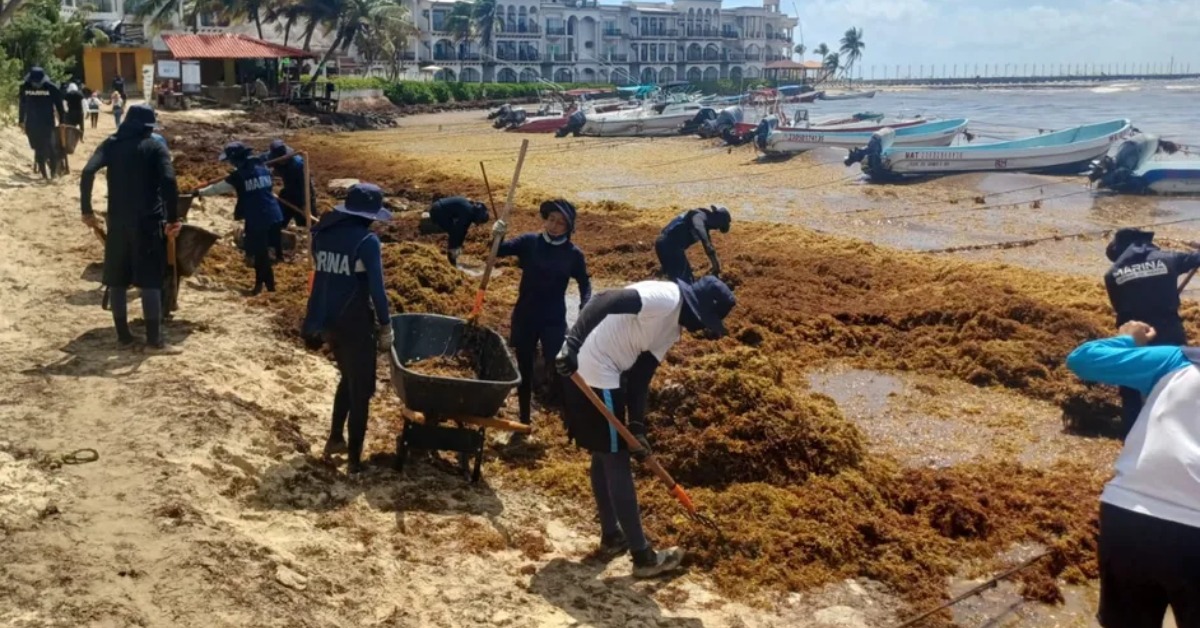
The current alert follows weeks of mounting cleanup work across the state. The Navy has reported more than 39,500 tons of sargassum collected so far this year in sea and beach areas of Isla Mujeres, Benito Juárez, Puerto Morelos, Cozumel, Playa del Carmen, Tulum, and Mahahual.
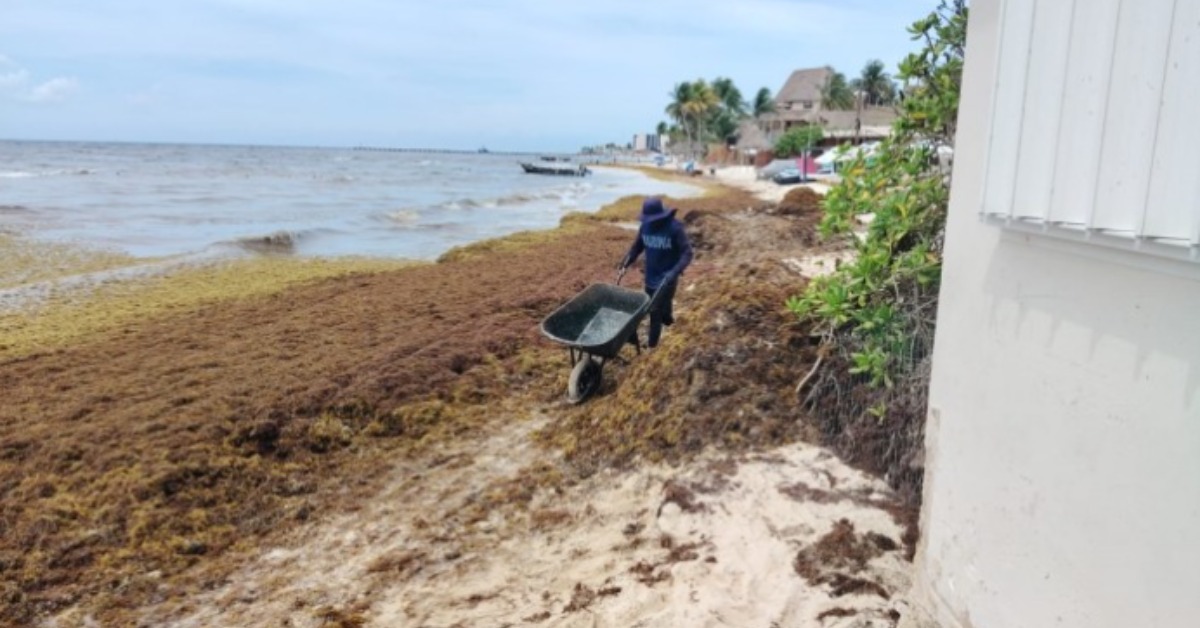
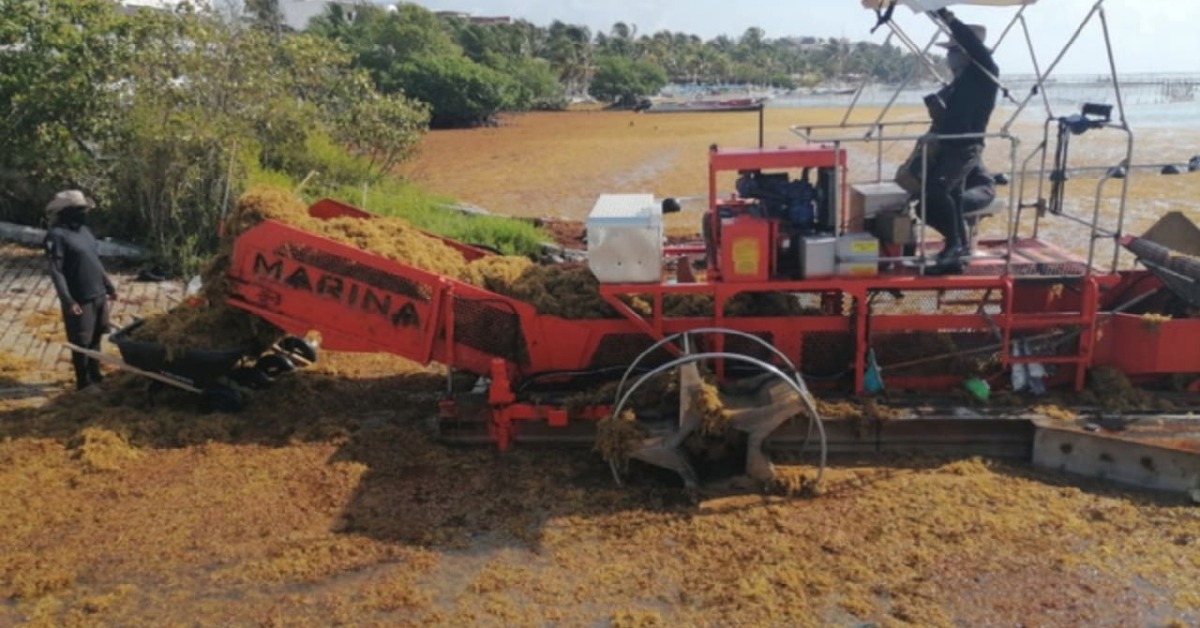
The response includes a sargassum ocean vessel, 11 coastal sargassum vessels, an amphibious sargassum unit, smaller support boats, and more than 7,600 meters of containment barriers. Beach crews are also removing the macroalgae by hand with tools and wheelbarrows.
Municipal authorities have reported increased arrivals in recent weeks, keeping cleanup and monitoring crews active at various points along the coast. In some concession areas, removal work falls to operators responsible for the federal maritime zone.
Tourism and beach conditions remain under watch
Tourism officials have said there are no official reports of hotel cancellations tied to the current sargassum conditions. Service providers, however, have reported that strong accumulations can create odors and affect visitor activity near the beach.
The red readings do not mean every beach has the same conditions at the same time. Sargassum can shift quickly with wind, currents, and weather, leaving some areas heavily affected while nearby beaches have lighter accumulation.
Authorities have linked the recent buildup to marine currents, surada winds, and changes in wind direction. Environmental specialists have also warned that the 2026 season could remain active into the summer months.