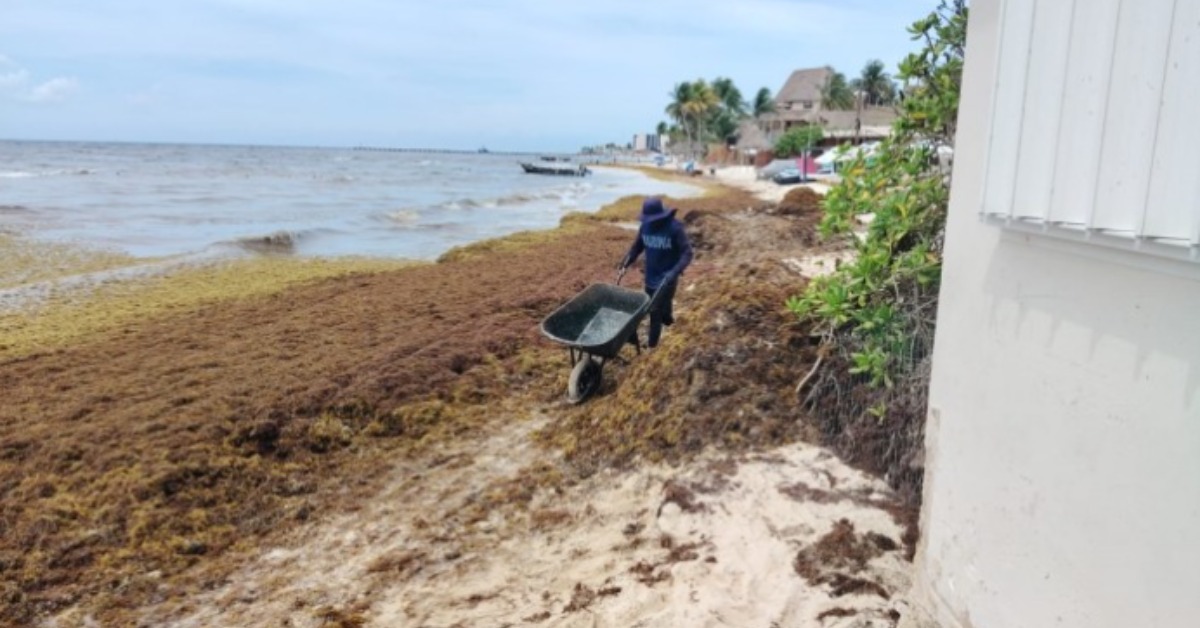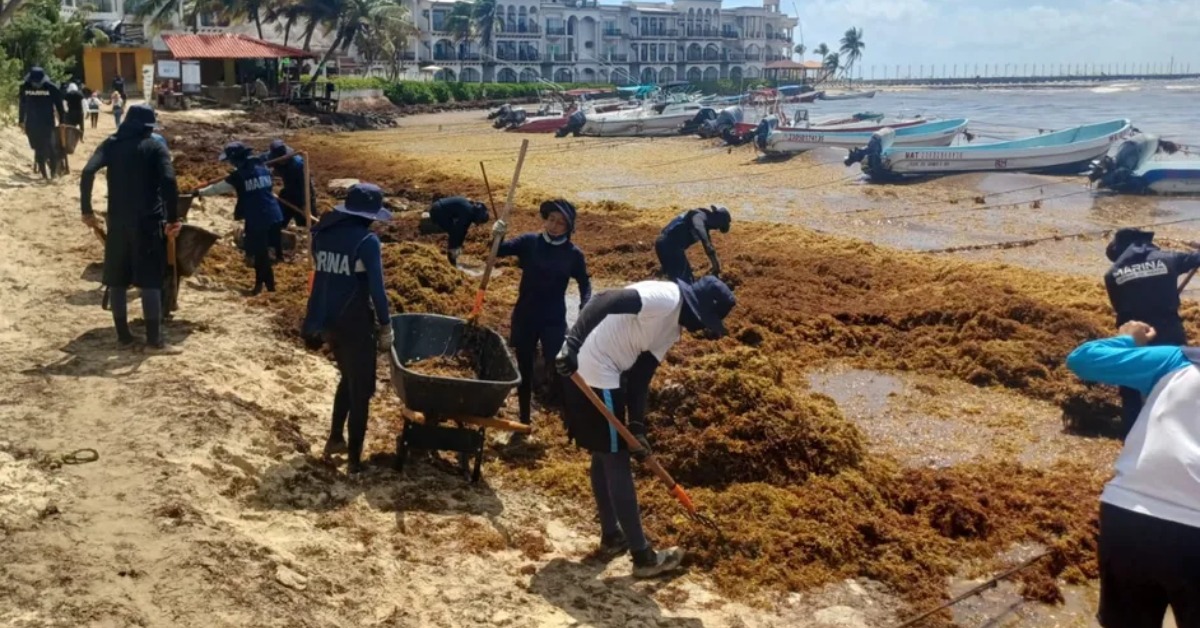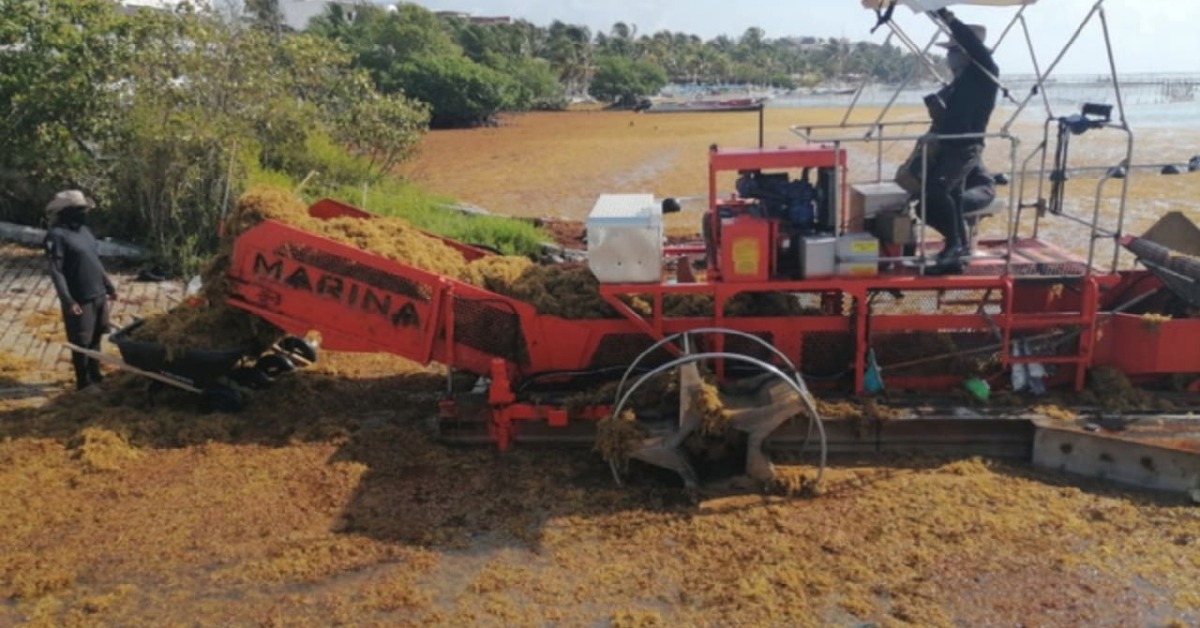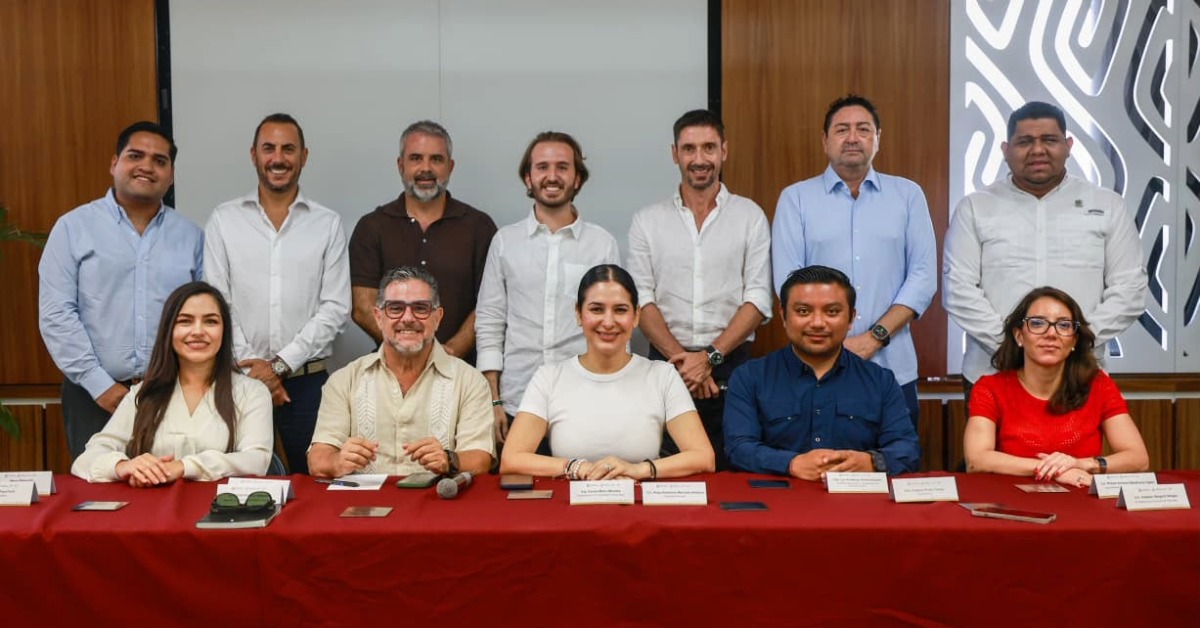
Playa del Carmen Mayor Estefanía Mercado met Tuesday with hotel and business leaders to coordinate the city’s response to sargazo along the municipality’s beaches.
The meeting brought together representatives from AMEXME, COPARMEX Riviera Maya, and the Riviera Maya Hotel Association, according to a municipal statement. City officials said the work is aimed at keeping beaches clean, supporting hotel operations, and protecting tourism conditions during the current season.
The meeting was held in the Javier Rojo Gómez hall at the old Municipal Palace. Mercado was joined by Luis Herrera Quiam, the municipal secretary general, Arturo Castro Duarte, the secretary of government, and council member Fernando Muñoz Calero.
Mercado thanked hotels for the daily cleanup work they carry out along their beachfronts. She said those efforts contribute to protecting Playa del Carmen’s main natural asset.
Facing a challenge that affects the wider Caribbean, Mercado said Playa del Carmen’s best response is “teamwork between government, private initiative, and society.”
Business and hotels asked to stay coordinated
The city said those at the meeting agreed to keep communication open and strengthen coordination so crews can respond faster when sargazo reaches the shore.
That coordination is not just about appearance. Heavy sargazo can affect beach access, water conditions, hotel operations, small beach businesses, and the workers who depend on steady tourism activity. Recent coverage of the local cost of sargassum in Playa del Carmen has shown how the problem reaches beyond the sand.
Playa del Carmen has been preparing for a heavier season for months. In February, the municipality announced an integrated 2026 sargazo strategy that included five kilometers of offshore barriers, daily satellite monitoring, beach-by-beach alerts, and coordination with the Navy, the state government, and the hotel sector.
That earlier plan said the barriers would cover the coast from Playa Cisne to Punta Esmeralda, including certified beaches. It also said the city had already collected more than 1,200 tons of sargazo before March, after unusual arrivals began in January.
Monitoring remains part of the response
Sargazo arrivals can shift quickly with currents, wind, and offshore accumulation. The National Laboratory for Earth Observation at UNAM says its satellite monitoring platform tracks sargazo across more than 150,000 square kilometers of sea and coastal areas from Quintana Roo to Belize, Guatemala, and part of Honduras.
Mercado said the city will continue building joint strategies to protect beaches, strengthen tourism activity, and keep the destination competitive.
“The greatness of Playa del Carmen is built with the sum of wills,” Mercado said. “When society, business leaders, and government work in the same direction, we are capable of facing any challenge.”