Sargassum in Playa del Carmen is usually judged by beach photos, but the real cost moves through the city in quieter ways. A bad recale can cut worker income, weaken small hotel bookings, pull money from the municipal budget, and send heavy trucks over streets never built for that load. This explainer follows the seaweed from the shoreline to the disposal site, then into the experiments, aiming to turn a yearly headache into something useful this season.
Sargassum Is Quietly Costing Playa del Carmen More
Sargassum costs Playa del Carmen money before anyone cancels a hotel room. It hits the beach worker waiting for a boat booking, the massage therapist watching foot traffic vanish, the small hotelier checking a thin reservation book, and the city crew sending another truck through streets that were never built for tons of seaweed.
That is a useful way to read this year’s sargassum season. The brown mat on the sand is only the visible part. Behind it sits a whole local machine: crews, barriers, loaders, disposal sites, tourism taxes, hotel discounts, road repairs, health monitoring, and a growing pile of experiments trying to turn an expensive mess into something useful.
Recent local reporting has given the machine sharper edges. Canal 10 reported that sargassum has cut beach activity and income for some Playa del Carmen tourism workers by an estimated 30 to 35 percent. The figure is not a citywide economic audit, but it aligns with what beach economies typically show first. People do not need to cancel a trip because money has disappeared. They only need to skip the beach chair, pass on the snorkel tour, or walk back to Fifth Avenue sooner than planned.
Beach workers feel the first hit
The first losses usually land on people who sell the beach one hour at a time. Boat crews, guides, beach clubs, chair rentals, massage workers, photographers, vendors, and casual restaurant staff depend on a simple chain of behavior. Visitors see clean water, stay longer, spend more, and maybe return the next day.
A heavy sargassum day breaks that rhythm. The beach may still be open, and some stretches may look better than others, but visitors make fast decisions. Families that came for turquoise water may choose a cenote. Couples may move lunch inland. A planned beach-club day can become a quick look, a grimace, and a turn back toward town.
This is why sargassum can become an income problem before it becomes an occupancy problem. Resort guests may remain in town while spending less on the beach. Day-trippers may still visit Fifth Avenue, yet skip a water activity. Residents may avoid the shoreline during the worst odor or cleanup periods. The hotel bed stays filled; the beach economy still takes the bruise.
Small hotels have less room to hide
Large resorts can absorb sargassum better than small downtown hotels, at least for a while. They can push pools, spa packages, private transport, enclosed dining, loyalty points, and alternative excursions. Some have staff and equipment for daily beachfront cleaning. Others can move guests toward protected stretches or sell the property as a full-service escape, even when the shoreline disappoints.
Small hotels in the center usually have a thinner shield. Many sell location and access. Guests choose them for their proximity to restaurants, nightlife, ferries, and the beach. When seaweed weakens the beach part of that promise, the hotel has fewer tools to replace it.
That vulnerability showed up in early June. 24 Horas Quintana Roo reported that small downtown hotels in Playa del Carmen opened the month at about 35 percent occupancy after averaging 42 percent in May, with hotel representatives citing slow demand, weak advance bookings, and sargassum as one factor working against the destination. Those numbers should be read carefully. Sargassum rarely acts alone. Airfare, exchange rates, online reviews, safety perception, competition from other Caribbean destinations, and travelers booking later all move the needle.
Even so, the seaweed adds a blunt disadvantage. Small hotels cannot promise a private beach crew, a huge pool complex, or a controlled resort bubble. Their best argument is the city itself. That works beautifully when the beach is good. During heavy sargassum weeks, the sales pitch needs more backup.
The city pays before the beach looks clean
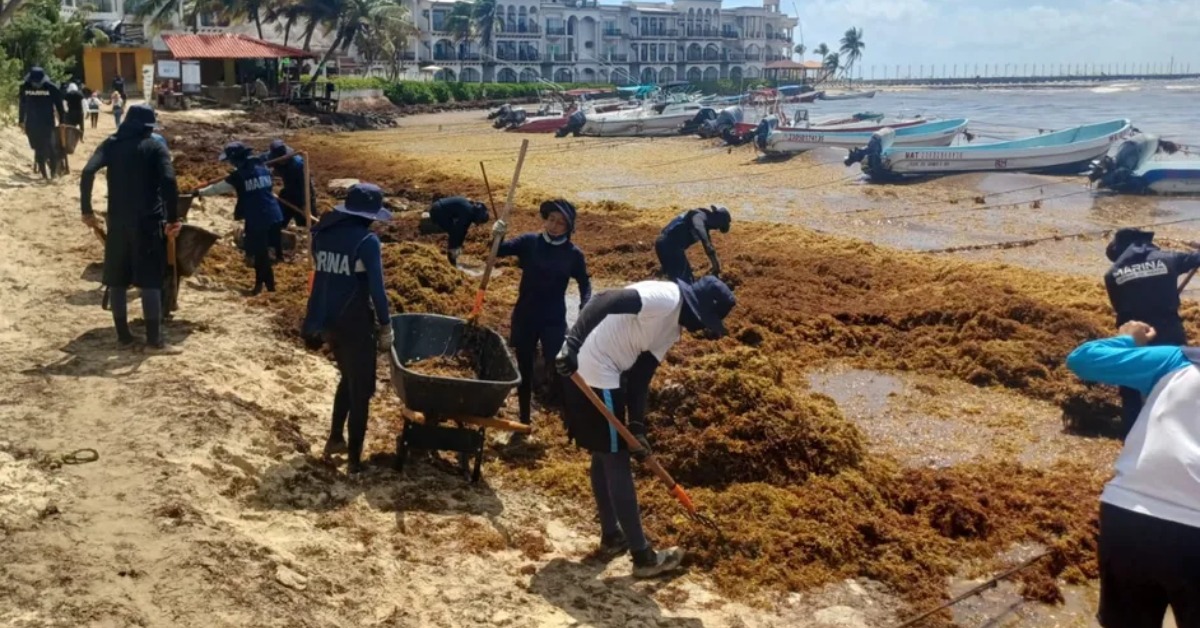
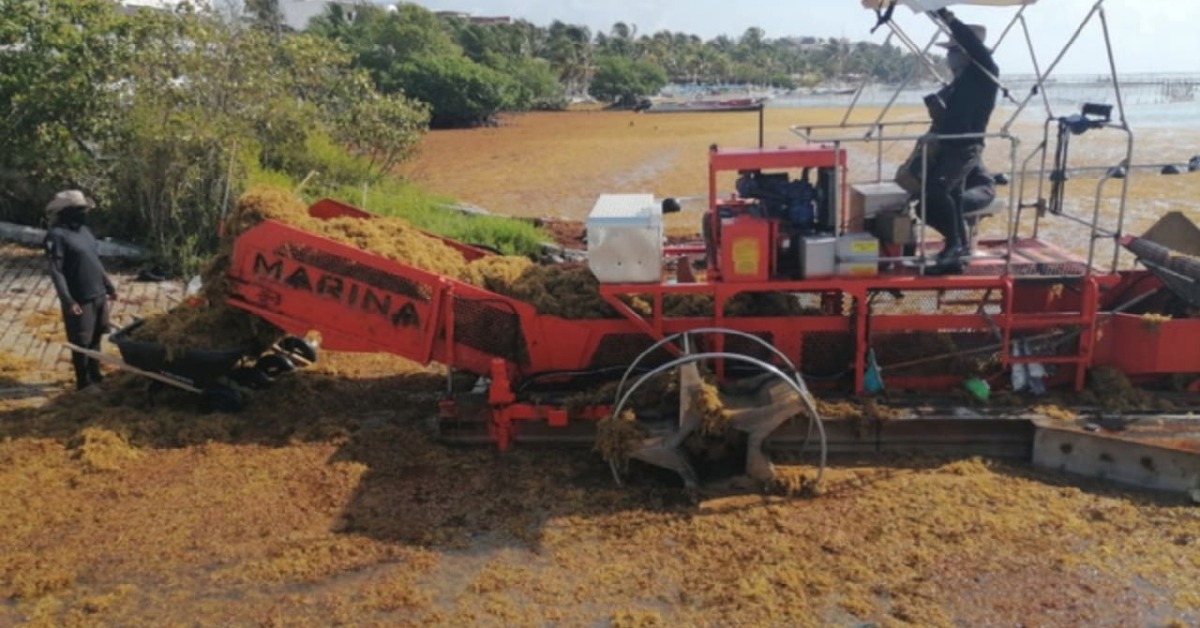
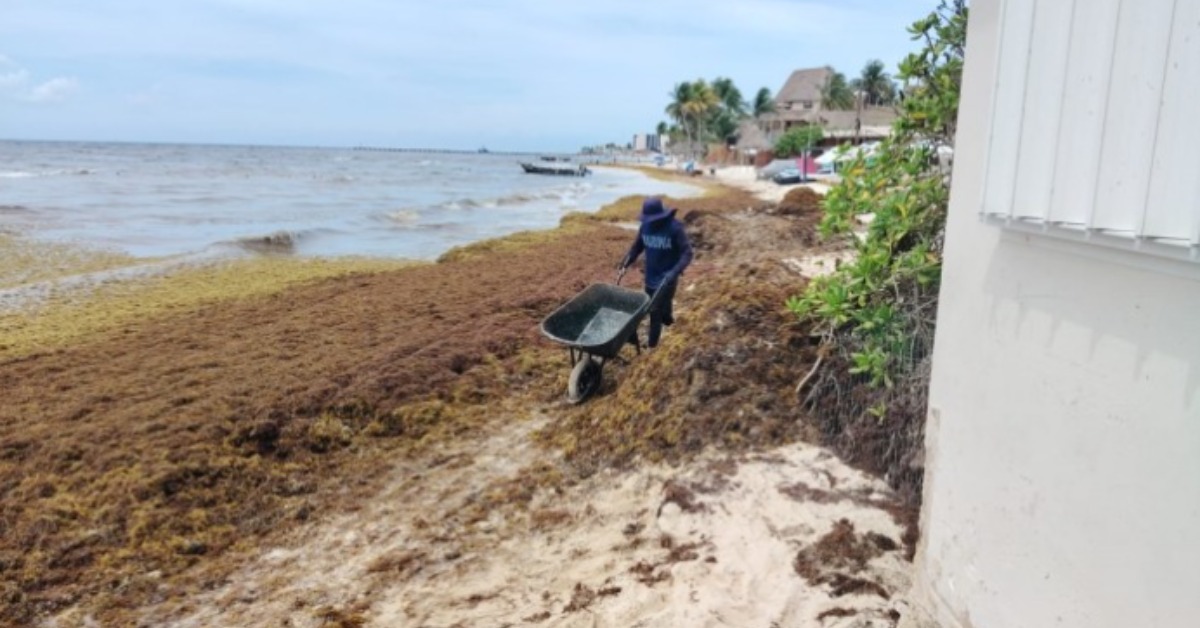
Cleaning sargassum is not a job for a man with a rake and a heroic Instagram caption. It is payroll, machinery, fuel, hauling, disposal, supervision, beach access management, coordination with the Navy, and constant timing. Crews try to work before the main visitor day begins. Machinery must avoid turtle nests. Trucks need somewhere to load, drive, dump, and return.
The municipal cost is not small. Heraldo de México Quintana Roo reported in March that Playa del Carmen had 86 million pesos available for sargassum response in 2026. The figure included 46 million pesos from the Environmental Sanitation Fee and another 40 million pesos in a disaster fund that could be activated in the event of a major disaster.
That 86 million pesos should not be treated as the exact final bill. It is the available financial cushion reported by municipal officials, not a neat per-ton invoice. Collection varies by week, beach, weather, currents, and staffing. During heavy periods, the city also pays in ways that do not fit neatly into a sargassum budget line, including road wear, staff diversion, extra supervision, and pressure on public works schedules.
Playa del Carmen’s own 2026 strategy called for five kilometers of anti-sargassum barriers, daily satellite monitoring, a beach-by-beach alert system, and coordination with the Navy, state officials, and hotels. Later reporting said around 14,000 tons had already been removed from public beaches by late May, with more than 320 people involved through municipal, Zofemat, Navy, and volunteer efforts. Vallarta Daily has tracked the same season through its coverage of Playa del Carmen’s heavier 2026 sargassum season, the new sargassum gas monitor, and Navy collection reports for Quintana Roo.
Heavy trucks move the problem inland
Sargassum does not vanish when it leaves the sand. It moves through the city on heavy trucks, often wet, salty, and dense. That is where the beach problem becomes a public works problem.
Canal 10 reported that Playa del Carmen officials were inspecting streets near sargassum collection points after repeated heavy-truck traffic damaged asphalt and paving. The city’s infrastructure secretary, Doris Aké Sierra, said the affected streets were mainly roads not designed for the constant passage of large vehicles, especially routes with beach access.
So far, the public reporting reviewed for this article does not give a final street-by-street damage list. That point matters. It is more accurate to say the city has identified damage near collection points, beach-access routes, the center, and tourism corridors, including areas around Fifth Avenue, while officials continue inspections. Naming specific blocks without an official list would turn a real infrastructure issue into guesswork.
The road damage also exposes a common sargassum trap. Moving the seaweed quickly improves the beach image, but rapid removal creates pressure elsewhere. Trucks need routes. Neighbors deal with noise and smell. Pavement takes the weight. Public works staff must repair streets while still keeping the tourism zone presentable. A clean photo at the waterline can hide a pothole forming three blocks away.
Reuse has promise, with a scale problem
Every sargassum season produces a familiar hope: turn the stuff into fertilizer, bricks, fuel, cosmetics, packaging, or some other circular-economy miracle. Some ideas deserve attention. Others belong in the folder labeled “nice conference panel, call me when it handles 30,000 tons.”
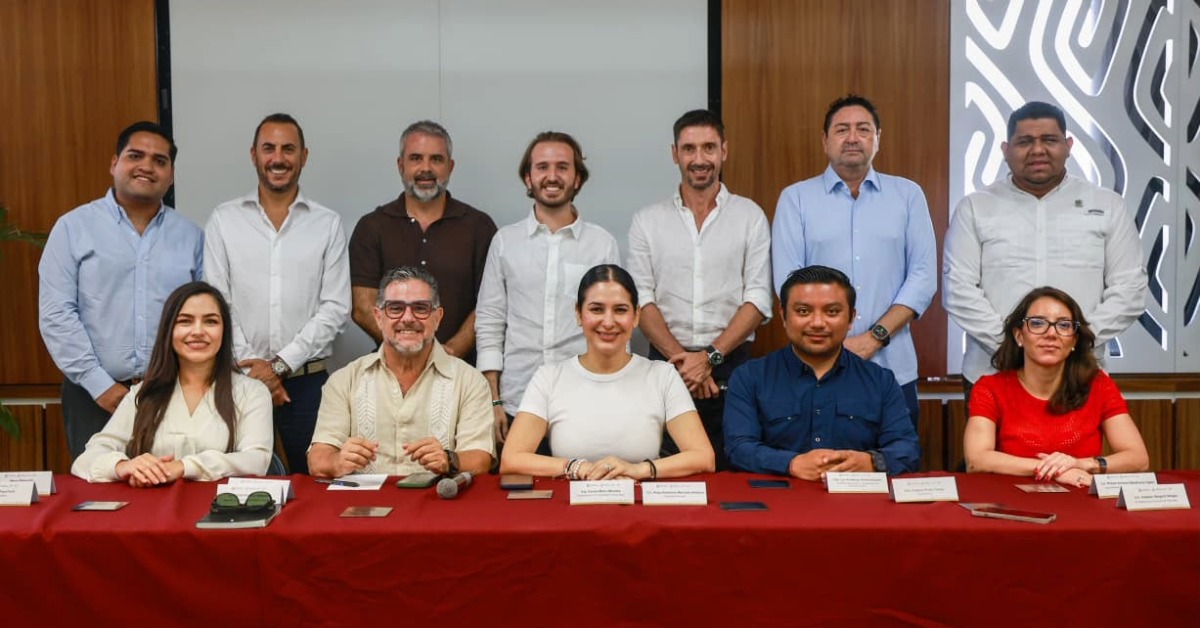
Playa del Carmen is now pushing the agricultural angle. The city government said its Agricultural and Fisheries Development office participated in a cattle-sector session at Rancho Tigre Grande on June 4 to discuss sargassum as a soil improver and an input for local production. Officials said 15 livestock producers attended and reviewed ways to use the material responsibly.
That is serious enough to watch, but not large enough to solve the beach problem on its own. A separate local report said producer Fernando Chico Hall has used sargassum to improve pastureland at Rancho Tigre Grande, describing a process that leaches out salt before the material is worked into soil. His case suggests value for some producers under controlled conditions.
The hard part is scale and safety. Sargassum can carry salt, organic load, and heavy metals, including arsenic and cadmium, depending on where it grew and how it decomposed. Reuters has reported that countries are exploring uses such as biofuels, fertilizers, and bioplastics, while researchers warn that toxin removal, unpredictable supply, and limited funding remain barriers.
A useful reuse project needs more than a clever product. It needs testing, transport economics, contamination controls, buyers, permits, predictable processing, and a way to handle peak arrivals. Without that, reuse stays helpful at the margins while the city still pays to collect and haul most of the biomass.
How to read a Playa del Carmen sargassum season
Sargassum is seasonal, uneven, and stubbornly local. One beach may look awful while another stretch is usable. Morning conditions can differ from those in the late afternoon. Wind, currents, barriers, cleanup schedules, and beach shape all matter.
That unevenness creates two bad habits. Visitors sometimes panic after seeing one ugly photo. Tourism promoters sometimes minimize real damage because another beach looks fine. Neither habit helps. The better approach is to treat sargassum as a moving condition with economic consequences.
For travelers, checking beach reports close to the trip helps more than relying on a photo from last week. Backup days around cenotes, inland activities, Cozumel, or less-affected beaches can save a vacation from becoming one long argument with seaweed. Residents have a different calculation. A heavy season can touch municipal spending, worker income, hotel discounts, road maintenance, odors, and local politics.
Playa del Carmen has lived with sargassum long enough to stop treating it as a surprise. The real test now is whether the city can make the response less wasteful each year. Cleaner beaches are only one part of that job. Protecting workers, keeping small hotels competitive, publishing clearer road-impact information, and demonstrating which reuse projects can scale would make the season easier to understand and live with.