Cancún officials are preparing a public inauguration event for the Nichupté Bridge on Sunday, May 3, marking the expected opening of a major new road connection between central Cancún and the Hotel Zone.
The event is expected to include public activities, with state officials saying more details will be released in the coming days. A community race has also been mentioned as part of the opening program, though full logistics have not yet been confirmed.
President Claudia Sheinbaum is expected to attend the inauguration, according to local reporting. Quintana Roo Governor Mara Lezama has also described the opening as a public event where residents can take part.
For Cancún, the bridge is more than a ceremonial ribbon-cutting. It is one of the city’s most important mobility projects in years, built to reduce pressure on the main routes connecting the urban area to the Hotel Zone.
Why the bridge matters for Cancún
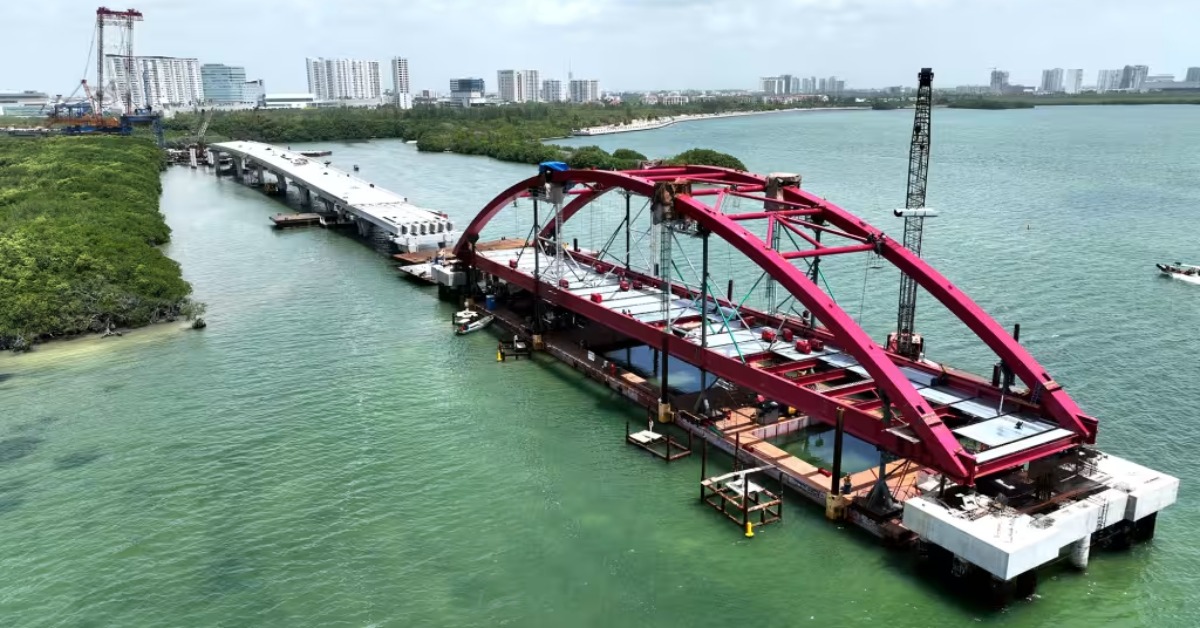
The Puente Vehicular Nichupté is intended to create a new route across the Nichupté Lagoon system. It links the city side near Boulevard Luis Donaldo Colosio with Boulevard Kukulcán, the main road through Cancún’s Hotel Zone.
That connection matters because Cancún’s Hotel Zone has long depended on limited access routes. Traffic can slow sharply during rush hours, storms, accidents, hotel shift changes, and major tourist periods.
The new bridge is expected to help residents, hotel workers, airport-area commuters, taxi and bus operators, tourists, and emergency crews. It gives the city another way to move people between the mainland and the tourism corridor.
For international residents and visitors, the bridge could affect routine trips to hotels, beaches, restaurants, medical appointments, and the airport corridor. It may also change how traffic is managed during hurricanes or other emergencies.
Officials have promoted the bridge as a way to cut travel times and improve daily movement in a city where tourism growth has outpaced some road infrastructure.
What the project includes
The project is about 11.2 kilometers in total. The main elevated section stretches about 8.8 kilometers over the Nichupté Lagoon system, with additional road connections on both ends.
The bridge is designed with three vehicle lanes, including one reversible lane that can be adjusted based on traffic demand. It also includes a bike path, pedestrian-related infrastructure, lighting, and intelligent transport systems connected to security operations.
The route is meant to function as a practical road link, not just a tourism project. Its use will likely be shaped by traffic controls, final access rules, public transport planning, and how drivers adapt after opening.
The bridge is also tied to broader mobility changes in Cancún. Local authorities have discussed a new bus service connected to the bridge after testing and operational adjustments.
A project marked by delays and cost increases
The Nichupté Bridge has been closely watched because it has faced repeated delays. The project began construction in 2022 and was expected to open earlier, with several target dates later missed.
The delays have been linked to technical issues, finishing work, inspections, load testing, access connections, and the challenge of building over a lagoon system.
The project has also drawn attention for its cost. Initial estimates were below 6 billion pesos, while later figures have placed the total cost above 12 billion pesos, depending on the source and accounting method used.
That increase has made the bridge a frequent subject of public debate. Supporters point to the bridge’s value for mobility and tourism. Critics have questioned the cost increases, delays, and environmental impact.
Federal infrastructure records list the project as part of Mexico’s national road infrastructure program. Those records describe the bridge as a public project promoted by the Secretaría de Infraestructura, Comunicaciones y Transportes.
Environmental concerns remain part of the story
The bridge crosses one of Cancún’s most sensitive natural areas. The Nichupté Lagoon system includes mangroves, wetlands, and coastal ecosystems that have already faced pressure from urban and tourism development.
Environmental concerns have followed the project from early planning through construction. Reports and environmental documents have pointed to direct effects on mangrove, wetland, and lagoon areas.
Authorities have said mitigation and restoration measures are part of the project. These include rehabilitation work in affected areas and broader conservation commitments connected to the Manglares de Nichupté protected area.
The environmental debate is likely to continue after the bridge opens. Its long-term impact will depend on maintenance, drainage controls, traffic management, runoff protection, and the actual enforcement of restoration plans.
For Cancún, the bridge reflects the central tension in the city’s growth. The city needs better mobility, but it is also built beside fragile ecosystems that support its tourism economy.
What happens next
The May 3 event is expected to mark the public opening phase of the bridge, though officials still need to confirm final access details, traffic rules, and any restrictions tied to the inauguration.
Drivers should expect special traffic management around the event. Public activities may also affect nearby roads, especially around the city-side and Hotel Zone access points.
Once in service, the bridge’s real test will come during normal weekday traffic, hotel shift changes, high tourism periods, and rainy-season disruptions.
If the bridge works as planned, it could reduce some of Cancún’s most frustrating bottlenecks. If traffic simply shifts to new pressure points at the entrances and exits, further road management may be needed.
For now, the May 3 inauguration gives Cancún a firm date for a project residents have been waiting years for. The celebration will be public, but the larger question is how much daily mobility improves after the first cars cross.