Quintana Roo’s governor is trying to stop one familiar image from defining the entire Mexican Caribbean. Her message is simple: Sargassum is real, but it does not cover every beach every day. That reassurance comes at a delicate moment, as officials promote the spring travel season while scientists and Navy monitors warn of an early and potentially intense year. For travelers, the real question is no longer whether sargassum exists, but how much is offshore, where it may land, and how fast conditions can change from one beach to the next.
A message aimed at travelers
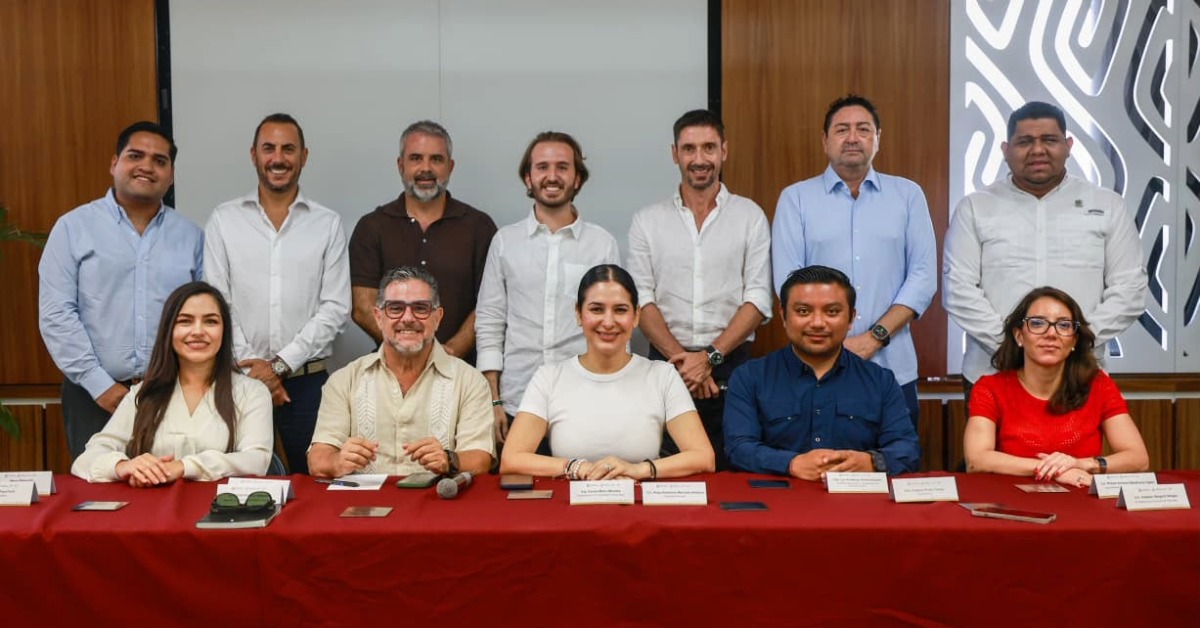
On Friday, Governor Mara Lezama said sargassum is not present on every Quintana Roo beach or every day. The remark was meant to ease fears ahead of the spring travel season. Some travelers assume the Mexican Caribbean is uniformly covered by seaweed. Her message was not that the problem is gone. It was that beach conditions are uneven, temporary, and often very local.
That distinction matters because tourism remains the state’s economic engine. The official tourism dashboard puts 2025 arrivals in the Mexican Caribbean at about 20.24 million. It also recorded 7.7 million cruise passengers and crew, while hotel occupancy averaged 71.3 percent. Many of those visitors came from the United States, Mexico, and Canada. When sargassum headlines spread, the effect can reach hotels, tours, restaurants, and workers well beyond the shoreline.
Why this year is drawing more attention
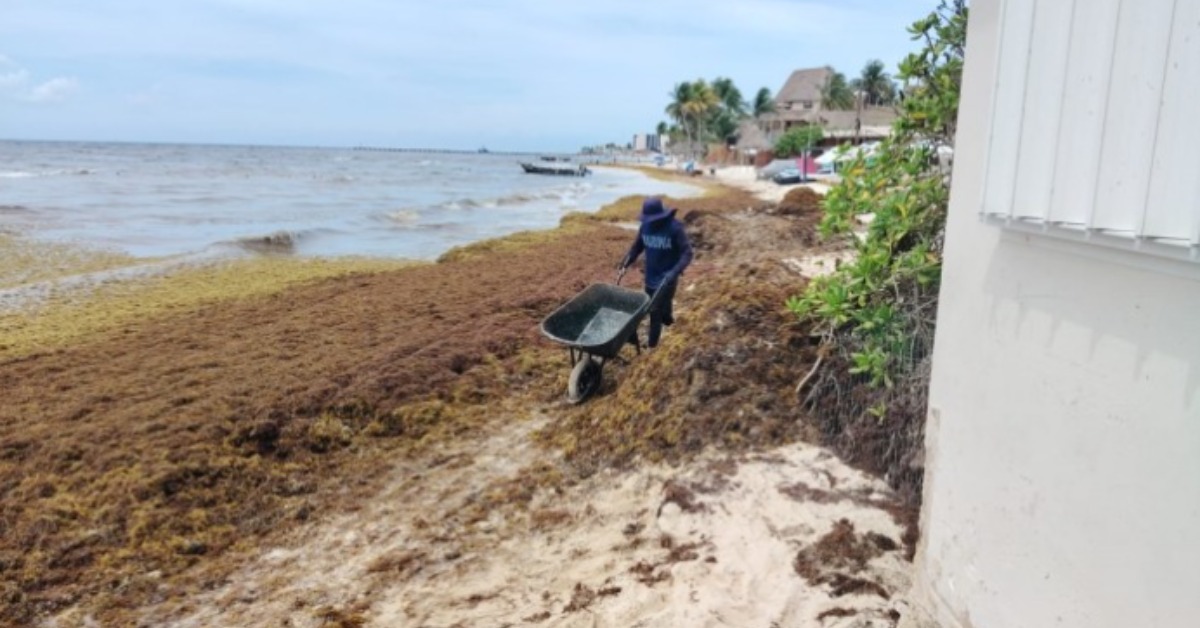
The governor’s reassurance comes as scientists and Mexican officials monitor an early, potentially heavy 2026 sargassum season. Sargassum is a floating brown seaweed found in the marine environment offshore. Trouble starts when large amounts reach the coast, pile up on beaches, and begin to decompose. That can affect beach access, water color, odor, and cleanup costs.
A satellite monitoring system run by the University of South Florida said February levels remained at record-high levels in most monitored regions. Its January outlook had already raised concern in the western Caribbean. It said the Mexican Caribbean coast could start seeing sargassum wash ashore early in the year. A daily Secretaría de Marina bulletin issued March 19 also showed why blanket statements can mislead in both directions. It is estimated that 35,525 tons of sargassum are in the Mexican Caribbean. It also noted that the amount seen offshore does not mean all of it will reach beaches.
That same Navy bulletin projected possible arrivals on several stretches. These included Cozumel, the corridor from Playa del Carmen to Puerto Morelos, and the southern coast from Xcalak to Mahahual. Other offshore clusters were tracked without a likely beach landing over the next 24 to 48 hours. That helps explain the governor’s point. Sargassum is real, but it does not hit every beach at once. It also does not arrive with the same intensity or duration everywhere.
What officials are doing
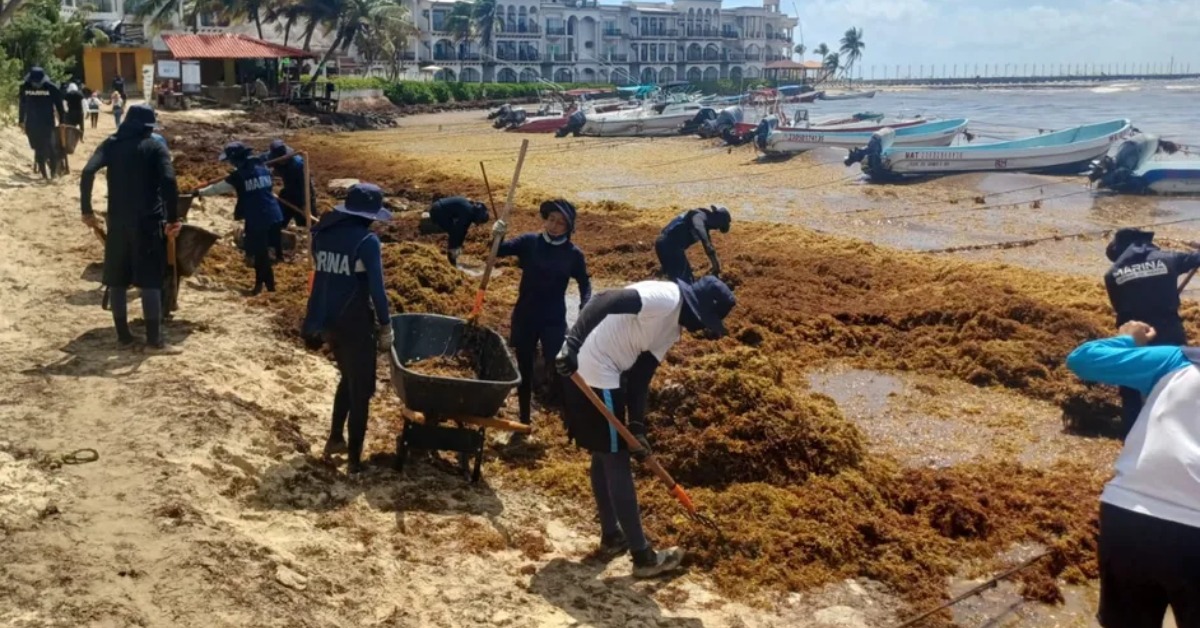
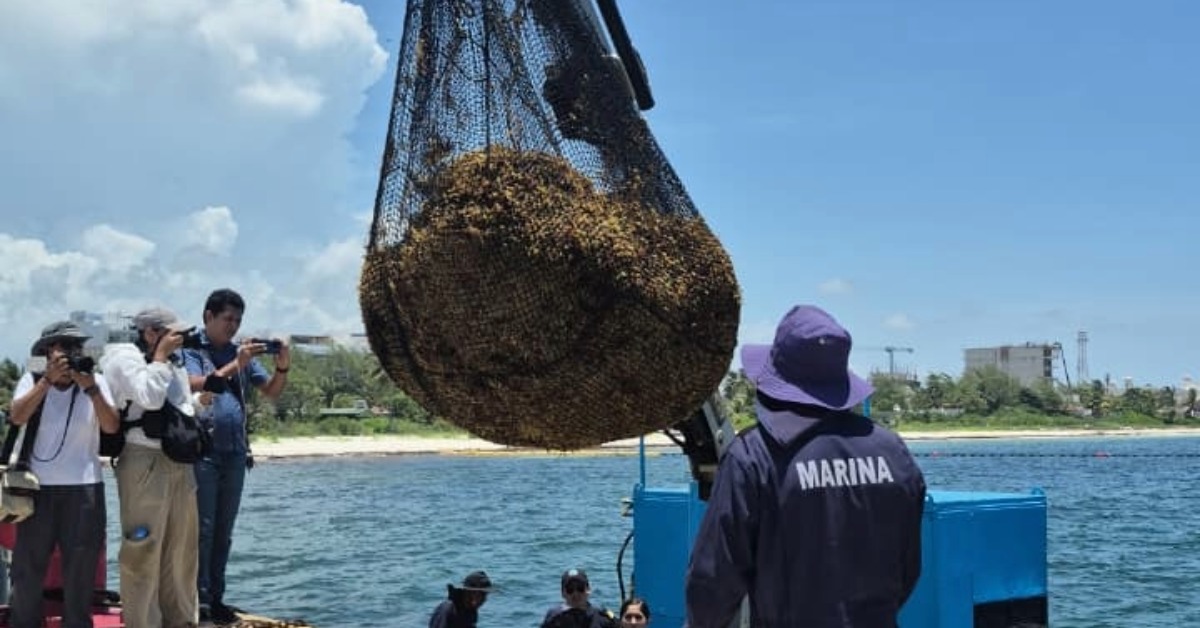
State officials say they moved early because the season also appears to have arrived early. In late February, Quintana Roo said it had already collected 4,558 tons of sargassum in 2026. The state also said 6,600 meters of anti-sargassum barriers had been installed in key areas. It identified Mahahual, Puerto Morelos, and Playa del Carmen among them. Another 7,500 meters had been purchased for distribution across coastal municipalities. The plan includes manual and mechanical beach cleanup. It also includes transport to authorized disposal sites and more work in March with state crews.
The government is also trying to move beyond cleanup alone. Officials have discussed using collected sargassum in energy projects and as raw material for products such as pavers. That does not solve the tourism problem in the short term. But it shows Quintana Roo is treating sargassum as both a coastal emergency and a longer-term economic and environmental challenge.
What travelers should understand
For travelers, the most useful takeaway is that both extremes can be misleading. It is not accurate to assume the entire Mexican Caribbean is unusable. It is also unwise to assume official reassurance means there will be no disruption. Beach conditions can change quickly with winds, currents, and local cleanup capacity. A beach that looks manageable one day can look very different the next.
That is why the real story is not just whether sargassum exists. It is also about where it is, how much of it is offshore, and how quickly authorities can respond. For Quintana Roo, this is now a yearly test of infrastructure, communication, and trust. For residents and visitors, the Caribbean season cannot be judged from one photo, one headline, or one beach.
With information from Gobierno de Quintana Roo, Secretaría de Marina, Secretaría de Turismo de Quintana Roo