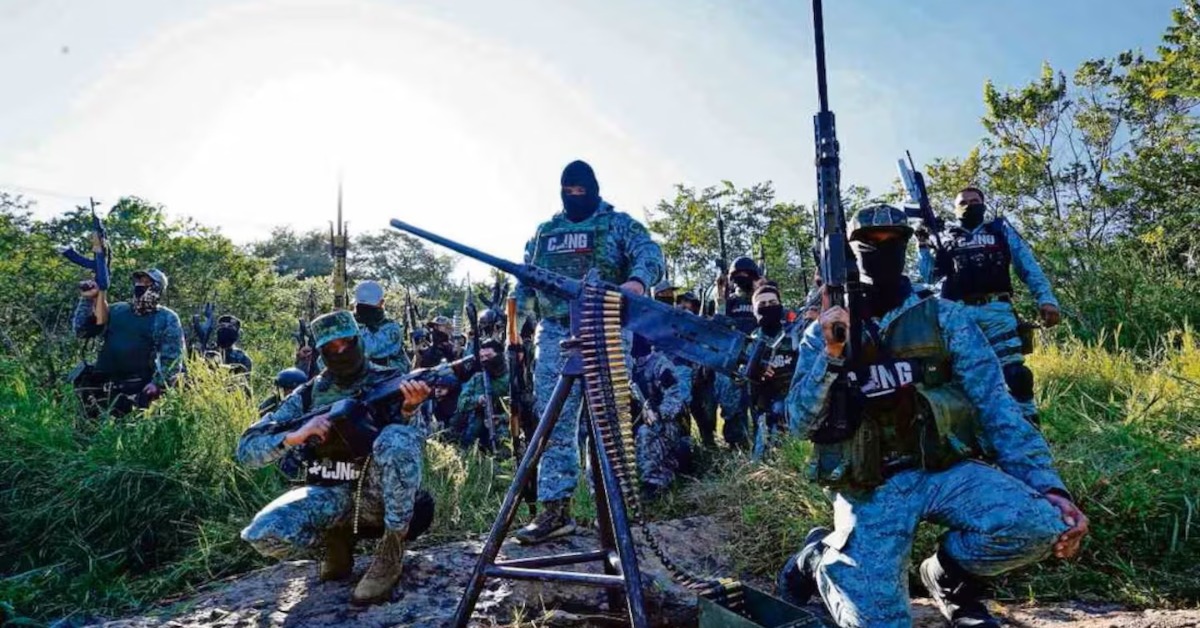
A U.S. federal indictment unsealed in late July lays out a sprawling CJNG military arms trafficking network that funneled heavy weaponry and cocaine to the Cartel de Jalisco Nueva Generación, one of Mexico’s most violent transnational criminal organizations. The charges, brought in the Eastern District of Virginia, name four foreign nationals accused of plotting since at least September 2022 to supply the cartel with machineguns, rocket launchers, anti-aircraft systems, and other military-grade weapons while coordinating cocaine distribution.
The lead defendant, Bulgarian national Peter Dimitrov Mirchev, allegedly headed the network. He and three accomplices—Kenyan national Elisha Odhiambo Asumo, Ugandan national Michael Katungi Mpeirwe, and Tanzanian national Subiro Osmund Mwapinga—are accused of creating layers of deception to hide the true destination of the arms. The indictment alleges they used falsified documentation, including a counterfeit End-User Certificate (EUC) purporting to come from the government of Tanzania, to mask a shipment of 50 AK-47 assault rifles with ammunition that was intended for the CJNG.
U.S. Attorney Erik S. Siebert of the Eastern District of Virginia and DEA Special Operations Division leadership disclosed that the conspiracy extended beyond that initial shipment. The accused planned future transfers worth roughly 53.7 million euros (about $58 million U.S.) in weaponry, potentially including surface-to-air missiles, anti-aircraft drones, and the ZU-23 anti-aircraft system. The indictment says Mirchev prepared detailed lists of arms for the cartel, while his co-conspirators arranged the necessary falsified arms-control paperwork to obscure the true end-user.
Weapons for CJNG
According to the court filing, the defendants believed the CJNG would use the weapons to bolster its trafficking operations, including large cocaine shipments into the United States. In February 2025, the CJNG received the designation of a Foreign Terrorist Organization under U.S. law and was also labeled a Specially Designated Global Terrorist, making any transfer of arms to it broadly prohibited.
The operation that gathered the evidence against the accused was undercover. Agents posed as cartel representatives, and in those interactions Mirchev and his associates negotiated and coordinated the illegal transfers while attempting to evade detection by international law enforcement. The conspiracy was hierarchical: Mirchev recruited Asumo, who then brought in Mpeirwe, who in turn enlisted Mwapinga. Together they secured the fraudulent Tanzanian EUC that provided the superficial legal cover for the weapons’ export from Bulgaria.
Mirchev was detained in Madrid
The arrests occurred on April 8, 2025, through a coordinated international effort involving the DEA’s Special Operations Division – Bilateral Investigations Unit and partner agencies in several countries. Mirchev was detained in Madrid, Spain, and is awaiting extradition to the United States. Asumo was captured in Casablanca, Morocco, and is in extradition proceedings. Mwapinga was arrested in Accra, Ghana, and was extradited to the U.S. on July 25, 2025. Mpeirwe remains at large.
U.S. authorities credited substantial assistance from international partners. The Hellenic National Police in Greece, Ghanaian justice institutions including the Office of the Attorney General and Narcotics Control Commission, and the DEA Attaché in Accra all played key roles in the investigation and extradition processes.
If convicted, each defendant faces a mandatory minimum of 10 years in federal prison, with potential sentences up to life, though actual terms will depend on federal sentencing guidelines and the discretion of the presiding judge. The charges include conspiracy to distribute cocaine; conspiracy to possess firearms—including machineguns and destructive devices—in furtherance of drug trafficking; and conspiracy to provide material support or resources to a foreign terrorist organization.
Prior implication in arms dealings
The exposed network echoes past allegations against Mirchev. Court records note his prior implication in arms dealings tied to Viktor Bout, a notorious international arms trafficker convicted of multiple offenses, including supplying anti-aircraft missiles and plotting violence against U.S. nationals.
The case forms part of the broader Department of Justice initiative dubbed Operation Take Back America, which marshals federal resources to confront cartels, transnational criminal organizations, and the flow of illicit goods into and through U.S. jurisdictions.
The CJNG military arms trafficking network revelation underscores how deeply interconnected global arms trafficking, drug distribution, and organized crime have become. U.S. prosecutors framed the indictment as both a disruption of a high-level weapons pipeline and a warning that international criminal logistics—leveraging fake state documentation and layered recruitment—are a primary target for future enforcement.
Key actors in the prosecution, Assistant U.S. Attorneys Anthony T. Aminoff and Edgardo J. Rodriguez, are handling the case, which remains active as authorities continue to seek Mpeirwe and pursue extradition of the detained suspects.
The defendants are presumed innocent until proven guilty in court.
CJNG, arms trafficking, U.S. Department of Justice, DEA, Peter Dimitrov Mirchev, Mexico cartels, military-grade weapons, international law enforcement