Mexico City, July 14, 2026 – The head of the U.S. Drug Enforcement Administration has moved Washington’s accusations beyond individual corrupt officials, describing Mexican cartel networks and the country’s government as effectively indistinguishable in prepared remarks published by the agency.
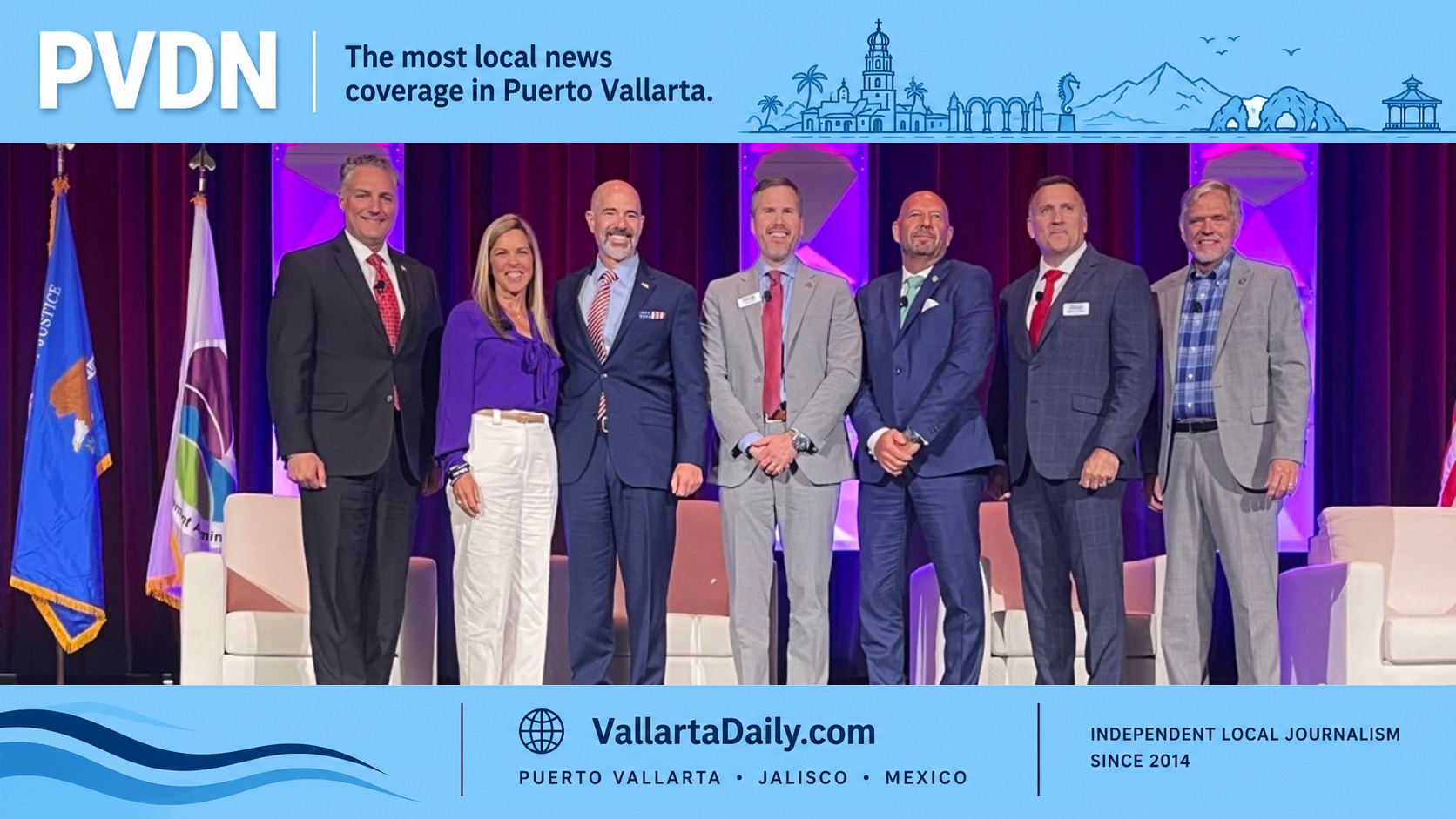
DEA Administrator Terrance Cole told a fentanyl summit in Orlando, Florida, that the agency was targeting traffickers, distributors, money launderers, chemical suppliers and anyone profiting from the illegal drug trade.
“This includes the deadly connection between cartel networks and the Mexican Government,” Cole said in the official transcript of his remarks, before describing the two as the same and declaring them the DEA’s top priority.
The statement was not an improvised answer during an interview. It appeared in Cole’s prepared address at the DEA’s inaugural Fentanyl Free America Summit, giving the accusation the weight of a formal agency position.
It was also considerably broader than the criminal cases Washington has placed on the public record. Cole did not identify which parts of the Mexican government he was referring to, name additional officials or disclose evidence supporting a claim about the government as a whole.
Mexican President Claudia Sheinbaum did not deliver a point-by-point response to Cole’s wording during her Tuesday morning press conference. Her comments addressed the separate U.S. case against Sinaloa Governor Rubén Rocha Moya, who has been on leave since Washington requested his detention for extradition.
Sheinbaum said the United States had still not provided Mexico with evidence against Rocha.
“We are not going to cover for anyone, that is very important, but neither are we going to accuse anyone without evidence,” she said in comments reported after the morning conference. She said Mexico’s Attorney General’s Office, the FGR, was responsible for reviewing the case.
A broader accusation than the cases on record
U.S. prosecutors charged Rocha and nine current or former Sinaloa officials in April with drug trafficking and weapons offenses.
The indictment alleges that Rocha received support from Los Chapitos during his 2021 election campaign and later protected the Sinaloa Cartel faction. Prosecutors also accused police commanders, prosecutors and other state officials of accepting bribes, warning traffickers about planned operations and releasing cartel members from custody.
Those allegations are detailed and directed at named defendants. They have not been proven at trial, and the indictment does not establish that the entire Mexican government operates as part of a cartel network.
The distinction is central to the current dispute. Evidence presented against a governor, police commander or prosecutor can be examined by courts and answered by the accused. A statement equating cartel networks with Mexico’s government does not provide the same boundaries, leaving it unclear whether Cole was referring to compromised municipal departments, state administrations, federal institutions or the Mexican state in its entirety.
PVDN has previously reported on the legal questions surrounding the case after Rocha took leave and lost his immunity, as well as Washington’s warning that more Mexican officials could face U.S. prosecutions.
Cooperation continues beneath the rhetoric
Cole’s accusation also falls within a security relationship that is more complicated than a simple rift between the two governments.
Mexico transferred 37 wanted suspects to U.S. custody in January, following groups of 29 and 26 people sent north during 2025. The Justice Department described the January operation as the largest transfer of its kind and publicly credited cooperation with Mexican authorities.
The two countries have also continued selected operational work, including maritime drug interdiction involving Mexican and U.S. forces.
At the same time, Sheinbaum has restricted the space available to U.S. agencies inside Mexico. Her government has rejected descriptions of shared missions that were not formally approved and has insisted that cooperation must respect Mexican command and territorial control. PVDN reported in February that Mexico had halted new permits for some U.S. agents while denying that joint anti-cartel operations were taking place on Mexican soil.
That tension matters in Jalisco, where the DEA considers the Jalisco New Generation Cartel one of its main targets. U.S. authorities recently identified Juan Carlos Valencia González, known as “El 03,” as the cartel’s new leader, keeping federal attention on criminal structures operating across Jalisco and the Pacific region.