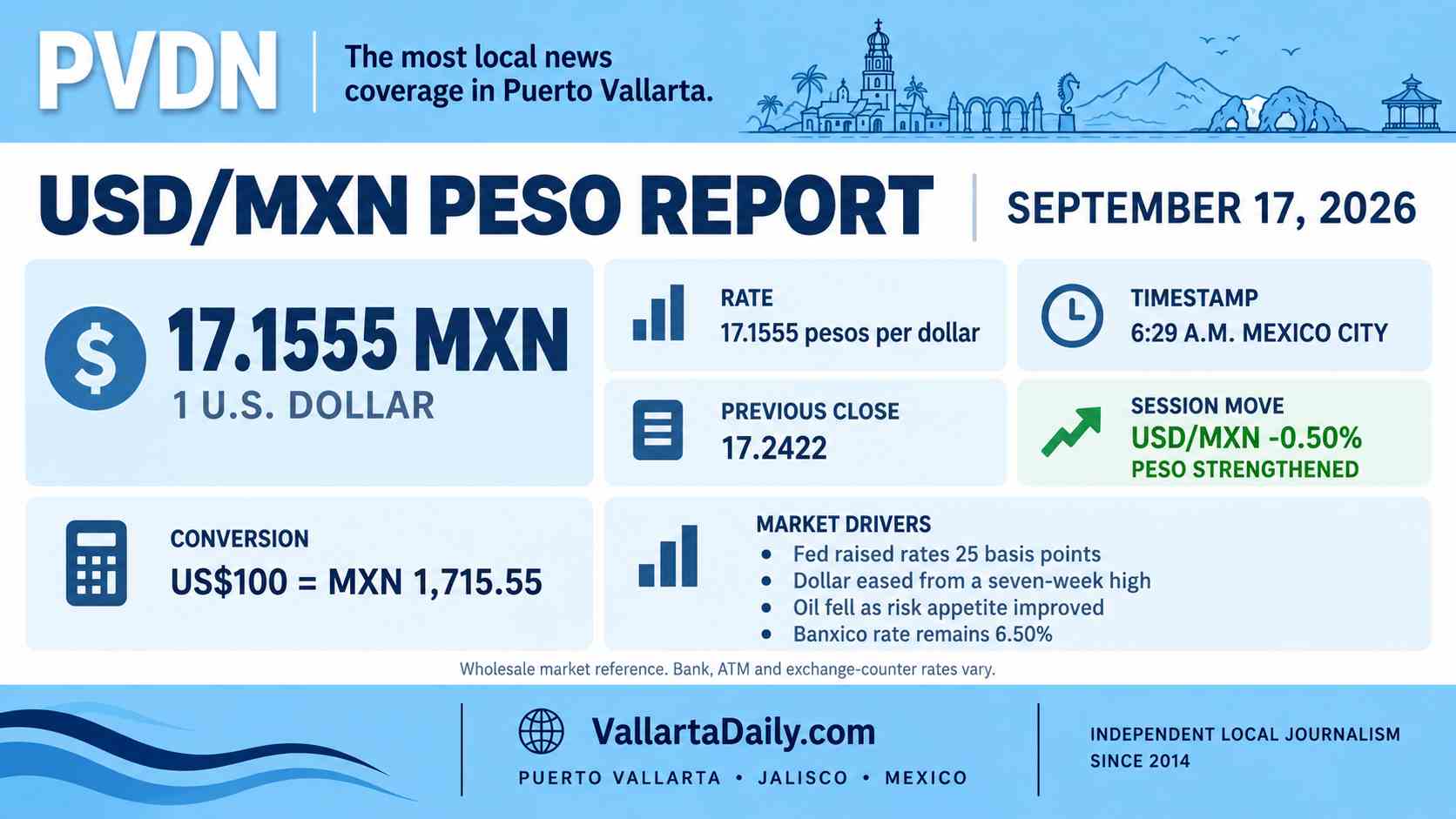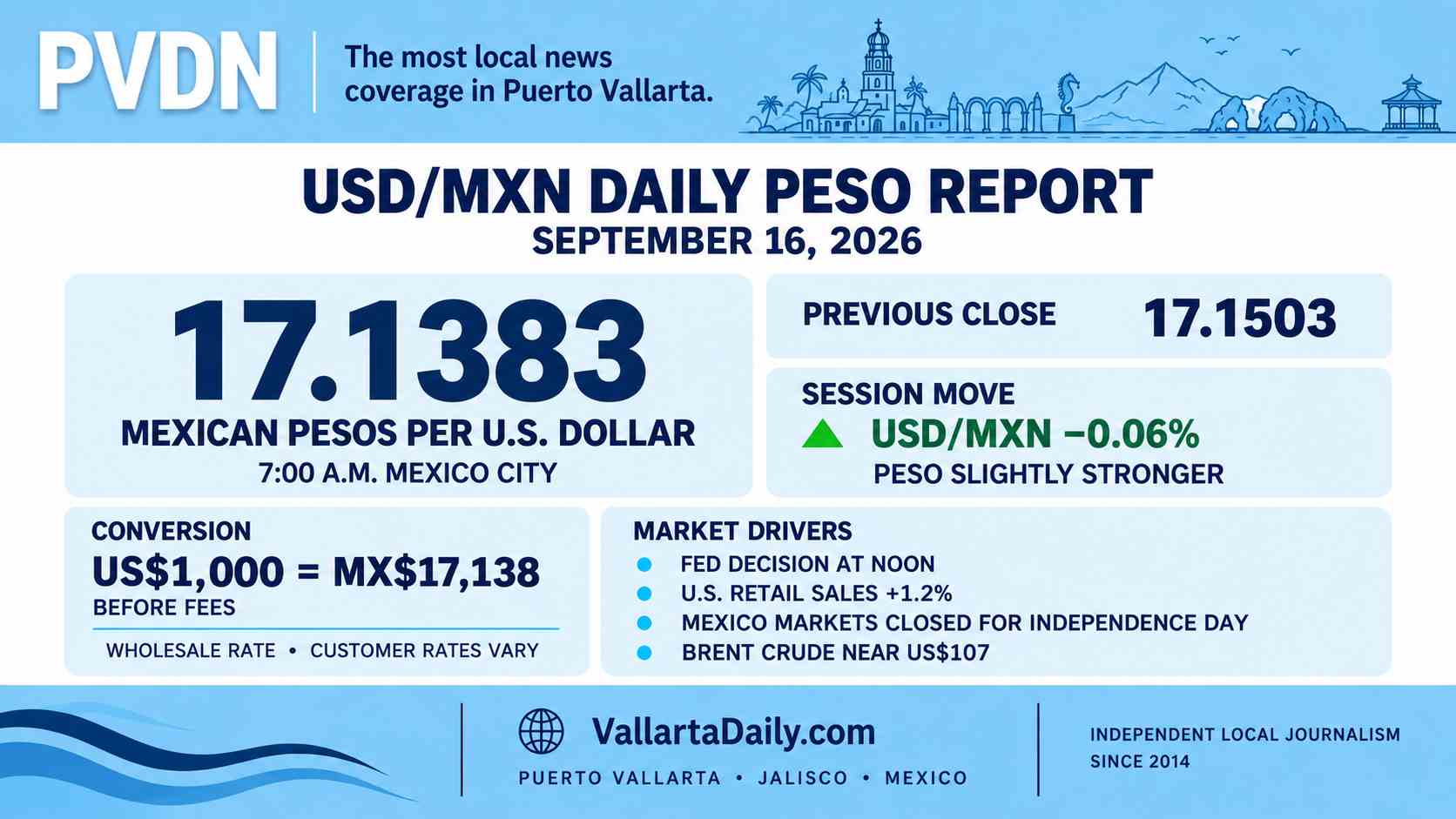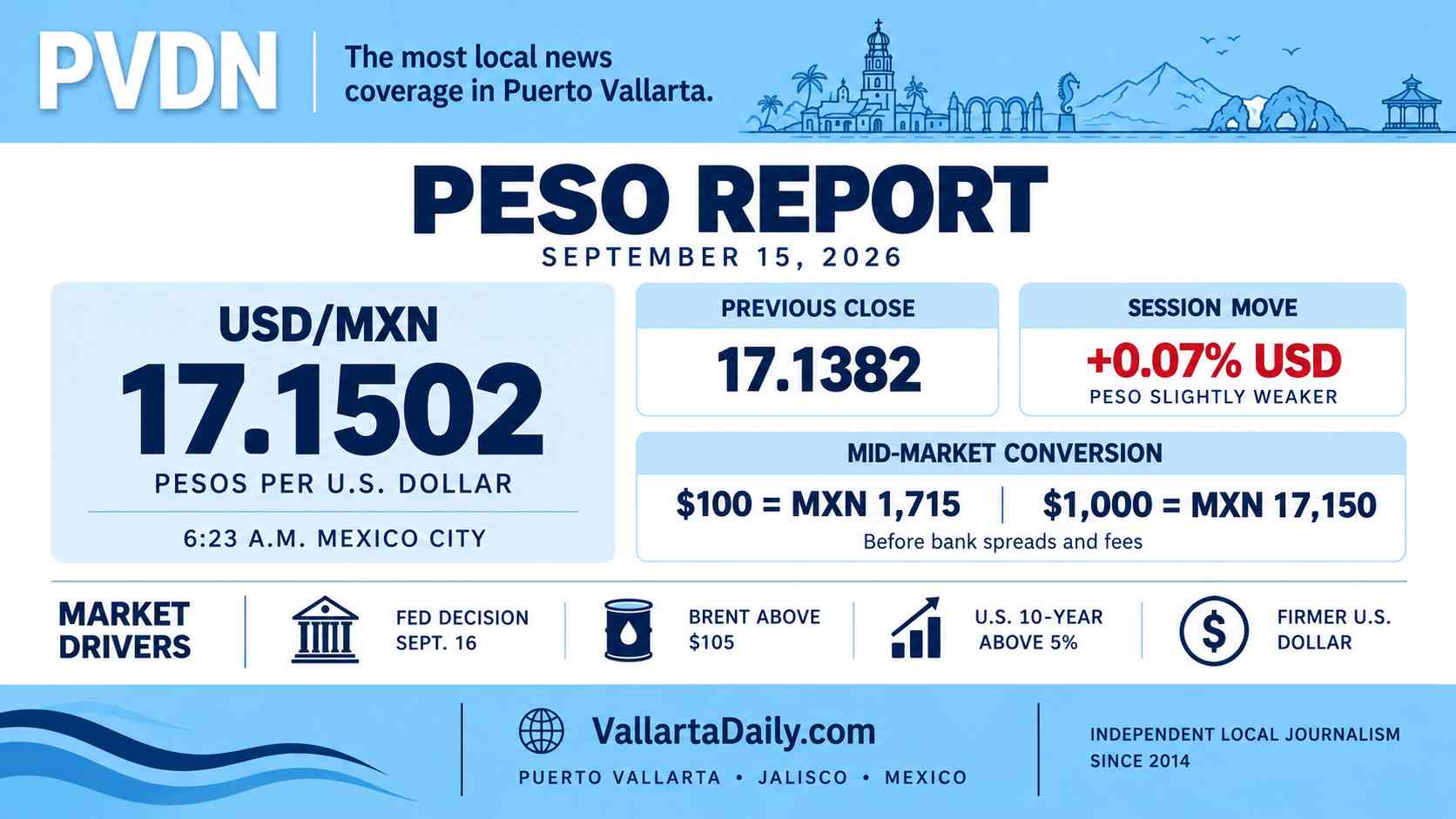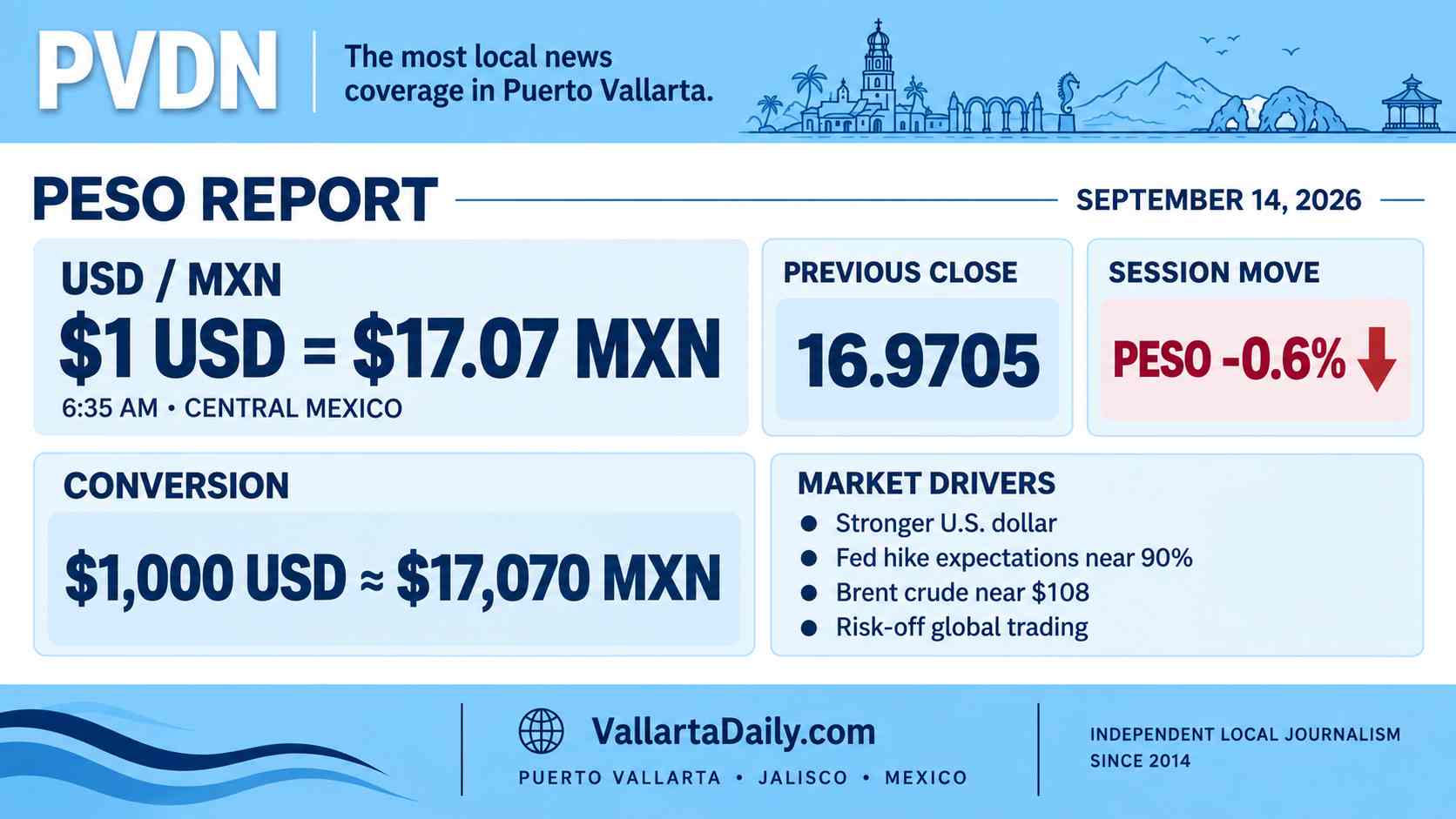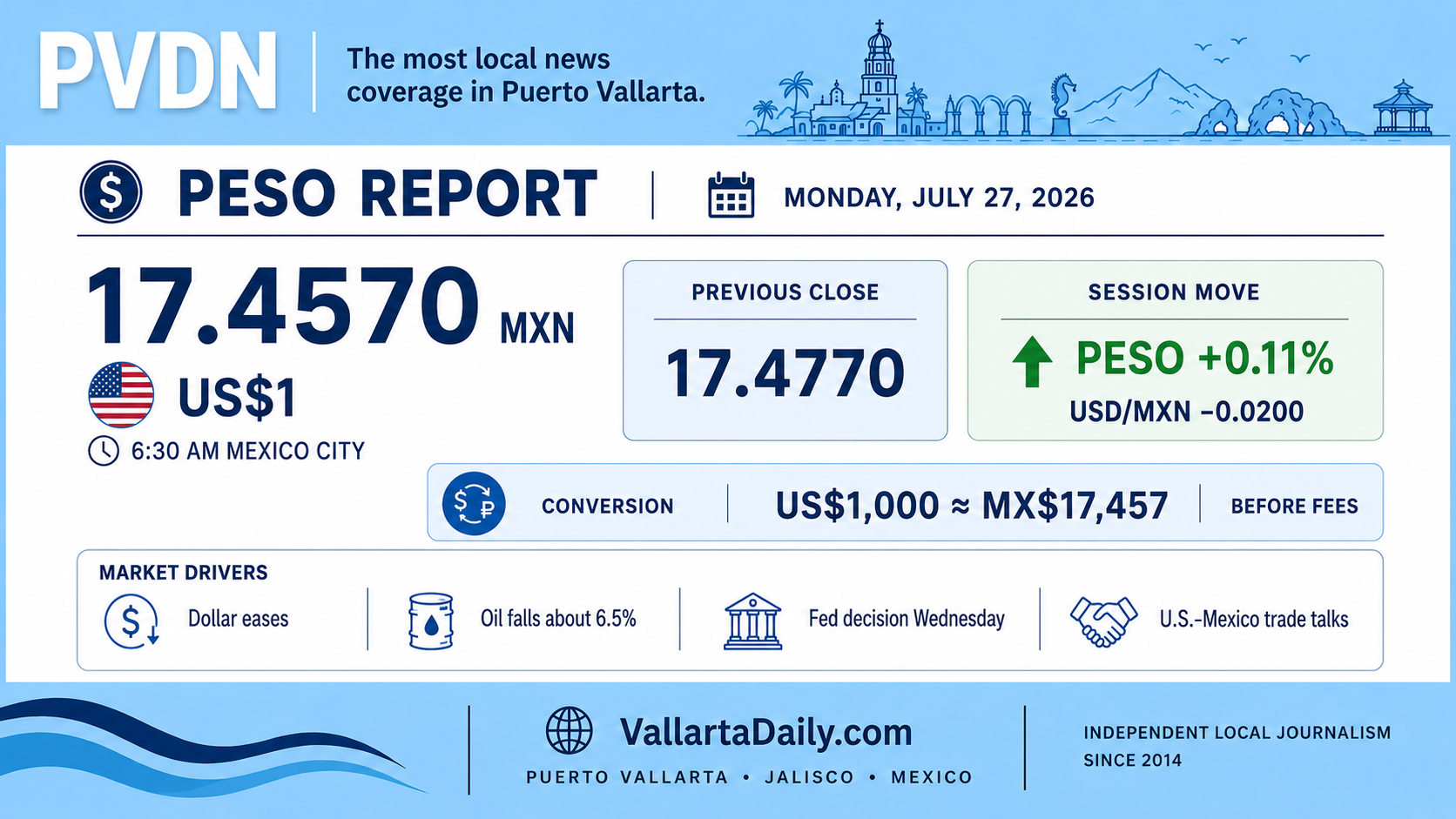
Puerto Vallarta, Jalisco, July 27, 2026 – The Mexican peso traded near 17.4570 per U.S. dollar at 6:30 a.m. Mexico City time Monday, strengthening modestly as the dollar eased and oil prices dropped.
The live USD/MXN market quote was about 0.11% below the previous close of 17.4770. The pair had traded between 17.4121 and 17.4897 during the early session, reflecting some volatility beneath the relatively small net change.
Banco de México’s official exchange-rate table showed a FIX rate of 17.4635 determined Friday. The rate applicable Monday for certain dollar-denominated obligations payable in Mexico was 17.5130. Neither figure represents the retail rate offered by every bank, exchange house or money-transfer service.
Lower oil prices ease pressure on the dollar
The peso’s early gain came during a broader pullback in the U.S. currency following a pause in fighting between the United States and Iran.
In early global currency trading, Brent crude fell about 6.5% to $90.45 per barrel after the United States temporarily halted strikes against Iran. The pause reduced immediate concern about further disruption around the Strait of Hormuz.
The dollar index was near 101.2, slightly lower during the morning session. Stock futures rose, and demand for some traditional safe-haven assets eased, signs of improved risk appetite.
That combination can support emerging-market currencies such as the peso. The relationship is not automatic, however. Mexico is also an oil producer, and sustained declines in crude can reduce government oil revenue even while easing inflation pressure.
Fed decision keeps currency markets cautious
Attention is shifting to the Federal Reserve’s July policy meeting, which begins Tuesday. The decision is scheduled for Wednesday, July 29, according to the Federal Reserve’s meeting calendar.
The Fed has maintained its target rate at 3.50% to 3.75% since January. Futures markets early Monday indicated roughly a one-in-three probability of a quarter-point increase this week, up from about 16% one week earlier.
Expectations have moved quickly because of volatile oil prices, renewed U.S. inflation concerns and limited guidance from Fed Chair Kevin Warsh. Most major brokerages still expected the Fed to leave rates unchanged, but the level of uncertainty could keep the dollar and peso moving sharply around new headlines.
A higher U.S. rate would generally make dollar-denominated assets more attractive. Holding rates steady could reduce some support for the dollar, although the wording of the Fed’s statement may matter as much as the decision itself.
Mexico inflation and trade remain in focus
Mexico entered the week with annual inflation at 3.10% during the first half of July, its lowest level since late 2020, according to INEGI’s latest consumer-price reading. Core inflation slowed to 3.95%, returning within Banco de México’s target range of 3%, plus or minus one percentage point.
Banco de México continues to list its benchmark interest rate at 6.50%. The gap between Mexican and U.S. interest rates can help support demand for peso-denominated assets, although trade policy, economic growth and global risk conditions can outweigh that advantage during volatile sessions.
INEGI’s June merchandise trade report is also dated for release Monday. Trade figures are receiving additional attention while Mexico and the United States negotiate changes to the USMCA framework.
Economy Minister Marcelo Ebrard said last week that the latest U.S. tariff measures would produce no effective change in Mexico’s tariff treatment. He said about 85% of Mexican exports to the United States comply with USMCA rules and would remain tariff-free. That percentage is the Mexican government’s assessment and has not been independently confirmed for every export category.
The two governments completed a third round of bilateral trade talks last week. Negotiations covered automobiles, steel, aluminum, agriculture and regional content rules. No comprehensive agreement had been announced by early Monday.
A small shift for household budgets
At the early market rate of 17.4570, a theoretical conversion of US$1,000 would equal 17,457 pesos before fees. At the previous close, the same amount equaled 17,477 pesos, a difference of about 20 pesos.
For residents paid in dollars but spending mainly in pesos, Monday’s stronger peso slightly reduces the local purchasing power of dollar income. People earning pesos and paying dollar-denominated bills receive a modest benefit in the opposite direction.
Actual conversion rates can differ substantially from the market quote. Banks, ATMs, credit-card networks and exchange houses add their own spreads or fees, and USD/MXN can change throughout the day as oil prices, trade headlines and expectations for Wednesday’s Fed decision move.