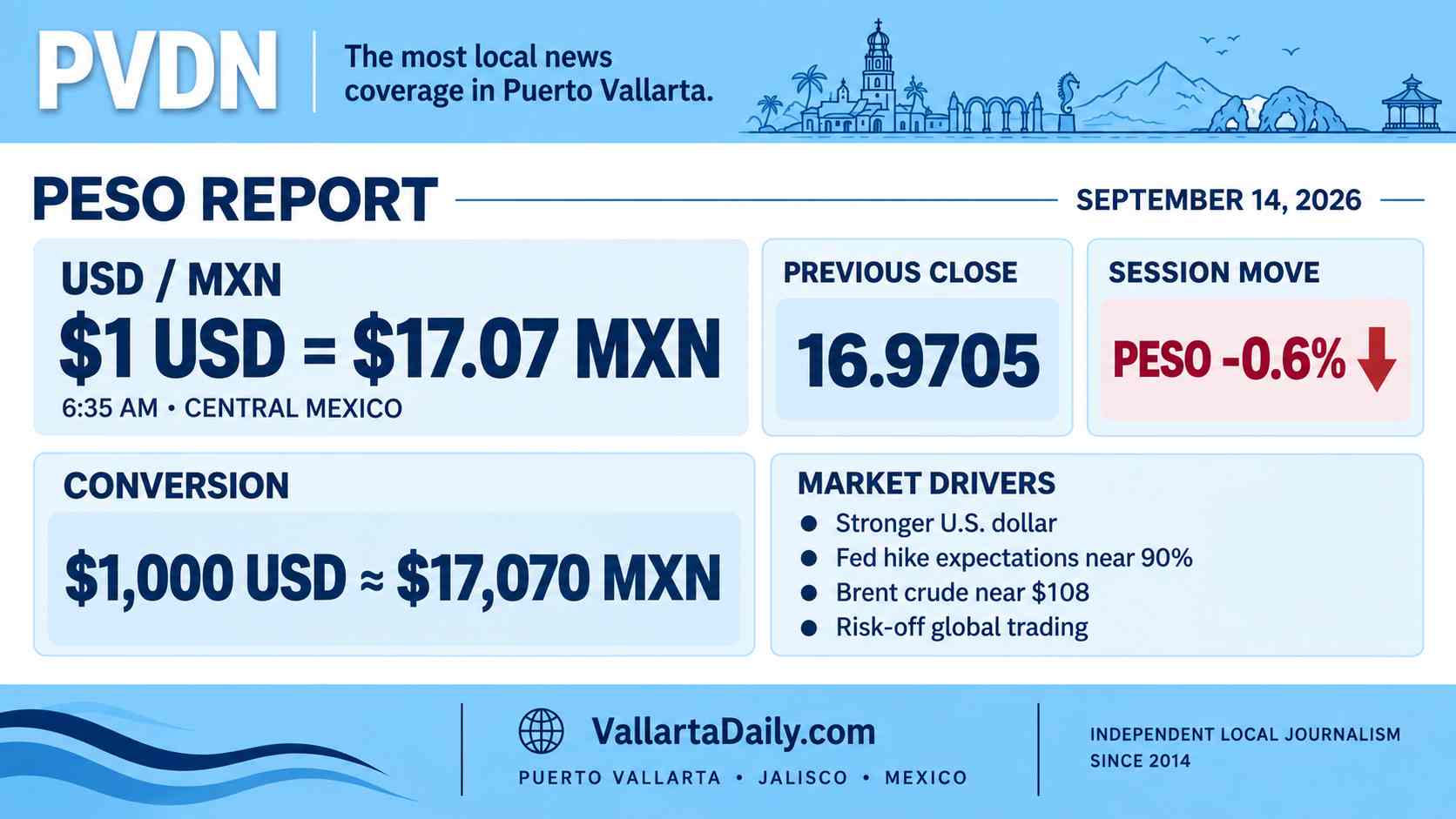
Puerto Vallarta, Jalisco, September 14, 2026 – The Mexican peso weakened in early Monday trading, with live market pricing placing the USD/MXN exchange rate near 17.07 pesos per dollar at 6:35 a.m. Central Mexico time. The rate can change throughout the day.
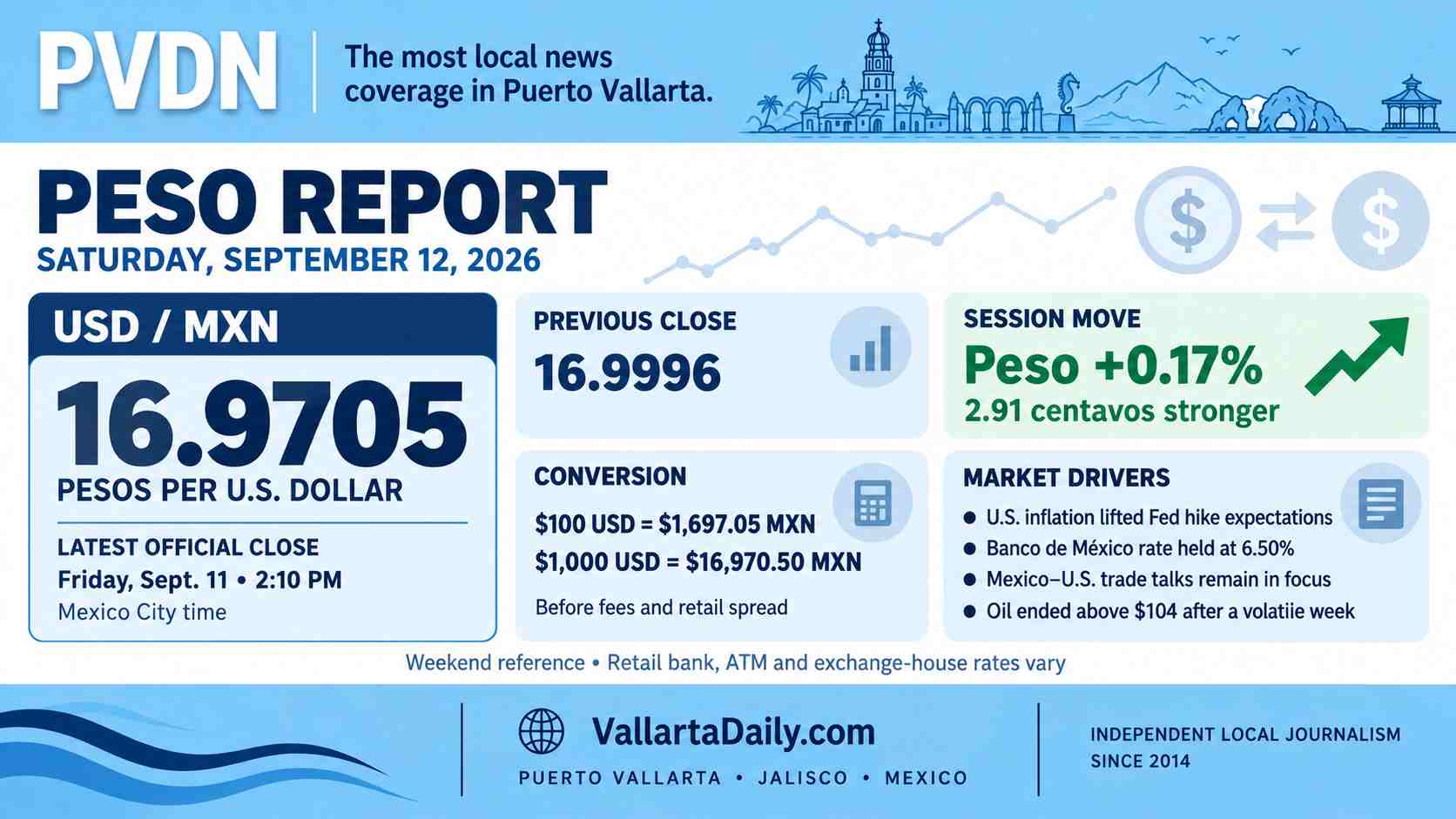
At that level, the dollar was about 0.6% above Friday’s official closing rate of 16.9705 published by Banco de México. Put another way, the peso had lost about 0.6% against the dollar from the previous completed session.
Banco de México had not yet calculated Monday’s FIX rate at the time of publication. Friday’s FIX was 16.9707, while the official rate applicable Monday for settling dollar-denominated obligations in Mexico was 16.9722 pesos.
The dollar sets the early direction
The peso’s decline came during a broader advance by the U.S. dollar. The dollar index gained nearly 0.4% and briefly reached 99.6, its highest level since September 2.
Demand for the dollar increased as investors reduced exposure to riskier assets. Global stock markets came under pressure, while renewed concerns about Middle East energy supplies pushed Brent crude about 3% higher to approximately $108 per barrel.
Higher oil prices can sometimes support currencies of oil-producing countries, including Mexico. Monday’s synchronized rise in the dollar against several currencies suggests that safe-haven demand and U.S. interest-rate expectations carried more weight in early trading.
Fed expectations shift after inflation data
The Federal Reserve begins a two-day policy meeting Tuesday, with its decision due Wednesday, September 16.
Interest-rate futures were pricing in roughly a 90% probability of a quarter-point increase after U.S. inflation data came in firmer than expected. In a survey released Monday, 86 of 101 economists expected the Fed to raise its target range to 3.75%–4.00%.
Expectations for higher U.S. rates tend to support the dollar by increasing returns on dollar-denominated assets. A Fed increase would also narrow part of the interest-rate advantage that has helped attract money into Mexican assets.
Mexico’s rate cushion remains in place
Banco de México kept its benchmark rate at 6.50% at its August meeting. That remains well above the current U.S. policy rate, although the gap would shrink if the Fed raises rates Wednesday.
Mexico’s annual inflation rate increased to 3.26% in August, from 3.12% in July. Core inflation eased to 3.88%, but services inflation remained higher at 4.33%. Those figures support the central bank’s cautious approach and reduce pressure for an immediate rate cut.
The rate difference continues to provide support for the peso when global risk appetite is steady. It does not prevent short-term losses when investors move toward the dollar or reassess U.S. borrowing costs.
Mexico’s budget and trade talks remain in view
Mexico’s 2027 budget proposal, submitted to Congress last week, projects economic growth of 1.5% to 2.5% next year and a broader public-sector deficit equal to 3.9% of gross domestic product. The proposal is now entering the congressional review process.
Markets are also following negotiations between Mexico and the United States over a possible interim trade agreement. Discussions include tariffs affecting automobiles and steel, regional content rules and Chinese investment in Mexico. No evidence available early Monday indicated that the negotiations caused the morning’s exchange-rate move, but trade headlines remain a source of uncertainty for the peso.
INEGI is scheduled to publish July data from its International Travelers Survey on Monday. The release has particular relevance for tourism-dependent destinations such as Puerto Vallarta, although it is not normally a major currency-market driver.
How the move affects dollar and peso budgets
At the morning mid-market rate, $1,000 would convert to approximately 17,070 pesos before fees. That is about 100 pesos more than the same conversion using Friday’s official closing rate.
People receiving income or pensions in dollars gained a small amount of peso purchasing power Monday morning. Residents and businesses earning pesos while paying dollar-denominated expenses faced the opposite effect.
Bank counters, ATMs, credit cards and money-transfer companies use their own buying and selling rates. Their spreads and fees can be larger than Monday’s market movement, so the final amount received may differ substantially from the wholesale quote.
A holiday week could sharpen the next adjustment
Mexican bank branches will close Wednesday for Independence Day, the same day the Federal Reserve announces its decision.
The peso will continue trading in international markets during the Mexican holiday, but reduced domestic participation can leave less liquidity. Any significant reaction to the Fed decision may therefore remain visible when Mexican markets and bank branches resume normal operations Thursday.