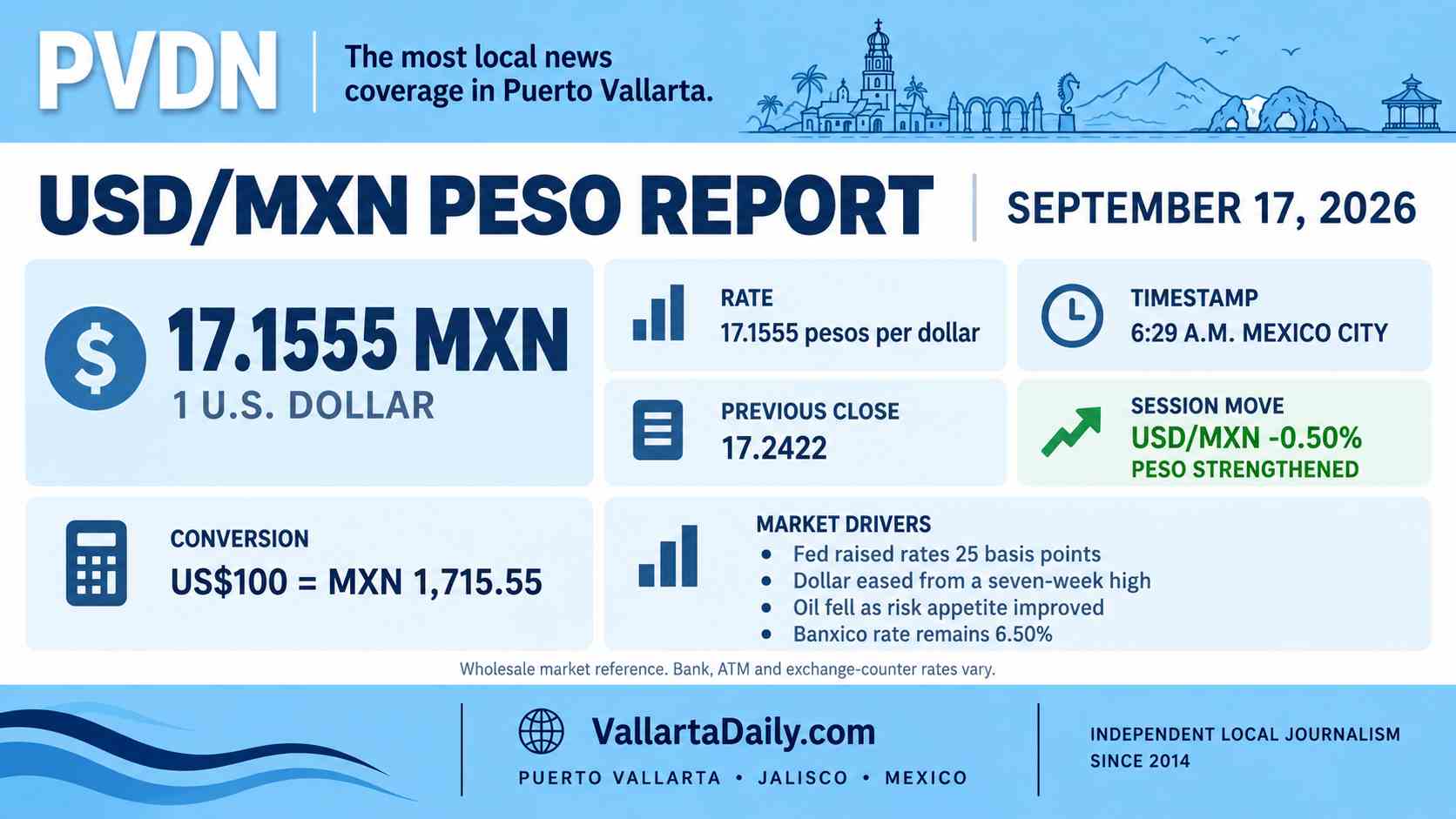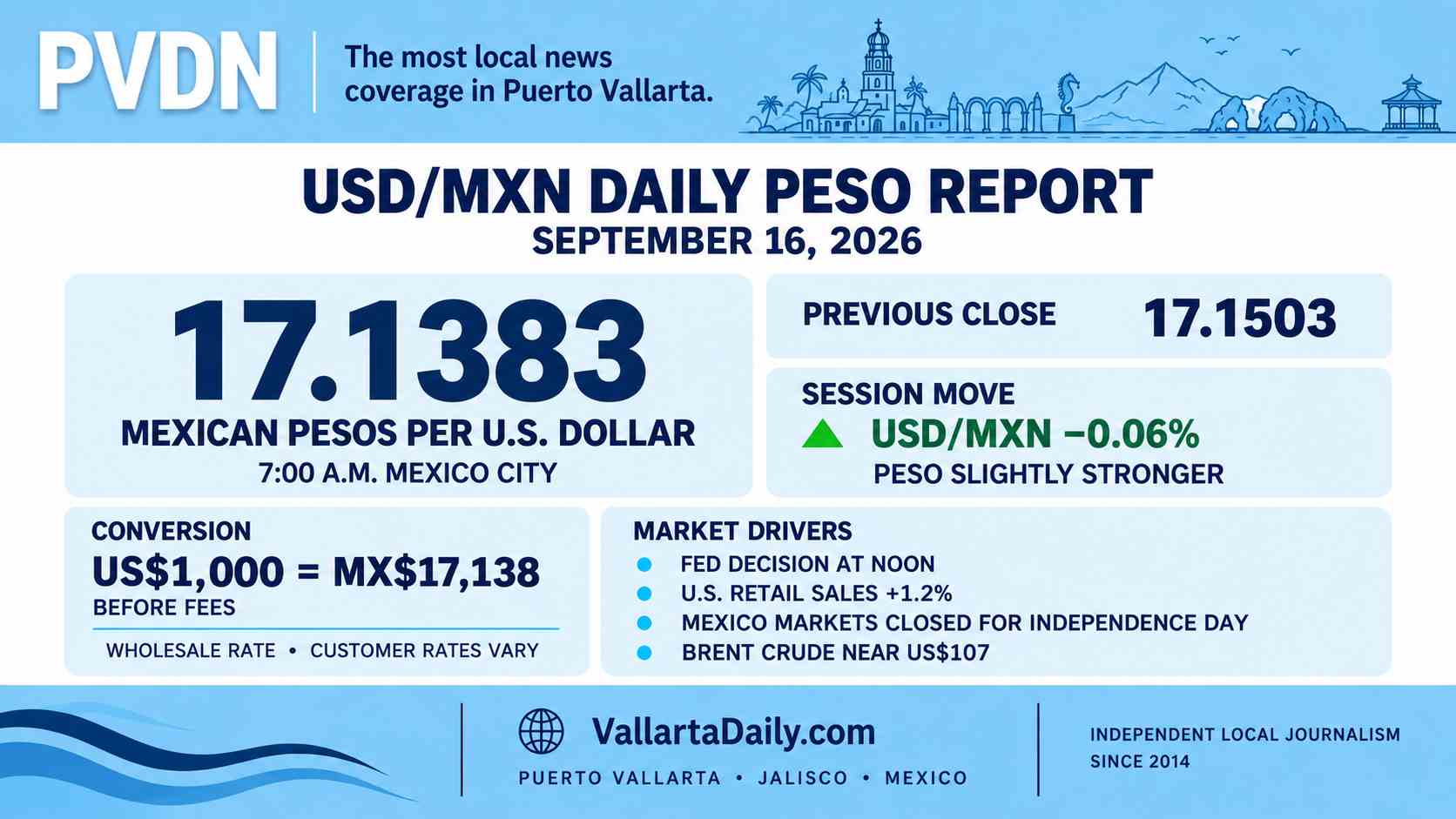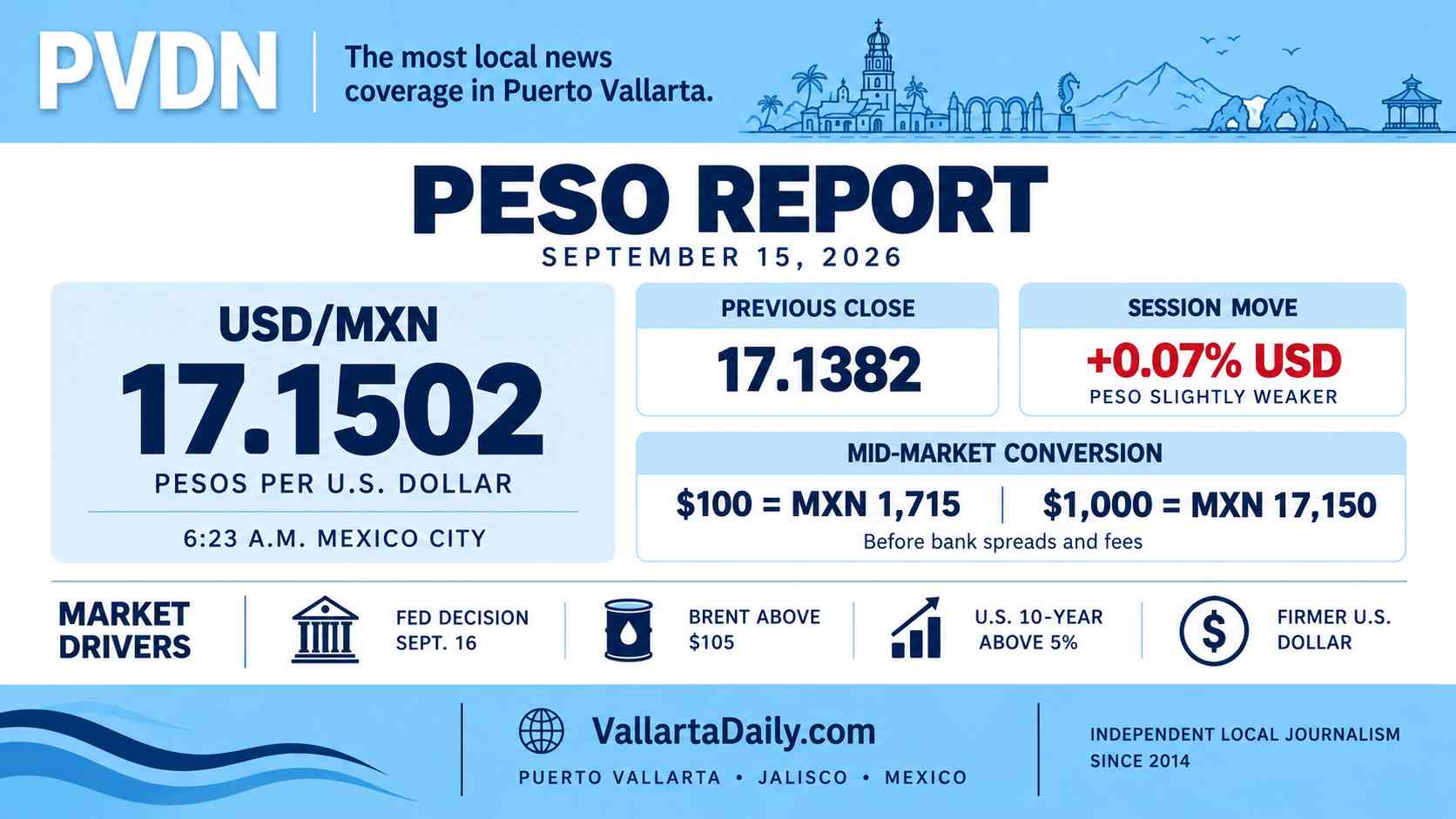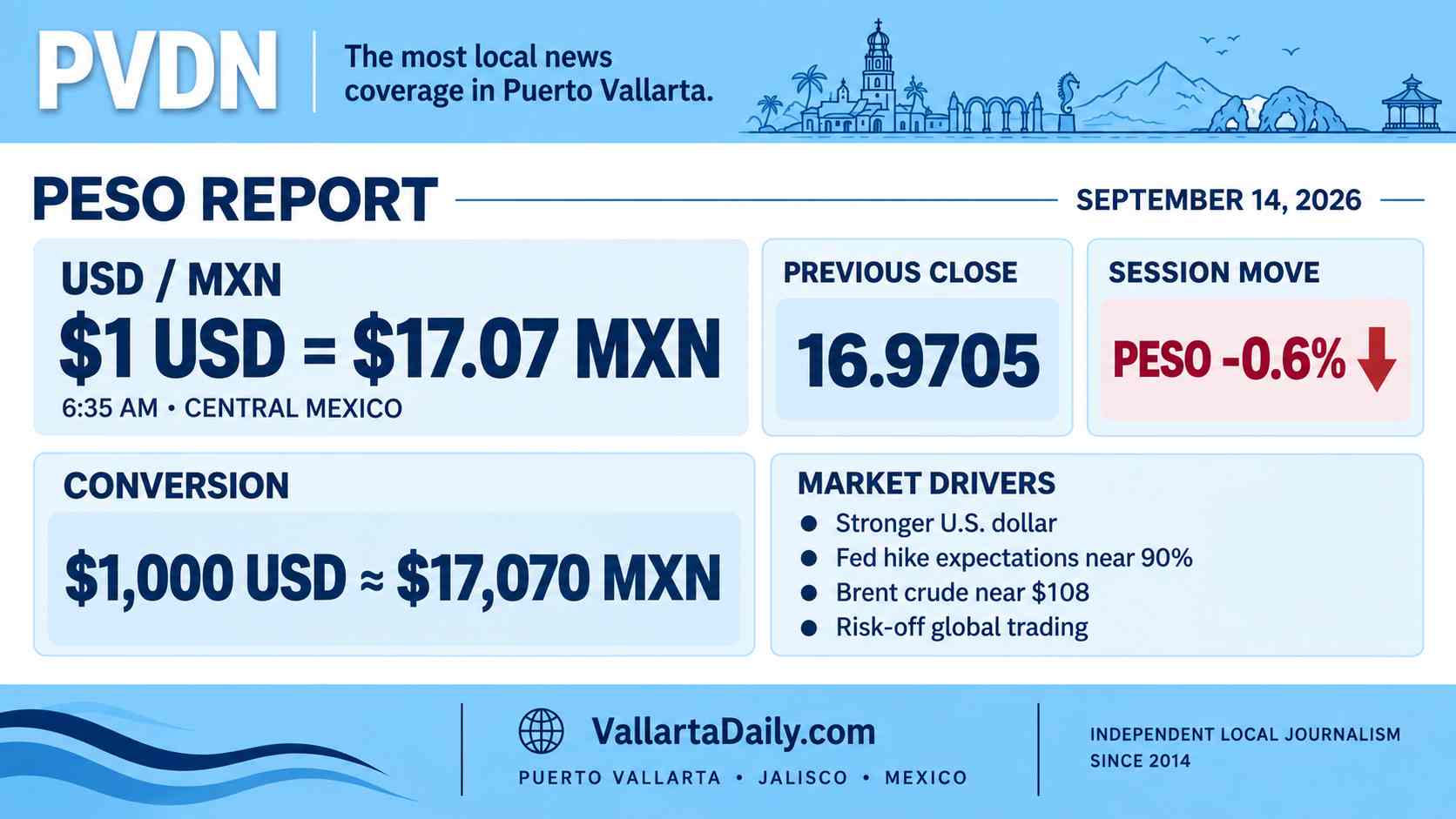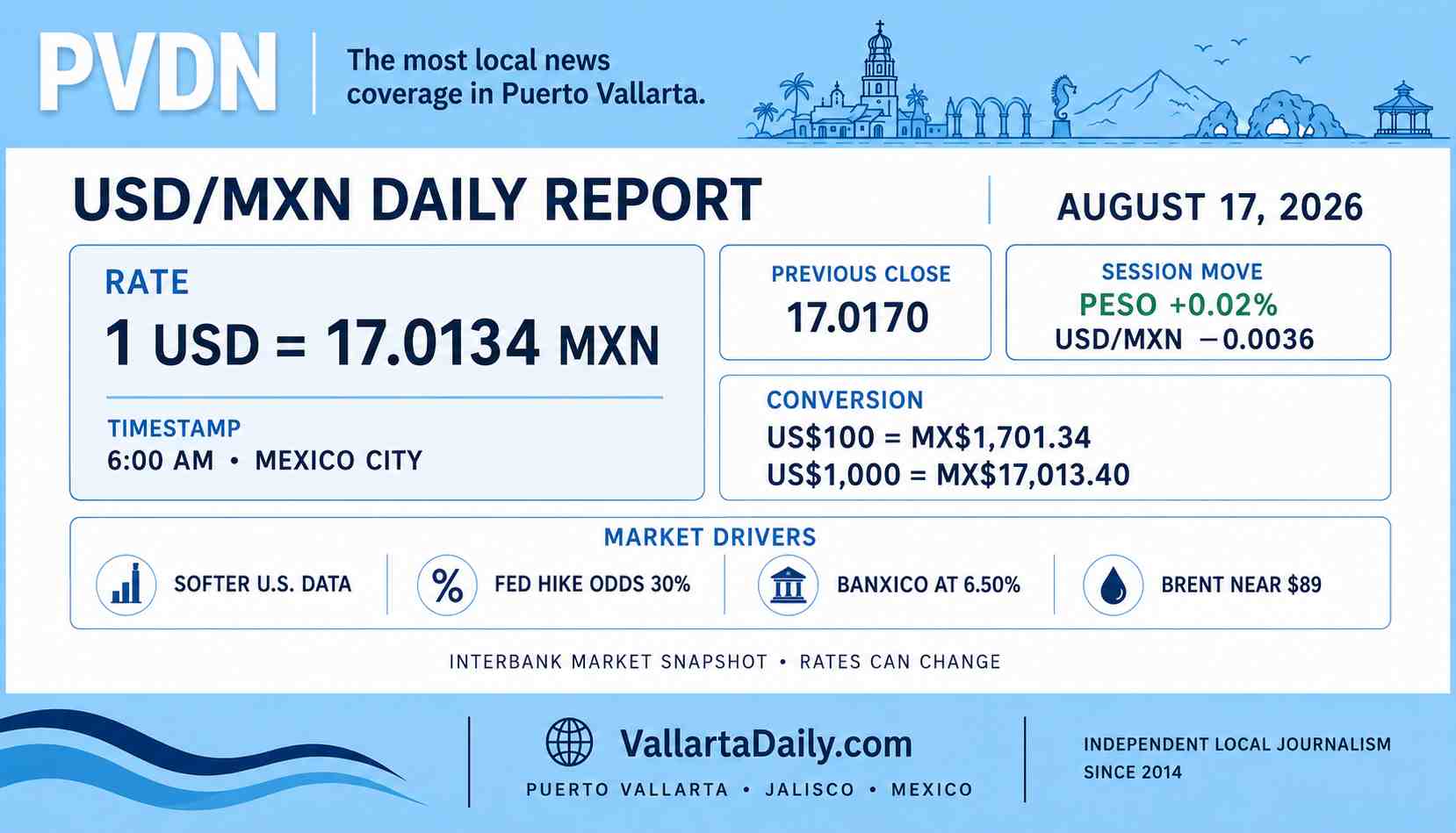
Puerto Vallarta, Jalisco, August 17, 2026 – The Mexican peso was trading at 17.0134 per U.S. dollar at approximately 6:00 a.m. Mexico City time Monday, according to live interbank market data. The peso was 0.02% stronger than the previous close of 17.0170.
Early trading remained narrow, with USD/MXN moving between 16.9969 and 17.0313. A lower USD/MXN rate indicates a stronger peso. The figures are a market reference and can change throughout the day.
At the quoted rate, US$100 converted to about 1,701.34 pesos and US$1,000 to 17,013.40 pesos before transfer charges or retail exchange spreads.
Softer U.S. data weighs on the dollar
The peso’s modest gain came as the broader U.S. dollar fell to its lowest level since June, following weaker U.S. economic reports and a shift in Federal Reserve expectations.
U.S. retail sales declined in July for the first time in nine months, while consumer sentiment fell more than expected. Markets reduced the estimated probability of a September Fed rate increase to about 30%, down from roughly 50% one week earlier.
Short-term U.S. Treasury yields also eased. Lower yields and reduced expectations for an immediate Fed increase can weaken demand for the dollar and provide support to emerging-market currencies, including the peso. The small change in USD/MXN cannot be tied to one factor alone, however, because liquidity and institutional positioning also influence the pair.
Monday’s U.S. economic calendar includes the Empire State Manufacturing Survey and the NAHB Housing Market Index. The Federal Reserve will publish minutes from its July meeting on Wednesday. Those releases could change dollar and interest-rate expectations after this report’s morning timestamp.
Global risk appetite was slightly firmer early Monday, which also provided a supportive backdrop for the peso. Oil presented a more mixed signal. Brent crude rose about 1% to $89.42 per barrel after gaining 6% last week as tensions involving Iran and Middle Eastern supply routes remained unresolved. Higher oil prices can benefit Mexico’s export income, but they can also raise inflation and transportation costs.
Banxico keeps Mexico’s rate backdrop steady
Banco de México kept its benchmark interest rate at 6.50% on August 6. All five members of the governing board supported the decision, extending the pause that began in June.
The rate remains above the Federal Reserve’s current target range of 3.50% to 3.75%. That gap can support demand for peso-denominated assets, although it does not protect the currency from global risk, trade disputes or changes in U.S. monetary policy.
Mexico’s annual inflation slowed from 3.37% in June to 3.12% in July, according to INEGI. Core inflation, which removes some volatile prices, eased to 3.95%.
Despite that improvement, Banxico delayed its estimated return to the 3% inflation target until the fourth quarter of 2027. The central bank cited persistent underlying price pressures, possible trade disruptions and international conflicts among the risks that could keep inflation higher.
Trade policy remains a source of currency uncertainty. Economy Minister Marcelo Ebrard said in July that approximately 85% of Mexican exports to the United States would remain tariff-free because they comply with the USMCA. The agreement’s review and negotiations over automotive tariffs remain active, but there was no clear indication that a new trade development caused Monday morning’s limited peso move.
Planning a budget around a 17-peso dollar
For residents paid in dollars, Monday’s slight peso gain reduced purchasing power by about 3.60 pesos for every US$1,000 compared with the previous market close. That difference is smaller than the spread many retail providers apply.
Across the morning trading range, the peso value of US$1,000 varied by approximately 34.40 pesos. The rate offered by a bank, transfer service or exchange counter may differ more because of fees and the provider’s buying and selling margins.
For people earning pesos and budgeting for dollar expenses, a lower USD/MXN rate reduces the peso cost at the interbank benchmark. Actual card charges and transfers depend on the rate used when the transaction is processed.
Banco de México is scheduled to publish minutes from its August policy meeting on Thursday, August 20. INEGI’s next mid-month inflation report is due August 24. Both releases will add information about Mexico’s rate outlook as the peso continues trading near 17 per dollar.