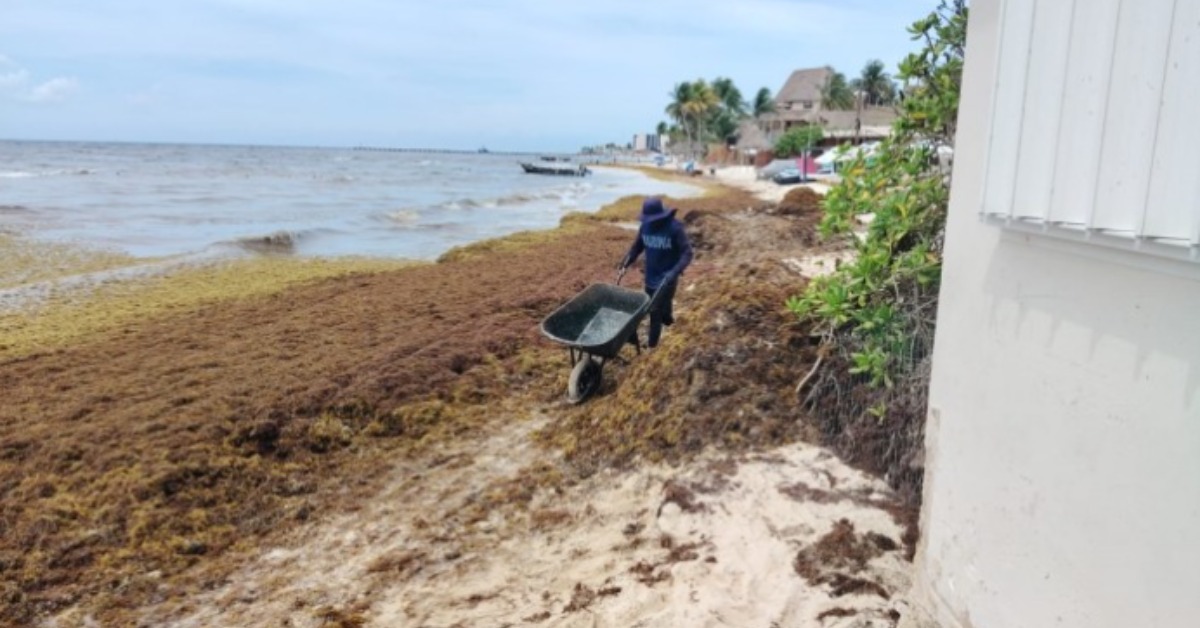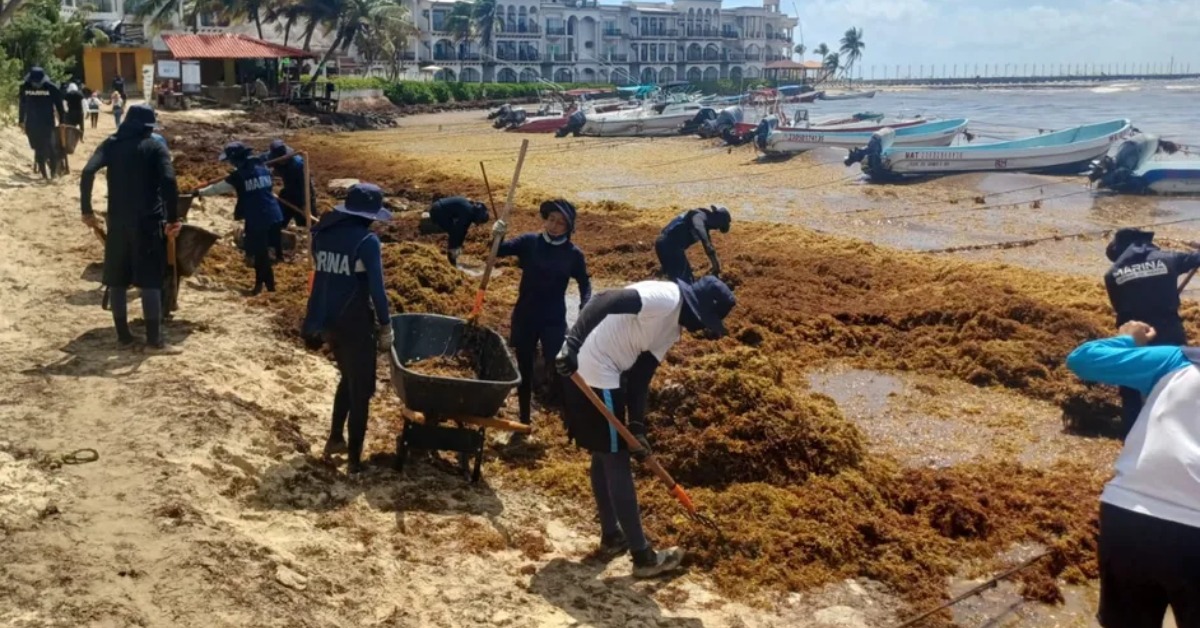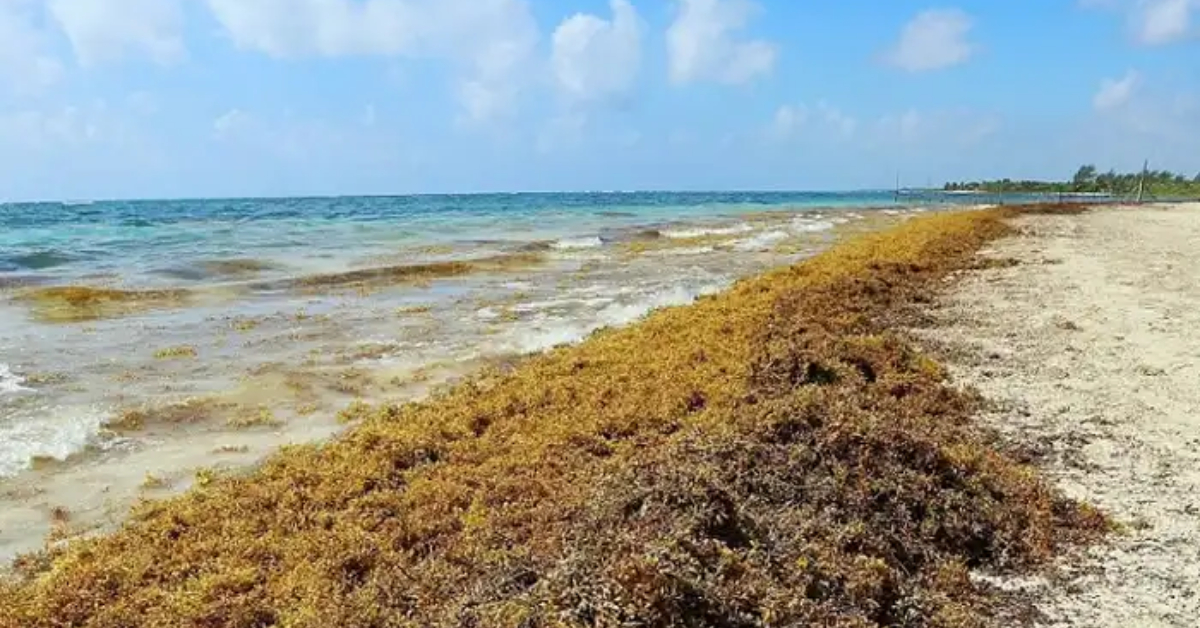
The first waves of sargassum usually feel like a spring problem. This year, the warning lights are flashing months earlier. Satellite trackers are watching an unusually large belt of seaweed build across the tropical Atlantic. Currents are lining it up for the Mexican Caribbean. Officials are already logging small but telling arrivals along Quintana Roo’s coast. The question now isn’t whether the brown tide returns. It is how soon, how thick, and which beaches take the first hit.
A season that may start before spring
On the Mexican Caribbean, sargassum is usually a spring headline. Most years, the first serious beaching starts around April or May, then builds into summer. The early 2026 outlook is pointing to a different calendar. Recent satellite-based assessments of the Great Atlantic Sargassum Belt show unusually high amounts in open water. Currents appear to be steering the mats toward the western Caribbean. Analysts are warning that meaningful arrivals could begin as early as late winter, not late spring. That could mean February or March, depending on currents and winds. If that pattern holds, popular stretches of Quintana Roo coastline could face repeated cleanup long before Easter. That includes Cancún, Puerto Morelos, Playa del Carmen, Cozumel, and Tulum. Some projections put the offshore load as much as 75% above historical norms. That raises the odds of a season that rivals the worst years locals remember, including 2022. It is still a forecast, not a guarantee. But the timing alone is enough to put hotels, municipalities, and residents on alert.
What the monitoring shows right now
One reason the warnings feel more concrete is that the monitoring has already begun to detect movement near shore. Mexico’s Navy publishes daily bulletins that blend recent satellite imagery with wind and current models. In its January 12 report, the Navy estimated about 5,698 tons of sargassum in the Mexican Caribbean. It tracked several small conglomerates within a few dozen kilometers of the Quintana Roo coast. The same bulletin projected arrivals in and around Playa del Carmen and Puerto Morelos within 24 to 48 hours. Even so, the overall alert level remained low. Local monitoring groups have also flagged atypical patches washing up along the coastline months earlier. The amounts being seen now are not the towering piles associated with peak season. They are more like a telltale early pulse. But early pulses matter because they hint at a larger offshore reservoir. These tools can’t promise which beach will be clear on a given morning. That reservoir can expand quickly once spring warmth and faster currents kick in.
Why 2026 could be a rough year
Scientists have been trying to explain why the Atlantic now produces these giant blooms year after year. The modern pattern dates to 2011. That is when the Great Atlantic Sargassum Belt began showing up as a near-continuous band across the tropics. In many years, the belt thins during winter and peaks around June or July. When it stays thick in winter, it often foreshadows trouble. Researchers at the University of South Florida noted rapid growth in late 2025. They also saw high amounts across nearly every region they track. They said that the combination makes 2026 more likely to be a major year. Some beaching events have already appeared earlier than usual. The physics and chemistry behind the bloom are complex, but the ingredients are familiar. Warm water helps the algae grow faster. Under the right conditions, it can double in 10 to 50 days. Shifts in winds and currents can push it toward the Caribbean. Nutrients also matter, including phosphorus brought up from deeper waters and nitrogen in surface waters. Put those together, and a small patch can become a moving carpet.
What it means for Quintana Roo
When sargassum hits in volume, the damage is not just cosmetic. Offshore mats can serve as floating habitats, but stranded piles smother shorelines. As it breaks down, it can strip oxygen from nearshore waters and stress seagrass beds and reefs. The smell that drives people away comes from gases released during decay, including hydrogen sulfide and ammonia. Most healthy beachgoers can simply avoid the worst piles. But anyone with asthma or other respiratory issues should take extra care on heavy days. The economic ripple is just as real. A detailed analysis of Mexico’s Caribbean coast linked sargassum events to a clear drop in local activity. It estimated a 17.5% dip in nighttime light intensity, a proxy for activity. That translates to roughly an 11.6% drop in gross local product in affected areas. It also found effects that can linger for up to a year after a major arrival. That is why officials talk about prevention, not just cleanup. Containment barriers, offshore collection, and rapid beach removal can prevent piles from rotting in place. If 2026 ramps up earlier, those measures will need to start earlier, too.