Puerto Vallarta, Jalisco, July 25, 2026 — Elevated surf and rip currents will remain a concern along Puerto Vallarta’s beaches this weekend, with municipal lifeguards warning that conditions can change significantly from one stretch of shoreline to another.
A new warning from Puerto Vallarta Civil Protection said waves of approximately one to two meters are expected to continue during the coming days. The agency said the height and force of the surf will vary depending on the geography of each beach.
The warning extends a period of unsettled water around Banderas Bay. VallartaDaily reported earlier this week that elevated waves could affect swimming and marine activity along the city’s coast.
Municipal flag reports have shifted among individual beaches as lifeguards reassess conditions. A red flag prohibits entry into the water, while yellow calls on swimmers to use caution. Beachgoers should follow the flag displayed when they arrive rather than relying on a report issued earlier in the day. VallartaDaily has a more detailed explanation of the city’s beach warnings and water reports.
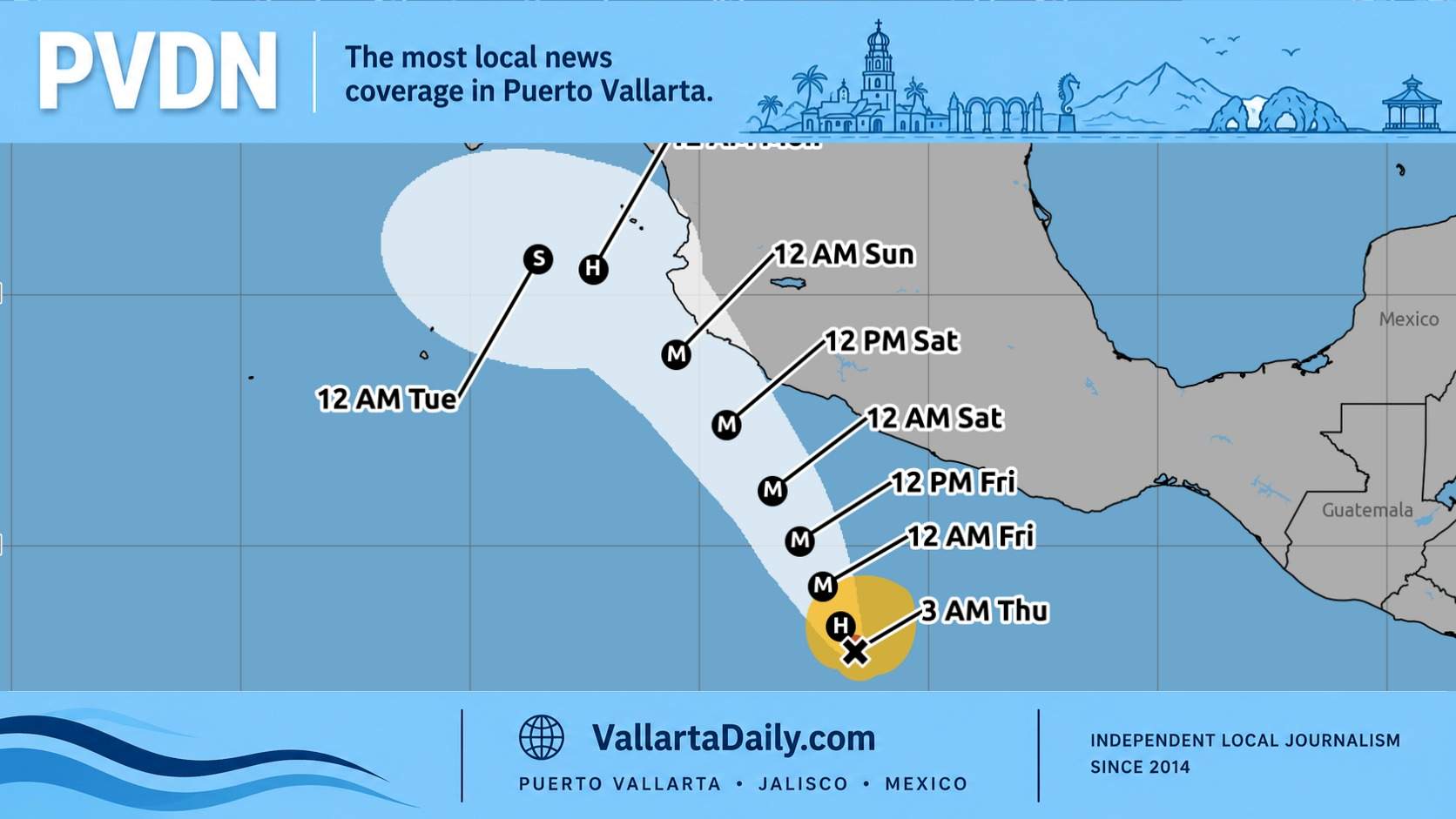
The broader marine outlook suggests the risk may increase after Saturday. Mexico’s National Meteorological Service projected mar de fondo swells of 1.5 to 2.5 meters along the Jalisco coast Saturday. Coastwide waves could reach 2.5 to 3.5 meters Sunday and 3.5 to 4.5 meters Monday.
Those figures cover the entire Jalisco coastline and do not mean every Puerto Vallarta beach will receive waves of that height. Banderas Bay, surrounding headlands and the shape of each beach can reduce or amplify local conditions. The municipal flag system remains the better measure of whether entry is permitted at a specific beach.
Hotels and beachfront businesses have been advised to move loungers, umbrellas and tables away from the breaking-wave zone. Higher water can reach furniture placed well above the normal surf line, particularly during larger sets.
Rip currents can carry swimmers away from shore even when the water between breaking waves appears less turbulent. NOAA safety guidance advises anyone caught in one to remain afloat, avoid swimming directly against the current, and move parallel to the shoreline until clear of its pull. Swimmers unable to escape should face shore, wave and call to a lifeguard.
Civil Protection said lifeguards will continue monitoring the coastline and issue updated warnings as conditions change. The agency has not announced a precise end to the elevated-surf period.