You don’t just know somebody with listings when choosing a real estate agent in Puerto Vallarta. Pretty condo photos can be sent to you by anyone. The real question is whether that person can help you make a good decision in a market where knowledge of nearby neighborhoods, legal expertise, locally relevant relationships, and honest expectations matter a great deal.
Puerto Vallarta is a great place to buy, rent, invest, or retire, but it is also a market in which foreign buyers can be particularly susceptible to bad advice. A good agent can save you money, stress, and regret. In a weak one, the process can feel far more difficult than needed. This is how to pick delicately, of course.
Find a real estate agent in Puerto Vallarta
Start with an ideal type of property.
Choose your agent before you begin.
A beachfront investment condo, a rental in Versalles, a hillside house in Conchas Chinas, and a retirement-friendly apartment near medical services are not considered the same search.
Some agents are better suited for luxury homes. Others are familiar with pre-construction. Some focus on rentals. Others mostly deal with foreign buyers arriving in Mexico for the first time. You need someone with daily work that matches your actual goal.
A good opening question would be something simply asked:
“How many clients like me have you helped in the past year?”
Listen closely to the answer. What you don’t want is the sales pitch. Look out for details. You are asking.
Look for memberships with AMPI — but never really stop there.
In Puerto Vallarta, many real estate professionals are members of AMPI, the Asociación Mexicana de Profesionales Inmobiliarios. AMPI calls itself Mexico’s national association of real estate professionals, offering codes of ethics, professional standards, and lifelong learning and development. (The Vallarta and Compostela chapters work with the Vallarta-Nayarit MLS system as well.)
That doesn’t mean every successful agent has to be your ideal fit just because they are AMPI-affiliated. It does not mean that every non-AMPI agent is necessarily bad, either. But AMPI membership is a good screening tool because it signals that the agent has been engaged with a professional structure, not just functioning casually on Facebook groups and WhatsApp referrals.
Jalisco has similarly shifted to a registration and accreditation system for real estate service providers. According to the state law drafting the registration and accreditation framework, it will help establish knowledge accreditation for people providing real estate services and a state registry of real estate service providers.
So ask directly:
- “Are you AMPI-affiliated?”
- “Are you registered or accredited under Jalisco’s real estate service requirements?”
- “Can I verify that?”
A serious agent should not feel offended by those questions.
Select someone who informs rather than pushes.
Making the process clearer should be a good agent’s job in Puerto Vallarta. They should introduce themselves and explain neighborhoods, quality of construction, HOA rules, closing costs, fideicomiso fundamentals, rental terms, parking issues, noise, uphill access points, water pressure, and resale concerns.
A weak agent rushes you.
Be careful with anyone who says something like this:
- “This will be gone tomorrow.”
- “You do not need an attorney.”
- “This is Mexico, it’s different.”
- “Everyone does it this way.”
- “Don’t sweat the paperwork.”
- “Everything will be easily covered with rental income.”
Sometimes a property does move fast. Sometimes a process really is normal just as long as you are using it. But a good agent imparts enough information to let you make your decision. They don’t shove you into silence.
Ensure they are familiar with foreign-buyer fundamentals.
Puerto Vallarta is in Mexico’s restricted zone because it is within 50 kilometers of the coast. Foreign buyers also can claim rights to residential property in this zone, often with the help of a bank trust called a fideicomiso.
According to Mexico’s Foreign Affairs Ministry, permits for restricted-zone trusts allow foreigners to use and benefit from real estate in the restricted zone for residential purposes for up to 50 years, with the trust contract recorded in a public deed.
Your agent is not required to be a lawyer. They should not pretend to be one, actually. But they ought to know the basic path well enough to answer when you require a notario, when you might want an independent attorney, what the fideicomiso constitutes in the transaction, the proper position, and which documents must undergo a second review.
A good agent knows when their role ends. That is important.
Ask how they deal with due diligence.
This is one of the biggest tests.
The good agent will never just say, “Is it safe or safe to buy?” Instead, they require active, ongoing checks, including quality control, due diligence, and verification.
Avoid asking just “Is this property safe to purchase?”
Ask, “How else do you recommend my due diligence before we cut out contingencies or continue?”
A good agent would want to discuss issues such as title examination and title re-examination, liens, HOA status, property taxes, construction permits, condominium bylaws, building administration and maintenance costs, and seller documentation. And then add the notario’s role.
For condos, she said, you should learn how the building was constructed, not just what the unit was. The view looks beautiful, but the HOA matters. The elevator matters. The reserve fund matters. The rental policy matters. And the loud noises from the bar downstairs count.
In Puerto Vallarta, you aren’t buying square meters. You are purchasing a spot, a building, a street, and a way of life.
It is often more about the knowledge of your local neighborhood than charm.
Plenty of agents are friendly. That is nice. But friendliness is not the same as local knowledge.
A capable Puerto Vallarta agent should be able to explain the practical differences between Centro, Zona Romántica, 5 de Diciembre, Versalles, Fluvial, Marina Vallarta, Conchas Chinas, Amapas, Pitillal, and the surrounding communities.
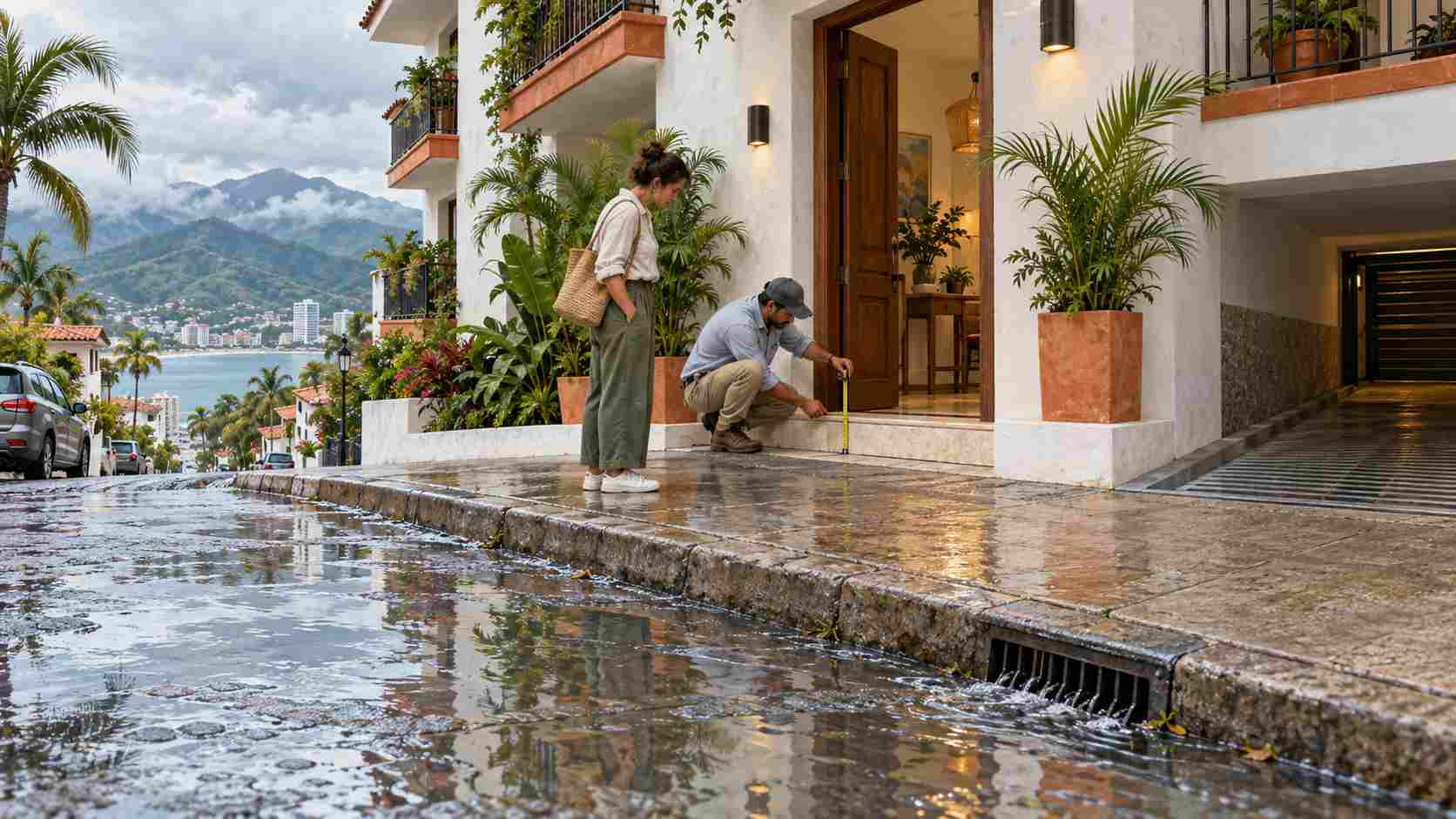
They should know about the fact that without a car, it’s easier for people to travel to an area, the streets that have noise and hills that are difficult to get around in the rainy months, where parking is a problem all the time, and new projects that will alter the character of the area all the time.
The right agent will sometimes go out and talk you out of a place. That is a good sign.
Hence, be careful with pre-construction.
Pre-construction in Puerto Vallarta can be appealing because its residents want newer buildings, modern infrastructures, and staged payments. But also a different level of caution.
If you have an agent looking at pre-construction, ask:
- Who is the developer?
- What has the developer done before?
- If delivery is late, what happens?
- Are permits in place?
- How are the buyer’s payments protected?
- What is included and what is not?
- Is it possible for an independent lawyer to review the contract?
A good agent will not write these off as negativity. They will treat them as if they were in everyday life.
Ask who they represent.
Real estate representation feels different on the ground in Mexico than it does for a typical U.S. or Canadian buyer. So ask explicitly, “Who do you represent in this transaction?”
Do they represent you as the buyer? The seller? The developer? Both sides? Are they displaying only their own listings, or do they have access to broader MLS inventory?
This is important because incentives determine advice. An agent who mostly sells one development can still be helpful, but you should know that up front. Transparency is the point.
The style of communication is not something trivial.
There is stress when it comes to buying or renting houses in a new country. You need someone who can communicate clearly and consistently.
Pay attention early. Are they direct answerers of questions? Does the agent explain the next steps? Do they make sure to include all important details in writing? Do they send documents in an organized way? How often do they follow up when they say they will?
If communication is messy before we have money involved, it most likely will not get any better afterward.
Talk to past clients.
Don’t put your judgment solely in testimonials you read on a web page. Ask for references from past clients whose situations are similar to yours.
For example:
- A foreign buyer who bought a condo.
- A retiree who relocated full-time.
- Someone who bought pre-construction.
- Someone who sold a property.
- Somebody who got help after closing.
The best question to ask a reference is not “Were they nice?” It is: What happened when something went wrong, and how did the agent handle it?. That answer will be of great help.
Watch for red flags.
If an agent: Walk away or slow down:
- Refuses to verify credentials.
- You are pushed to wire money out quickly.
- Requires money to be transferred to a personal account without proof.
- Discourages independent legal review.
- Makes guarantees of rental income.
- Cannot explain the closing steps.
- Avoids written communication.
- Gets irritated by basic questions.
- Only discusses lifestyle and never speaks of risk.
- Says a property is “perfect” without any tradeoffs.
An agent who seems trustworthy has a less seller’s tone than someone who sounds like an advisor.
It’s not always the biggest name that is the best agent.
Puerto Vallarta has massive, well-known agencies and many experienced professionals. But size alone may not determine your decision.
This is why a small agency or independent agent can be great, if they are ethical, experienced, organized, and quite familiar with your target area.
What matters most is fit.
You want somebody who understands your budget, your risk tolerance, your lifestyle, and your reasons for living in Puerto Vallarta in the first place.
A simple interview script.
Talk to an agent before you decide. Ask:
- “How long have you been working in real estate in Puerto Vallarta?”
- “Which neighborhoods do you know best?”
- “Are you AMPI-affiliated or registered under Jalisco’s real estate requirements?”
- “How do you help foreign buyers understand fideicomiso and closing steps?”
- “Do you recommend independent legal review?”
- “How do you handle due diligence?”
- “Do you mostly work with buyers, sellers, renters, or developers?”
- “Can you show me properties outside your own listings?”
- “What are the most common mistakes buyers make here?”
- “What would make you tell a client not to buy a property?”
That last question is particularly helpful. A good agent will have a reply.
The right real estate agent in Puerto Vallarta will want to slow down the wheel, ask better questions, and see the big picture. They should know the market, but also understand that buying or renting in Mexico may make you a newbie.
And choose someone who is knowledgeable, transparent, local, and honest to the core, who will tell you the truth regardless of how it may cost them a sale.
That is the agent you’ll want on your side.