Puerto Vallarta, Jalisco, August 8, 2026 — City Hall had a week in which visible public works and persistent infrastructure problems landed side by side. A street project was completed in Jardines, and SEAPAL began a substantial sewer repair in Parque Las Palmas, while heavy rain again exposed weaknesses in the drainage network, and residents in Mojoneras said recurring flooding remains unresolved.
That mixed record is worth more attention than any single political score. The previous City Hall Watch examined a poor national effectiveness measurement involving Puerto Vallarta. This week brought a very different political number. Demoscopía placed Mayor Luis Ernesto Munguía at 62.6 percent approval in July, fourth among the Jalisco mayors included in its ranking.
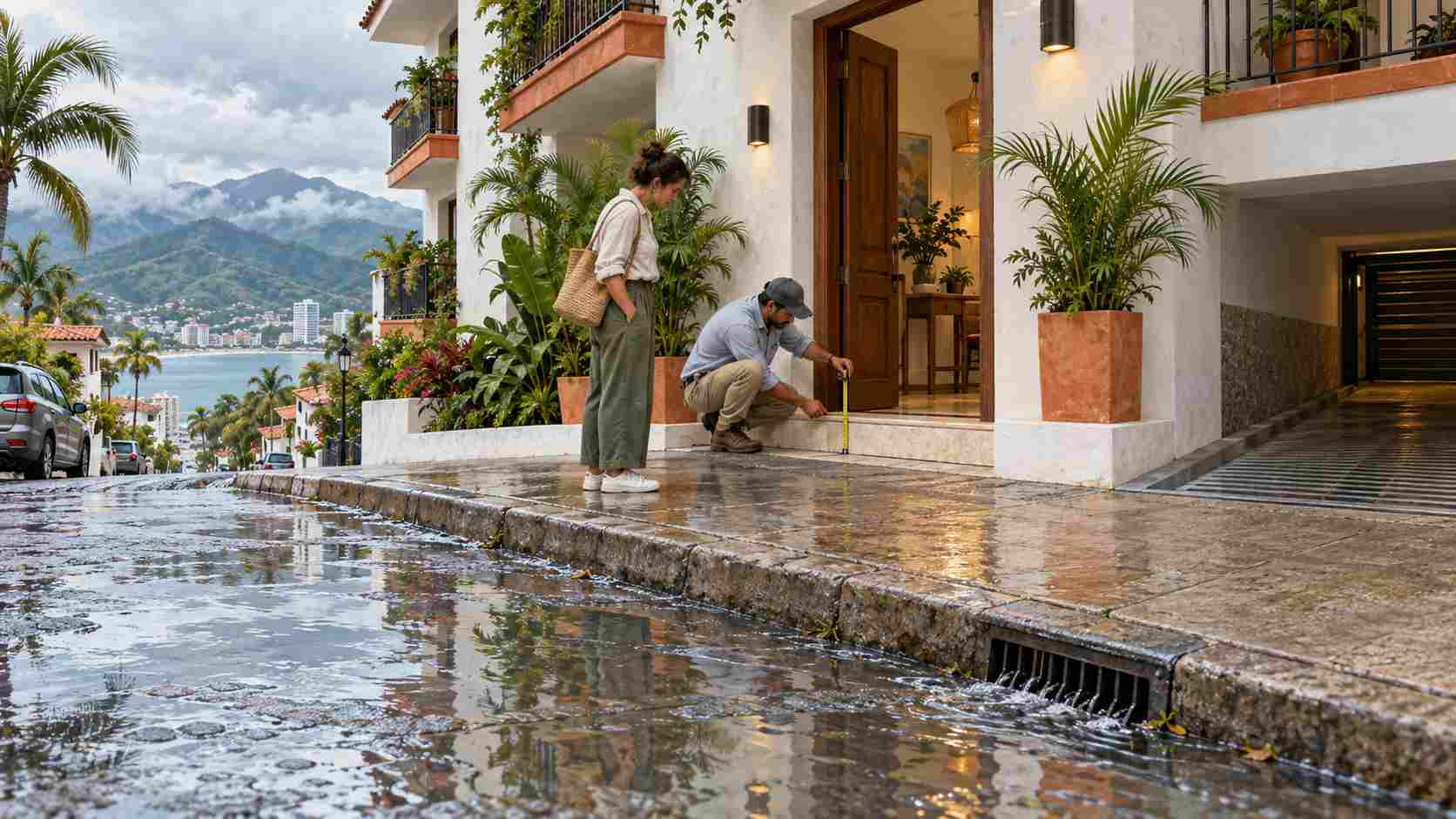
Rain exposed the weakest point
The harder evidence arrived with the rain.
Storms during the night of August 2 and the morning of August 3 caused blockages, solids accumulation, and damage to pumping equipment in the sewer system. SEAPAL acknowledged that a pump failed at the North I treatment plant, while crews worked on clogged infrastructure and sanitation in areas where wastewater had spilled.
The response was tangible. Crews cleared infrastructure, lowered wastewater levels, and prepared the damaged pump replacement. But the episode also produced sewage problems around Las Glorias and once again demonstrated how quickly heavy rain can overwhelm parts of the system.
Mojoneras presents the more difficult accountability question. Residents reported recurring flooding across several streets and said wastewater has backed up through drains and bathrooms during severe storms. They also said municipal and state officials had discussed the problem previously without producing a permanent solution. Their claims about the cause still require technical confirmation, but the flooding itself fits a broader pattern examined in PVDN’s recent report on why Vallarta streets flood during heavy rain.
One project finished and another went underground
City Hall had a clearer result in Colonia Jardines. The municipality inaugurated the rebuilt Calle Margarita this week. The project included more than 2,000 square meters of hydraulic concrete, sidewalks, new water and sewer lines, and public lighting. The government estimates more than 5,500 people benefit.
That is an actual completed asset rather than another promise on the city’s ambitious 2026 street-paving agenda. One important number was missing from the announcement, however. The city did not state the total cost of the Calle Margarita project, making it difficult to assess the value relative to the physical result.
SEAPAL also moved beyond the announcement stage in Parque Las Palmas. Work began on August 5 on 66 meters of 20-inch sewer pipe, continuing repairs that began with a siphon rehabilitation in July. Intermittent closures at Avenida México and Avenida Las Palmas are expected across six weeks. PVDN has traffic and project details here. SEAPAL’s announcement did not disclose the project cost.
Another initiative announced Friday deserves to remain in the promise column until installation is complete. Seven free public water stations are planned at the Agustín Flores Contreras sports complex, La Lija, SEAPAL headquarters, the UMA, and Malecón. The SEAPAL announcement identified the locations but gave neither a budget nor an installation calendar.
The political polling may give Munguía a favorable headline this week. The municipal test through August is less abstract. Las Palmas has a six-week construction clock; Mojoneras still needs a documented solution; rainy-season sewer failures remain measurable; and the newly promised drinking-water stations can be checked against what is actually installed. Those are the numbers that will show whether City Hall’s infrastructure push is catching up with the problems people encounter on the street.