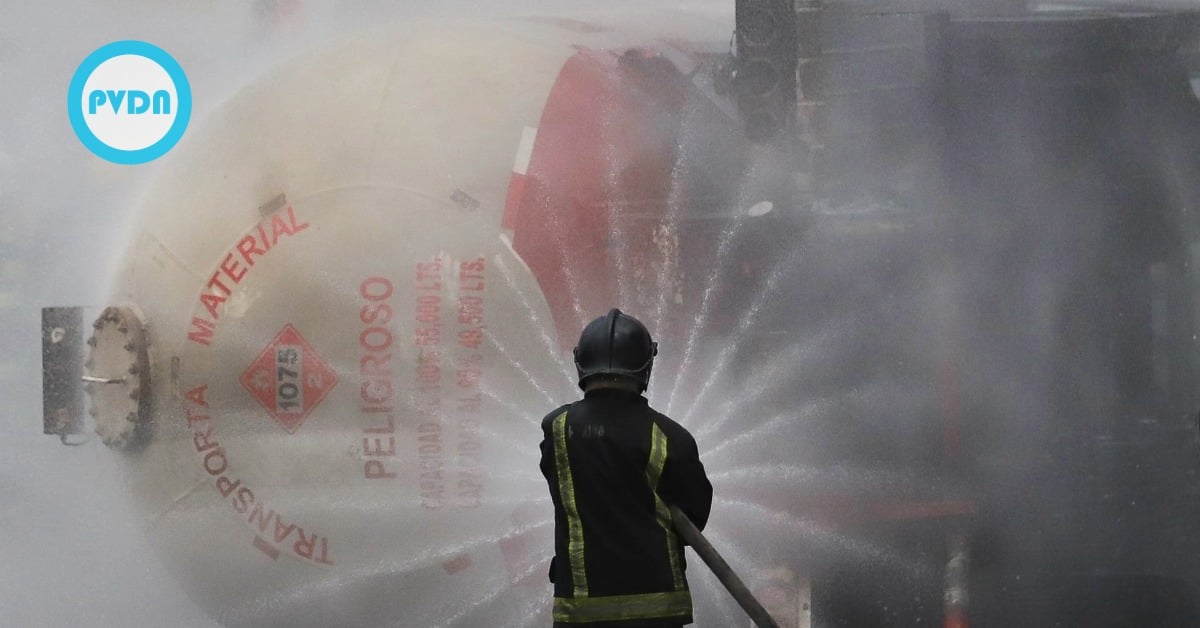
The death toll rose again after last week’s tanker blast under the Puente de la Concordia. Mexico City health officials say 22 people have died, and dozens remain in the hospital. Investigators now describe a rupture in the tank and a cloud of gas that ignited within minutes. Families are grieving while asking who will be held responsible and how long recovery will take. City leaders promise help and a new committee to manage donations. We lay out what’s confirmed, what’s disputed, and what comes next.
Iztapalapa gas explosion
Mexico City’s Health Secretariat raised the death toll to 22 late Thursday, eight days after a gas tanker exploded beneath the Puente de la Concordia on Calzada Ignacio Zaragoza. At the 10 p.m. update on September 18, officials reported 25 people still hospitalized and 37 discharged.
The latest deaths include two women identified by local media: 50-year-old Norma Chávez Ortega and 34-year-old Abril Díaz Castañeda. Their passing underscores how severe internal injuries and burns can worsen days after an explosion.
The blast happened on Wednesday, September 10, at the busy Zaragoza–Concordia interchange that straddles Iztapalapa and the border with Nezahualcóyotl. Traffic was heavy, visibility was clear, and videos show the fireball swallowing lanes in seconds.
What investigators say so far
Authorities say the tanker struck containment walls and suffered a rupture—about 40 centimeters—in the front-left portion of the cylinder. Gas leaked, spread roughly 180 meters, and ignited. The driver later died in the hospital. Forensic work points to speed and impact as the likely chain of events, though conclusions are pending.
Prosecutors opened cases for negligent homicide, injuries, and property damage while reconstructing the truck’s route from Veracruz to a depot in Tláhuac. The agency has publicly outlined its theory and continues to secure footage and witness statements.
Hospitals, families, and accountability
The Iztapalapa gas explosion has left families moving between burn units and trauma hospitals across the capital. As of Thursday night, 25 remained admitted, including adolescents and infants. Authorities—working with the Michou y Mau foundation—are assessing additional transfers of child burn victims to Shriners Hospital in Texas, where at least one minor has already been sent.
City Hall says it will not allow impunity. The government announced a new Solidarity Committee to centralize donations, with participation from the U.N., UNAM, and the Mexican Red Cross, among others. The goal is to ensure transparent aid and long-term support for survivors. Families told reporters they welcome help—but want clarity on insurance, liability, and timelines.
The questions are stark. Why was a tanker loaded with LP gas moving through one of the capital’s most congested corridors at that hour? Were speeds unsafe for the ramp geometry? And were maintenance or insurer obligations fully met by the operator? Prosecutors have pushed back on rumors about road conditions, and the technical focus remains on the tank damage and speed. Any final accountability will hinge on what peritajes show and whether the company’s coverage satisfies claims.
For now, the numbers tell their own story. Twenty-two lives lost. Dozens are still fighting to heal. A neighborhood is trying to breathe again under a concrete bridge that has suddenly become a memorial. Those most affected are asking for answers with the same urgency as they ask for care. The city owes them both—and soon.