Puerto Vallarta, Jalisco, August 13, 2026 – Eleven adult American crocodiles have been found dead across Puerto Vallarta, Bahía de Banderas and the surrounding coast in recent weeks, shifting the local crocodile debate beyond beach safety and into the loss of breeding animals from a protected population.
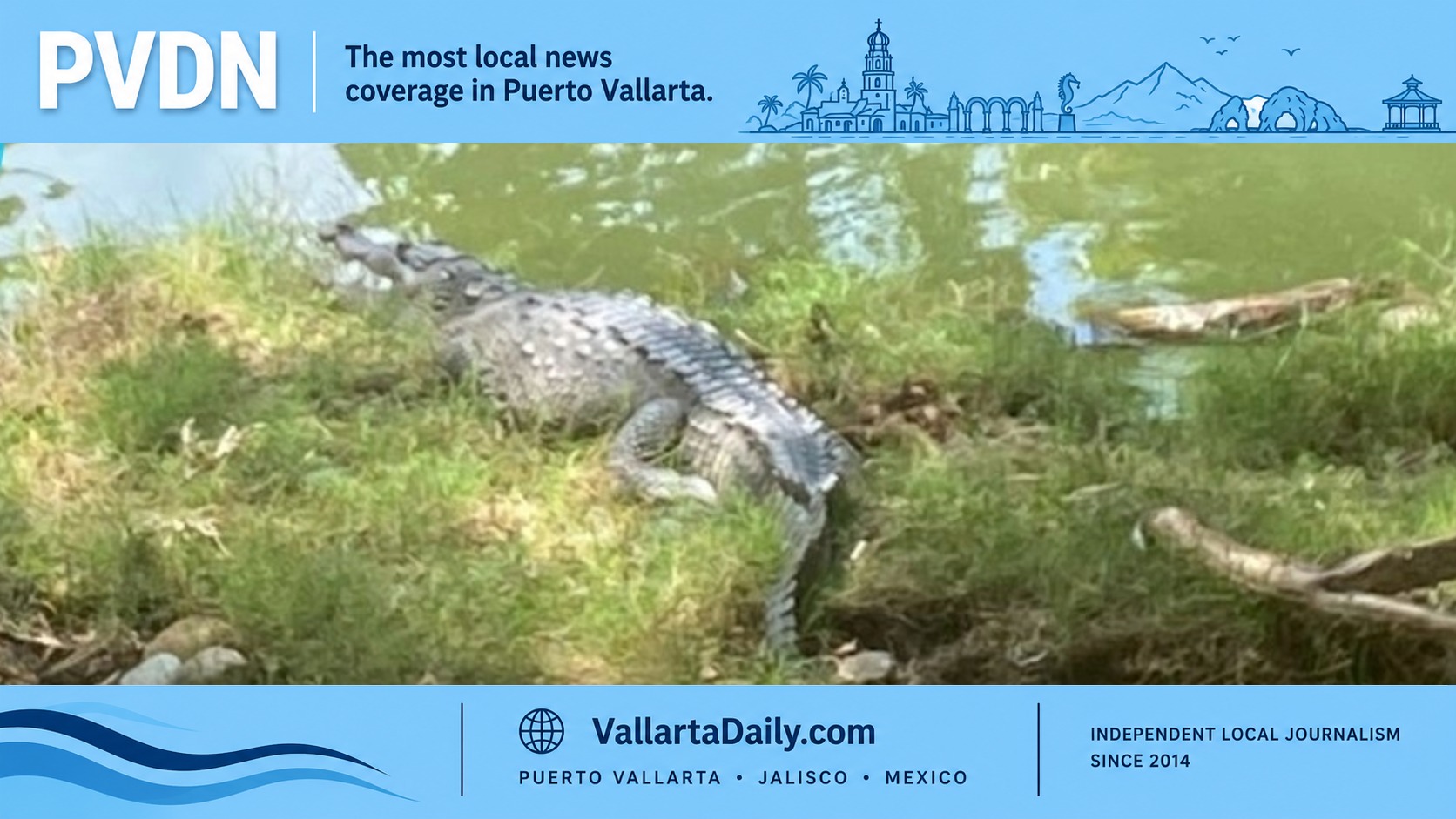
The Jalisco Secretariat of Environment and Territorial Development confirmed the 11 deaths while rejecting claims that the region has too many crocodiles. State monitoring places the Bahía de Banderas population between 300 and 350 animals across all stages of development.
Biologist Paulino Ponce described the deaths as an ecological crisis. He told UDGTV that adult crocodiles are the reproductive animals within the regional population and linked increasing encounters to the destruction and fragmentation of habitat rather than overpopulation.
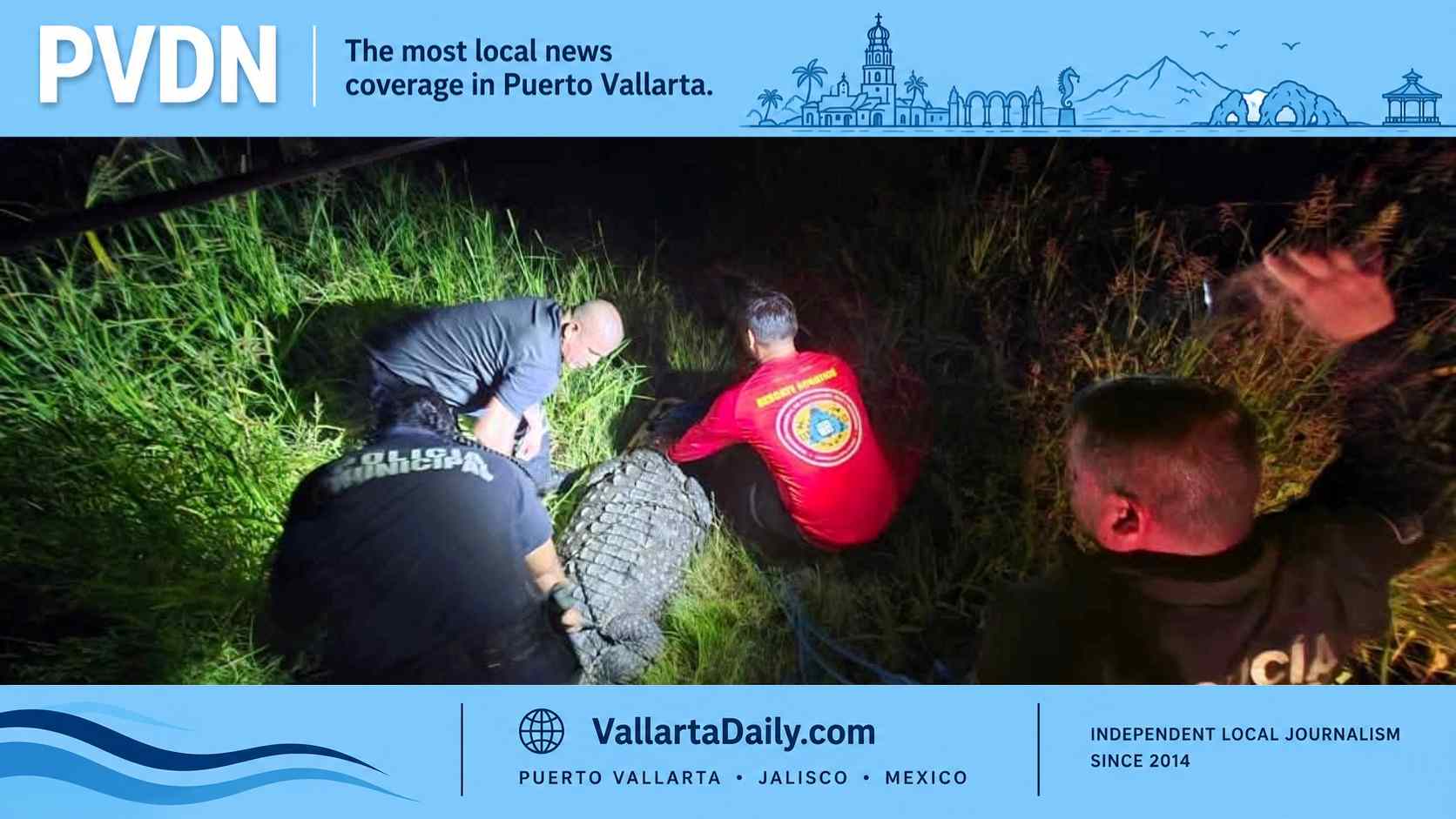
Some of the animals were found mutilated near Estero Boca Negra, with threatening messages reportedly left beside the remains. The killings followed the June 26 fatal attack near Marina Vallarta, where a 28-year-old man from Mexico City was dragged beneath the water near the beach outside the Marriott. His body was recovered the following day near Boca de Tomates.
Ponce’s national database records 448 incidents involving people and crocodiles since 1990, including 62 deaths. Forty-one incidents were recorded within the Bahía de Banderas region. He identified the June attack as the first fatal case recorded in the sea rather than inside a river, estuary or similar crocodile habitat.
The fatality remains a serious beach-safety concern, particularly during the rainy season when rising water allows crocodiles to move more easily between estuaries, rivers, canals and the ocean. Semadet said this seasonal movement explains part of the increase in sightings along beaches and developed areas.
The American crocodile is listed under special protection in NOM-059-SEMARNAT-2010. Mexico’s Federal Criminal Code sets penalties ranging from one to nine years in prison and 300 to 3,000 days of fines when someone unlawfully damages wildlife covered by special protection. Additional penalties may apply when the conduct affects a protected natural area.
Semadet said the deaths are being followed through the Human-Crocodile Working Group, which includes Semarnat, Profepa, Conanp, Jalisco Civil Protection, municipal agencies, the University of Guadalajara’s Centro Universitario de la Costa and Estero El Salado.
The public-safety response has expanded since the June attack. Puerto Vallarta hotels were told to maintain certified lifeguards, review warning signs and report sightings immediately. Resorts were also asked to designate an official contact who can communicate directly with Civil Protection and environmental agencies.
The state has announced standardized signs near river mouths, estuaries and other areas where encounters are more common. The Jalisco Alerta application is also being expanded to display confirmed sightings reported by officials and members of the public.
Ponce wants the hotel requirements taken further. He called on Mexico to require lodging businesses to disclose crocodile risks clearly rather than relying on voluntary notices. He said some businesses have resisted prominent warnings because of concern that the information could discourage guests, even though clearer communication could reduce the chance of another encounter.
Warnings about the regional population losing habitat predate the current deaths. In 2019, researcher Armando Rubio Delgado warned that continued urban expansion could eventually eliminate crocodiles from Bahía de Banderas. That assessment estimated roughly 250 crocodiles across the bay, including 35 adults.
The 2019 and 2026 totals were produced at different times and should not be treated as a direct measure of population growth. The consistent finding is that local specialists have repeatedly rejected the idea that the bay is experiencing crocodile overpopulation. Their concern remains the shrinking separation between human activity and the wetlands, canals and estuaries used by the animals.
People who see a crocodile should keep their distance, leave the water and report the location to Civil Protection or 911. They should not feed, pursue, strike or attempt to capture the animal. When red and purple flags are displayed at a beach, swimming is prohibited due to water conditions and the presence of potentially dangerous wildlife.