Conagua says irregular settlements along rivers and arroyos in Jalisco have grown beyond what authorities can easily control. That matters because these are not marginal planning violations. In many cases, they involve homes, patios, walls, or additions built in or next to channels meant to carry stormwater safely during heavy rain.
The warning is important because it connects two issues that are often covered separately. One is urban growth. The other is flooding. In practice, they are tied together. When a waterway is narrowed, blocked, or altered, the water does not disappear. It looks for another route. In a dense urban area, that route often runs through streets, vehicles, and homes.
For many readers, the key point is simple. This is not only a housing or land dispute. It is also a public safety issue. Water agencies say people are living in areas where the risk rises sharply once the rainy season begins.
Why building in waterways creates a bigger flood threat
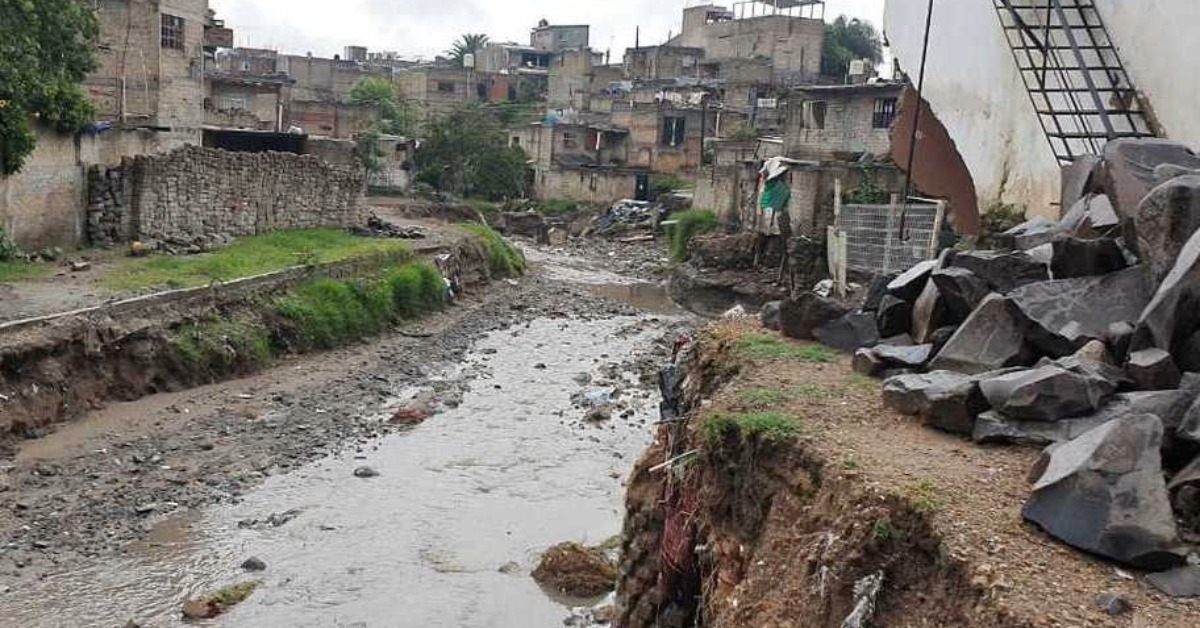
A cauce is the natural path water follows through a river, stream, or arroyo. Along many of these waterways, Mexico also has federal zones protected by law. These strips exist because rivers and channels need room to carry water, overflow within limits, and be maintained without permanent obstructions.
When homes or additions push into that space, the result is usually the same. The channel loses capacity. Water moves faster in tighter passages. Debris gets trapped more easily. Then a strong storm turns a bad drainage point into a flood emergency.
That is why this issue becomes more serious before seasonal rains. Authorities in the Guadalajara metro area are already removing tapones, or blockages, from channels and urban drainage points. Those blockages can come from trash, informal construction, or other interventions that interrupt the natural flow of water. Removing them may reduce some immediate risk, but it does not solve the larger problem when entire settlements remain in vulnerable corridors.
One recent example is Arroyo El Seco in San Pedro Tlaquepaque. Authorities described homes in nearby colonies that had advanced into the federal zone, shrinking the space meant for runoff. In another case, officials had already carried out removals in Zapopan in past years, including demolitions of irregular structures in the Arroyo Seco corridor. Even so, the broader pattern has continued.
The human cost is why this debate is so difficult
The hardest part of this story is that it is not only about enforcement. It is about people already living in danger. Conagua has acknowledged that removing structures is not a quick operation. In some places, any attempt to clear invaded areas would mean confronting entire communities, not a handful of isolated violators.
That helps explain why the agency is discussing agreements with municipalities rather than promising an immediate crackdown. The goal is to involve local governments in the prevention, control, and recovery of invaded spaces. But that also shows the scale of the problem. If the response depends on long negotiations, legal steps, and relocation challenges, then many risky areas may still be occupied when heavy rains arrive.
This is where the story becomes especially relevant to international readers who may not be familiar with the structure of Mexican water management. Conagua oversees national waters and federal zones, but municipalities control many land-use decisions, local services, and emergency response. When settlements grow in risky places, the responsibility becomes fragmented. One authority may identify the danger, while another must handle planning, relocation, permits, or civil protection.
That fragmented system makes slow responses more likely. By the time officials agree on who must act, families may have lived in a waterway corridor for years.
Jalisco has already seen what happens when risk and growth collide
This warning is not theoretical. Jalisco has recently experienced flood damage, highlighting how exposed some communities already are. In 2025, severe flooding in La Martinica in Zapopan left more than a hundred homes affected, vehicles swept away, and a baby dead. That area sits in the Arroyo Hondo corridor and remains inhabited.
Cases like that change the tone of the current warning. Authorities are no longer speaking only about illegal occupation of land. They are pointing to a pattern that can turn a storm into a deadly event. The more a city grows over channels, floodplains, and runoff corridors, the less margin it has when heavy rain arrives.
This also matters beyond the immediate residents of those settlements. Flooding does not stay neatly inside one colony. A blocked arroyo can backwater into nearby streets. Debris can travel downstream. Emergency services can be stretched across multiple neighborhoods. Roads can become impassable. What begins as a land-use violation in one spot can create consequences for a much larger urban area.
What this means as the rains approach
The immediate takeaway is that Jalisco’s flood risk is not only about the weather forecast. It is also about what has been built, where it was built, and whether authorities can recover space in channels before major storms arrive.
The longer-term takeaway is more uncomfortable. Preventing future disasters will require more than clearing trash or sending out warnings during storms. It will mean stopping new invasions into waterways, enforcing land-use rules earlier, and addressing existing settlements through costly and politically difficult legal, social, and urban-planning tools.
For residents, that makes this a story worth watching now, not after the first major flood. Once the water rises, the argument over jurisdiction matters less than the fact that too many people may already be in harm’s way.