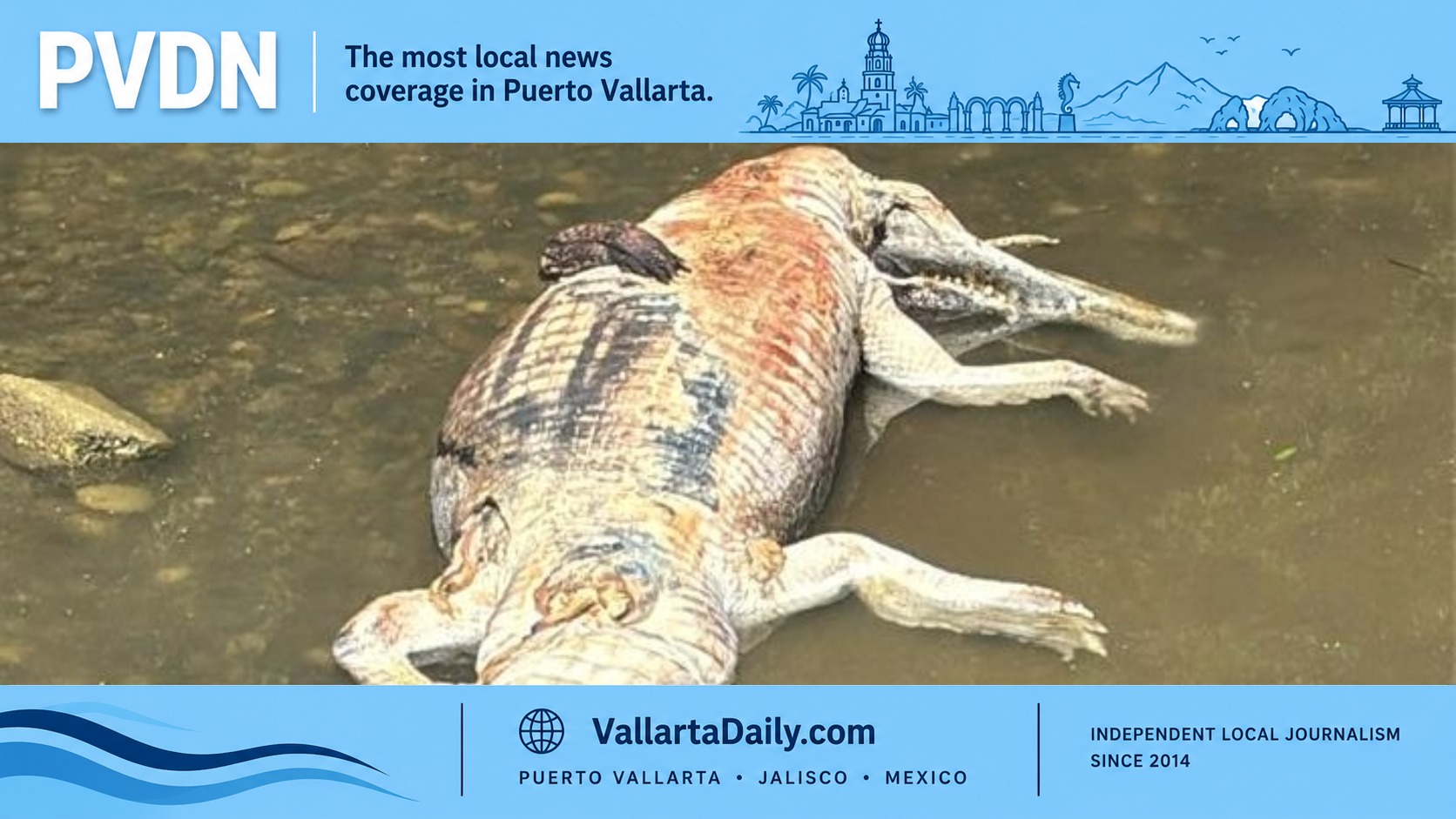
Puerto Vallarta, Jalisco, July 3, 2026 – A crocodile conservation biologist says reports of crocodiles killed by people have increased since last week’s fatal attack near Marina Vallarta, raising concern that fear is overtaking the slower work of prevention, signage, habitat protection and public education.
Lesly Solís, a biologist with SOS Cocodrilo Nayarit and member of Mexico’s human-crocodile interaction commission, said that reports of dead crocodiles already existed before the June 26 attack, but conservation groups now fear more animals will be killed in retaliation.
The warning follows the death of a 28-year-old Mexican man who was reportedly attacked by a crocodile in the Marina Vallarta and Boca Negra beach area. Search teams from municipal Civil Protection, the Jalisco State Civil Protection and Fire Unit, and the Navy searched by land and sea before the body was recovered the next morning near Estero Boca Negra, as PVDN reported after the attack.
Public anxiety is real around beaches where crocodiles move between esteros, river mouths, and the ocean, especially during the rainy season. But killing random crocodiles does not remove the conditions that bring them into contact with people. It can also create a false sense of safety at the same access points where better warnings, patrols, lighting, hotel communication and beach behavior are still needed.
Solís rejected the idea that the bay has a simple “overpopulation” problem. Local specialists have made similar points before. Pablo Hernández Hurtado of the University of Guadalajara’s CUCosta has described Puerto Vallarta as a transit area for crocodiles because esteros and historic channels have been reduced by urban growth. In an interview published by the University of Guadalajara, he pointed to the Ameca River, Boca Negra and Estero El Salado as areas where crocodile movement is part of the local ecosystem, not an unusual invasion of the beach.
The tension between development and habitat is not new. In 2025, Jalisco environmental officials opened work tables on human-crocodile coexistence after reports of violence against crocodiles and misinformation online. Regional coverage at the time cited at least ten crocodiles killed or mutilated in recent years, while SEMADET called for a coordinated response involving government agencies, academics and civil groups.
During a later meeting of Jalisco’s responsible human-crocodile coexistence strategy, agencies agreed to training, educational workshops, handling protocols, risk-zone signs, hotel outreach and possible satellite monitoring. Jalisco TV reported that the plan included SEMADET, SEMARNAT, Puerto Vallarta’s municipal government, Protección Civil, CUCosta, Estero El Salado, hotel and resident groups, and organizations working with crocodiles.
A sign that is missed, misunderstood, or placed too far from the point where people enter the beach will not carry the same weight as a clear warning at the moment someone decides whether to swim, walk a dog, take photos near the water, or approach a river mouth after rain. A hotel brochure will not help if staff at a beach access point cannot explain the risk in English and Spanish. Patrols also lose value if people treat crocodile sightings as entertainment and gather around with phones.
Crocodiles in the region are also protected wildlife, not nuisance animals that private citizens can legally remove. CONABIO lists the American crocodile, Crocodylus acutus, as the crocodile of the river or American crocodile in Mexico’s CITES-related conservation work, and Profepa’s materials on biodiversity crimes identify damaging protected wildlife as conduct covered by the Federal Penal Code. The General Wildlife Law also treats unauthorized control or eradication of wildlife as an environmental infraction.
No official public count of crocodiles killed since the June 26 attack had been released by federal or municipal authorities as of Friday. It was also unclear whether any recent reports had led to Profepa investigations.
The practical safety advice has not changed. Do not swim near river mouths, esteros or brown runoff after storms; do not enter the water at night in crocodile zones; keep dogs away from the shoreline in those areas; do not feed, provoke, corner or throw objects at crocodiles; and report sightings to 911 or Protección Civil rather than trying to scare or film the animal.
After the fatal attack, crocodile warnings expanded on Vallarta beaches, and PVDN reviewed the local warning zones tied to Marina Vallarta, Boca Negra and nearby river-mouth areas.