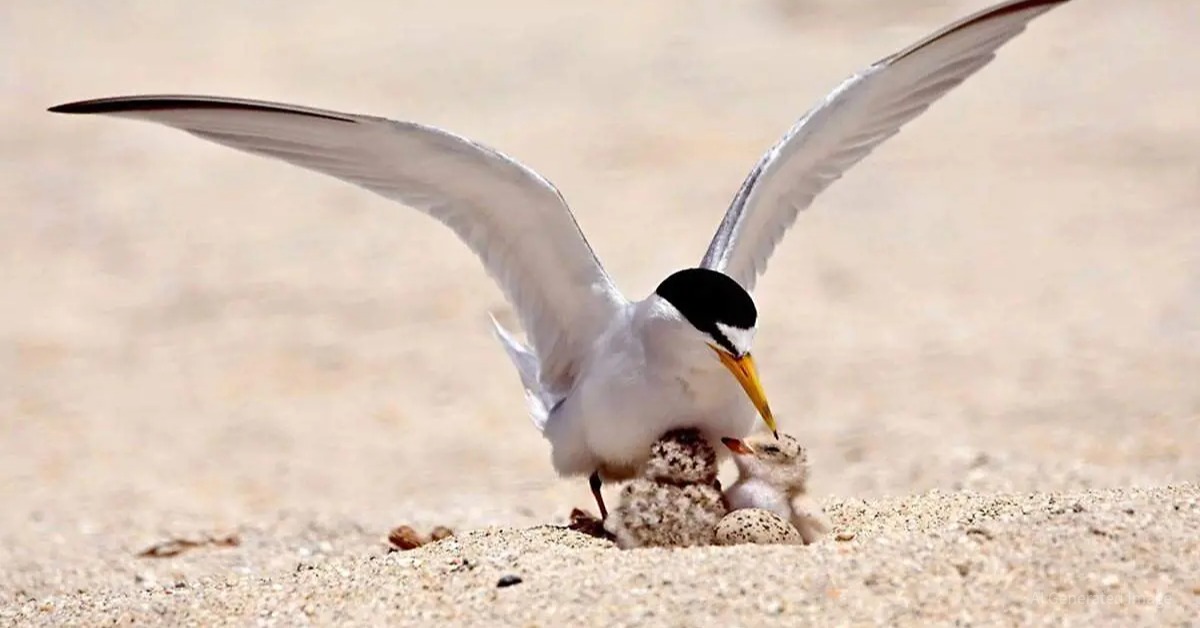
Los Cabos is reinforcing protection around least tern nesting areas on San José del Cabo beaches after municipal environmental staff identified three active nests and one chick during recent monitoring.
The city said the work focuses on the gallito marino, the local name for the least tern, a protected migratory seabird that uses parts of the Los Cabos coastline for reproduction during the season.
According to the Los Cabos municipal government, the nests were found during supervision rounds on beaches in San José del Cabo led by Jorge Armando López Espinoza, director general of Ecology and Environment.
Municipal officials also reported more than 20 nests in an area next to Hotel Presidente. The city said it has already coordinated with representatives of the hotel complex to allow continued monitoring and follow-up in that nesting area.
The municipal notice did not identify the exact beach section where the three active nests and chicks were found. It also did not announce a beach closure. Officials said the work is technical and preventive, and should not affect tourism, recreation, or economic activity in the area.
The immediate instruction for beach users is simple: respect marked areas, do not approach nests, and follow directions from authorized personnel.
The monitoring involves the municipal Ecology and Environment Department, coordination with the State Ecological Reserve Estero San José del Cabo, civil society representation from the reserve’s advisory council, and SYCOMA, which the city said is authorized by Semarnat for management, monitoring, and conservation work related to the species.
The San José del Cabo estuary area is part of a broader wetland system listed by federal conservation authorities as the Sistema Ripario de la Cuenca y Estero de San José del Cabo, a Ramsar site in Baja California Sur. That gives the nesting notice added weight because the area is not only a tourism corridor but also a coastal habitat used by migratory and resident wildlife.
Least terns nest directly on the ground in open sandy areas, salt flats, or beaches with little vegetation, often near wetlands. Conservation group Pro Esteros says the birds arrive along the Baja California coast in early May and remain there until August. Eggs are laid in shallow depressions in the sand, and chicks leave the nest within days of hatching, making them hard to see and easy to disturb.
That is why ordinary beach activity can become a conservation issue. Vehicles, loose pets, horseback riding, garbage, trampling, and people crossing marked zones can damage eggs or separate chicks from cover.
In Vallarta and Bahía de Banderas, seasonal wildlife protection often manifests in turtle-nesting rules, wetland enforcement, and limits on work near sensitive habitat. PVDN has followed similar issues in its Puerto Vallarta environmental coverage and in recent reporting on federal action to protect the Vallarta casquito turtle.
What needs watching now is whether additional nesting areas are marked near the San José estuary and the nearby hotel zone as the season continues into summer. Any tighter limits would likely come through municipal, state, or federal environmental authorities.