Federal environmental inspectors found more than unpermitted work during a May visit to two Puerto Vallarta properties. The case involves land clearing, operating brickworks, an affected arroyo, and a nesting area tied to one of the region’s most restricted native species. The latest measures also come as local researchers and citizen monitors continue trying to protect the casquito turtle, a small freshwater turtle whose habitat overlaps with urban growth.
Profepa orders closures in turtle nesting area
The Federal Attorney for Environmental Protection ordered temporary total closures on two properties in Puerto Vallarta after inspectors found activities affecting habitat used by the casquito turtle, known scientifically as Kinosternon vogti.
The inspection took place on May 12. Inspectors reported changes in land use, clearing, and vegetation removal on land identified as habitat and a nesting area for the species. The sites were in Puerto Vallarta, Jalisco.
Profepa said the measures were precautionary and aimed at conserving the nesting area. The agency said the properties did not present federal environmental impact authorization from Semarnat.
Inspectors found brickworks, debris, and affected vegetation
Authorities also identified two brickworks operating on the properties. According to the report, the brickworks had been active for at least eight years.
Inspectors also found piles of sand and rubble. The inspection noted impacts to an intermittent arroyo along the edge of the land.
The affected area covers about 5.37 hectares. Profepa described the vegetation as selva baja caducifolia and selva mediana subperennifolia, two types of tropical forest found in western Mexico.
The closures apply to the works and activities at the two properties while the federal process moves forward.
A small turtle with a limited range
The Vallarta casquito turtle is a freshwater turtle associated with the Bahía de Banderas region. Scientific references identify it as a species restricted to Jalisco and Nayarit.
The species was described in 2018. Researchers have reported that it lives in small streams and ponds in and near Puerto Vallarta.
The turtle is considered at high conservation risk. The IUCN specialist profile lists the species as Critically Endangered and states that its occupied area has been severely reduced.
In Mexico, the species is also treated as protected under the country’s at-risk species framework.
Citizen monitors turned over 90 traps
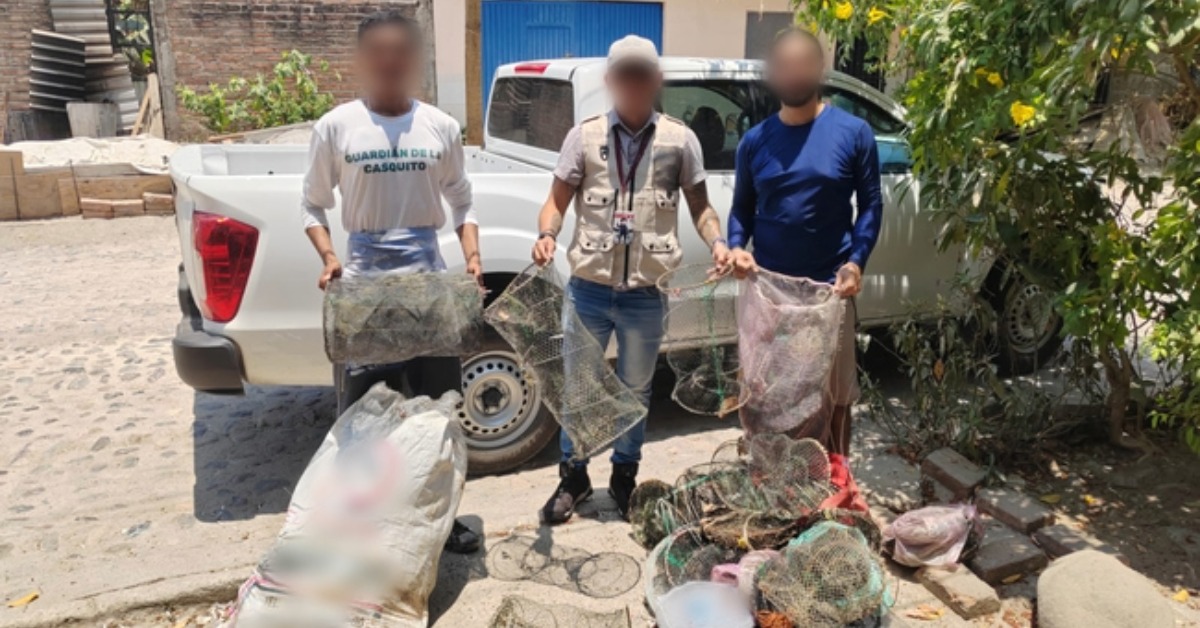
Profepa also received 90 traps from the Comité de Vigilancia Ambiental Participativa de la Tortuga Casquito Vallarta.
The committee found and disabled the traps in other areas that form part of the turtle’s habitat. Profepa said those traps were handed over to agency personnel.
The finding adds another pressure point to the enforcement case. The turtle’s habitat is limited, and local conservation work has already focused on threats from urban growth, habitat disturbance, and illegal capture.
The case is another example of how environmental enforcement can intersect with local development, land use, and the protection of small habitat areas inside a growing urban zone.