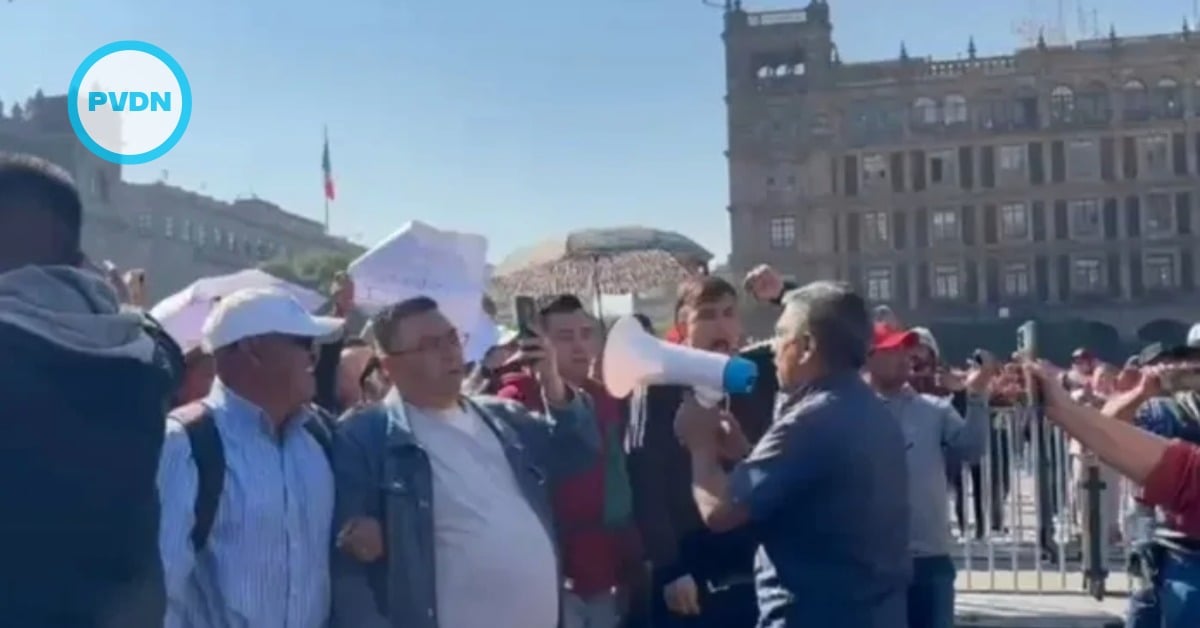
The rivals found each other at the same doorway. As Emmanuel Macron’s motorcade entered Palacio Nacional late Friday morning, detractors with hand-lettered signs met a cluster of presidential supporters at the metal barriers on Moneda Street. Shouts rose. A few bodies leaned and bumped. For several tense minutes, the ceremony inside had a parallel soundtrack outside. La Jornada described the scene as a brief exchange of chants and shoving, with supporters of the President blocking an opposition group that tried to edge toward the Puerta de Honor.
Those minutes captured the mood that often surrounds the Zócalo: a plaza that hosts statecraft and dissent on the same stones. Witnesses heard competing slogans. One side answered, “Es un honor estar con Claudia hoy.” The other volleyed back “fuera dictadura,” a phrase that has become a banner in recent opposition rallies. OEM’s El Sol de México also reported the face-off as the French president arrived, calling it a confrontation of chants and pushes as the delegation entered the compound.
Macron Mexico visit
Inside the walls, the Macron Mexico visit was calibrated to show momentum after months of calendar juggling. The welcome ceremony in the Patio de Honor began around the planned 9:40 a.m. hour, followed by a private bilateral and a wider meeting with cabinet members and business leaders. The message was practical: trade, research ties, and a reset of a diplomatic relationship that turns 200 next year. By midday, both leaders moved to a joint press event to summarize the results and set the tone for the next steps—less theater, more work.
The contrast between the measured protocol and the street-level noise was striking but not unusual. Palacio Nacional is the working seat of government in the middle of a living city. Security corridors run past commuters and school groups. When a head of state visits, those corridors get tighter; the sounds from the square do not. On Friday, the boundary held. The encounter outside stayed short, then dissolved as quickly as it formed, while the day’s agenda pressed forward across the patios and salons.
What many will remember from the official side of the program is culture, because culture became policy. Mexico and France agreed to a high-profile exchange of pre-Hispanic codices tied to the 2026 bicentennial of diplomatic relations. That decision, announced after talks in the palace, signaled a willingness to turn heritage into a shared showcase and to broaden cooperation beyond commerce and security talking points. El País reported that Mexico will loan the Códice Boturini and receive the Códice Azcatitlán from France’s national library, a swap loaded with symbolism for both publics.
What sparked the shouting
Street politics rarely have a single trigger. Friday’s flashpoint had several. Part of it was proximity; the entrance bottlenecked supporters eager to cheer and opponents intent on being seen. Part of it was timing; arrivals and anthems gave everyone a focal moment. And part of it was the capital’s routine choreography: most mornings, see some demonstration near the palace, and every big visitor raises the volume.
Eyewitness accounts line up on the basics. The opposition group tried to move closer to the Puerta de Honor as the French delegation stepped in. A cluster of supporters formed a human stop-line, answering with chants and out-chanting to drown the other side out. The result was a brief shove-and-shout that fizzled once the principals were inside and the press corps pivoted to the indoor agenda. That picture is consistent across La Jornada’s desk report and OEM’s on-scene coverage, each describing shouts, jostling, and a quick return to the day’s script.
The rest of the visit aimed to do what official visits are meant to do: lock in the deliverables. Beyond heritage, both governments pushed the case for investment and science ties. Mexico has made “nearshoring” pitch lines a staple of its economic messaging; France, for its part, has industries—from aerospace to pharma—that already maintain a footprint here and want predictability for growing it. The leaders’ teams framed the day as a relaunch of a strategic council and a bridge to next year’s EU-Mexico trade update, putting a technocratic spine under the photo ops. To the extent that street images threatened to overshadow the file folders, officials tried to keep attention on agreements and timelines.
Here is the core truth of Friday: two stories unfolded side by side. Outside, a small clash reminded us that Mexico’s public square remains contested and loud, even on days of ceremony. Inside, the work of diplomacy continued: a handshake over culture that could pull new audiences into the relationship, and a slate of meetings meant to convert goodwill into projects. The test for both governments will be whether the codices actually travel, the business leads actually mature, and the next meeting produces more than parchment and podiums. For now, the visit reads as a pragmatic start, punctuated—literally—by the sounds from the street.