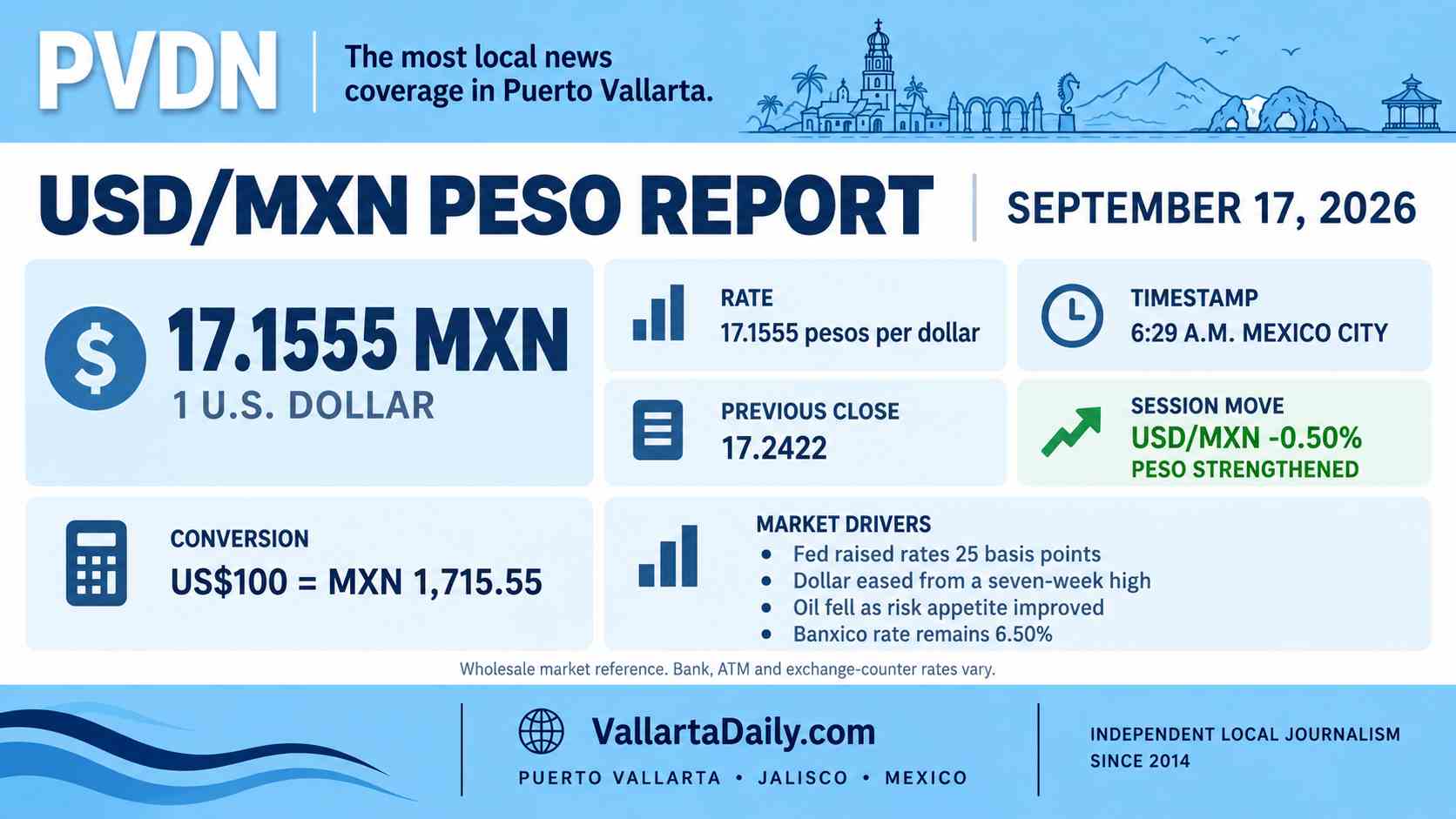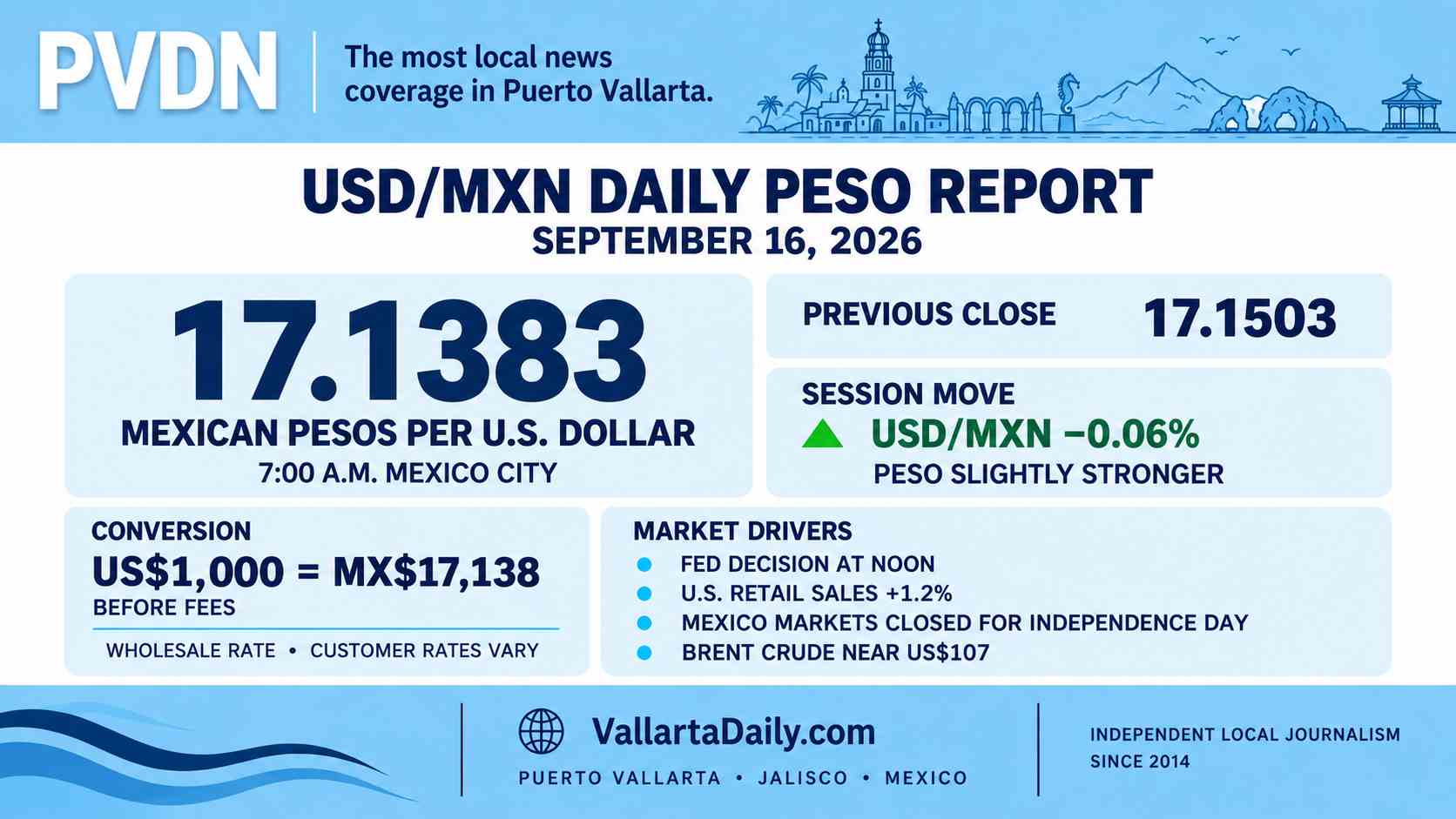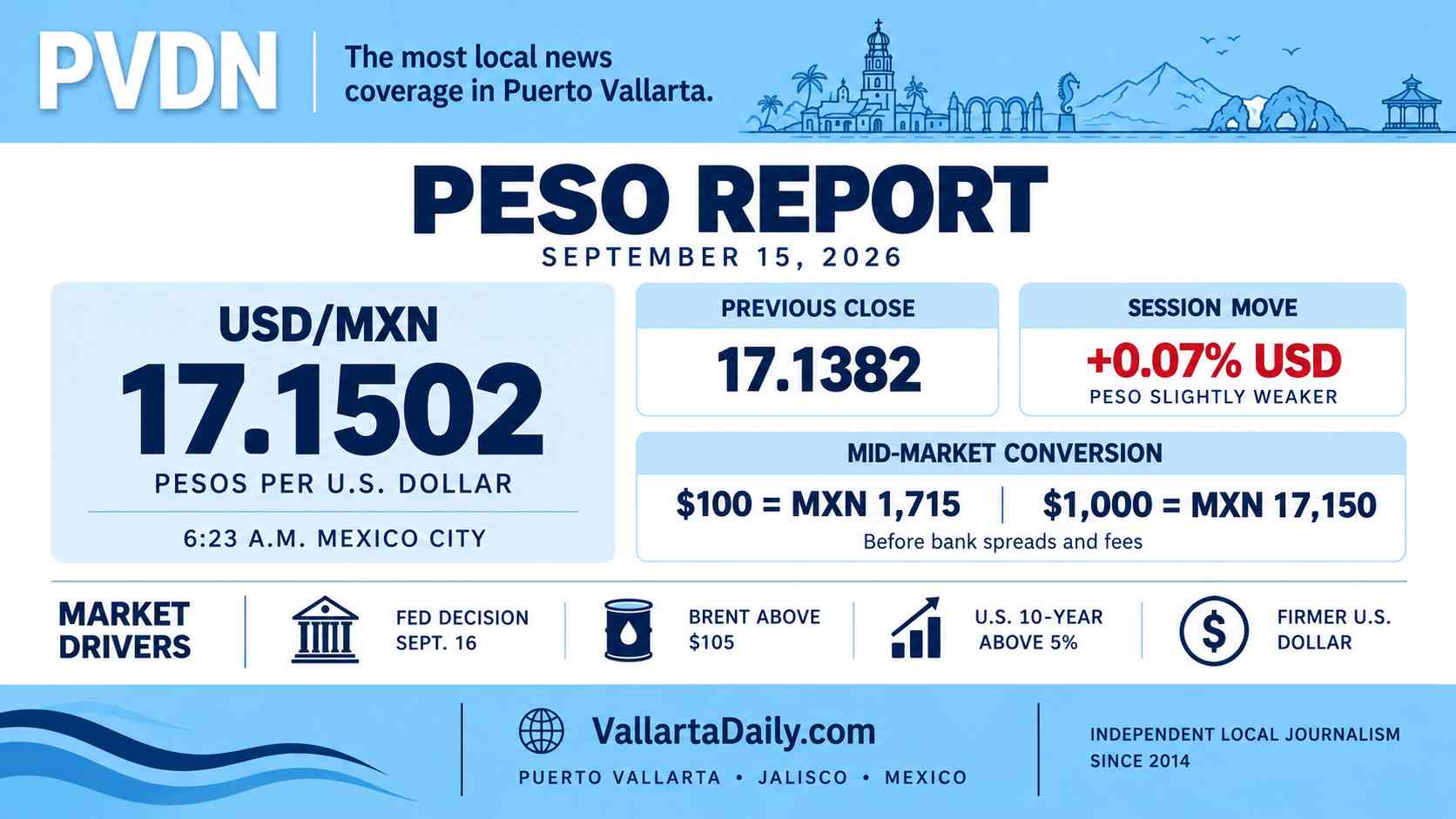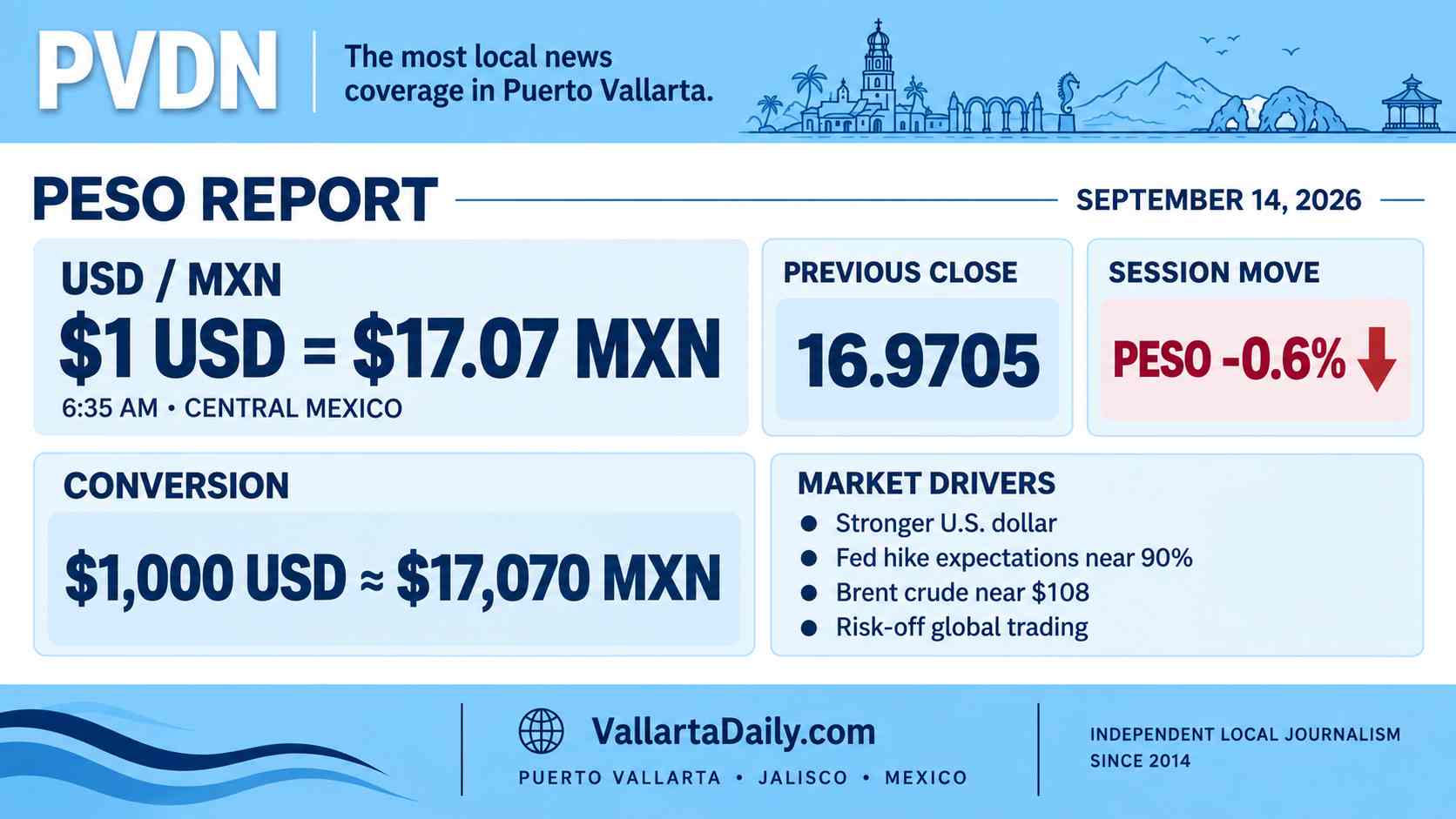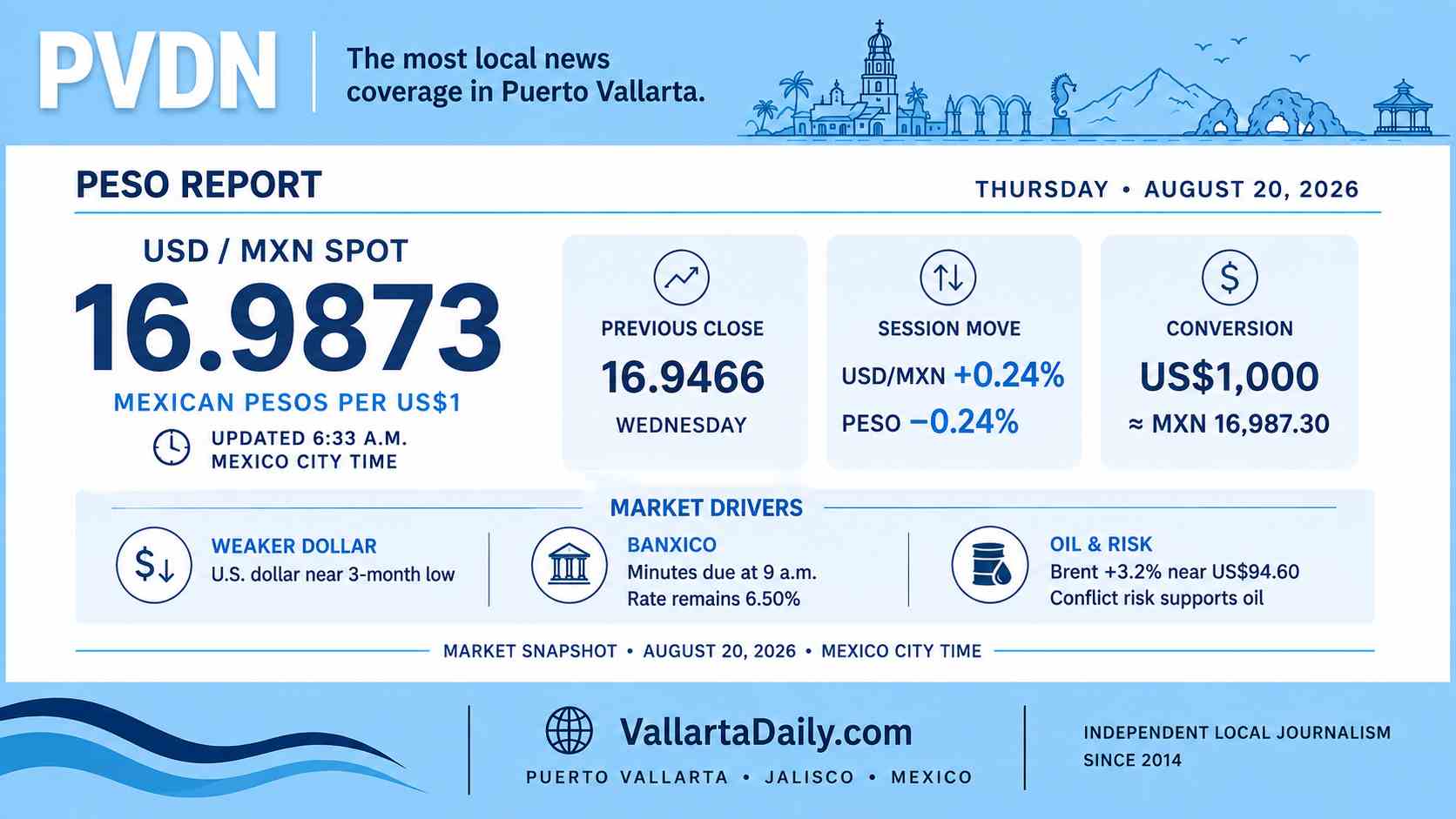
Puerto Vallarta, Jalisco, August 20, 2026 – The Mexican peso traded near 16.99 to the U.S. dollar at 6:33 a.m. Mexico City time Thursday. A live USD/MXN quote placed the rate at 16.9873, about 0.24% above Banco de México’s official Wednesday close of 16.9466. A higher USD/MXN rate means more pesos are required to buy one dollar.
The pair had moved between 16.9429 and 16.9968 during the session. Thursday’s early decline reversed only a small part of Wednesday’s advance, when the peso gained about 0.7% against the dollar based on Banco de México’s closing series.
The quote is a wholesale market rate, not the price offered at a bank or exchange counter, and it can change throughout the day. Banco de México set Wednesday’s FIX at 16.9593 and will determine Thursday’s reference rate after noon, according to its official exchange-rate page.
Dollar weakness meets renewed Fed caution
The broader U.S. dollar remained under pressure despite the peso’s modest pullback. The dollar index was near 98.70 after touching 98.558 earlier Thursday, its lowest level since May 14.
The decline followed a U.S. Treasury announcement that it would at least double the maximum size of buyback operations for longer-dated government securities, from $2 billion to $4 billion per operation. The change takes effect September 9 and is intended to improve liquidity in the Treasury market.
That action helped long-term bond yields retreat from recent highs and reduced one source of support for the dollar. It also improved risk sentiment during Wednesday’s session, contributing to gains in several currencies, including the peso.
The Federal Reserve supplied a counterweight. Minutes from its July meeting showed growing concern about inflation. Three policymakers favored an immediate quarter-point rate increase, while several others indicated that higher rates could be needed if inflation does not return toward the Fed’s 2% target.
Higher U.S. interest-rate expectations can support the dollar and reduce the relative advantage offered by Mexican rates. The Fed kept its target range at 3.50% to 3.75% in July, and the minutes did not establish what it will do at its next meeting.
Weekly U.S. jobless claims and the Philadelphia Fed manufacturing survey were scheduled for 6:30 a.m. Mexico City time. The exchange-rate snapshot was taken three minutes later, so it may not reflect the market’s full response to those reports.
Banxico minutes return Mexico’s rate gap to focus
Banco de México is expected to publish the minutes of its latest policy meeting at 9 a.m. Mexico City time Thursday, following the date set in its 2026 monetary policy calendar.
The central bank held its benchmark rate at 6.50% on August 6 in a unanimous decision. Its statement said headline inflation had fallen to 3.10% in the first half of July, while core inflation declined to 3.95%.
Banxico also delayed its expected return to the 3% inflation target until the fourth quarter of 2027. Thursday’s minutes may provide more detail on how board members weighed persistent core inflation, weaker economic activity, international conflict and the peso’s recent strength. No interest-rate decision is scheduled Thursday.
Mexico’s rate remains 2.75 to 3 percentage points above the Fed’s range. That difference has supported demand for peso-denominated assets, although it does not shield the currency from changes in global risk appetite or expectations for future rate moves.
Mexico’s latest preliminary growth signal was softer. INEGI’s early estimate indicated that economic activity slipped 0.1% from June in seasonally adjusted terms while remaining 1.1% above July 2025. The IOAE is a model-based estimate published before the final monthly activity figure, and it was unclear whether the release contributed to the peso’s early movement.
Oil sends a mixed signal for the peso
Brent crude futures climbed about 3.2% to $94.59 a barrel Thursday morning as conflict involving the United States, Israel and Iran kept supply risks in focus.
Higher oil prices can benefit Mexico’s export income, but the currency effect is not automatic. A sharp increase tied to geopolitical tension can also raise inflation concerns and reduce demand for emerging-market assets.
Risk appetite was mixed early Thursday. U.S. stock futures were lower and volatility measures had risen, even as the Treasury’s bond-market action eased concerns about long-term yields. The competing signals make it difficult to assign the peso’s four-centavo decline to one cause.
The 16.99 rate inside a Puerto Vallarta budget
At a mid-market rate of 16.99, US$1,000 converts to about MXN 16,990 before fees. A MXN 10,000 expense equals roughly US$589.
Compared with Wednesday’s official market close, Thursday’s early move adds about MXN 41 to the peso value of US$1,000. That gives people earning dollars a small increase in local purchasing power, while someone earning pesos and paying a dollar-denominated bill faces a similar increase in cost.
The actual difference may be larger because banks and exchange providers apply their own spreads and fees. For same-day budgeting, the final number of pesos received is more useful than the wholesale market quote alone.