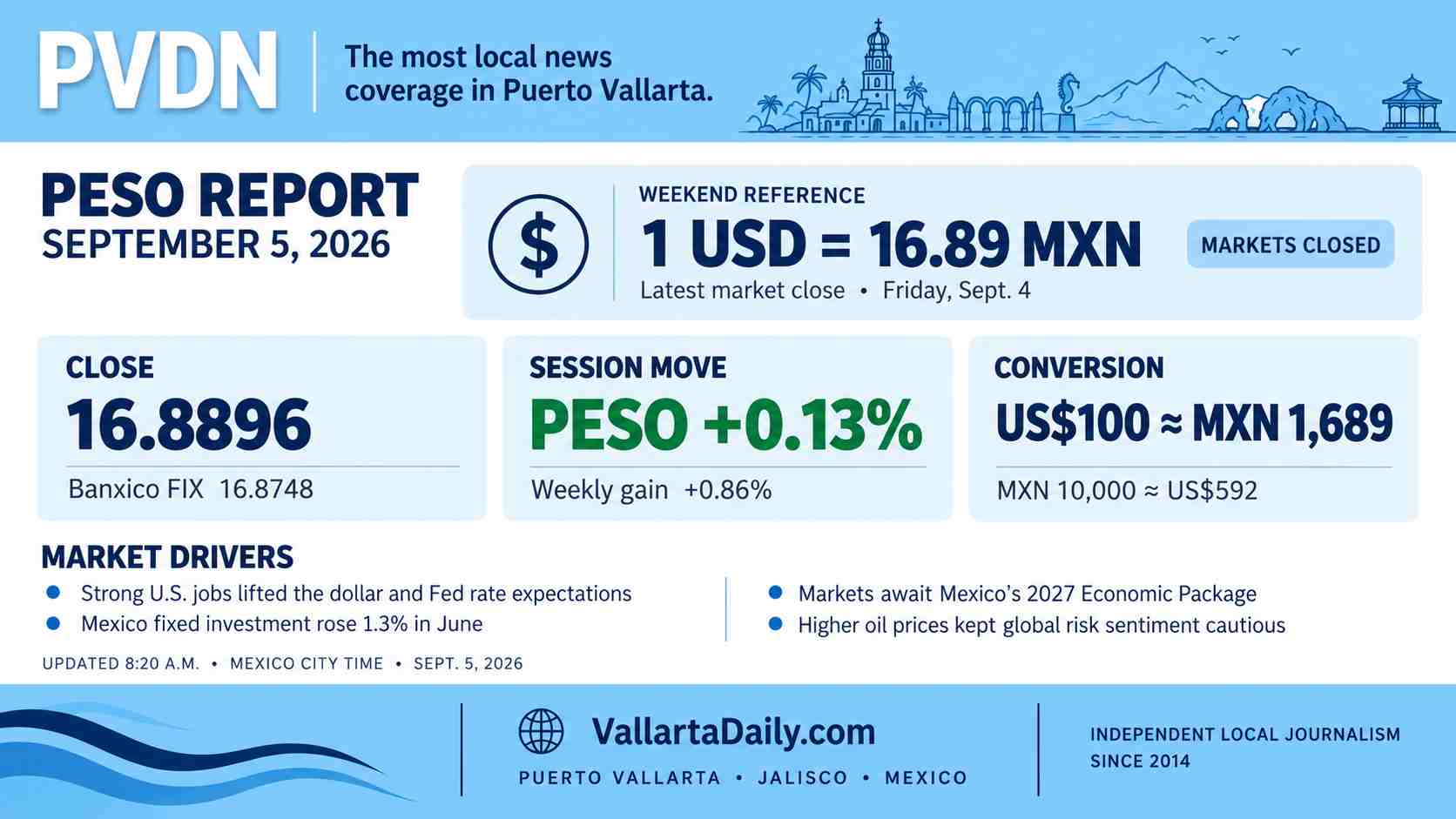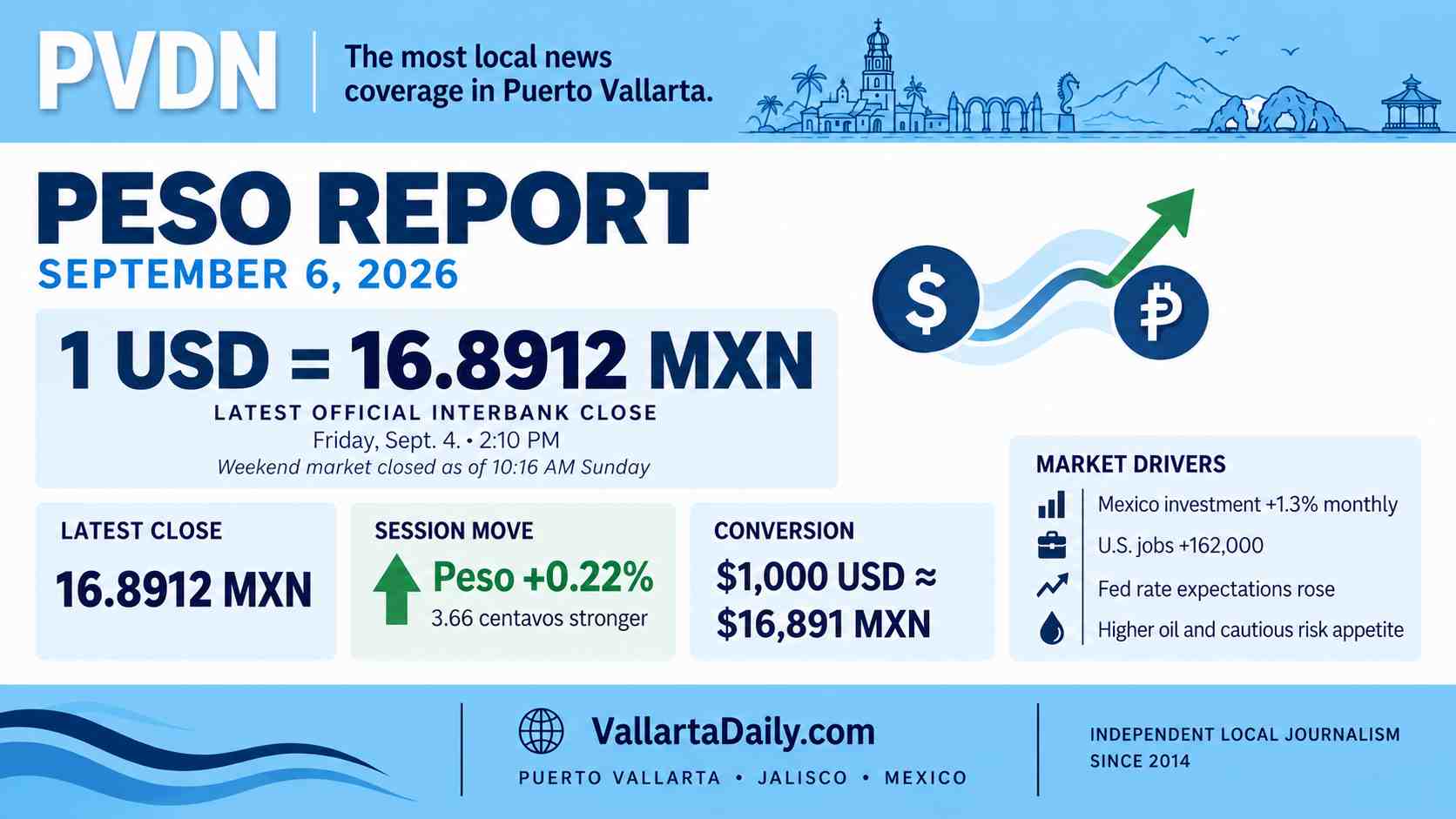
Puerto Vallarta, Jalisco, Sept. 6, 2026 – The Mexican peso entered Sunday at 16.8912 per U.S. dollar, the latest official interbank close after trading ended Friday.
As of 10:16 a.m. Central Mexico time, the interbank currency market remained closed for the weekend. Banco de México’s exchange-rate table shows the Friday rate was released at 2:10 p.m.
The peso gained 3.66 centavos, or 0.22%, from Thursday’s close of 16.9278. A falling USD/MXN rate means the peso is strengthening because fewer pesos are required to buy one dollar.
Peso closes below 17 for a third session
Friday’s rate was the peso’s strongest closing level since May 2024. The currency gained about 0.47% over the week from the previous Friday’s close of 16.9712.
During Banco de México’s observation period from 9 a.m. to 2 p.m., the dollar traded between 16.8580 and 16.9040 pesos. The peso held its advance even as the broader U.S. dollar strengthened against several major currencies.
Banco de México set Friday’s FIX reference rate at 16.8748. The rate applicable Sunday for calculating dollar-denominated obligations payable in Mexico is 16.9560 because the legal reference follows the Diario Oficial publication schedule.
The FIX, interbank close, and exchange rate offered by a bank or currency counter serve different purposes and should not be treated as interchangeable.
Mexican investment data supports the peso
Mexico’s fixed investment increased 1.3% in June from May and 7.7% from a year earlier, according to figures released Friday by INEGI. Market reports attributed part of the peso’s late-session recovery to that stronger domestic result, although currency movements cannot be tied to one report alone.
Private consumption fell 0.4% during June but remained 1.6% above its year-earlier level, INEGI reported. Together, the figures gave investors a mixed but firmer picture of domestic economic activity.
Mexico’s interest-rate advantage also remains part of the peso’s support. Banco de México held its benchmark rate at 6.50% in August, compared with the Federal Reserve’s current range of 3.50% to 3.75%.
Strong U.S. employment lifts Fed rate expectations
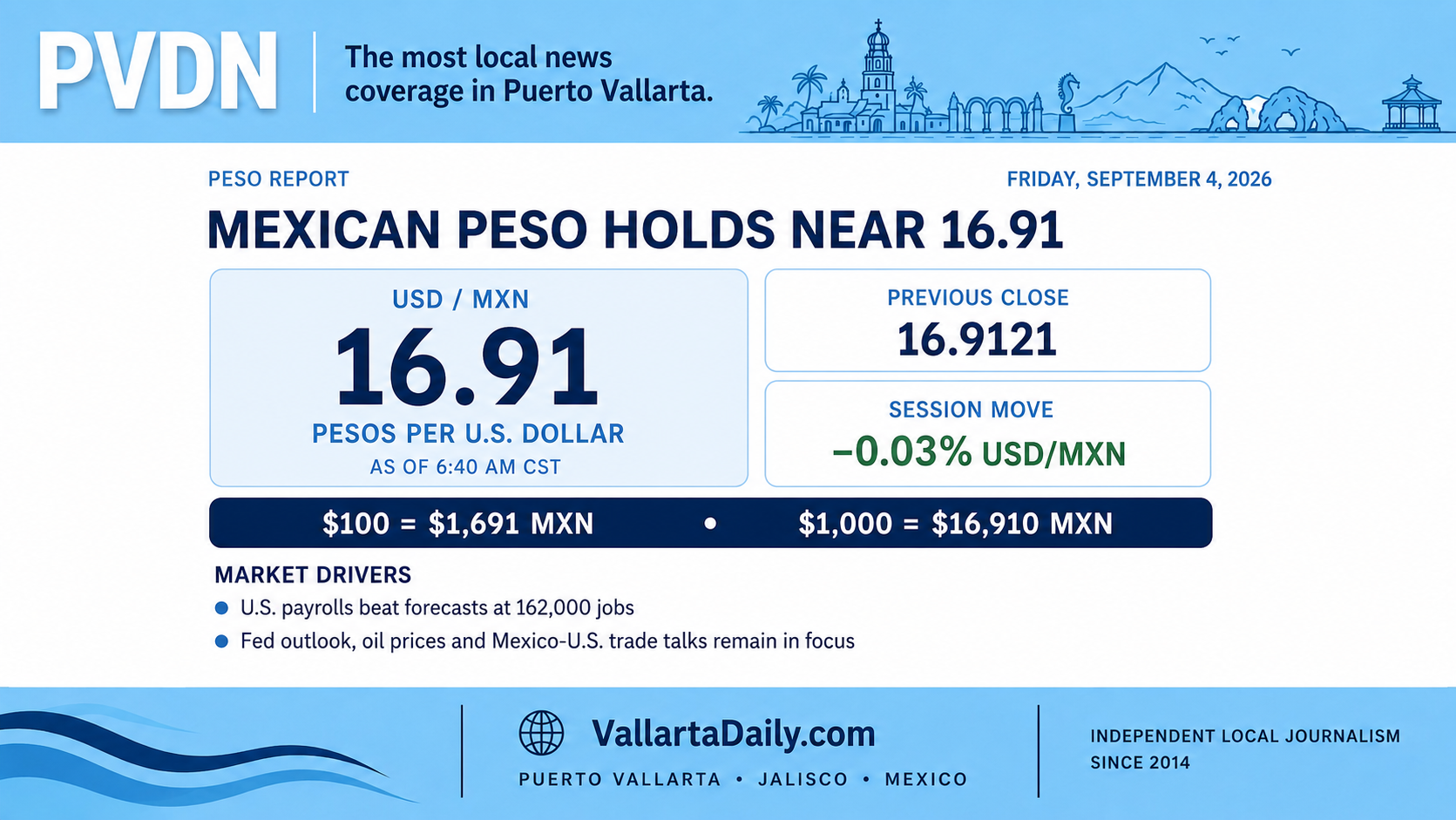
The United States added 162,000 nonfarm jobs in August, while unemployment remained at 4.1%, according to the U.S. Bureau of Labor Statistics. The job increase was well above the 56,000 expected by economists surveyed before the report.
The dollar index rose 0.21% to 99.17, while the two-year U.S. Treasury yield increased to about 4.37%. Interest-rate futures placed the probability of a quarter-point Fed increase at about 57% by Friday afternoon, up from 50% before the employment report.
Higher U.S. rate expectations often favor the dollar. The peso weakened briefly after the report but recovered before the close, indicating that Mexican data and demand for the currency outweighed that pressure during Friday’s session.
The Fed will announce its next decision Sept. 16. U.S. producer and consumer inflation reports due before that meeting could shift rate expectations again.
Oil and trade remain market crosscurrents
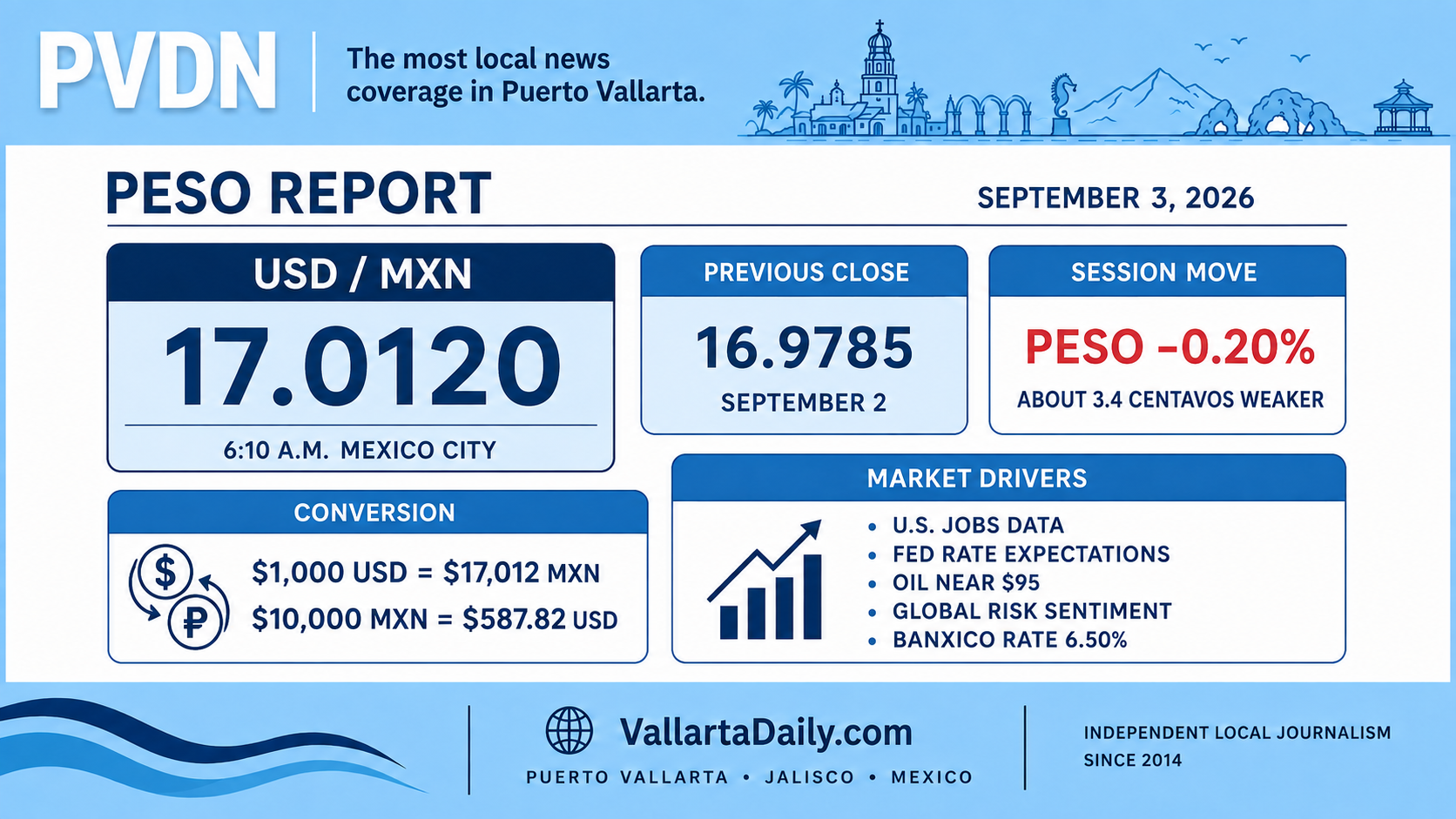
Brent crude settled Friday at $92.68 a barrel, and West Texas Intermediate at $91.48 as conflict involving the United States and Iran disrupted supply routes. Brent gained 7.6% for the week, while U.S. crude rose nearly 10%.
Higher energy prices can add to inflation concerns and support expectations for higher interest rates. At the same time, geopolitical uncertainty can reduce demand for emerging-market currencies. Friday’s peso gain occurred despite both pressures.
Trade policy also remains unresolved. Economy Secretary Marcelo Ebrard met U.S. Commerce Secretary Howard Lutnick last week while Mexico sought progress on American tariffs covering automobiles, steel and aluminum. The discussions are connected to the USMCA review, but no settlement was announced.
Mexico is scheduled to release August inflation data and present its 2027 Economic Package on Wednesday, Sept. 9. The inflation report could affect expectations for Banco de México, while the budget will provide new government assumptions for growth, revenue, borrowing and spending.
A 16.89 peso dollar in Puerto Vallarta budgets
At Friday’s interbank benchmark, $1,000 converts to approximately 16,891 pesos before bank spreads, transfer charges or ATM fees. A 10,000-peso expense equals about $592.
One year earlier, Banco de México recorded a rate of 18.7402 pesos per dollar. That means $1,000 now buys about 1,849 fewer pesos than it did at the comparable 2025 rate, a reduction of nearly 10% for people receiving income in dollars and paying expenses in pesos.
The stronger peso lowers the peso cost of dollar-denominated purchases for people earning or saving in Mexico’s currency. Dollar earners face the opposite effect when covering rent, utilities, payroll or household expenses in pesos.
Retail rates can differ by more than one peso between a bank’s buying and selling prices. Card networks, transfer services and ATMs may also add conversion margins or fees.
Currency trading is expected to resume Sunday afternoon, although liquidity may remain lighter before U.S. markets return Tuesday following the Labor Day holiday. Any payment or conversion should be based on the provider’s quoted rate at the time of the transaction.