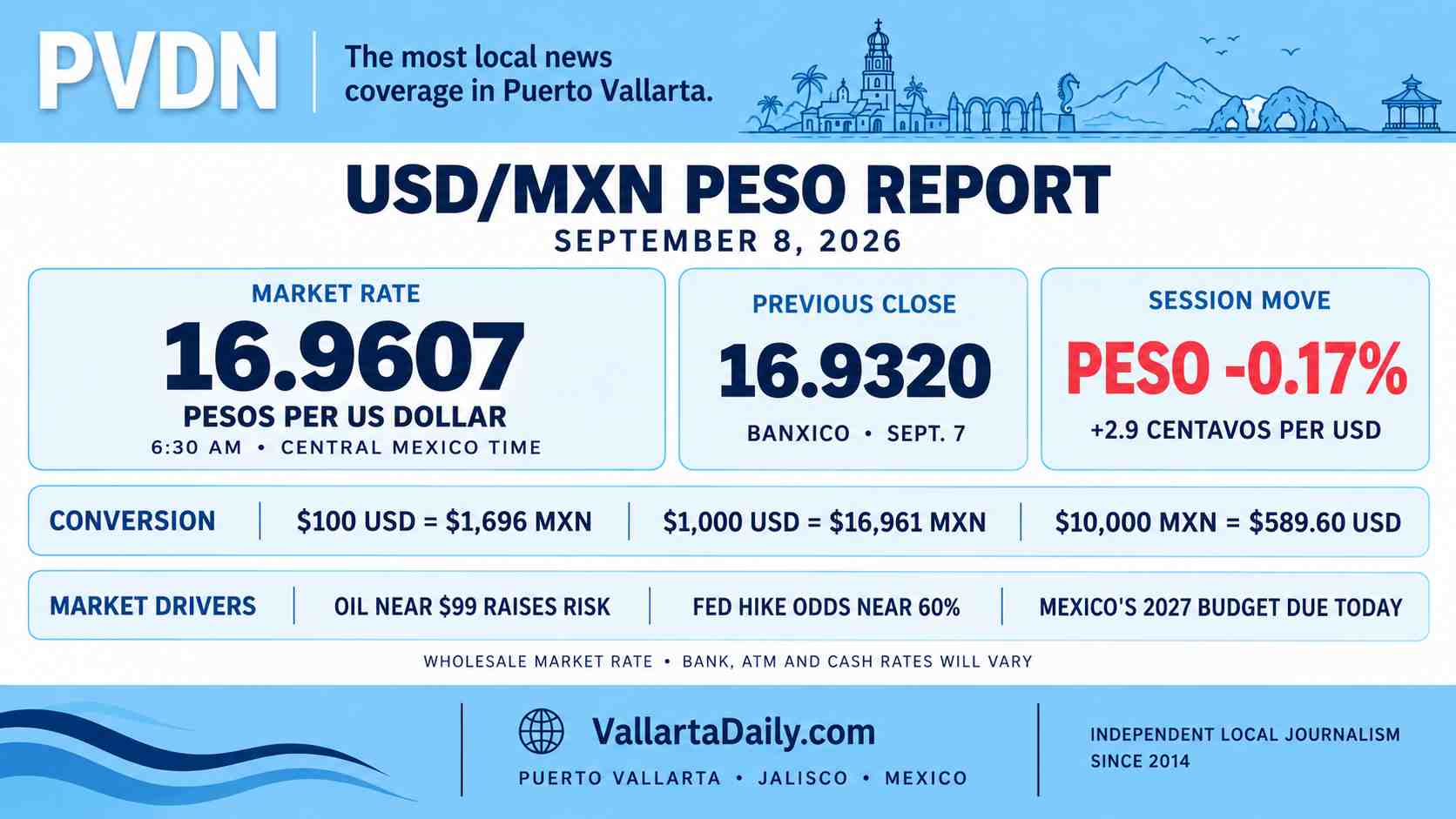
Puerto Vallarta, Jalisco, Sept. 8, 2026 – The Mexican peso traded at approximately 16.9607 per U.S. dollar at 6:30 a.m. Central Mexico Time, according to a live wholesale-market quote. The rate can change throughout the day.
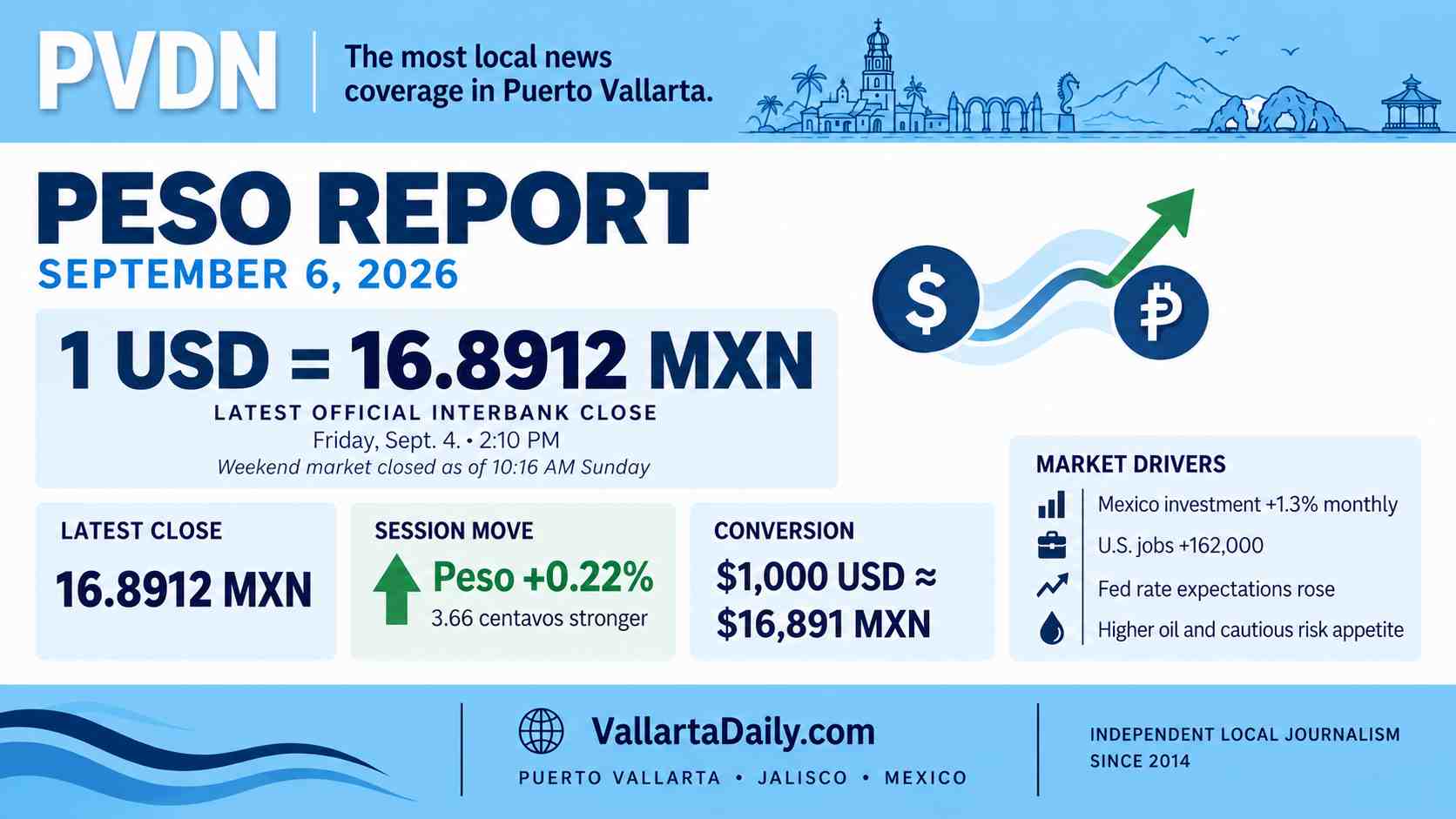
Compared with the Banco de México closing rate of 16.9320 on Monday, the dollar was about 2.9 centavos higher. That left the peso approximately 0.17% weaker in early trading Tuesday.
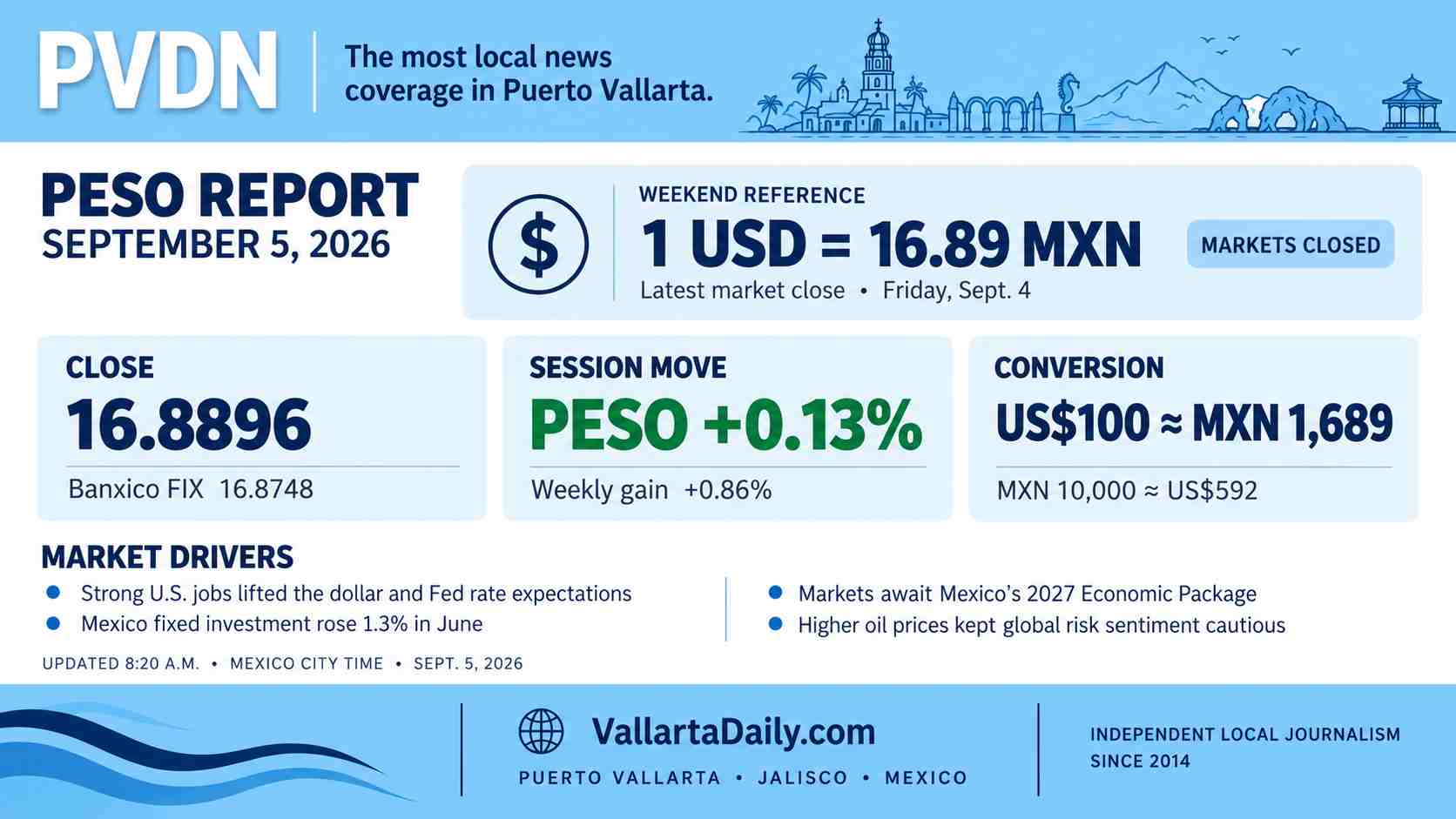
Banco de México had not yet issued its Sept. 8 FIX determination at the time of this report. The central bank publishes that figure after noon. The FIX rate appearing in Tuesday’s official publication was 16.9237, while 16.8748 was the rate applicable to dollar obligations payable in Mexico that day. Those figures are separate from live market and retail exchange rates.
Peso gives back a small part of recent gains
Tuesday’s decline was limited, and the dollar remained below the 17-peso level. The peso was still about 9% stronger than one year earlier, based on the same market series.
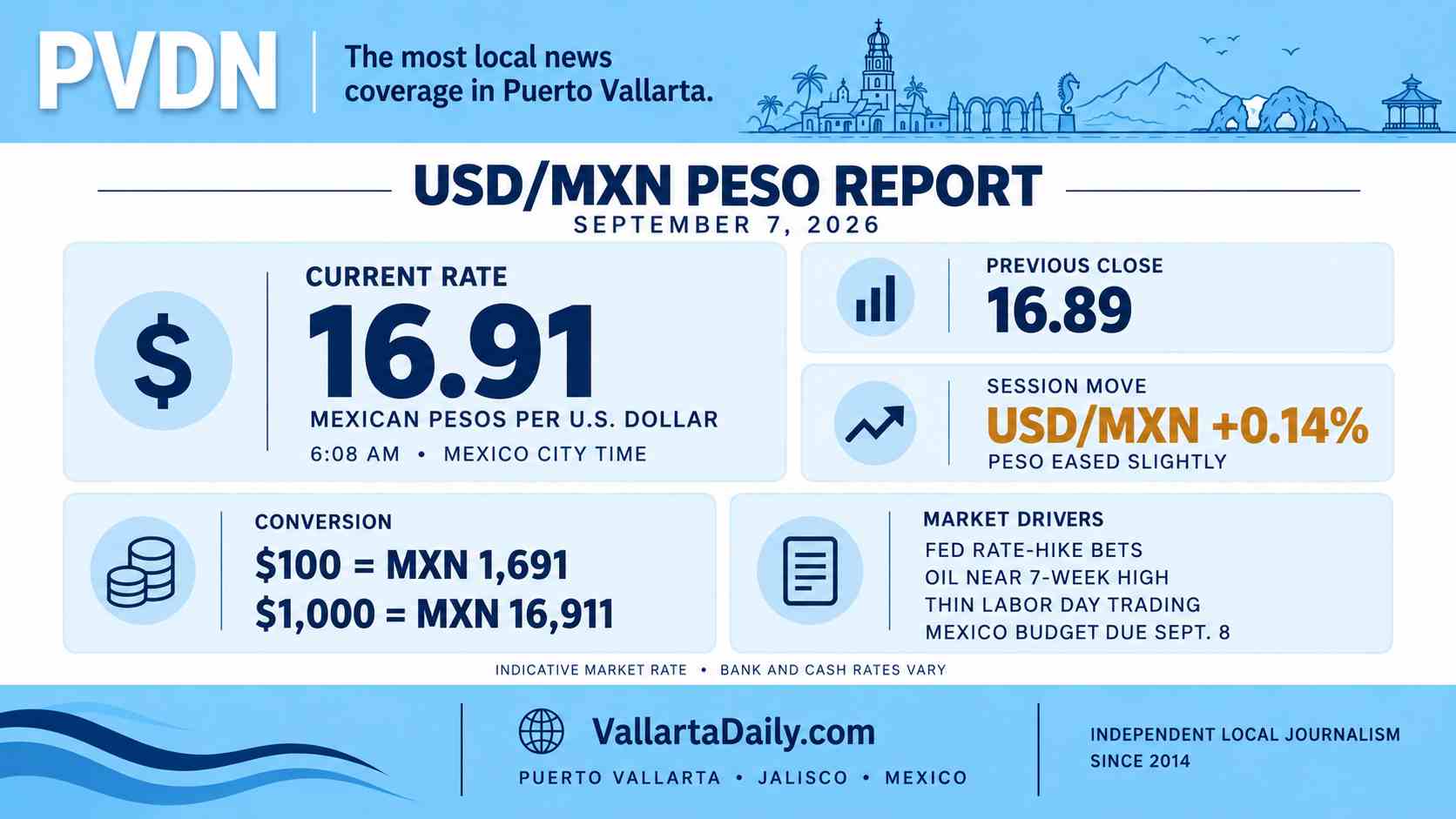
The current move follows five sessions of peso gains and a quieter Monday session during the U.S. Labor Day holiday. Trading activity returned Tuesday as investors weighed stronger U.S. employment data, rising Treasury yields, and renewed volatility in global markets.
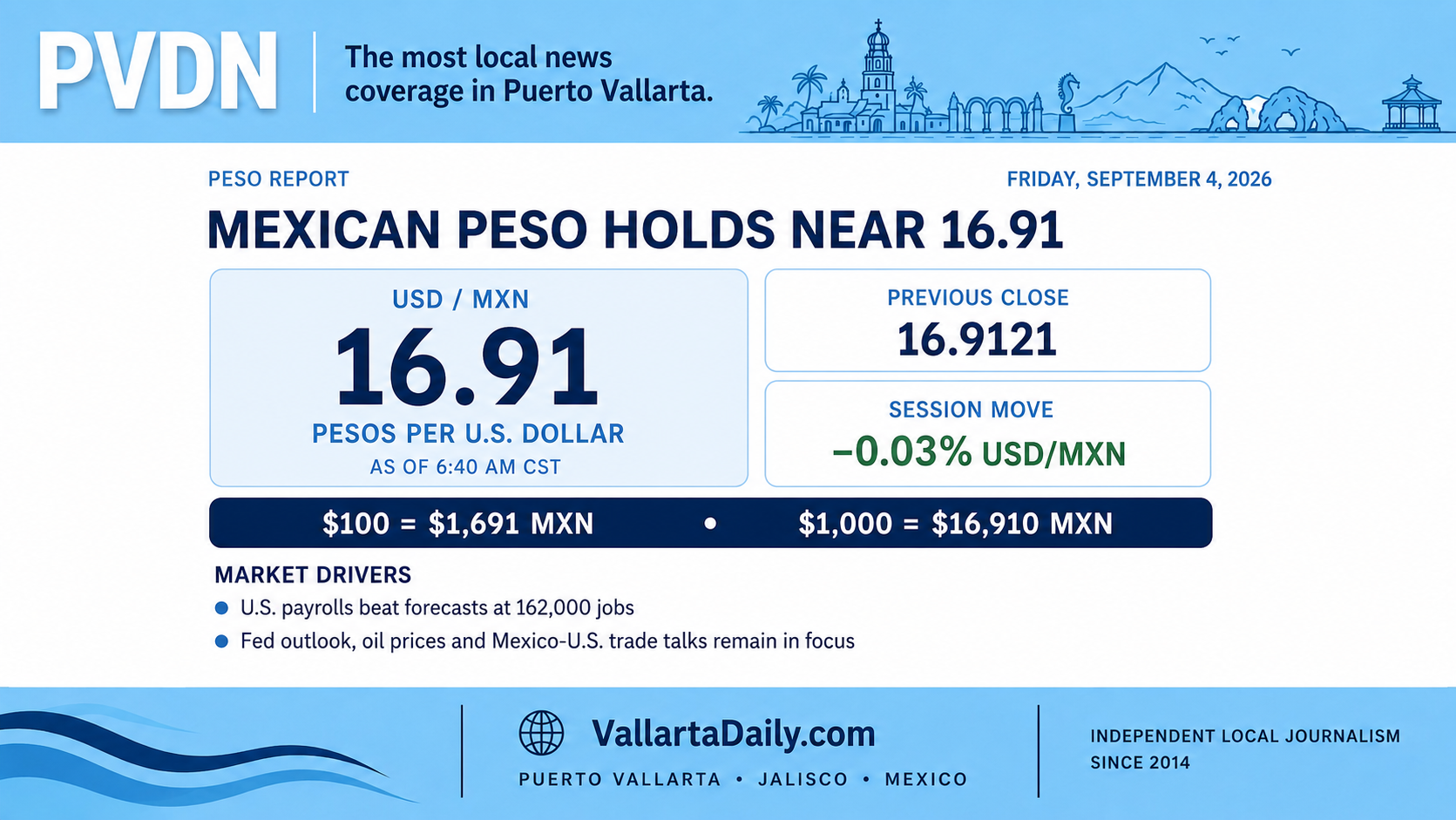
The latest U.S. employment report showed that employers added 162,000 jobs in August while unemployment remained at 4.1%. The report strengthened expectations that the Federal Reserve could raise interest rates at its Sept. 15-16 meeting.
Early Tuesday, futures markets placed the probability of a September rate increase at about 60%. The 10-year U.S. Treasury yield was near 4.80%. Higher U.S. rates and bond yields can reduce the relative appeal of peso-denominated assets, although they do not determine the exchange rate on their own.
Oil and risk appetite complicate the session
Global markets were cautious after attacks on energy facilities in the Gulf pushed Brent crude to $98.66 a barrel, an increase of 1.73% in early trading. Stock futures declined as oil and inflation concerns increased.
The effect of higher oil prices on the peso is mixed. Mexico can receive more revenue from higher-priced crude exports, but a conflict-driven increase can also raise inflation expectations and reduce demand for currencies considered more sensitive to global risk.
The dollar was roughly unchanged across major currencies Tuesday and weakened against the Japanese yen. That helped limit the peso’s decline even as investors reduced exposure to some emerging-market assets.
Mexico’s 2027 budget enters the market
In Mexico, attention is centered on the federal government’s 2027 economic package, which is scheduled to reach Congress on Tuesday. The package includes the proposed federal budget, revenue legislation and the government’s economic assumptions for next year, according to the official congressional schedule.
President Claudia Sheinbaum previously said the proposal would not raise taxes and would include measures intended to increase revenue collection and combat tax evasion. That remained a government preview early Tuesday because the complete documents had not yet been released.
Currency markets will examine the package’s projections for economic growth, the peso, oil prices, government borrowing and the fiscal deficit. Proposed financial support for Petróleos Mexicanos will also be closely read because of the company’s effect on federal finances.
Banco de México has kept its benchmark interest rate at 6.50% since May, including unchanged decisions in June and August. The central bank’s rate history confirms the current level. The gap between Mexican and U.S. interest rates has supported demand for pesos, but an increase by the Federal Reserve would narrow that difference.
Converting dollars and pesos today
At the early market rate of 16.9607, $100 converted to approximately 1,696 pesos and $1,000 to about 16,961 pesos before fees. A 10,000-peso expense was equal to roughly $589.60.
People earning dollars received slightly more pesos than they would have at Monday’s official closing rate. The longer comparison remains less favorable for dollar earners because the peso has strengthened during the past year. Peso earners purchasing dollars receive the opposite benefit.
Banks, ATMs, credit cards and exchange houses use their own buy and sell rates. Their quoted rate may include a spread, foreign-transaction charge or ATM fee, so customers should not expect the wholesale market rate at the counter.
Inflation data will test the sub-17 level
Mexico’s August inflation report is scheduled for Wednesday, Sept. 9, according to the INEGI release calendar. The United States will release producer inflation Thursday and consumer inflation Friday.
Those reports will influence expectations for Banco de México and the Federal Reserve. Details from Mexico’s budget package could also move the peso during Tuesday’s session, particularly if its fiscal or economic assumptions differ from market expectations.