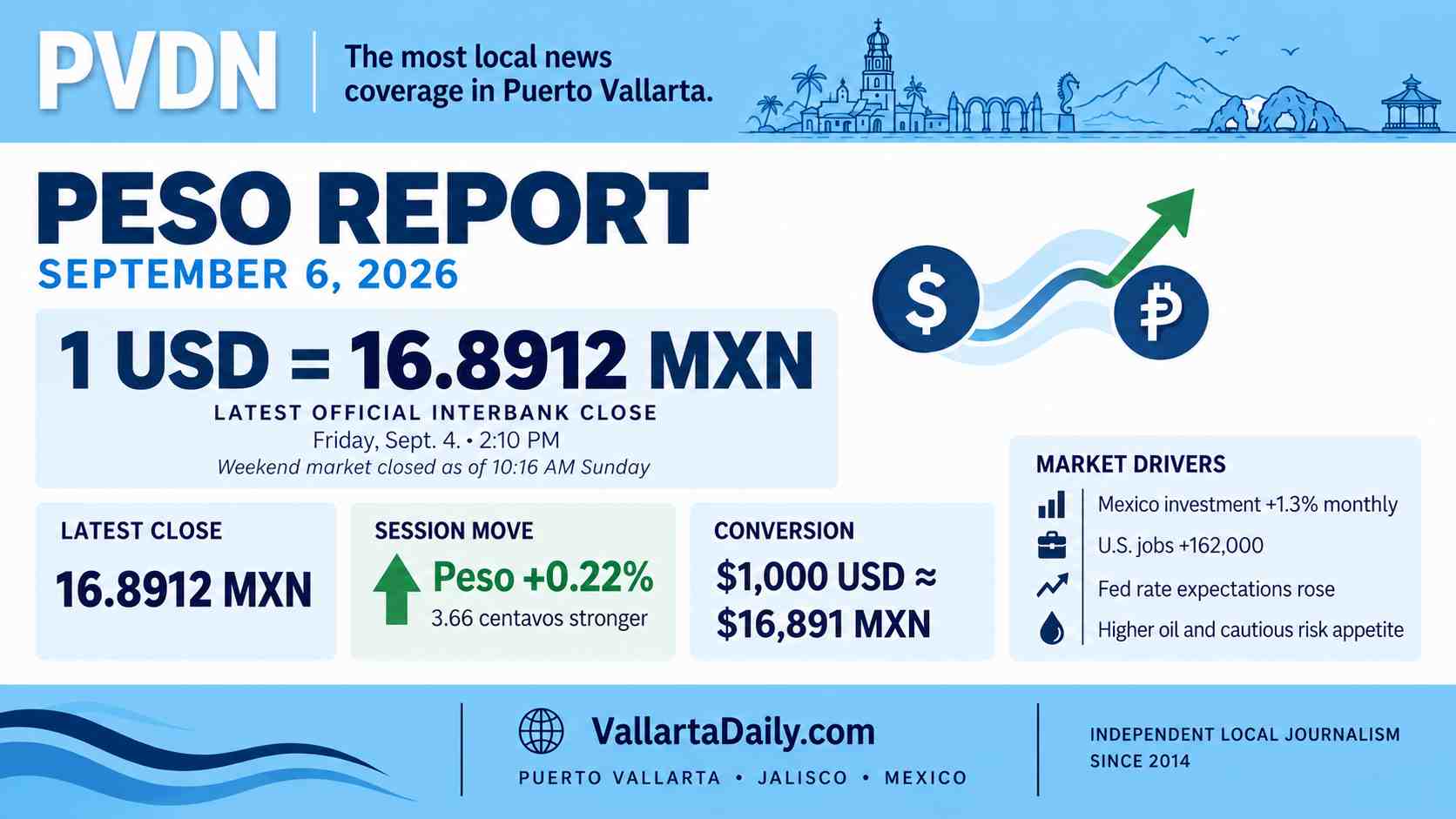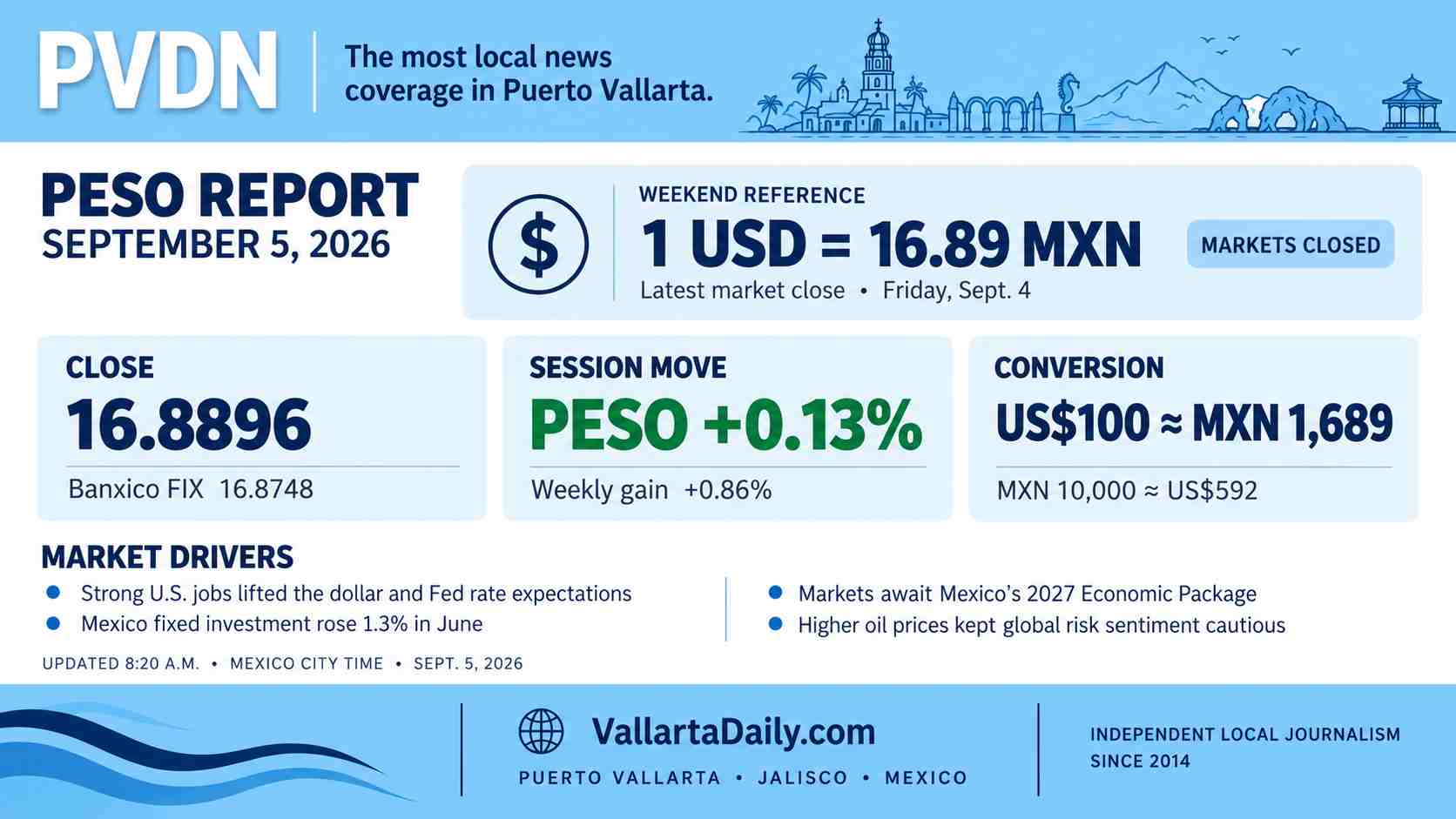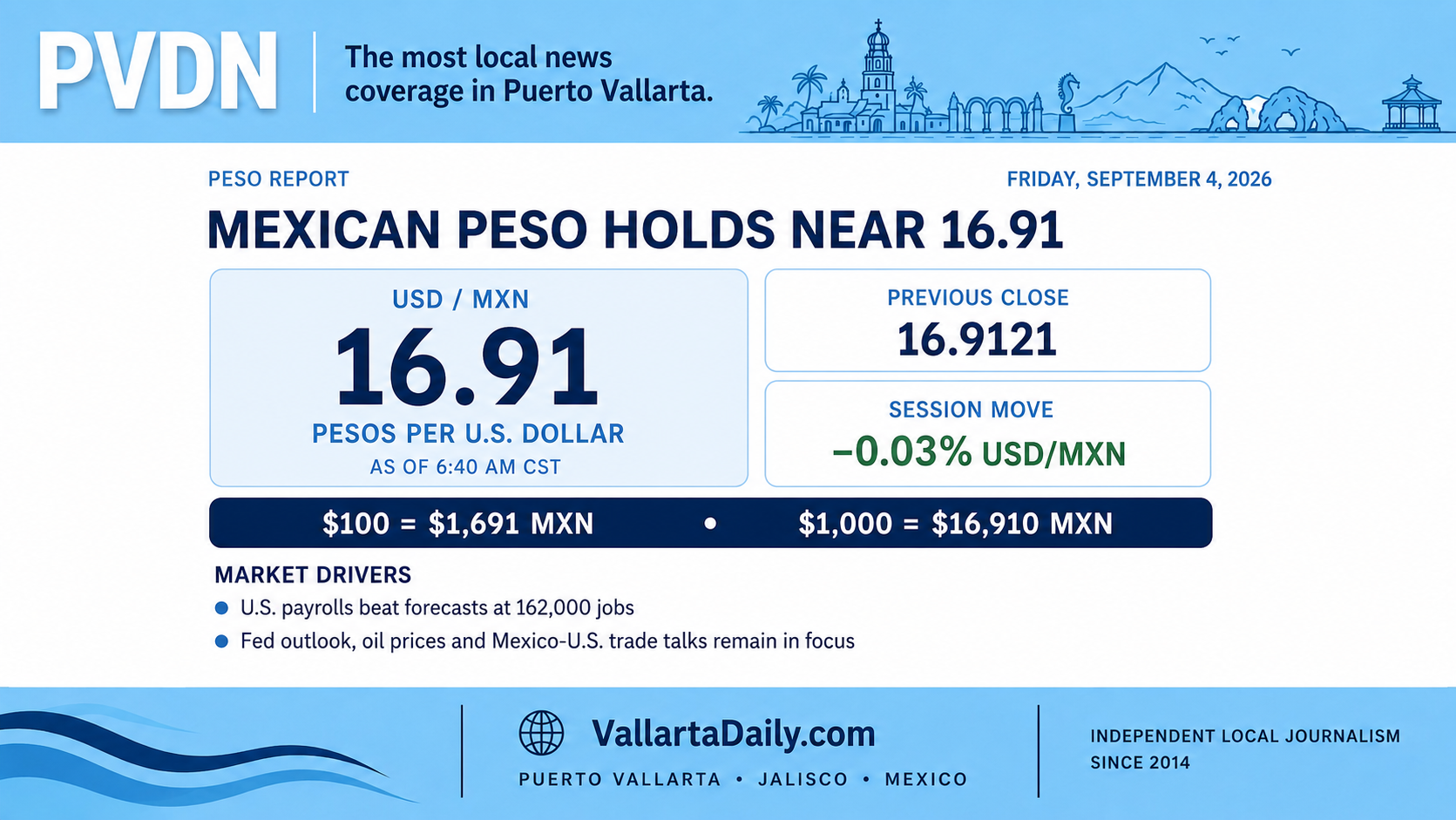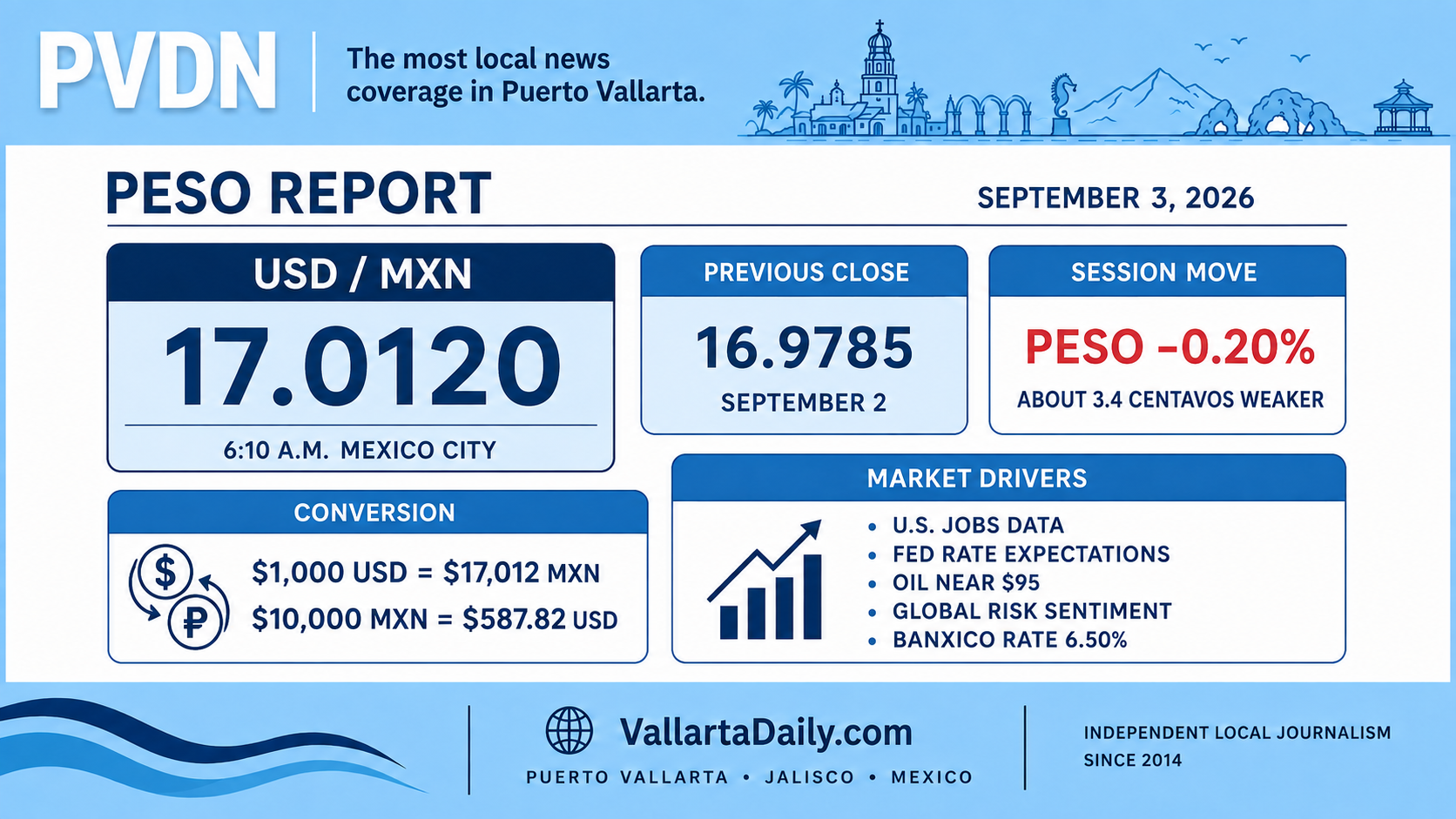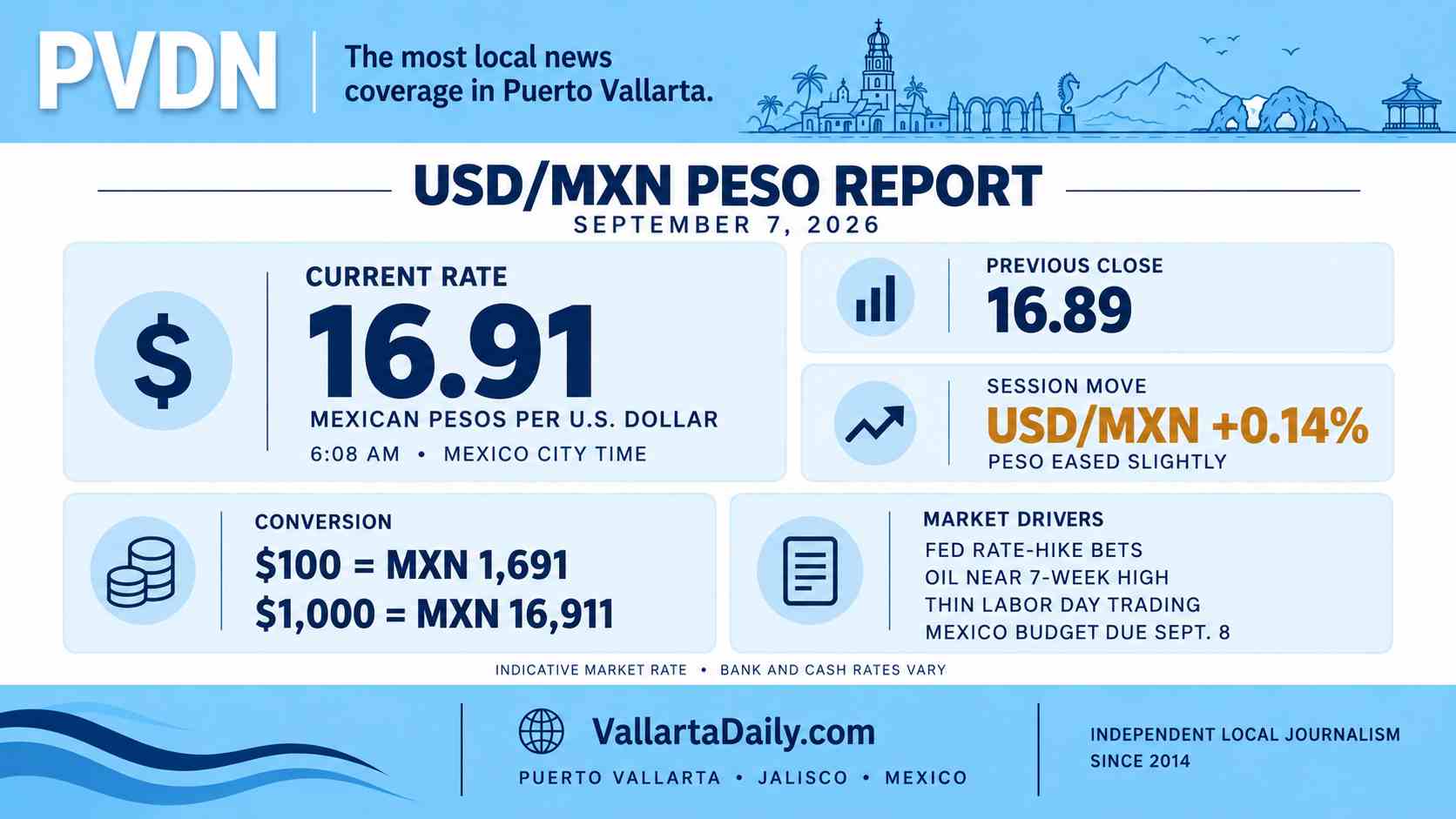
Puerto Vallarta, Jalisco, September 7, 2026 – The Mexican peso traded near 16.91 per U.S. dollar at 6:08 a.m. Mexico City time Monday. Live market data placed USD/MXN at 16.9109, about 0.14% above the previous session. A higher USD/MXN rate means modest weakness for the peso.
The movement was limited. The peso remained below 17 per dollar after reaching its strongest level since May 2024 last week. It has gained about 1.3% against the dollar over the past month.
Trading conditions were lighter because U.S. markets were closed for Labor Day. Lower volume can make early price changes less reliable, and the rate may shift when normal U.S. trading resumes Tuesday.
The market rate and Banxico’s official reference
The 16.91 figure is an indicative wholesale market rate. It is different from the exchange rates offered by banks, card networks, money-transfer services and Puerto Vallarta currency exchanges.
Banco de México’s foreign exchange portal lists Friday’s FIX rate at 16.8748 pesos per dollar. The rate published for settling dollar-denominated obligations in Mexico on Monday is 16.9560. Banxico calculates the FIX rate from wholesale-market quotations and normally releases it after noon on banking days.
Fed expectations limit the peso’s advance
Friday’s U.S. employment report showed 162,000 jobs added in August, nearly three times the market forecast. The unemployment rate held at 4.1%, while annual wage growth remained at 3.1%.
The stronger labor market increased expectations that the Federal Reserve could raise interest rates at its September 15–16 meeting. Interest-rate futures indicated roughly a 57% to 58% probability of an increase early Monday. The decision is still expected to depend heavily on this week’s U.S. inflation reports.
Higher U.S. rates can support the dollar and reduce the interest-rate advantage that has helped the peso. Strong U.S. growth can also support Mexican exports, so the effect on USD/MXN is not always one-directional.
The broader dollar was softer Monday. The dollar index fell about 0.2% to 98.9, while the Japanese yen reached a seven-month high. That broader decline helped contain the dollar’s advance against the peso.
Oil adds inflation and risk concerns
Brent crude climbed toward $97.60 a barrel, its highest level in seven weeks, as attacks involving the United States and Iran raised concerns about shipping near the Strait of Hormuz.
Oil prices rose nearly 8% last week, while diesel prices reached record levels. The increase could support revenue for oil-producing countries, but it also raises inflation concerns and can reduce demand for currencies considered more sensitive to global risk. Oil was therefore a mixed influence on the peso Monday.
Mexico turns to its budget and inflation data
Mexico’s 2027 Economic Package is due before Congress on Tuesday, September 8. The proposal will include the federal government’s growth, inflation, exchange-rate and oil-price assumptions, along with its revenue and spending plans.
Officials have promised a gradual fiscal consolidation. The complete figures were not public early Monday, leaving investors to watch the proposed deficit, federal borrowing and continued support for Pemex. Congress has confirmed the September 8 presentation.
Banco de México held its benchmark interest rate at 6.50% on August 6. Early-August inflation reached 3.26% annually, while core inflation stood at 3.93%.
INEGI is scheduled to publish full August inflation data on Wednesday. That report will help shape expectations for Banxico’s next decision and show whether the increase recorded during the first half of August continued through the month.
Budgeting between dollars and pesos
At a market rate of 16.91, $100 converts to about 1,691 pesos and $1,000 to about 16,911 pesos before fees or exchange spreads. A 10,000-peso expense equals approximately $591.34 at the same rate.
People earning dollars received slightly more pesos Monday than during the previous session, but the peso remains considerably stronger than it was a year ago. Peso earners paying dollar-denominated bills continue to benefit from the stronger currency.
Actual card, bank and cash-exchange rates can differ by several percentage points. Anyone making a same-day payment should use the quote supplied by the service handling the transaction rather than the wholesale market rate.
A light session before heavier economic data
Monday’s move was small and occurred during thin holiday trading. The week’s larger tests begin Tuesday with Mexico’s federal budget proposal, followed by Mexican inflation data Wednesday and U.S. producer and consumer inflation reports on Thursday and Friday.
Those releases could change expectations for both central banks. Oil prices, Middle East developments and U.S.-Mexico trade headlines remain additional sources of short-term movement.