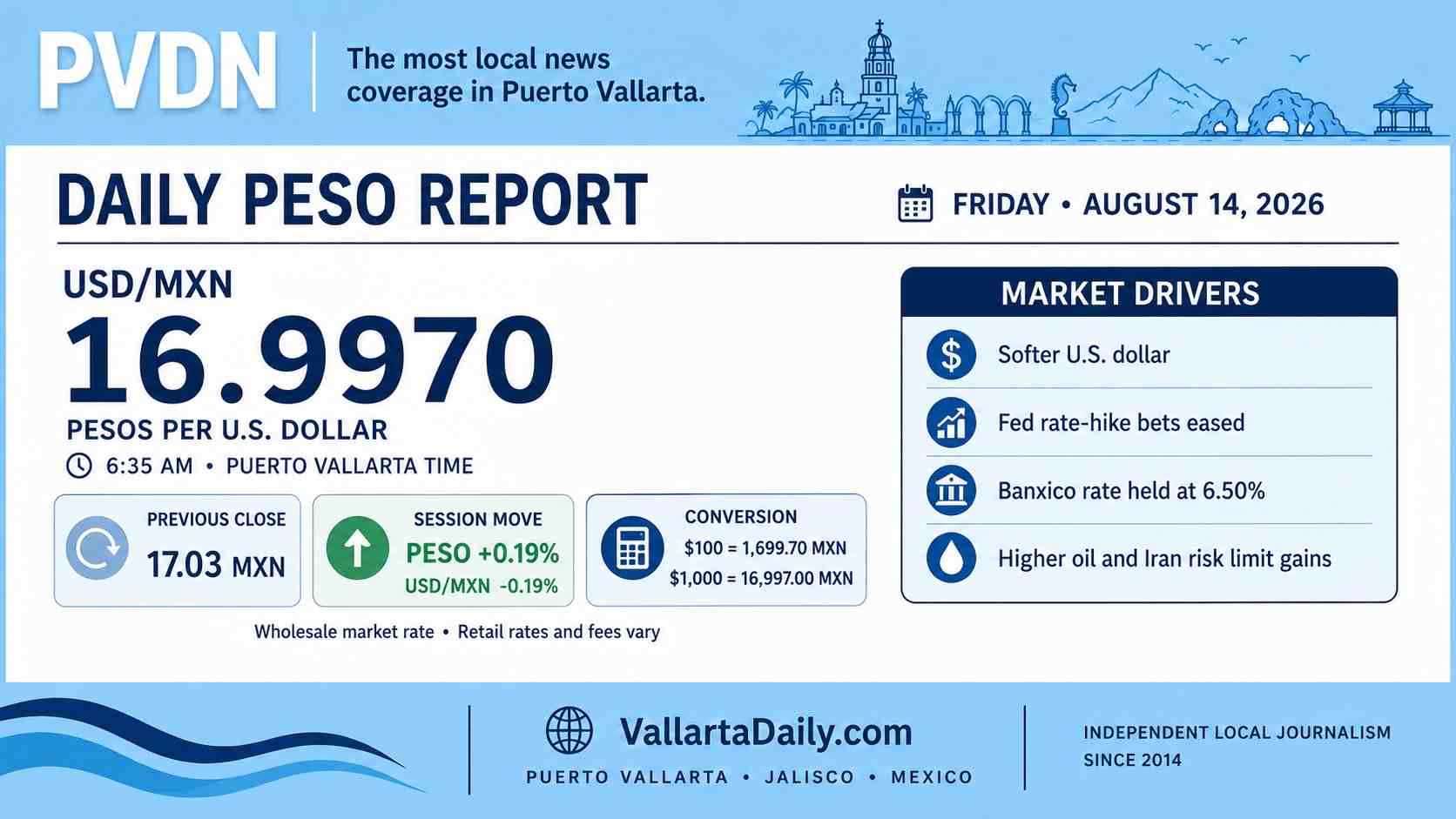
Puerto Vallarta, Jalisco, August 14, 2026 – The Mexican peso strengthened to the 17-per-dollar line early Friday, extending gains as the U.S. dollar weakened and traders reduced expectations for a Federal Reserve rate increase in September.
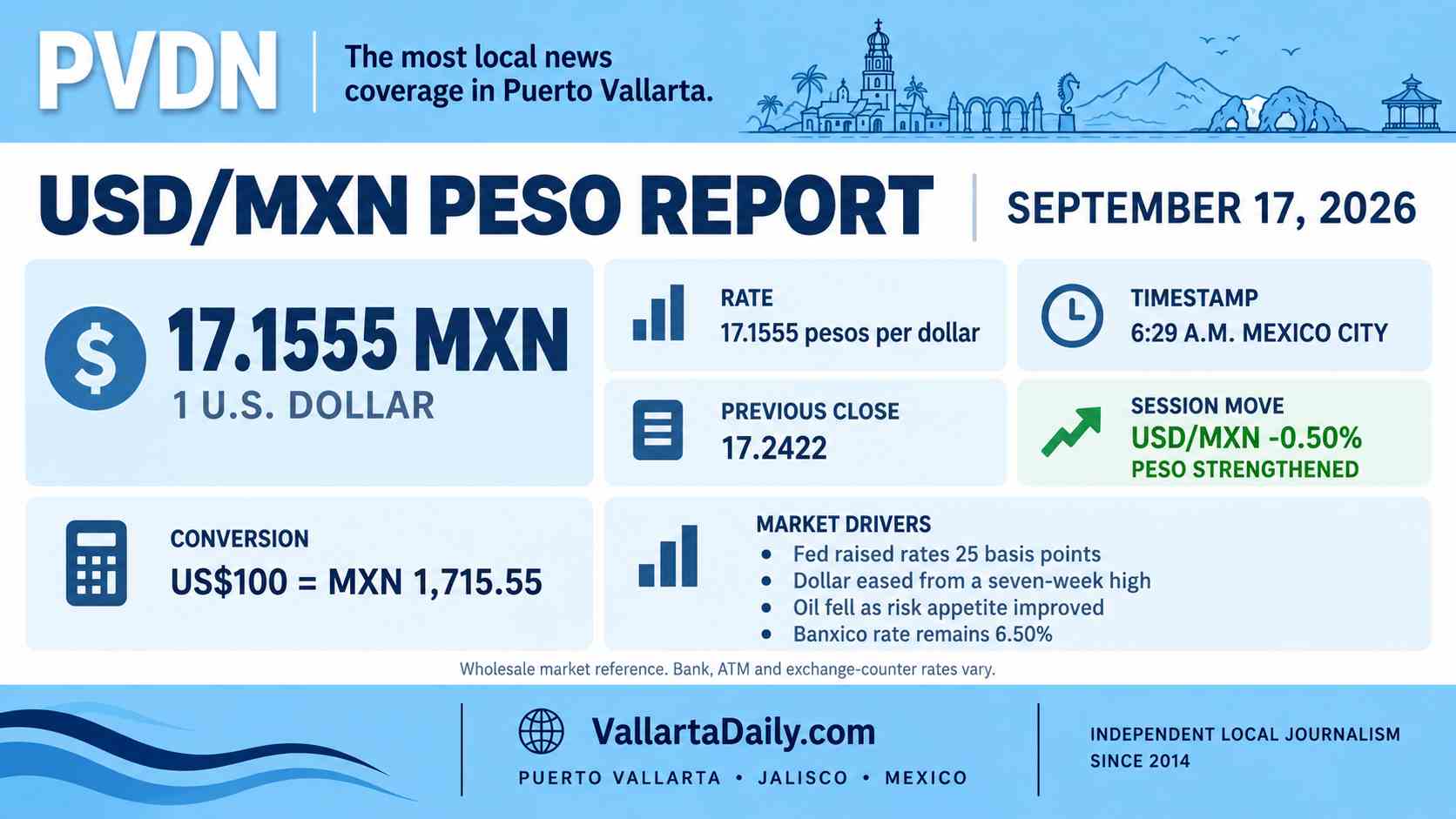
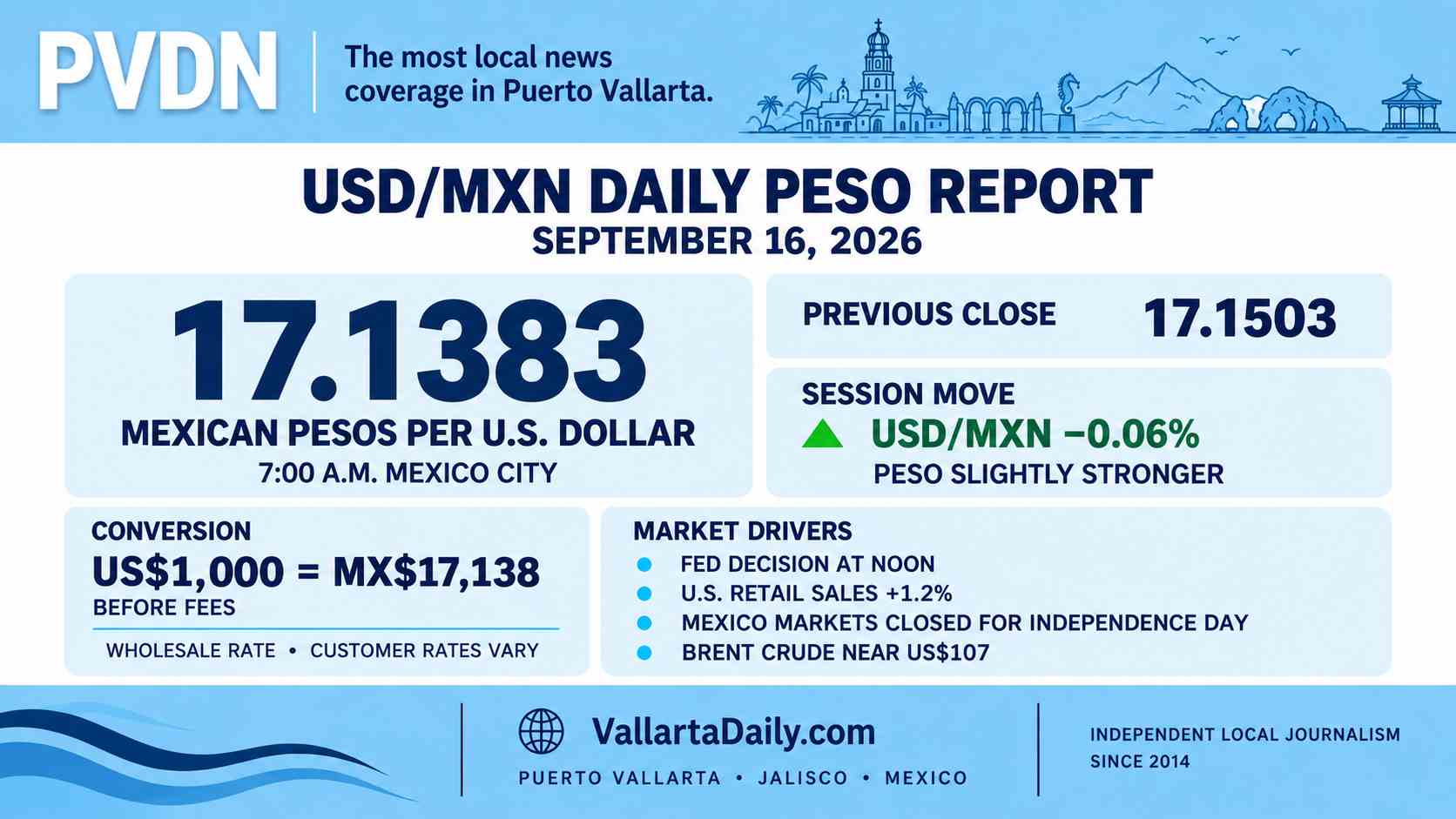
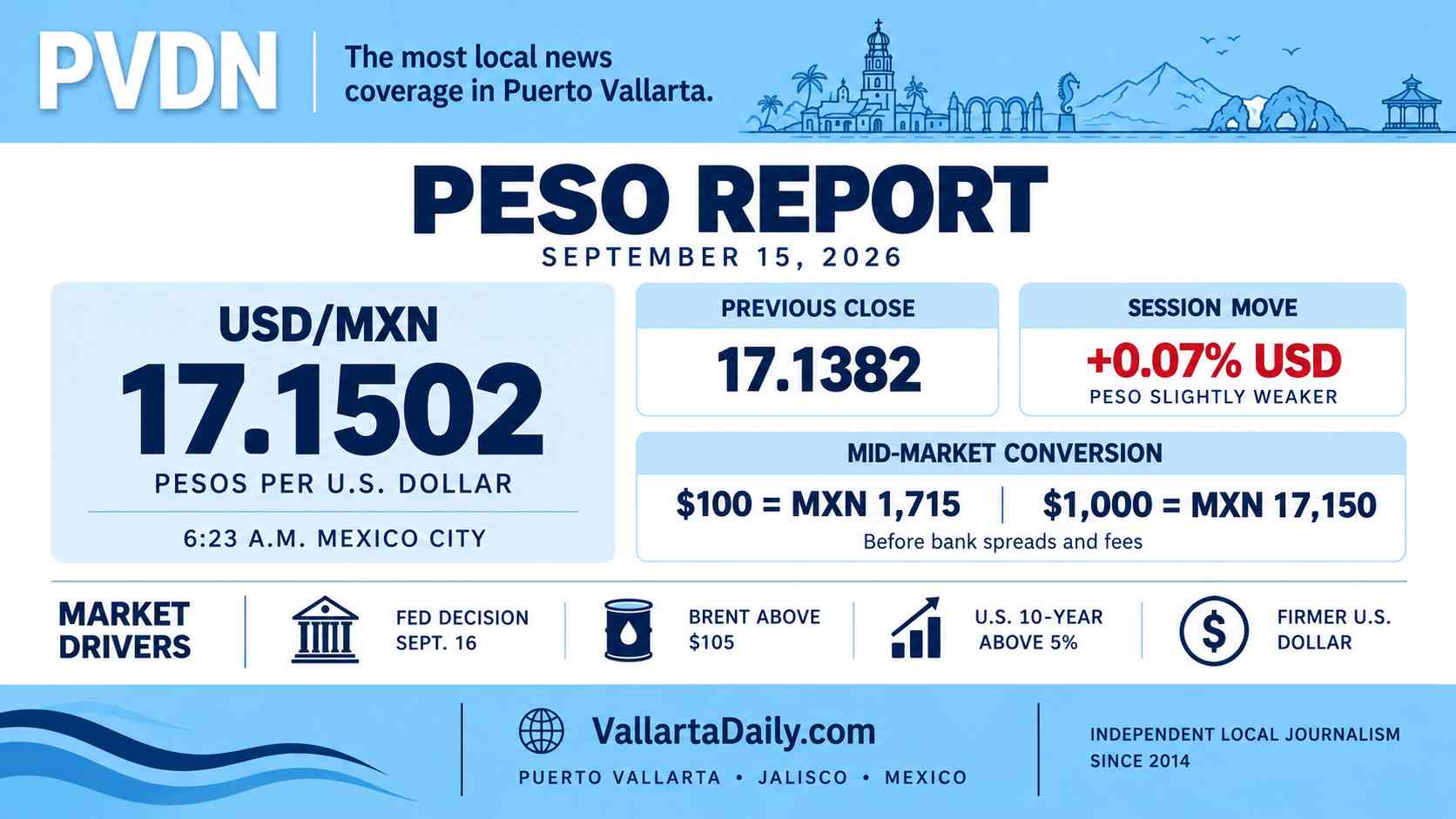
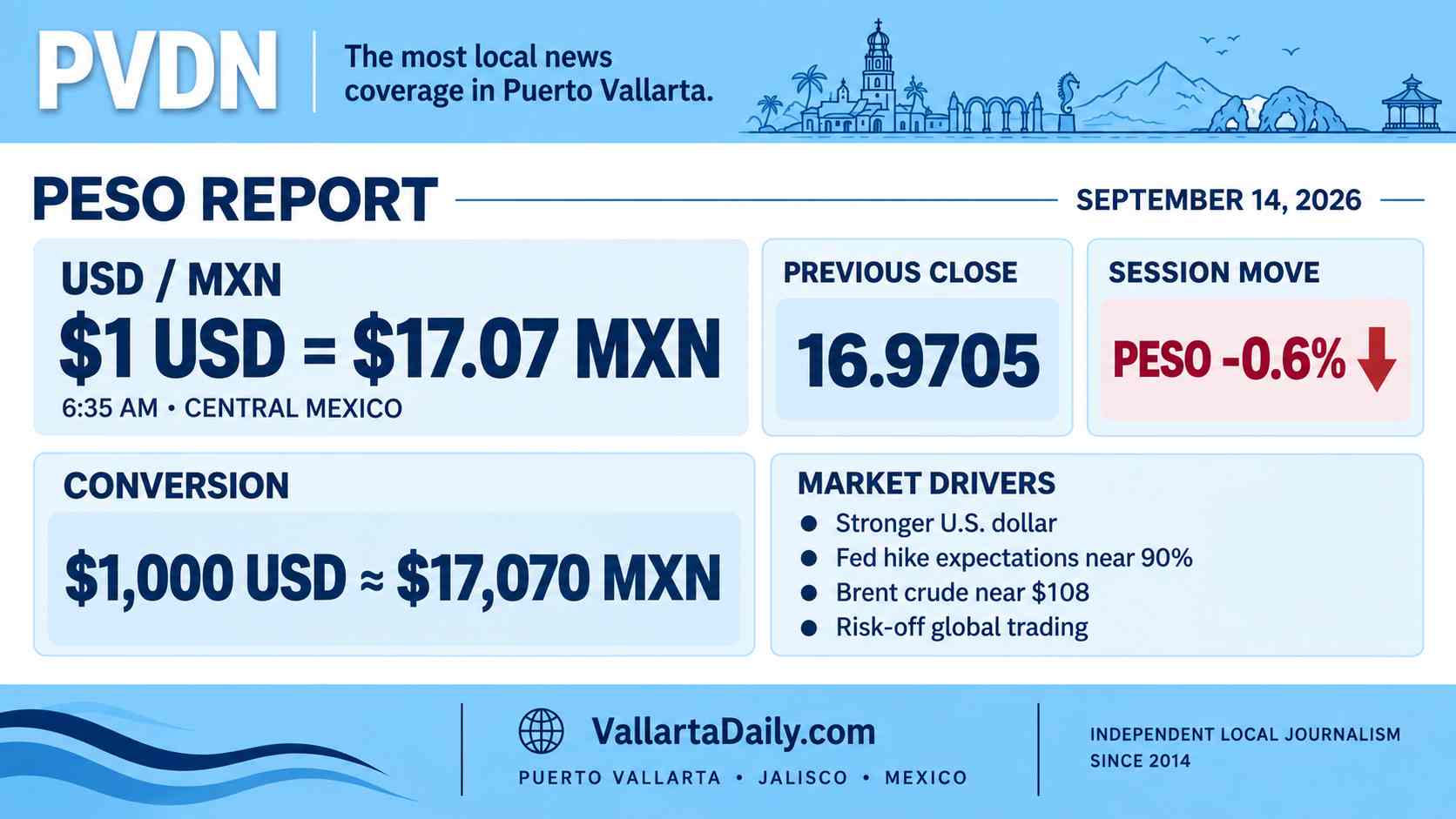
At 6:35 a.m. Puerto Vallarta time, the wholesale USD/MXN market rate stood at 16.9970 pesos per dollar. That was about 0.19% below the previous session’s level near 17.03. A lower USD/MXN quote means a stronger peso.
At that rate, $100 converted to approximately 1,700 pesos and $1,000 to about 16,997 pesos before bank spreads, ATM charges or transfer fees. Retail customers will usually receive a different rate.
Softer U.S. data weighs on the dollar
The dollar’s decline provided part of the support for the peso. The U.S. Dollar Index was down about 0.38% at 99.58 in the same morning market snapshot.
Thursday’s U.S. producer-price report showed that wholesale prices were unchanged in July, compared with market expectations for an increase. Goods prices fell 0.7%, while services prices rose 0.2%.
The figures followed a moderate U.S. consumer-inflation report earlier in the week. Together, the releases reduced some of the pressure on the Federal Reserve to raise interest rates at its September meeting.
By Thursday, futures-market pricing showed a 35% probability of a September increase, down from 55% one week earlier. That shift does not guarantee that the Fed will hold rates, but it has reduced one source of support for the dollar.
July U.S. retail sales were scheduled for release at 6:30 a.m. Puerto Vallarta time Friday, according to the official release calendar. The exchange-rate snapshot was taken within minutes of that release window, while the initial market response was still developing.
Banxico’s rate remains a source of peso support
Mexico’s central bank held its benchmark interest rate at 6.50% on August 6 and indicated that keeping the rate at its current level would be appropriate.
The Federal Reserve’s target range remains 3.50% to 3.75%. Mexico’s higher rate can support demand for peso-denominated assets, although exchange rates also respond to trade policy, economic growth and international risk.
Mexico’s inflation picture has given Banxico more room to hold its position. INEGI reported annual inflation of 3.12% in July, down from 3.37% in June. Core inflation, which excludes more volatile prices, remained higher at 3.95%.
Banxico has warned that trade-policy changes in the United States and prolonged geopolitical conflicts could still affect inflation and the peso. The central bank expects inflation to return to its 3% target during the fourth quarter of 2027.
Oil and global risk limit a clear market direction
Oil prices were higher Friday morning as markets followed renewed tensions involving Iran and shipping through the Strait of Hormuz. Brent crude traded near $87.48 per barrel, while U.S. crude was close to $81.96.
Higher oil can provide some support for Mexico as a crude exporter. At the same time, a sustained rise in energy prices can increase inflation concerns and reduce demand for emerging-market currencies. The peso’s response depends on which effect dominates during the session.
Global risk appetite remained mixed. U.S. stock futures showed little movement after the S&P 500 closed at a record Thursday, while Middle East developments kept investors cautious.
Exchange rates available in Puerto Vallarta
The market rate near 17 pesos is a wholesale reference. Banks, exchange houses, transfer services and ATMs apply their own buy and sell prices. The difference can be several centavos or more for each dollar.
For someone receiving income in dollars, the stronger peso means each dollar produces slightly fewer pesos. The movement from roughly 17.03 to 17.00 reduces a $1,000 conversion by about 30 pesos before fees.
People earning in pesos and paying dollar expenses receive the opposite effect. A dollar purchase costs marginally fewer pesos, although the change is small for ordinary transactions.
Banco de México’s official exchange-rate table had not yet posted an August 14 FIX rate early Friday. The latest FIX was 17.0530, while the rate applicable Friday for settling dollar-denominated obligations in Mexico was 17.0627. Banxico normally publishes the new FIX after noon.
The 17-peso line sets Friday’s early range
USD/MXN moving below 17 marks the peso’s strongest area in more than two years, but the margin was only a fraction of one centavo early Friday. The pair could move back across that level during the session.
The first market reactions to U.S. retail sales, changes in Fed expectations and oil-price movements will shape the rest of Friday’s trading. Mexico’s scheduled update on private consumption may also provide fresh evidence on the strength of domestic demand.