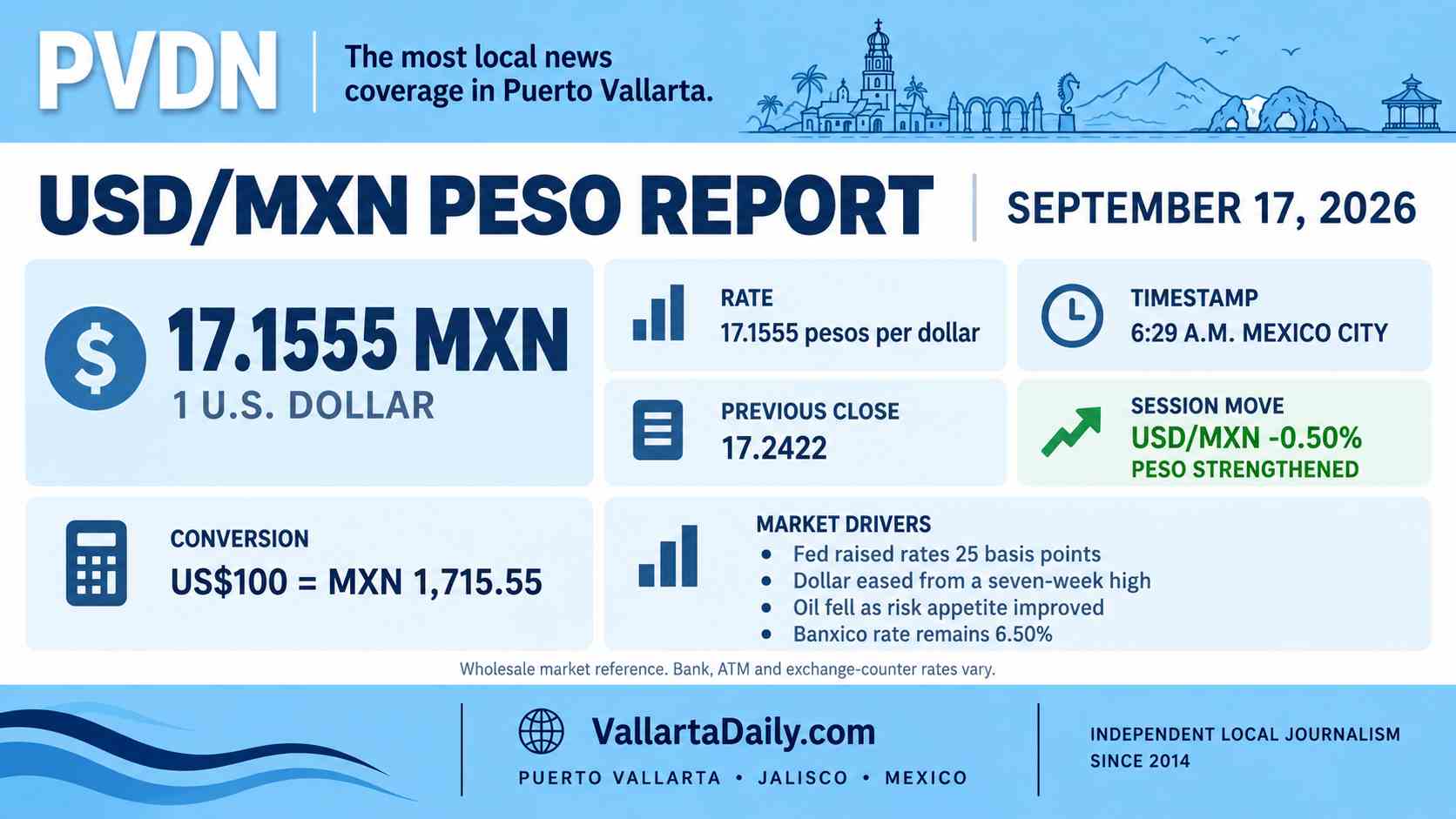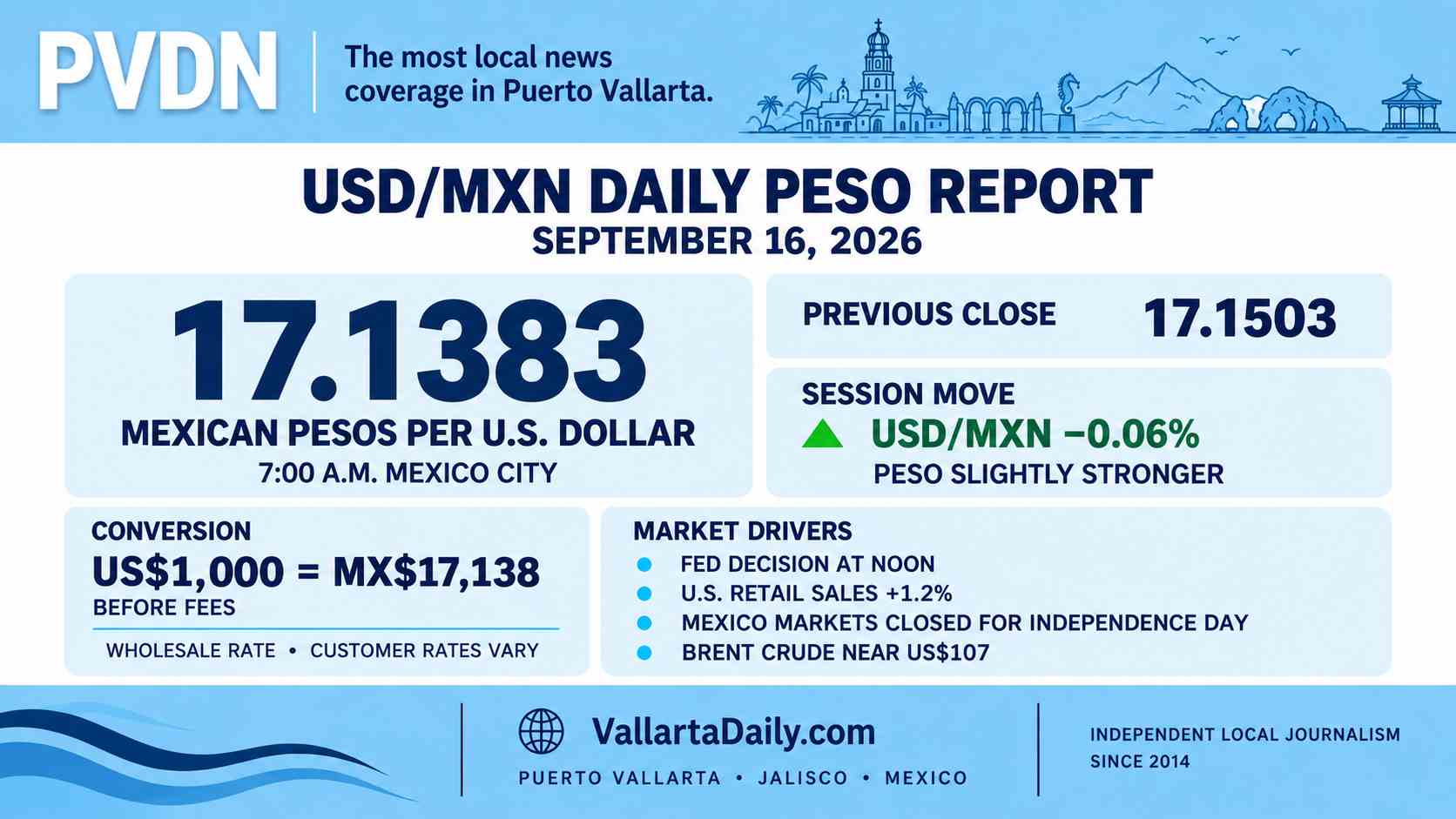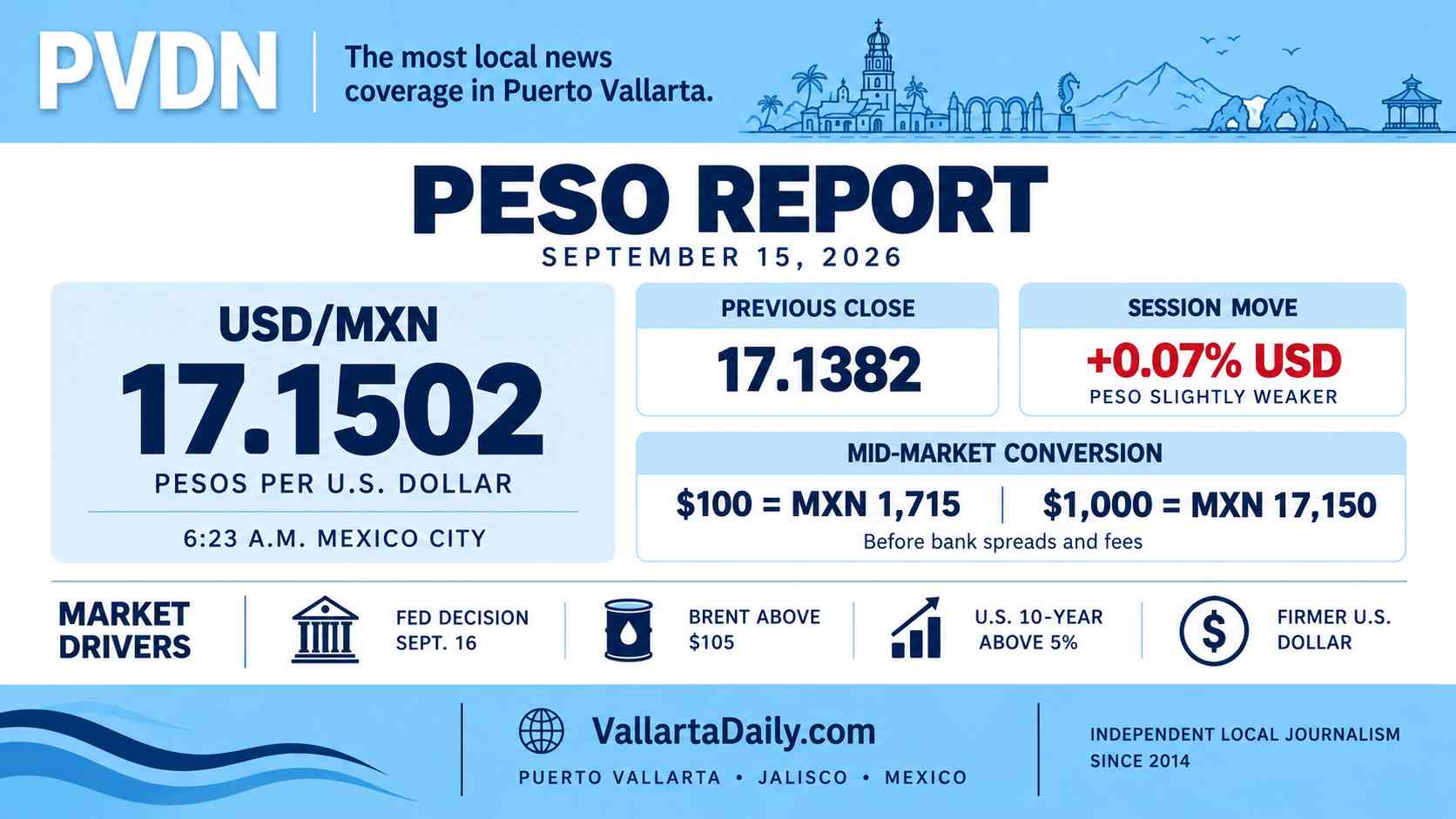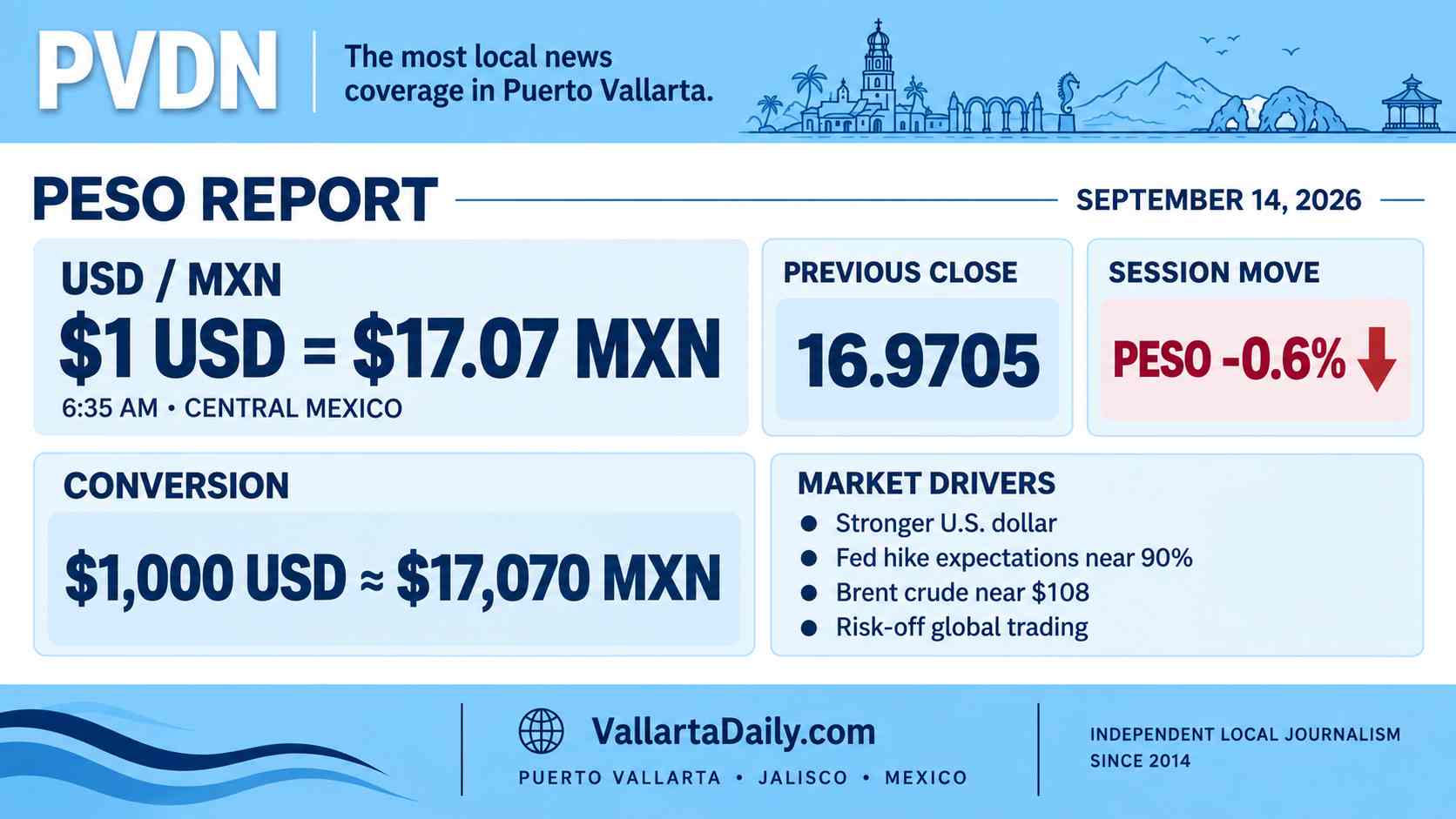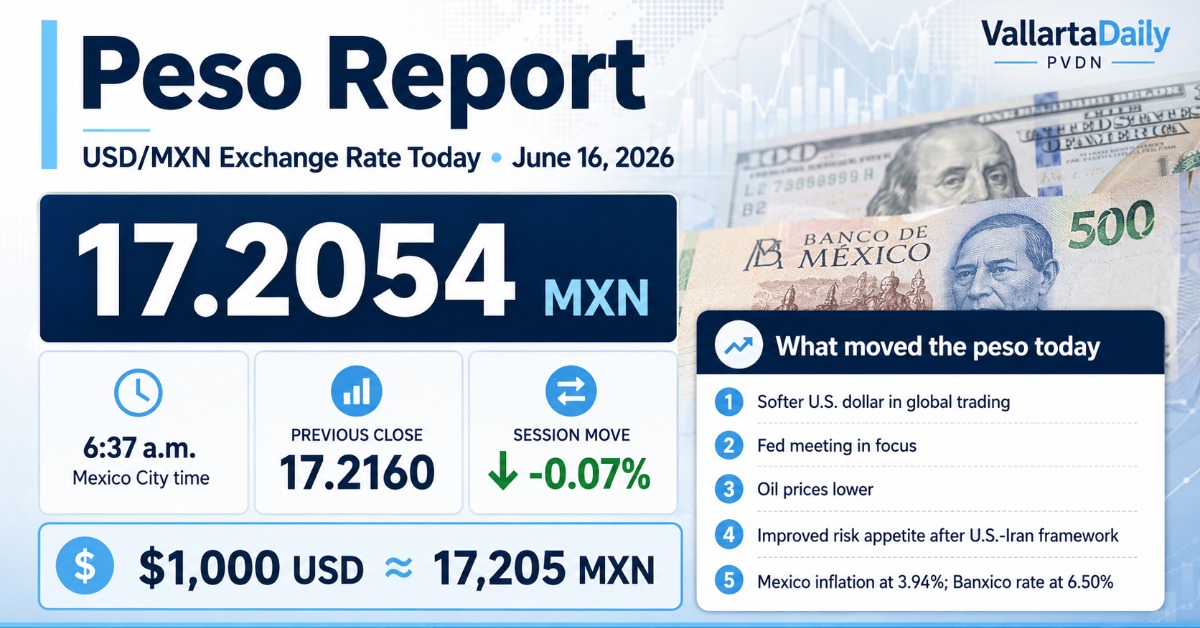
The Mexican peso traded slightly stronger against the U.S. dollar early Tuesday, June 16, with USD/MXN near 17.20 in the morning session.
As of 6:37 a.m. Mexico City time, live market quotes showed the dollar at 17.2054 pesos, compared with a previous close of 17.2160. Trading Economics showed a similar rate near 17.2045, down about 0.07% from the prior session.
For readers in Puerto Vallarta, a $1,000 transfer would equal about 17,205 pesos before bank spreads, ATM fees, or transfer company charges. The move from the previous close is small, about 11 pesos per $1,000, but it keeps the peso near a firm level by recent standards.
A lower USD/MXN rate means the peso is stronger against the dollar. A higher rate means the dollar buys more pesos.
The peso’s early move came as the dollar remained under pressure in global markets. Traders were also watching for improved risk appetite after a preliminary U.S.-Iran framework raised hopes that shipping through the Strait of Hormuz could return to more normal levels.
Oil was part of the morning setup. Brent and U.S. crude prices fell nearly 3% Tuesday as markets weighed the possible return of supply through the strait. Shipping and energy analysts still cautioned that normal traffic may take time to resume.
Lower oil prices can ease inflationary pressures, but the effect on Mexico is not straightforward. Energy costs, public finances, and investor sentiment can all move through separate channels.
The next major U.S. event for the peso is the Federal Reserve’s June 16-17 meeting. The Fed is expected to hold rates steady, but markets are watching the wording of the policy statement and Chair Kevin Warsh’s first press conference for signals on inflation, growth, and future rate decisions.
In Mexico, the latest inflation reading remains the main domestic data point in view. INEGI reported that annual inflation slowed to 3.94% in May, back inside Banco de México’s 3% target range, plus or minus one percentage point. Core inflation, which excludes more volatile items, remained higher at 4.19%.
Banco de México cut its benchmark rate to 6.50% in May and said it expected to keep the rate at that level for now. That still leaves Mexico with a wide rate gap relative to the United States, a factor that has helped support the peso. Banxico has also pointed to weak economic activity, inflation risks, and uncertainty tied to geopolitical conflicts.
For people in Puerto Vallarta who earn in dollars and spend in pesos, a stronger peso trims the local value of dollar income. For people earning pesos but paying for travel, imported goods, or dollar-linked expenses, it offers some relief.
Tuesday morning’s move is not large enough to change most weekly budgets. It matters more for rent, tuition, property expenses, medical bills, or larger transfers.
Bank, exchange-house, ATM, and app rates may differ from the wholesale market rate shown on financial platforms. The official Banco de México FIX rate is published later on banking days, so early-morning rates should be treated as a live market snapshot rather than the final official reference for the day.
The peso’s tone on Tuesday morning remained calm, but the week still carries outside risks. The Fed’s language, the dollar’s broader direction, oil prices, and the U.S.-Iran framework could continue to move the exchange rate.