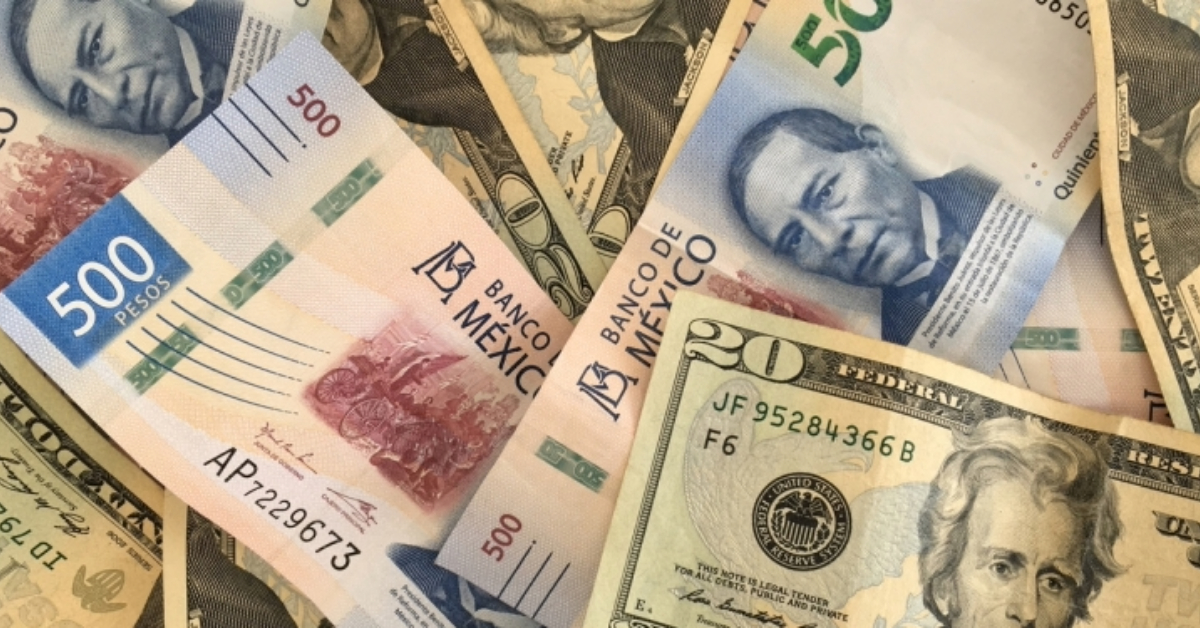
The Mexican peso is outperforming peers in 2025, driven by high interest rates, investor confidence in President Sheinbaum, and stable U.S. trade ties despite Trump’s latest 30% tariff threat.
The Mexican peso has defied expectations and maintained a strong position in global markets—even as Donald Trump’s return to aggressive trade posturing spooks investors worldwide. With a gain of over 11 percent so far in 2025, the peso has outpaced all other major Latin American currencies and remains one of the best performers in the broader emerging-market category.
This impressive resilience comes despite the latest threat from Trump, who announced over the weekend that he’s considering a 30 percent tariff on certain imports from Mexico. The news sent the peso slightly lower on Monday, July 14, but the currency quickly regained stability thanks to a mix of investor confidence, strong interest rates, and Mexico’s close economic ties to the United States.
At the heart of investor optimism is President Claudia Sheinbaum’s calm and pragmatic response to Trump’s threats. Rather than escalating tensions, Sheinbaum has pursued a cautious and diplomatic path, which analysts say is giving markets the reassurance they need to keep faith in Mexican assets.
“Markets know the drill,” said Marco Oviedo, senior strategist at XP Investimentos in São Paulo. “The only real risk is if the Mexican government fails to deliver something Trump wants on drug control, which could stall negotiations or extend tariff uncertainty.”
Despite the political noise, foreign investors continue to bet on Mexico’s fundamentals. The country’s benchmark interest rate—held at a steep 8 percent by Banco de México (Banxico)—remains one of the highest among emerging economies. That has made the peso an attractive carry trade for global investors seeking returns in a high-rate environment.
Last month, Banxico cut the rate by just half a percentage point, signaling a cautious approach to monetary easing. Governor Victoria Rodríguez underscored this on July 9, suggesting that any future cuts would be modest and carefully measured, a stance applauded by international markets.
“The Mexican peso is trading incredibly well in response to this,” said Eric Fine, emerging-market debt portfolio manager at Van Eck Associates. “There are many explanations—but EMFX and rates have had a strong year despite tariff-dominated headlines.”
One of the peso’s biggest strengths is Mexico’s entrenched economic relationship with the U.S. Thanks to the United States-Mexico-Canada Agreement (USMCA, or T-MEC), the bulk of Mexico’s exports to its northern neighbor are protected from Trump’s latest round of tariff threats. This protection gives exporters, and by extension the peso, a buffer against shocks.
U.S. Ambassador to Mexico Ronald Johnson emphasized the strength of bilateral ties during a press event in Mexico City over the weekend. “President Trump and President Sheinbaum have a wonderful relationship,” Johnson said. “No partnership should be easier than the one between our two nations.”
However, Sheinbaum’s administration was reportedly caught off guard by the new tariff threats, highlighting the unpredictable nature of Trump’s trade policy. Still, the peso’s continued strength suggests that investors see through the bluster, focusing instead on long-term indicators of economic and political stability.
Money managers who were previously quick to react to Trump’s announcements have grown more accustomed to the noise, and their market responses have become more muted. After repeated delays in tariff implementation, the strategy seems to be wait-and-see.
Despite the political friction, capital inflows into Mexican assets continue to rise. The peso has become a barometer for emerging-market strength, particularly as global interest in developing economies begins to pick up again. Mexico, with its stable banking system, robust trade volumes, and sound fiscal management, stands out in that landscape.
And while the specter of tariffs could remain in play for months, analysts are not expecting a dramatic pivot in the currency’s trajectory—unless there’s a breakdown in Mexico’s ability to cooperate on Trump’s key demands, such as drug enforcement and border control.
For now, the Mexican government appears to be walking a fine line between defending national sovereignty and maintaining economic stability. That approach is paying dividends in the form of peso strength and sustained investor interest.
As the second half of 2025 unfolds, the key question is whether Mexico can maintain this momentum. With presidential elections looming in the U.S. and trade volatility likely to increase, Banxico and Sheinbaum’s team will need to remain steady, measured, and prepared for turbulence.
But for now, Mexico is winning the confidence game. And for investors betting on the peso, that’s more than enough.
Mexican peso, Claudia Sheinbaum, Trump tariffs, Banxico, USMCA, Mexico economy, emerging markets, currency exchange, interest rates, Mexico-US trade