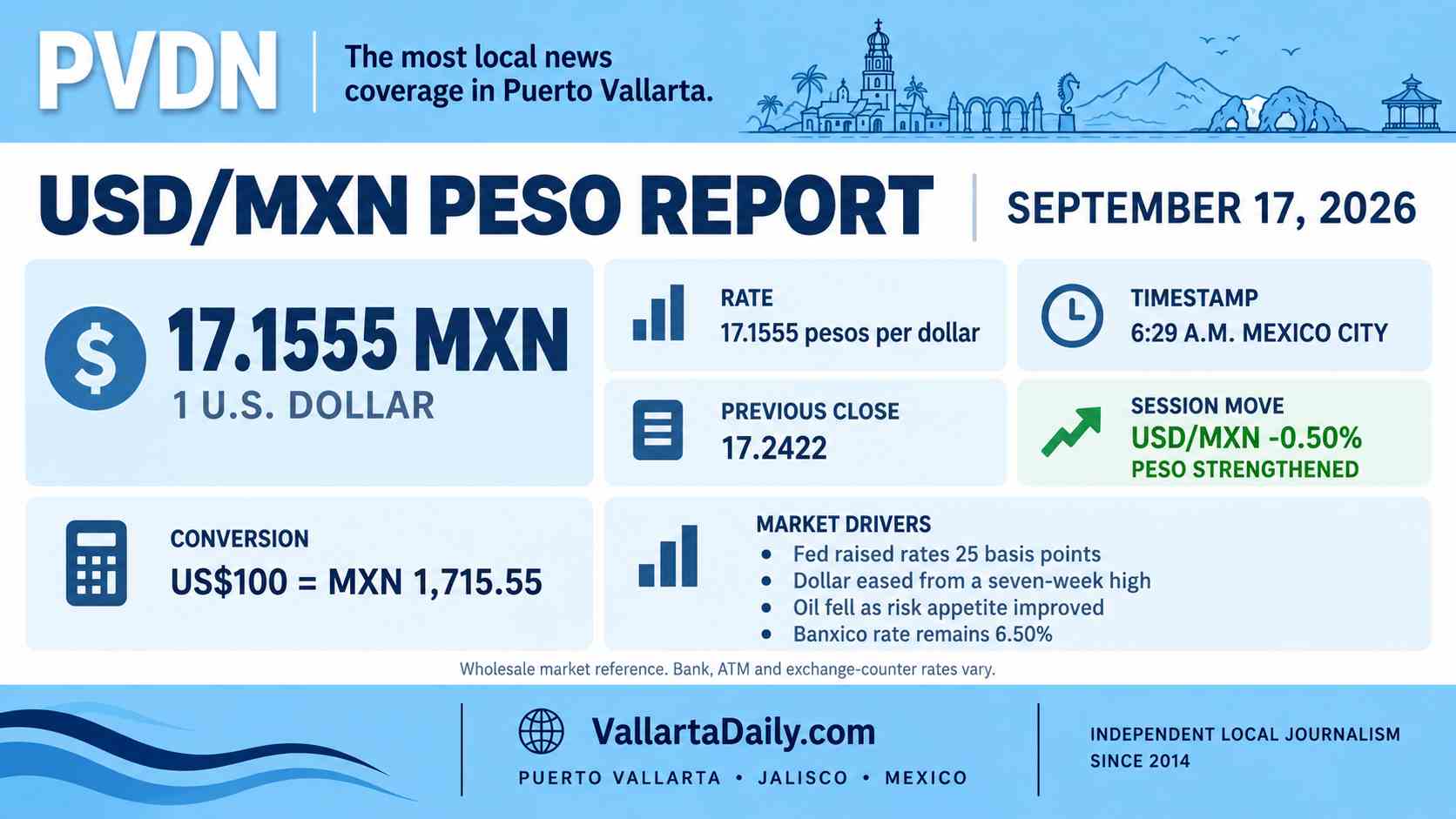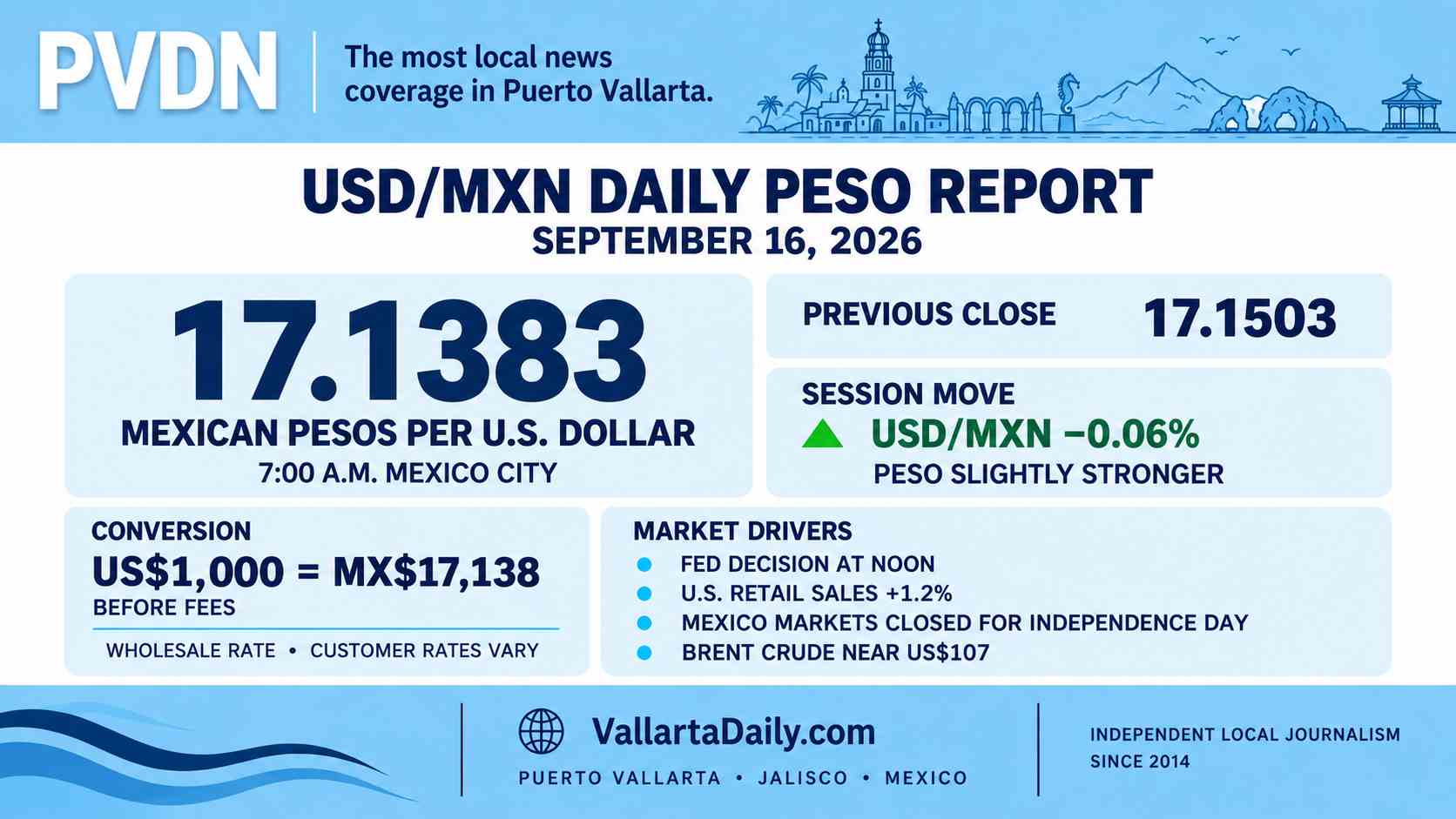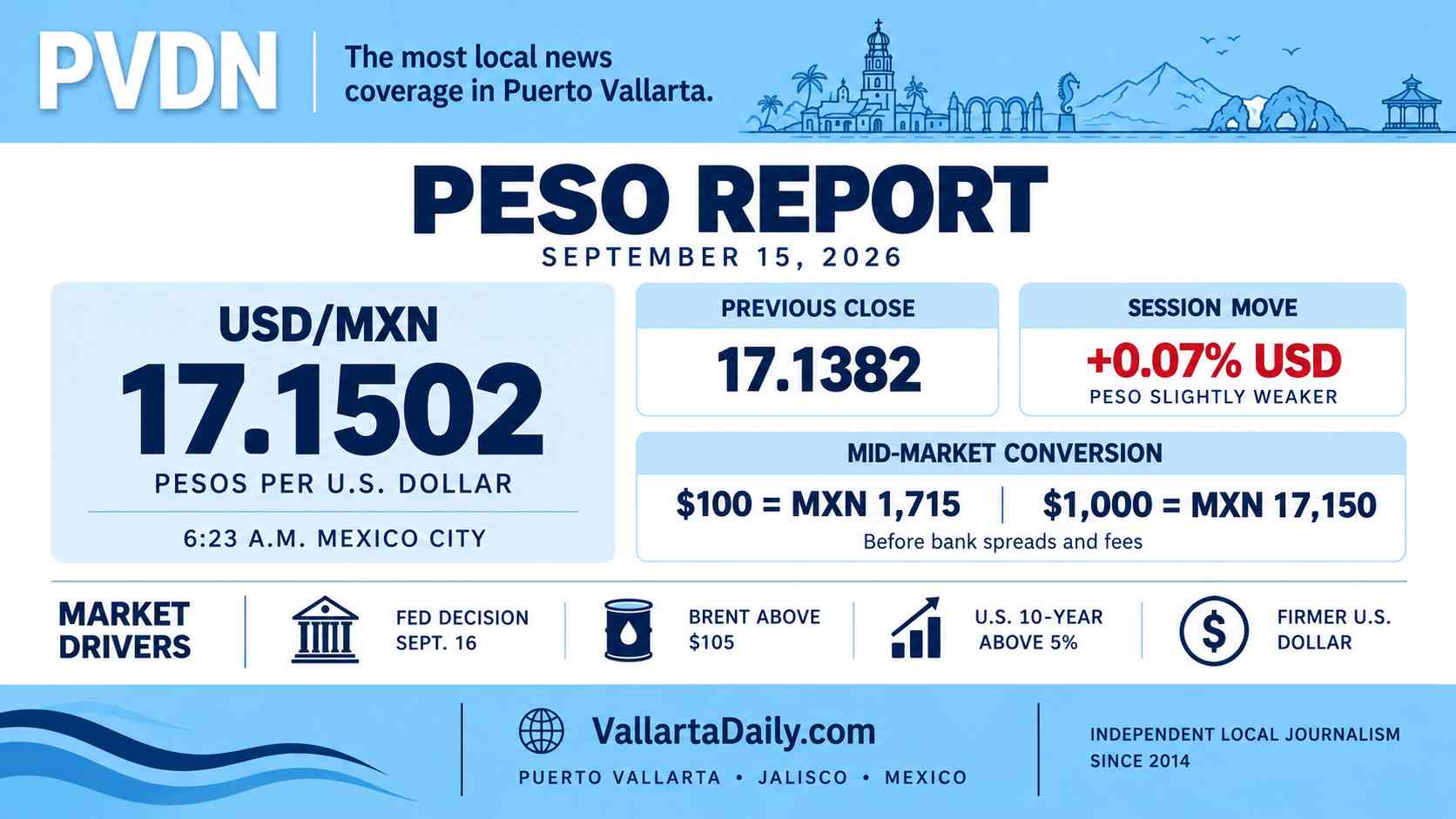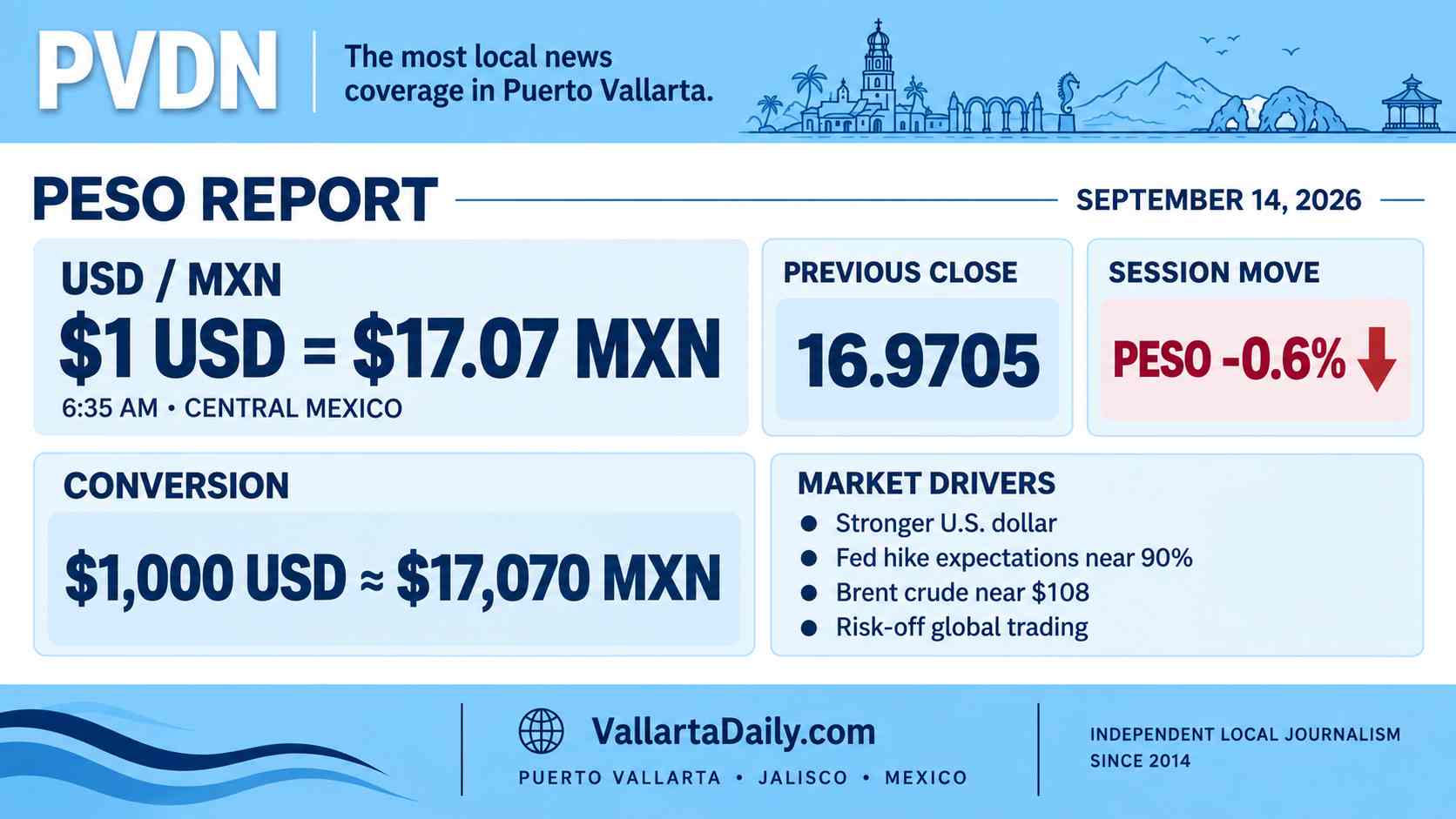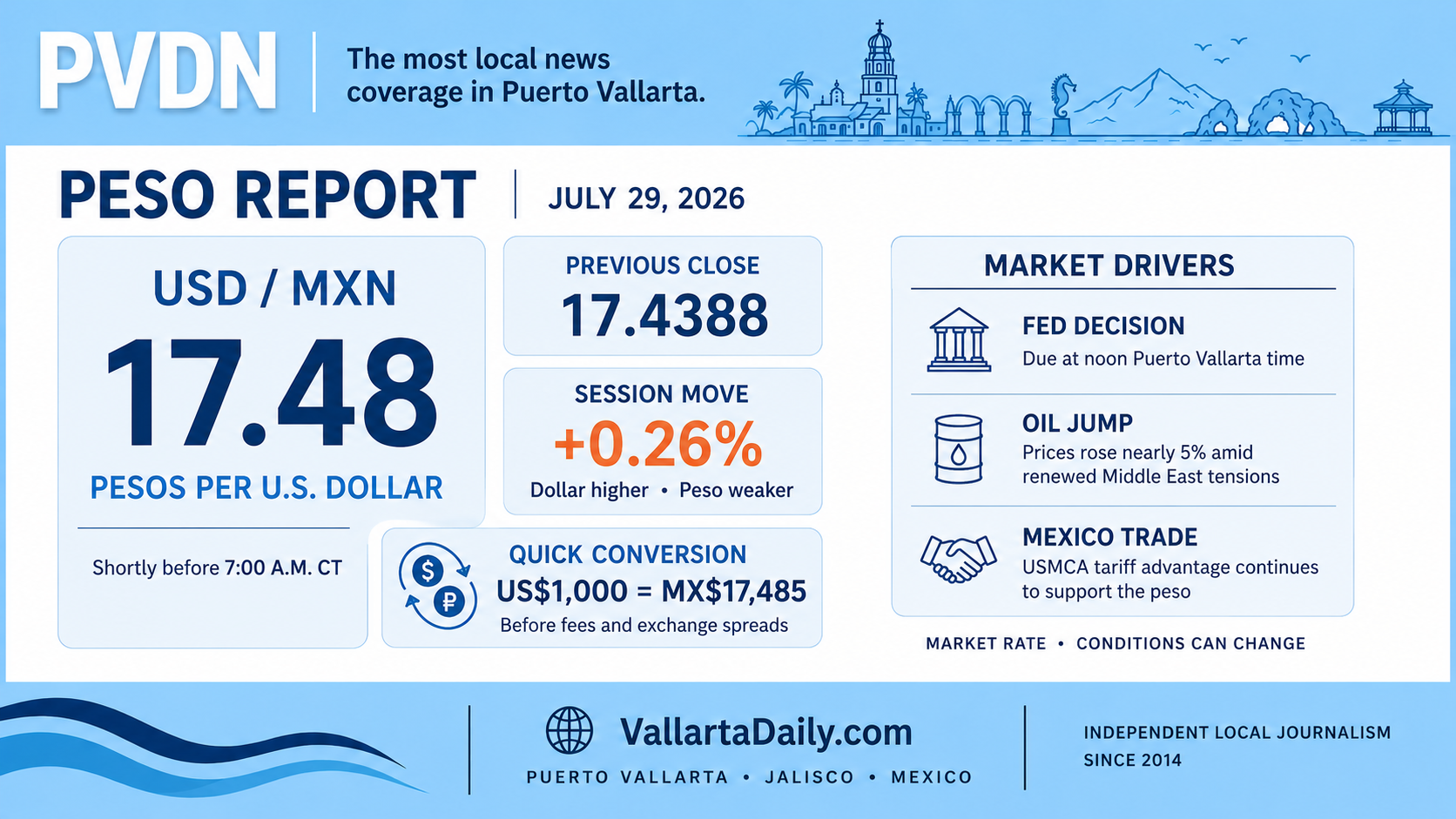
Puerto Vallarta, Jalisco, July 29, 2026 – The Mexican peso weakened modestly Wednesday morning, with the USD/MXN exchange rate trading near 17.48 pesos per dollar shortly before 7:00 a.m. Central Time.
The market rate was about 0.26% above Tuesday’s close of 17.4388, meaning the dollar had gained roughly 4.6 centavos. Early trading remained within a narrow range of approximately 17.43 to 17.49 pesos per dollar, according to intraday currency data.
The movement came before a closely watched Federal Reserve decision and amid another sharp increase in oil prices following renewed conflict in the Middle East.
Peso loses ground in cautious early trading
A rising USD/MXN quotation means the dollar is gaining value, and the peso is weakening. Wednesday’s change was limited, but markets held cautious positions ahead of the U.S. central bank’s announcement.
The dollar index, which compares the U.S. currency with six major counterparts, was near 101.33 after reaching a one-month high Tuesday. The index had eased about 0.08% in early trading, but the dollar remained supported by uncertainty over U.S. interest rates.
For reference, Wednesday morning’s market rate was separate from Banco de México’s FIX rate and the retail prices offered by banks, exchange houses and money-transfer services. Banco de México calculates the FIX from wholesale market quotations and publishes it after noon on banking days.
Federal Reserve decision sets the day’s direction
The Federal Reserve will announce its policy decision at 2:00 p.m. Eastern Time, or noon in Puerto Vallarta. A news conference is scheduled 30 minutes later, according to the Federal Reserve’s July calendar.
Most analysts expect the Fed to keep its benchmark rate within the current 3.50% to 3.75% range. Markets were nevertheless assigning roughly a 30% probability to a quarter-point increase, reflecting concern about inflation and limited guidance from Fed Chair Kevin Warsh.
That uncertainty may produce wider exchange-rate movement around noon. A rate increase or a firm warning about future inflation could strengthen the dollar, although the peso’s response will also depend on broader risk appetite and how much of the decision markets have already priced in.
Banco de México’s benchmark rate remains at 6.50% following its June monetary policy decision. The gap between Mexican and U.S. interest rates continues to provide some support for the peso because peso-denominated assets offer higher yields, though that advantage can be overwhelmed by geopolitical or trade shocks.
Oil and Middle East tensions add pressure
Oil prices rose sharply Wednesday after renewed military action involving the United States, Saudi Arabia and Iran-backed groups increased concern about shipping and production disruptions.
Brent crude climbed nearly 5% to about $88 per barrel during the session, while U.S. West Texas Intermediate crude traded near $83, according to early energy-market reporting.
Higher oil prices can have mixed consequences for Mexico. The country remains an oil exporter, but high energy costs can heighten inflation concerns and reduce investors’ appetite for emerging-market currencies. Wednesday morning’s modest peso decline cannot be attributed to oil alone, particularly with the Fed decision only hours away.
Mexico retains a relative trade advantage
Mexico’s domestic economic calendar was light Wednesday. The next important release will be INEGI’s preliminary estimate of second-quarter gross domestic product on Thursday, July 30.
Trade policy continues to provide some support. Economy Minister Marcelo Ebrard said last week that Mexico’s effective tariff treatment would remain largely unchanged under the latest U.S. measures. Goods that comply with the USMCA continue to enter the United States without the new general tariff, covering approximately 85% of Mexican exports, according to the minister’s estimate.
That claim reflects the Mexican government’s assessment of the new rules. The longer-term effect will depend on enforcement, USMCA compliance and the separate tariffs that continue to affect industries including steel, aluminum and automobiles.
The rate Puerto Vallarta households will actually see
At the early market rate of 17.48, US$1,000 was worth about 17,485 pesos before fees or exchange spreads. That was approximately 46 pesos more than the same amount at Tuesday’s market close.
Residents paid in dollars receive slightly more pesos when USD/MXN rises. People earning pesos but paying dollar-denominated bills face the opposite effect. For household budgets, Wednesday morning’s movement was small, but the rate could shift after the Fed announcement.
Bank counters, ATMs, credit cards and exchange houses will quote different prices. Their rates include operating margins and, in some cases, separate commissions or foreign-transaction fees. Anyone making a large conversion should compare the final number of pesos delivered rather than relying on the wholesale rate displayed in market charts.