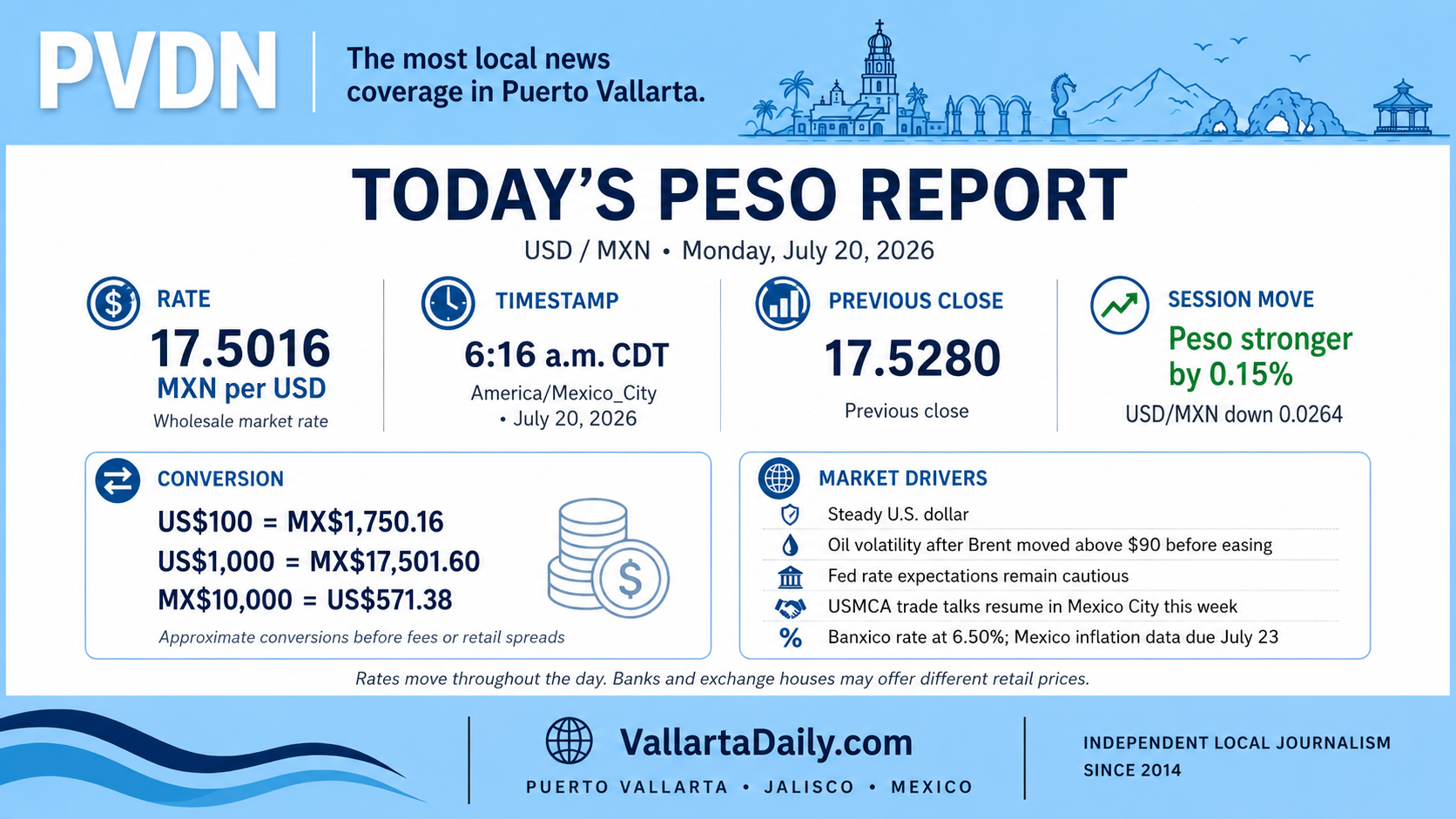
Puerto Vallarta, Jalisco, July 20, 2026 – The Mexican peso opened the week with a modest gain against the U.S. dollar. At 6:16 a.m. Central Time, the live wholesale USD/MXN rate was 17.5016 pesos per dollar, down about 0.15% from the previous close of 17.5280. A lower USD/MXN rate means the peso has strengthened.
The pair had moved between 17.4609 and 17.5596 during the early session. These are wholesale market prices and can change quickly. Banks, exchange houses, card networks and money-transfer services normally apply their own spreads and fees.
Mexico’s official exchange rate, published on July 20, was 17.5242 pesos per dollar. That government reference rate is used for certain peso-denominated obligations and should not be confused with the continuously changing market quote.
Dollar Holds Steady as Oil Keeps Markets Cautious
The peso’s early advance came while the broader U.S. dollar showed little direction. The U.S. Dollar Index was near 100.78, with traders cautious rather than moving heavily into or out of the dollar.
Energy markets remained a larger source of uncertainty. Brent crude briefly climbed above $90 a barrel as continued fighting involving the United States and Iran raised concerns about shipping through the Strait of Hormuz. Prices later eased toward $88 as the market assessed reports of possible diplomatic efforts.
Higher oil prices can affect the peso in both positive and negative ways. Mexico is an oil producer, but it also imports refined fuels and remains exposed to the broader inflation and growth effects of an energy shock. For currency traders, the immediate issue is whether oil increases inflation expectations, pushes global interest rates higher, or weakens demand for emerging-market assets.
U.S. interest-rate expectations offered mixed signals. Futures markets indicated an 85.6% probability that the Federal Reserve would leave rates unchanged at its July 29 meeting. At the same time, some Fed officials have argued that another increase may be needed if inflation remains persistent.
That combination has limited conviction in the currency market. A steady dollar and reduced expectations of an immediate Fed increase can support the peso, while higher oil prices and geopolitical risk can work in the opposite direction.
Mexico and U.S. Begin Another Round of Trade Talks
The main Mexico-specific event this week is the third round of bilateral negotiations connected to the review of the United States-Mexico-Canada Agreement.
The U.S. Trade Representative said the meeting will begin July 21 in Mexico City. The discussions are expected to cover rules of origin, economic security, agricultural trade and measures intended to increase North American production.
The trade agreement remains in force, but the United States declined to approve a full extension during the formal review on July 1. Negotiations now continue under a process that allows annual reviews.
Recent statements from U.S. officials have indicated that Washington is considering tighter content requirements and possible tariffs or quotas in some sectors. No final agreement has been announced, and it remains unclear which proposals Mexico would accept.
The talks matter to the peso because Mexico sends most of its exports to the United States. Clearer trade rules could reduce uncertainty for factories and foreign investment, while prolonged disputes could weigh on business planning.
Banxico Rate and Inflation Data Remain in Focus
Banco de México’s benchmark interest rate remains at 6.50%. The central bank held the rate unchanged at its June 25 meeting after cutting it in May. Official Banxico data continued to show the 6.50% target through the weekend.
Mexico’s relatively high interest rate can encourage demand for peso-denominated assets. That support can weaken when investors expect Banxico to resume rate cuts or when global risk rises.
The next domestic test arrives Thursday, July 23, when INEGI is scheduled to publish inflation for the first half of July. Mexico’s annual inflation rate was 3.37% in June, according to the official inflation calendar and data.
A higher-than-expected reading could reduce expectations of another near-term Banxico cut. A softer number could strengthen the case for lower rates later in the year.
Budgeting With a 17.50-Peso Dollar
At the early market rate of 17.5016, US$100 converted to about 1,750.16 pesos before fees. US$1,000 equaled roughly 17,501.60 pesos, while 10,000 pesos was worth about US$571.38.
People who earn or hold dollars receive fewer pesos when the peso strengthens. That can affect household budgets for foreign residents, retirees and property owners whose expenses are primarily in Mexico.
A stronger peso can reduce the local-currency cost of some imported goods and dollar-denominated payments. It can also mean fewer pesos for families receiving remittances or businesses paid in dollars.
Retail exchange rates will differ from the wholesale quote. Anyone making a large transfer should compare the final peso amount after the provider’s exchange-rate margin, transfer fee and receiving-bank charges.
The peso’s early gain remained small, and Monday’s direction could change as oil prices move and details emerge from the Mexico-U.S. trade meetings. The previous close near 17.53 remains a useful reference point for judging whether the peso holds its morning advance.