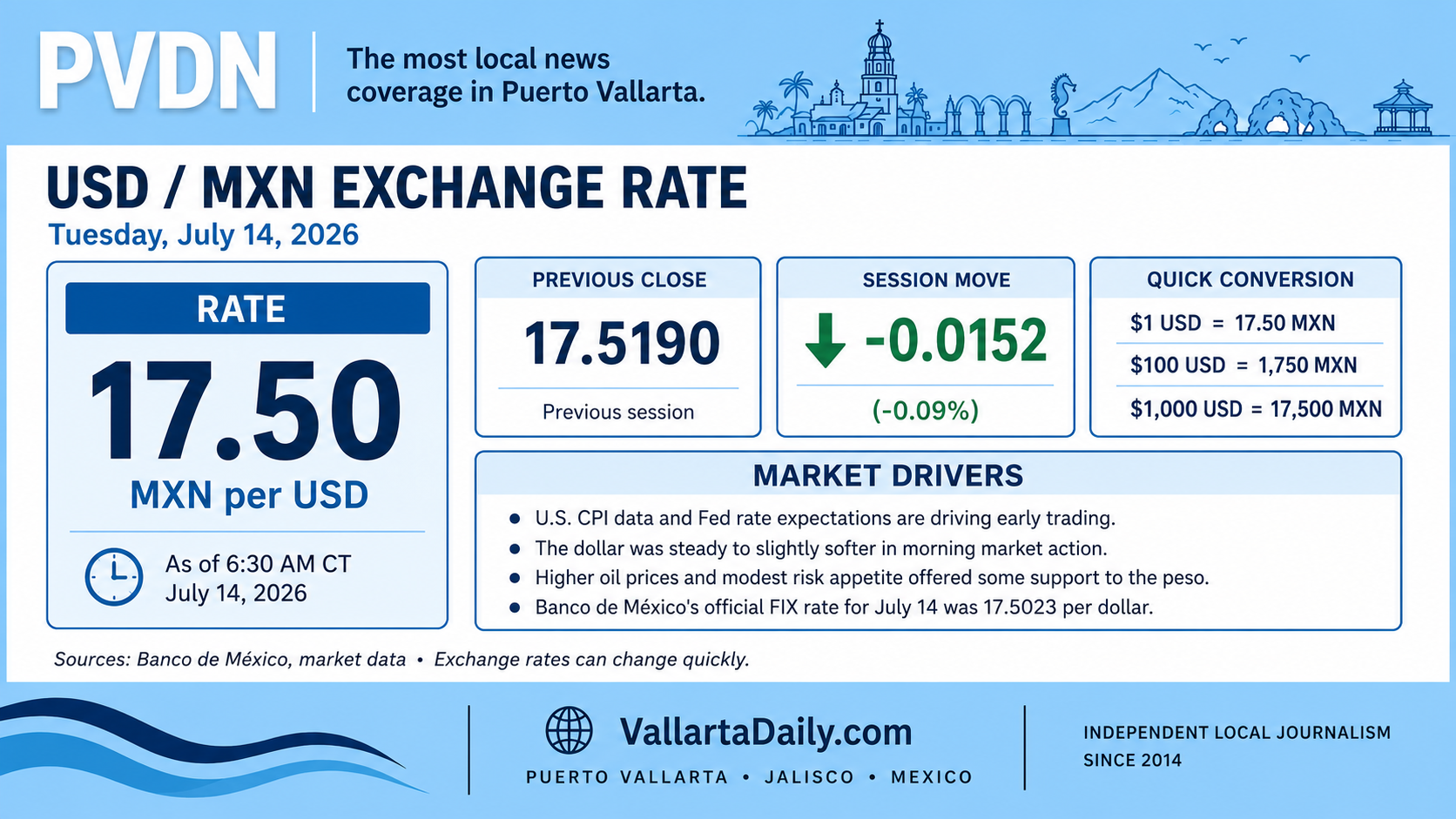
Puerto Vallarta, Jalisco, July 14, 2026 – The Mexican peso traded near 17.49 per U.S. dollar early Tuesday, posting a modest gain as currency markets prepared for fresh U.S. inflation data and closely watched signals from the Federal Reserve.
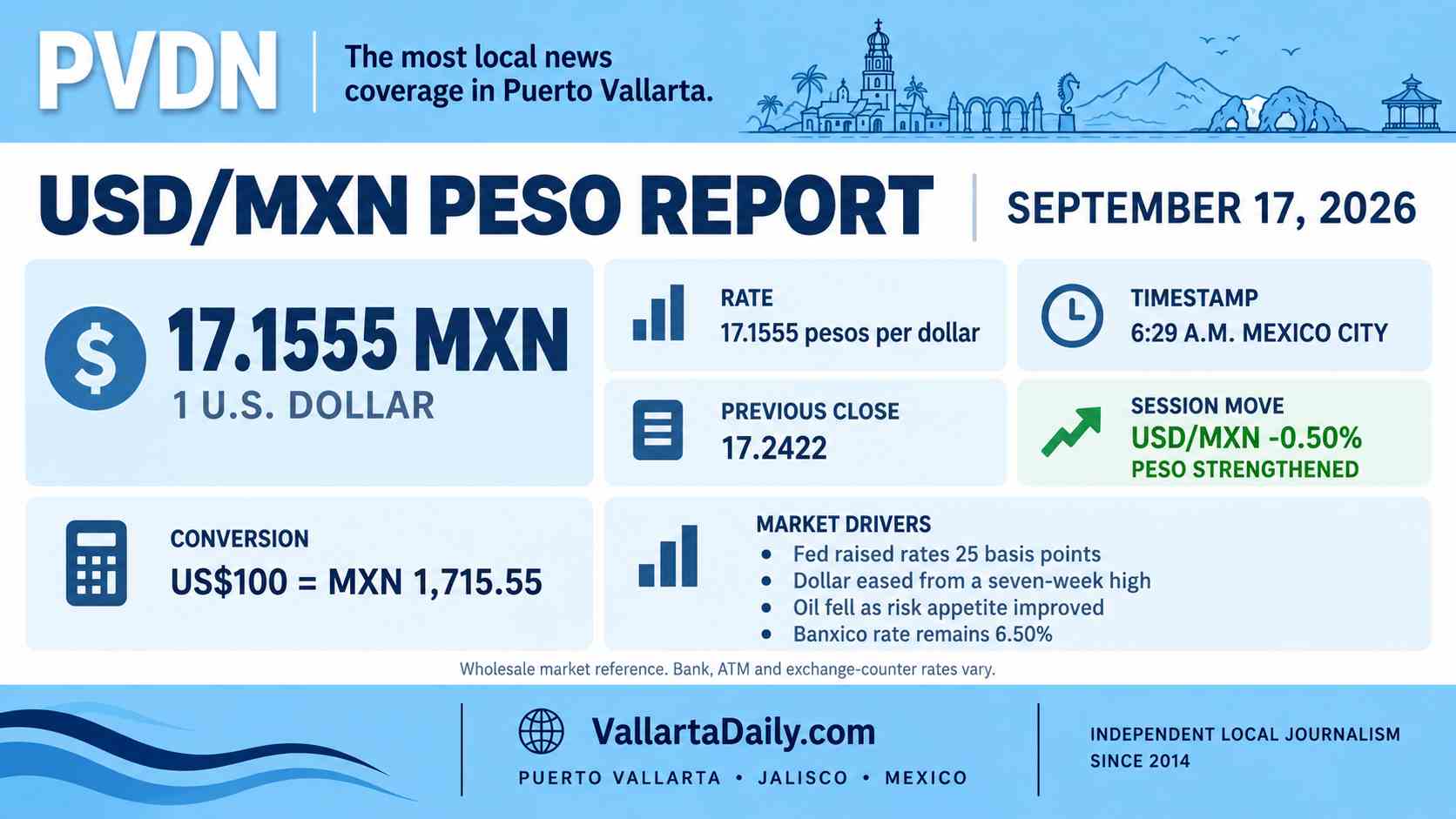
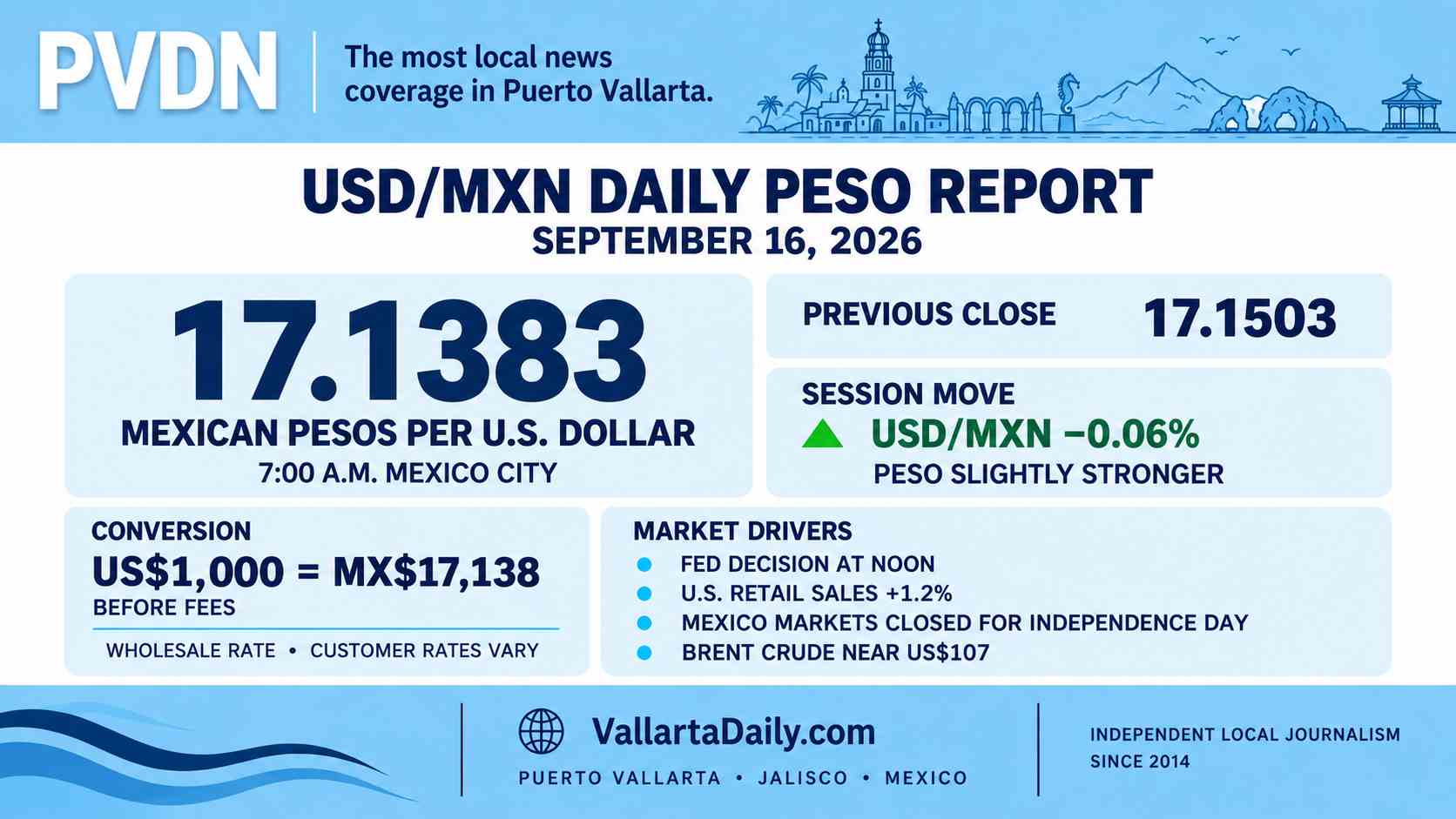
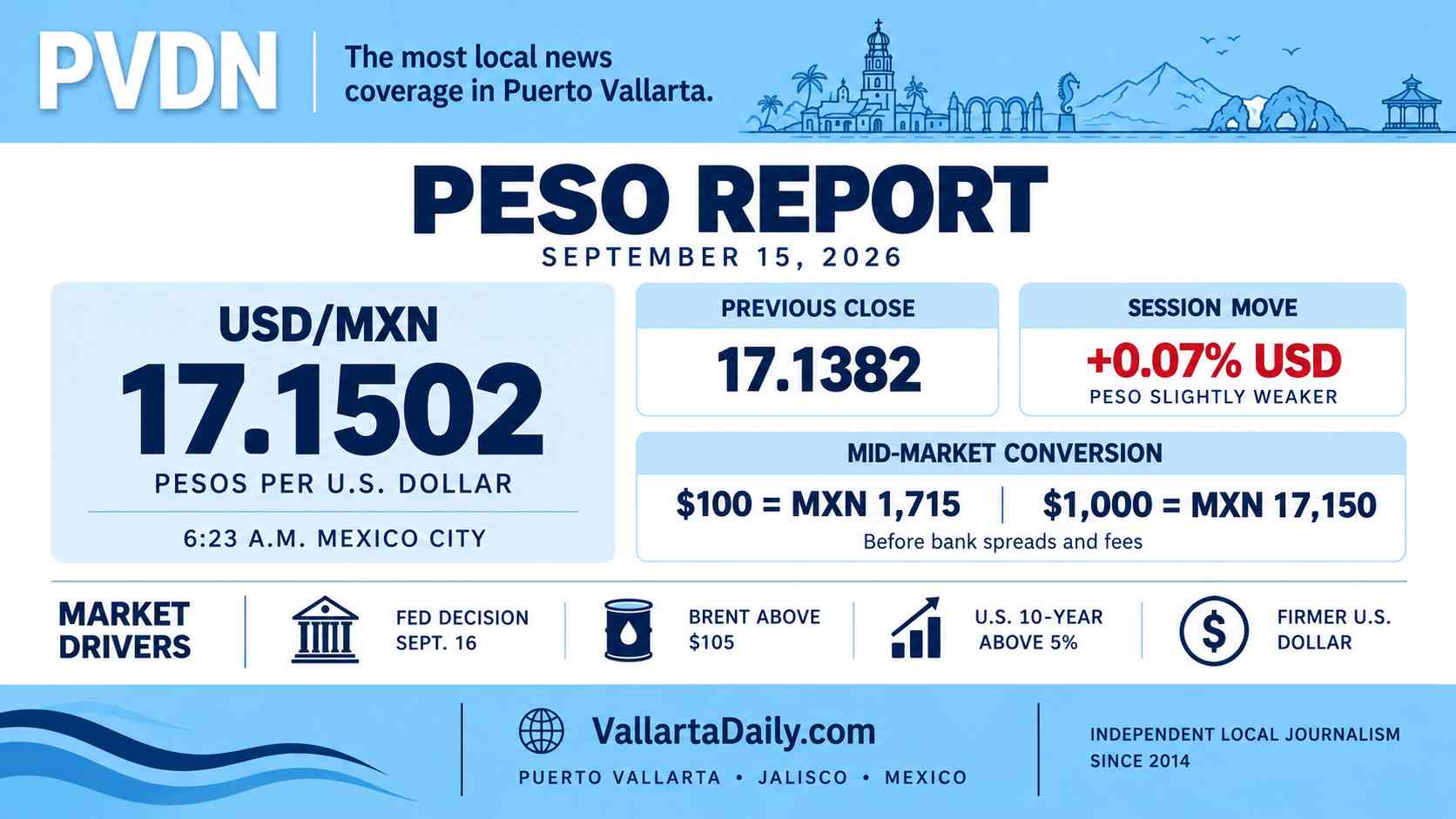
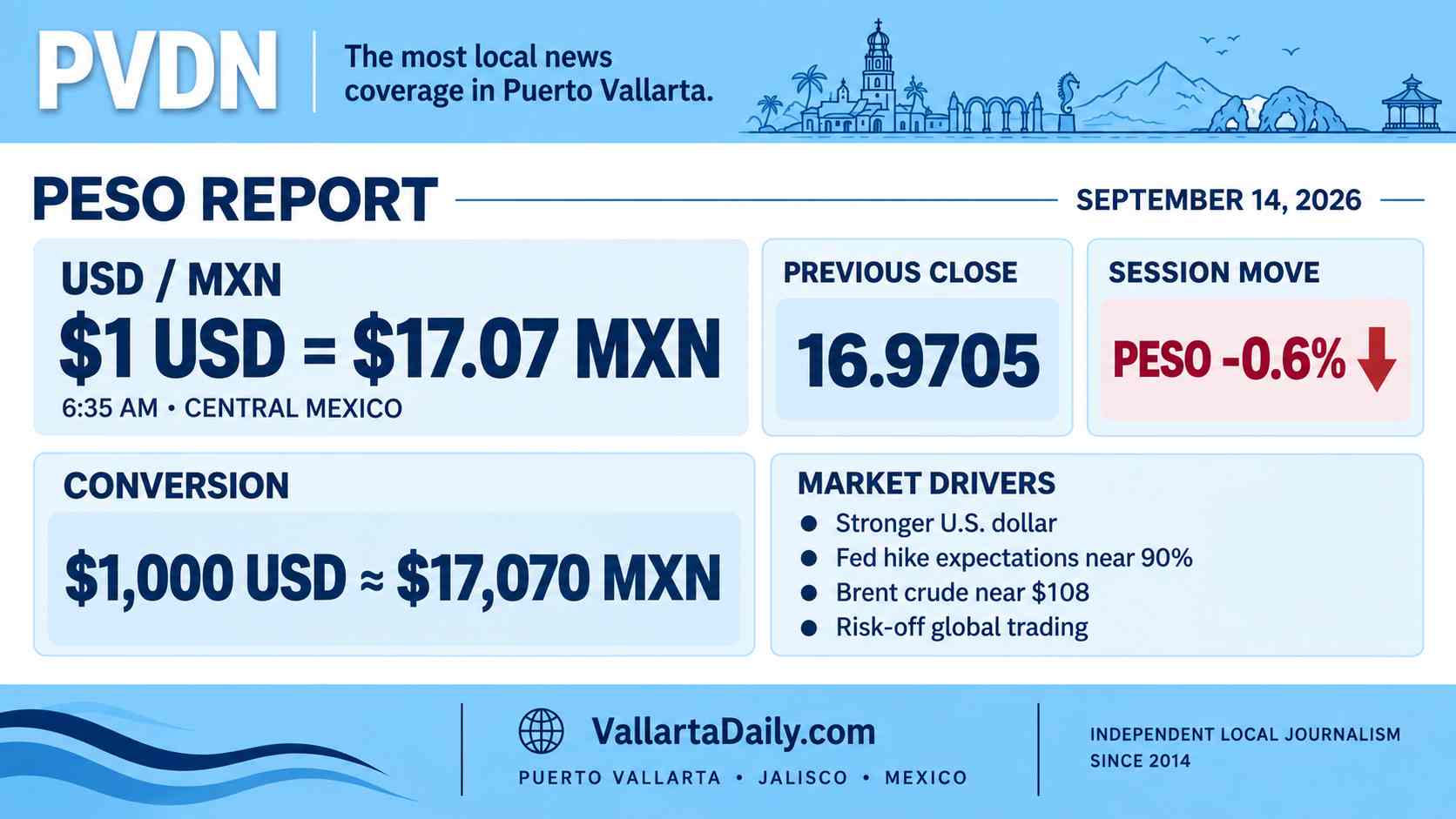
At approximately 6:30 a.m. Mexico City time, the wholesale USD/MXN quote stood at 17.4907 pesos per dollar. The pair was down about 0.21% from the previous session’s reference near 17.53, meaning the peso had strengthened slightly against the dollar.
The figure is an international market rate. Banks, ATMs, transfer services and exchange houses in Puerto Vallarta will normally offer different rates after adding their margins or transaction fees.
U.S. Inflation and Fed Policy Drive the Session
The most immediate market event Tuesday was the U.S. Consumer Price Index report for June. The official release schedule placed publication at 8:30 a.m. Eastern Time, or 6:30 a.m. in central Mexico.
Because the peso snapshot was taken while the report was being released, the initial quote may not reflect the full currency market response. Economists surveyed before publication expected annual headline inflation to ease from 4.2% to about 3.8%, with core inflation near 2.8%.
The report could alter expectations for U.S. interest rates. Before the release, traders were assigning a meaningful but minority probability to a Federal Reserve rate increase at its July meeting.
Federal Reserve Chair Kevin Warsh was also scheduled to deliver his first semiannual monetary-policy testimony to Congress. Governor Christopher Waller had added pressure to the rate debate by saying borrowing costs may need to rise if inflation remains well above the central bank’s target.
Those expectations have helped keep U.S. Treasury yields elevated and the dollar near its strongest levels in more than a year. The dollar index slipped about 0.2% early Tuesday, but remained near its recent monthly highs.
Mexico’s Inflation Improves as Industry Slows
Domestic economic data offered the peso a mixed backdrop.
Mexico’s annual inflation rate fell to 3.37% in June, down from 3.94% in May and below the 3.52% expected by economists. Core inflation, which excludes some volatile food and energy prices, remained higher at 4.03%.
The headline reading returned to Banco de México’s target range of 3%, plus or minus one percentage point. Banxico kept its benchmark rate at 6.5% at its latest meeting, and the minutes of that meeting showed policymakers remain concerned about persistent core inflation, trade uncertainty, and the conflict in the Middle East.
Economic growth remains less supportive. The latest industrial activity report showed production fell 0.8% from April to May, after seasonal adjustments. Construction dropped 3.7%, while manufacturing declined 0.1%.
Banco de México’s governing board has cited a staff estimate of 1.1% economic growth for 2026, while noting that stronger exports and infrastructure investment could produce a somewhat better result.
Oil Prices and Trade Talks Add Uncertainty
Oil prices rose sharply Tuesday as renewed U.S.-Iran hostilities and disruptions near the Strait of Hormuz increased concerns about global supplies.
Brent crude was trading near $86.19 per barrel, up about $2.80, while U.S. crude reached approximately $79.78 per barrel. Higher oil prices can produce mixed effects for the peso. Mexico is an oil producer, but a sustained energy price shock can also increase global inflation, support the dollar, and reduce demand for emerging-market currencies.
North American trade negotiations remain another background risk. The United States declined to renew the USMCA in its current form during the July 1 review, although the agreement remains in force.
The U.S. trade representative’s office said another round of bilateral talks with Mexico is planned for the week of July 20. Changes affecting automotive production, tariffs, or regional content rules could influence longer-term expectations for Mexican exports and investment.
A Working Rate for Puerto Vallarta Budgets
At the early market rate of 17.4907, a conversion without fees would produce approximately:
US$100 = 1,749 pesos
US$1,000 = 17,491 pesos
10,000 pesos = US$571.73
For Puerto Vallarta residents who earn income in dollars, a stronger peso reduces the number of pesos they receive when converting the same dollar amount. People earning pesos but paying dollar-denominated expenses receive the opposite benefit.
The early movement was small, however, and Tuesday’s rate could shift after markets fully process U.S. inflation figures, Federal Reserve testimony, oil price changes, and new developments in the Middle East.