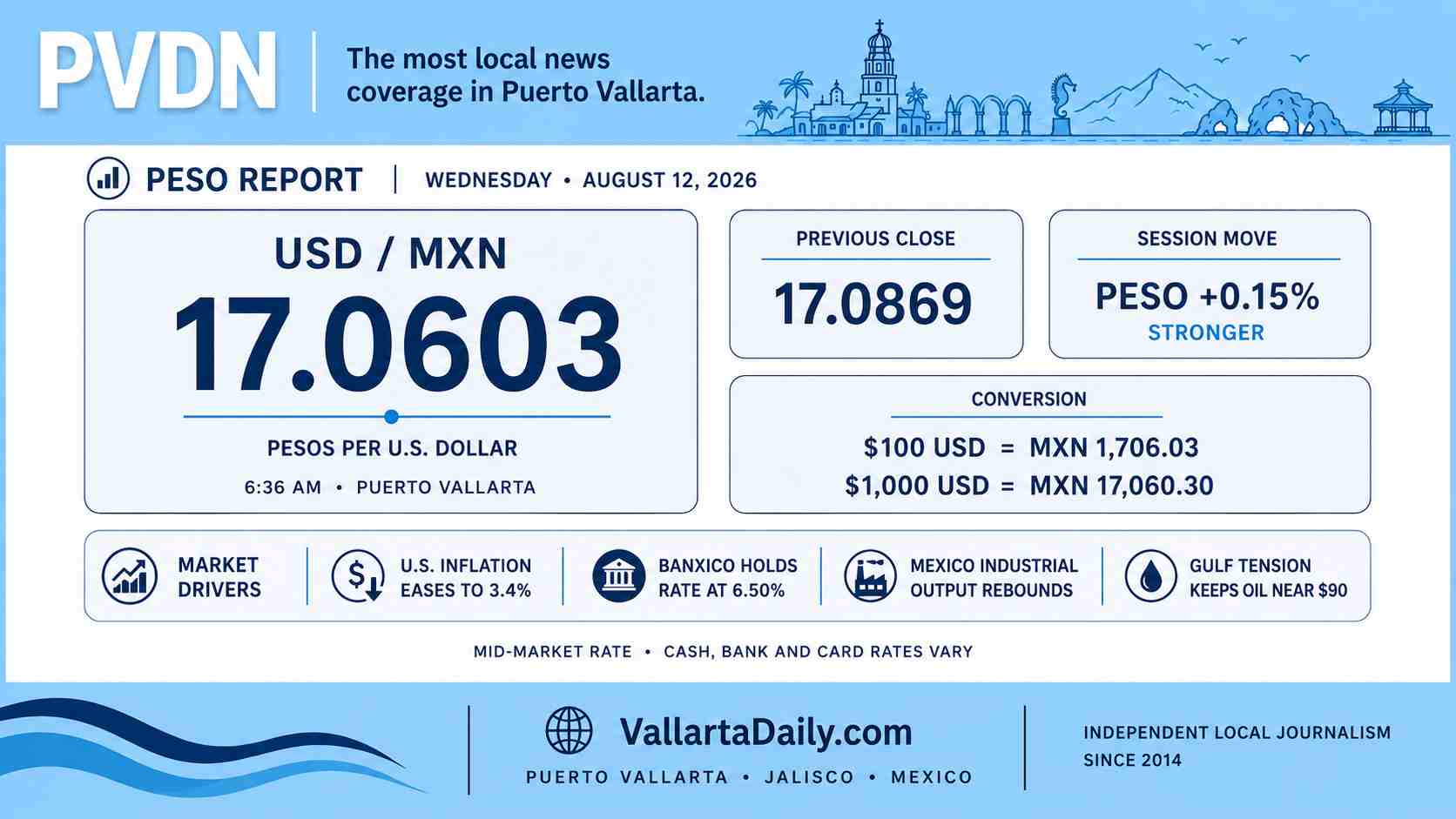
Puerto Vallarta, Jalisco, August 12, 2026 – The Mexican peso traded near 17.0603 per U.S. dollar at 6:36 a.m. Wednesday, Puerto Vallarta time. The live spot-market quote was 0.15% below the previous session, representing a gain of roughly the same size for the peso.
The dollar had traded near 17.09 pesos in the prior session. The lower USD/MXN quote brought the currency pair closer to 17.00, a level it has not sustained during the current rally.
The Bank of Mexico’s official exchange-rate table still showed Tuesday’s FIX at 17.1092 early Wednesday. Banxico had not published the August 12 FIX, which is released after noon. The official rate for dollar-denominated obligations payable in Mexico on Wednesday was 17.1408.
U.S. inflation lands close to forecasts
The peso’s early position was tested at 6:30 a.m., when the U.S. Bureau of Labor Statistics reported that consumer prices rose 0.1% in July and 3.4% from a year earlier. Annual inflation eased from 3.5% in June.
Core inflation, which excludes food and energy, increased 0.2% during July and 2.5% annually. Both the headline and core readings matched broad market forecasts.
Because the figures produced no major surprise, the initial signal for the dollar and U.S. interest rates was limited. The peso was already trading near 17.06 before the report, so its overnight gain cannot be attributed entirely to the inflation data.
Before the release, interest-rate markets had assigned roughly even odds to a Federal Reserve rate increase in September. The July report showed inflation easing, but it did not settle that debate. The Fed will receive additional employment and inflation data before its September 16 decision.
Mexico’s interest-rate gap supports the peso
The Bank of Mexico held its benchmark rate at 6.50% on August 6 and said maintaining that level would be appropriate for now. The U.S. federal funds target remains at 3.50% to 3.75%.
That gap can support demand for peso-denominated assets because Mexican rates remain higher. It does not protect the currency from sudden changes in global risk appetite, U.S. policy or trade relations.
Fresh domestic data also gave markets a mixed but improved picture of Mexico’s economy. Industrial activity grew 0.2% in June after contracting in May. Output was 0.8% higher than a year earlier on a seasonally adjusted basis.
Construction increased 3% during the month, while manufacturing declined 0.6%. The figures showed that Mexico’s industrial recovery was uneven, particularly in sectors tied closely to U.S. demand.
Mexico’s annual inflation fell to 3.12% in July, according to the latest national consumer-price report. Core inflation remained elevated at 3.95%, helping to explain why Banxico has maintained a cautious stance despite the decline in the headline rate.
Oil and Gulf tensions remain a counterweight
Global markets were also following the conflict involving Iran and threats to shipping through the Strait of Hormuz. Brent crude traded near $89.71 per barrel early Wednesday, down 0.2% after five consecutive gains.
The dollar index was nearly unchanged at 99.84 before the U.S. inflation report, while global stocks posted modest gains. That produced a mixed backdrop for the peso rather than a clear shift toward or away from risk.
Higher oil prices can support revenue expectations for an oil-exporting country such as Mexico. A prolonged energy shock can also increase inflation, strengthen demand for safe-haven dollars and affect expectations for U.S. interest rates. The resulting effect on USD/MXN is not automatic.
Banxico has identified global conflict, changes in U.S. economic policy and possible trade disruptions as continuing risks to Mexico’s inflation and currency outlook.
The rate residents will actually receive
At the 17.0603 market rate, $100 converted to about 1,706 pesos and $1,000 to about 17,060 pesos before fees or provider spreads. The session move reduced the theoretical peso value of a $1,000 conversion by approximately 27 pesos from the previous level.
For people earning dollars and paying expenses in pesos, the stronger Mexican currency means each dollar produces slightly fewer pesos. Those earning or saving in pesos face a somewhat lower cost when paying dollar-denominated bills.
Bank transfers, credit cards, ATMs, remittance services and Puerto Vallarta exchange houses will offer different rates. The mid-market quote and Banxico FIX are reference points, not guaranteed retail rates. Anyone budgeting a payment on Wednesday should use the rate quoted by the provider handling the transaction.
Currency conditions can change through the Mexican market open and the U.S. trading session, particularly as investors assess the inflation report and developments affecting oil and global risk.