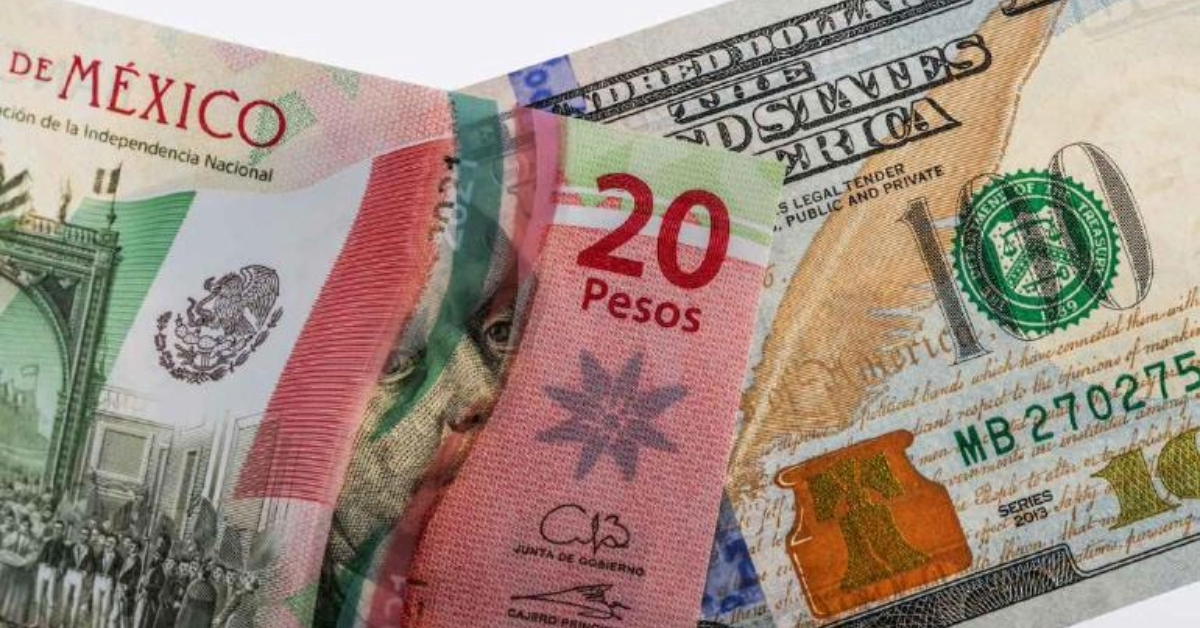
Puerto Vallarta, Mexico – The Mexican Peso struggled to maintain its earlier gains against the US Dollar as attention turned sharply to ongoing trade tensions between the two neighboring countries. By midday, the Peso had slid to 20.30 per dollar—up 0.30% from the previous session but unable to break above its weekly high near 20.22. The currency’s weakness follows a slightly hotter inflation reading in Mexico and solid but underwhelming US Nonfarm Payrolls data.
Inflation in Mexico Runs Hot, But Rate Cut Still Likely
Mexico’s inflation data for February exceeded forecasts, with headline consumer prices increasing 0.28% month-on-month—above the 0.27% estimated—and core inflation rising to 0.48% from the expected 0.46%. Annually, headline inflation reached 3.77%, while core inflation stood at 3.65%.
Despite the stronger numbers, analysts suggest these figures will not be enough to dissuade the Bank of Mexico (Banxico) from a potential rate cut at its upcoming March 27 meeting. A recent Banxico survey also indicates headline inflation is expected to end the year at 3.71%, with core CPI at 3.75%. Looking further ahead, economists see the USD/MXN rate potentially rising to 20.85 in 2025 and beyond 21.30 in 2026.
Trade Policies Take Center Stage
While economic indicators draw interest, it is trade policy that appears to be driving market sentiment. Despite securing a one-month exemption on certain USMCA-related imports, Mexico continues to face US tariffs on steel and aluminum. Economy Minister Marcelo Ebrard plans to meet with US trade officials to negotiate a more durable solution, but investors remain wary.
Trade tensions can pose a severe risk for the Peso, given Mexico is one of the largest exporters to the United States. Economists warn that if tariff disputes deepen, it could push Mexico’s economy into recession and drive the USD/MXN pair higher.
US Data: NFP Misses Estimates, But Dollar Loses Momentum
Stateside, February’s Nonfarm Payrolls rose to 151,000—an improvement from January’s 125,000, but below forecasts of 160,000. The unemployment rate ticked up from 4.0% to 4.1%, largely in line with expectations. While the latest figures could have boosted the dollar, it instead posted a steep weekly drop of around 3.56%, according to the US Dollar Index (DXY).
Expectations for a Federal Reserve rate cut in 2025 further weighed on the greenback. Futures contracts are pricing in around 80 basis points of easing by the end of that year, even as Fed Governor Adriana Kugler suggested that monetary policy could remain on hold for a while, citing “upside inflation risks” and a labor market that has largely rebalanced.
Outlook: USD/MXN Holds Near 20.30 as Markets Eye Fed Chair Remarks
Looking ahead, traders await comments from Federal Reserve Chair Jerome Powell, who is scheduled to speak at the University of Chicago at 17:30 GMT. Any indication of the Fed’s longer-term approach to rates could influence USD/MXN movement.
Technically, the pair has been consolidating between 20.20 and 20.30 after clearing the 100-day Simple Moving Average at 20.33. A definitive break above 20.33 would open the door to a test of 20.50, followed by the March 4 high of 20.99 and the 2025 peak of 21.28. On the downside, a breach of the 20.00 level could expose the 200-day SMA near 19.54, offering potential respite for the Mexican Peso.
For now, however, market participants remain focused on Washington’s policy decisions toward Mexico—a factor likely to determine whether the Peso can recover lost ground or remain under pressure in the weeks to come.