Puerto Vallarta, Jalisco, June 30, 2026 – The United States and Mexico moved Tuesday against an alleged CJNG-linked fuel smuggling network that investigators say used logistics, transport, currency exchange and real estate companies to move money tied to illegal hydrocarbon operations.
The action was not limited to cartel figures or street-level fuel thieves. It targeted the business side of the scheme: companies, customs paperwork, cross-border payments, gas-station supply chains and financial accounts.
The U.S. Department of the Treasury said its Office of Foreign Assets Control sanctioned two Mexican nationals and nine entities tied to fuel smuggling schemes linked to the Cártel Jalisco Nueva Generación. At the same time, Treasury’s Financial Crimes Enforcement Network issued a supplemental alert warning banks and other financial institutions to watch for fuel-smuggling and tax-evasion patterns along the U.S.-Mexico border.
Mexico’s Finance Ministry, through the Unidad de Inteligencia Financiera, also placed the OFAC-designated subjects on its blocked-persons list and added nine more people after reviewing fiscal, financial and corporate records, El Universal reported.
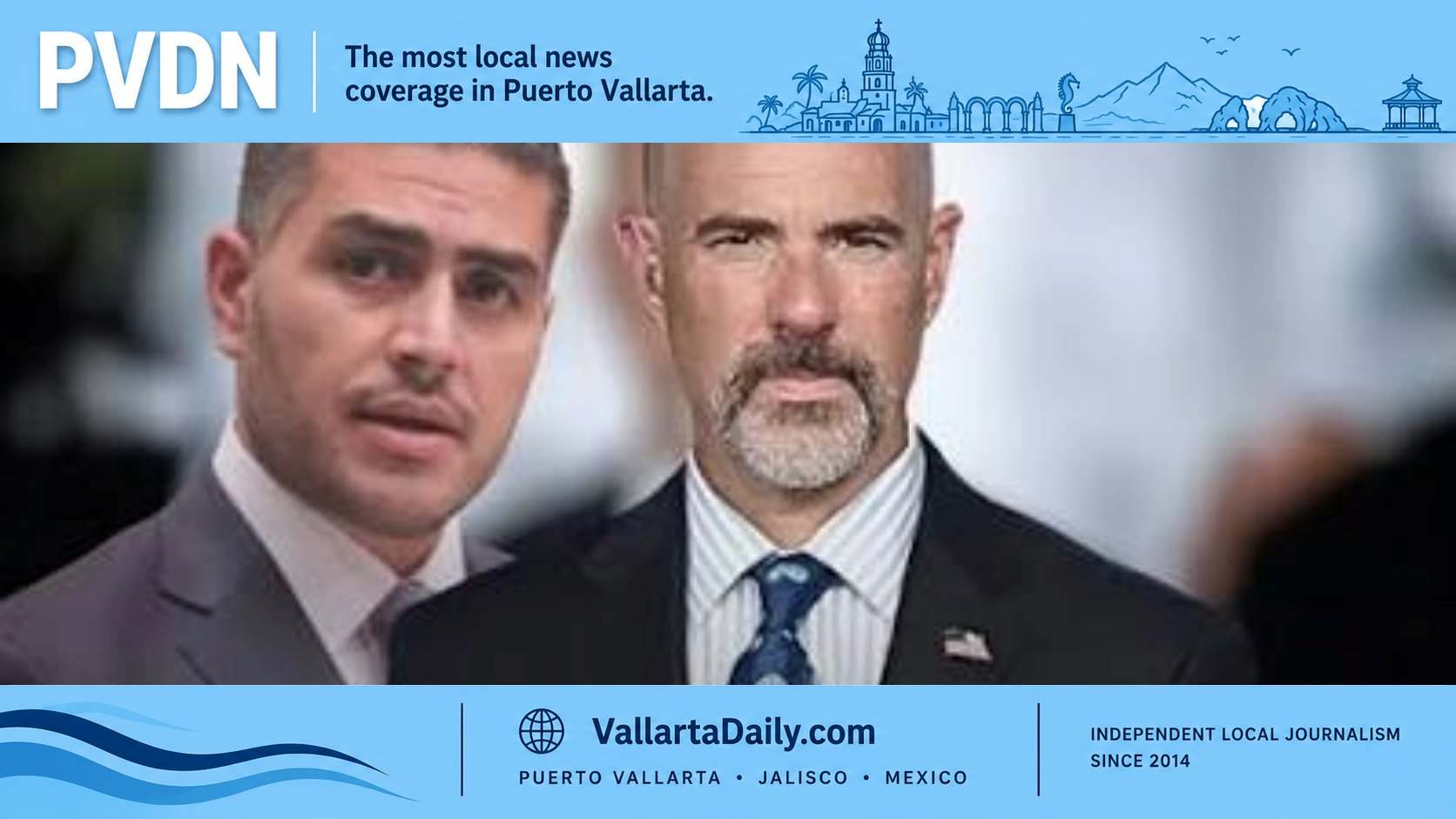
Treasury identified the two sanctioned individuals as Oscar Guillermo Juraidini Silva and J. Refugio Ruiz Villagomez. U.S. officials described Juraidini as a key business operator who allegedly created shell companies and falsified customs documents to move fuel from the United States into Mexico while avoiding Mexican taxes. Ruiz Villagomez was accused of helping smuggle fuel into Mexico without proper permits and paying fees to criminal groups controlling border crossings.
The companies named by Treasury include Jomadi Logistics & Cargo, S.A. de C.V.; Ahavat Logistics Solution, S.A. de C.V.; Centro Cambiario La Peseta, S.A. de C.V.; OJ Living Trust, S.A.P.I. de C.V.; RK Real King, S.A. de C.V.; Soma Transporte y Servicios, S.A. de C.V.; Ogui Fletes; OF Transportes; and Cucumber Sweet Waves Ltd., a United Kingdom-based company.
The sanctions freeze property and interests in property under U.S. jurisdiction and generally bar U.S. persons or companies from dealing with the designated people and entities. Treasury also warned that companies owned 50 percent or more by blocked persons are treated as blocked, even if not separately named.
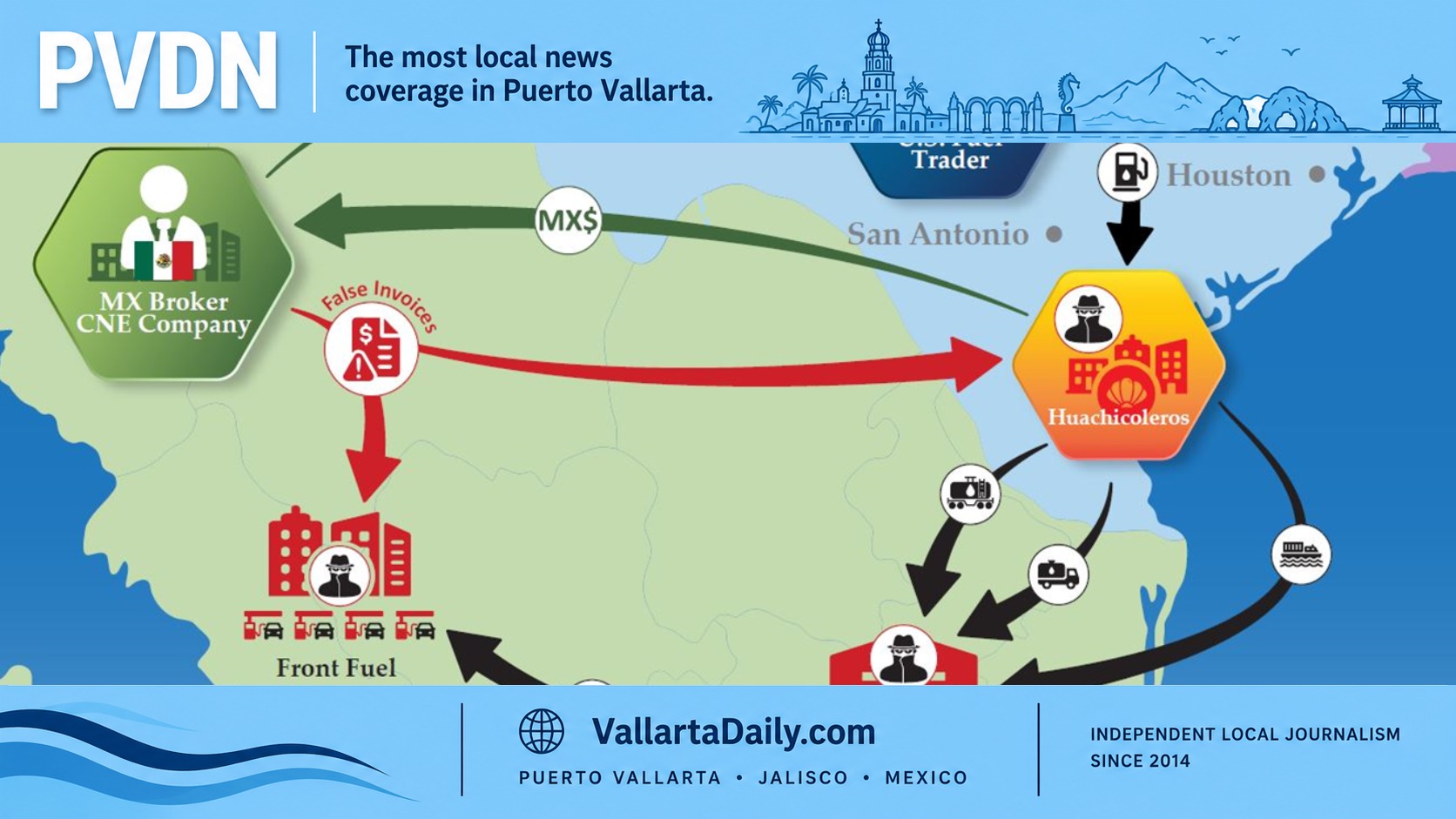
The case sits at the intersection of Mexico’s fuel market and cartel finance. The alleged scheme is part of what Mexican authorities and analysts often call huachicol fiscal, a form of fuel crime that differs from the older image of thieves tapping Pemex pipelines. Instead of siphoning gasoline from a duct, fuel theft can involve importing gasoline, diesel, or other refined products from the United States while misclassifying the shipment, using false invoices, hiding the true buyer, or avoiding Mexico’s IEPS fuel tax.
PVDN has previously reported on Mexico’s broader fuel fraud investigations, including cases in which authorities alleged the use of false documentation, corporate fronts and customs irregularities. The latest U.S. action suggests Washington is treating the issue not only as a Mexican tax problem, but as a cartel-financing and financial-system risk.
FinCEN’s alert said suspicious activity linked to these schemes has moved through banks, wire transfers, digital asset payments, shell companies and trade-based laundering. The agency said fuel can be moved by tanker truck, railcar and, in some cases, vessels, with documents falsely describing shipments as waste oil, lubricants or other products.
Treasury also said the illicit fuel business has become one of the most important non-drug revenue streams for Mexican criminal groups. That makes the fuel trade different from many cartel rackets: it depends on access to legitimate infrastructure, including customs brokers, transport fleets, storage networks, import-export companies, fuel distributors and retail stations.
The financial damage for Mexico is not only the value of stolen or smuggled fuel. The larger loss is tax revenue, damage to Pemex, and pressure on legitimate fuel importers and sellers competing against untaxed product. FinCEN’s alert said Mexico’s dependence on imported refined fuel creates a large legal trade that criminal groups can exploit by hiding illicit shipments within normal cross-border commerce.
The action also adds pressure to Mexico’s customs and port oversight. Earlier this year, Mexico reported major fuel-smuggling seizures and said anti-huachicol operations had dealt a multibillion-peso blow to criminal groups. Those operations have focused on the movement of fuel through warehouses, tanker trucks, customs channels, and commercial networks rather than solely on illegal pipeline taps.
The sanctions do not name any Puerto Vallarta company or allege that the local fuel market was part of the network. The case remains relevant to readers in Jalisco because CJNG-linked financial activity has repeatedly been targeted by U.S. sanctions, including cases involving fuel theft, fraud, real estate, timeshares, and money laundering. PVDN has also tracked how U.S. sanctions have reached legitimate-looking businesses tied to alleged CJNG fraud networks.
The practical risk is not that motorists will see an immediate change at the pump. It is that Mexico’s fuel market remains a high-value target for organized crime, and the enforcement focus is shifting toward the financial and corporate structures that allow illicit fuel to be bought, transported, sold and laundered.
Treasury’s latest action also sends a compliance warning to companies with cross-border exposure. Fuel distributors, freight companies, customs brokers, banks, currency-exchange firms, and real estate businesses may face greater scrutiny if transactions involve unusual fuel volumes, mismatched business activity, residential addresses used by commercial firms, large cash movements, or payments routed through shell companies.
Mexican officials said the UIF’s blocked-persons action was intended to protect the national financial system and restrict its use for operations suspected of involving illicit proceeds. U.S. officials framed the sanctions as part of a wider effort to cut cartel revenue streams beyond drug trafficking.
The case shows how fuel theft has moved far beyond clandestine taps in a pipeline. It is now being treated as a cross-border financial-crime problem that runs through invoices, customs forms, banks, and companies built to look ordinary.