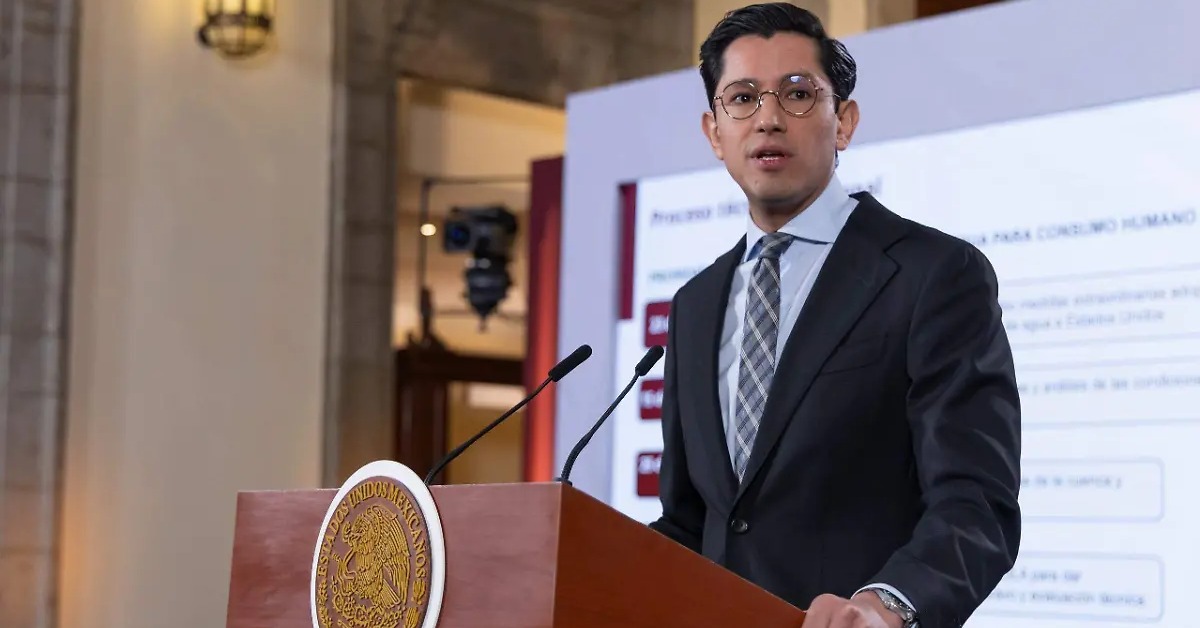
A meeting between Mexican and U.S. officials has put a spotlight back on the broader state of the bilateral relationship. Mexico’s Foreign Ministry said Foreign Minister Roberto Velasco met with U.S. Ambassador Ronald Johnson to discuss shared priorities and reaffirm cooperation between the two countries.
Public details from the meeting were limited. That is common in early diplomatic contacts, especially when both governments are trying to keep room for negotiation. Even so, the message mattered. It came just days after Velasco took office as Mexico’s new top diplomat, at a time when the relationship with Washington is under close watch on issues that reach well beyond foreign policy circles.
Velasco arrived with a strong North America profile. Before moving into the top post, he had already worked for years on Mexico’s relationship with the United States and Canada. That matters because this is not a ceremonial period for the Foreign Ministry. It is a working phase shaped by trade talks, migration pressure, security cooperation, and repeated debates over how far each side should go without crossing political red lines.
Why a quiet diplomatic meeting matters
On its face, the meeting was a standard signal of continuity. Mexico has a new foreign minister, and the U.S. ambassador met him to confirm that the channel remains open. But the timing gives the meeting more significance than the short official summary suggests.
The most obvious reason is T-MEC, the North American trade pact known in English as USMCA. The review process is no longer a distant event. U.S. and Mexican trade officials formally launched the process in March, and both sides have already begun technical discussions ahead of the joint review scheduled for July 1. Those talks are not just about paperwork. They are focused on issues such as rules of origin, North American supply chains, and reducing dependence on inputs from outside the region.
That trade review will shape much more than government talking points. It could influence factories, prices, investment decisions, and the broader tone of the bilateral relationship. For many foreign residents in Mexico, those outcomes are not abstract. They can affect the economy, the peso, job markets, cross-border business confidence, and the general policy climate surrounding movement between the two countries.
Migration and security remain just below the surface
Even when officials describe a meeting in broad diplomatic language, it is hard to separate trade from migration and security in the current relationship. Washington has continued to press Mexico for stronger action on border security and cartel activity. Mexico, for its part, has tried to maintain cooperation while drawing a clear line around sovereignty.
That balancing act is likely to define Velasco’s early months in office. He is taking over during a period when Mexico needs good ties with Washington, but also wants to avoid the appearance of accepting pressure without limits. That is especially relevant when U.S. political rhetoric turns more aggressive on migration or organized crime.
Recent months have shown how fast those tensions can rise. Mexico has had to manage deportation flows, maintain its consular response, and defend its position whenever U.S. officials or politicians suggest unilateral actions that Mexican authorities reject. In that context, even a brief meeting between the foreign minister and the ambassador serves a practical purpose. It keeps communication open before disputes harden in public.
What to watch next
The main question is not what was said in the room. The bigger question is what follows. If this meeting were an early reset, the next clues would come from trade announcements, migration coordination, and whether both governments keep disagreements inside negotiation channels or push them into public confrontation.
The T-MEC review will be one of the clearest tests. If the talks stay focused on supply chains, industrial policy, and regional production, the relationship may remain tense but manageable. If trade disputes merge with migration fights or security demands, the diplomatic temperature could rise quickly.
For foreign residents in Mexico, this is the part worth watching. The relationship between Mexico and the United States often unfolds through technical meetings first, with public consequences later. A calm official photo can look minor at the time. But in a year shaped by trade review deadlines, migration pressure, and sensitive security politics, even routine diplomacy can signal where the next round of negotiations is headed.